Big-Box Retail Roofing in Lewisville, TX
Home // Property Types We Roof //
Overview
Big-Box Retail Roofing in Lewisville
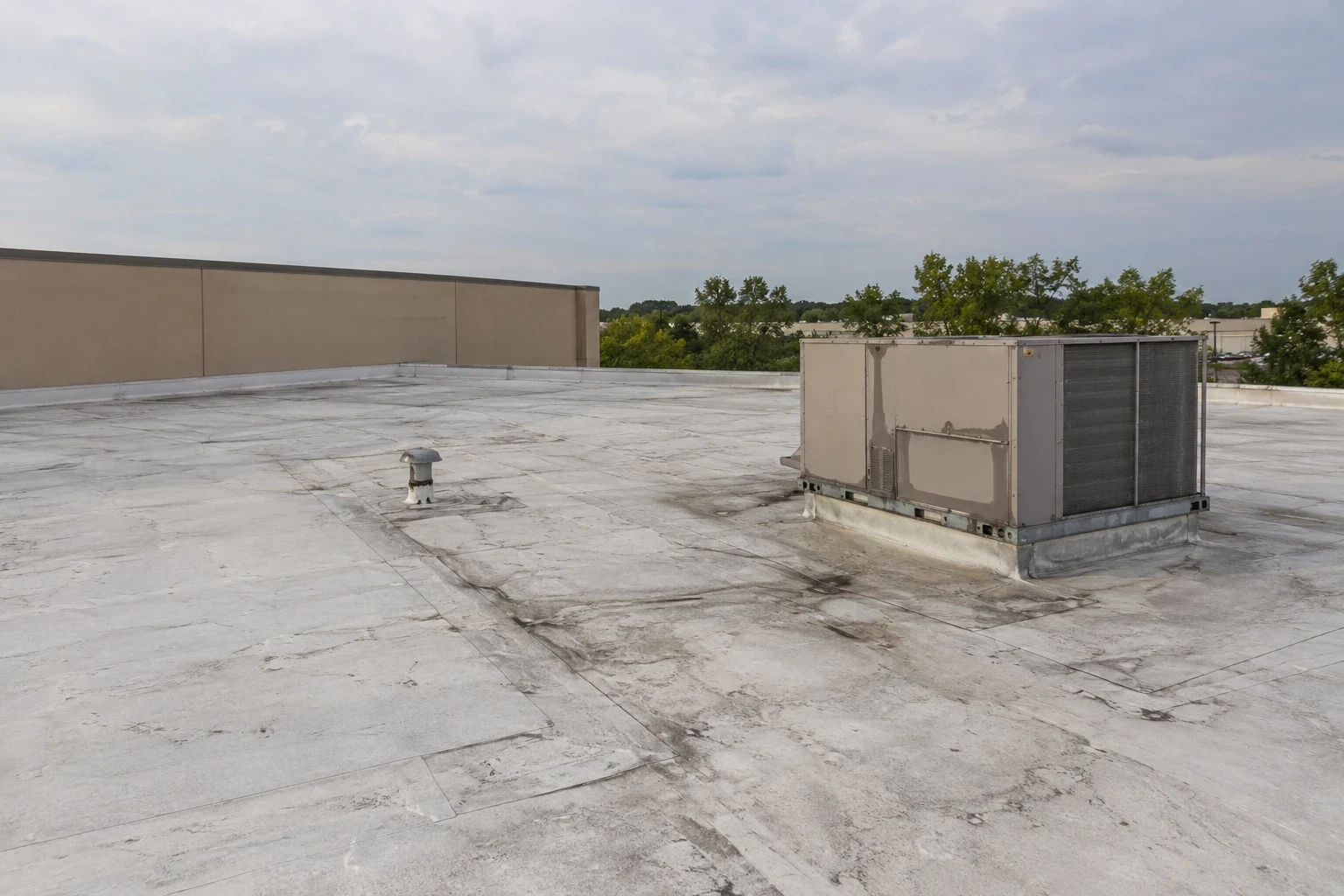
The number of rooftop units, skylights and drains on a big-box deck is the first figure a roof scope should state, because that count drives almost every other number in it. A large single-tenant store in Lewisville, TX can carry many packaged HVAC units, a field of skylights, long runs of parapet and a handful of interior drains serving a very wide deck. A leak on that roof is rarely a mystery about the field of the membrane. It is usually a question about which of the many details let the water in.
The first inspection pass therefore counts and numbers every detail before it judges any of them.
Local context: retail gateways and the interstate
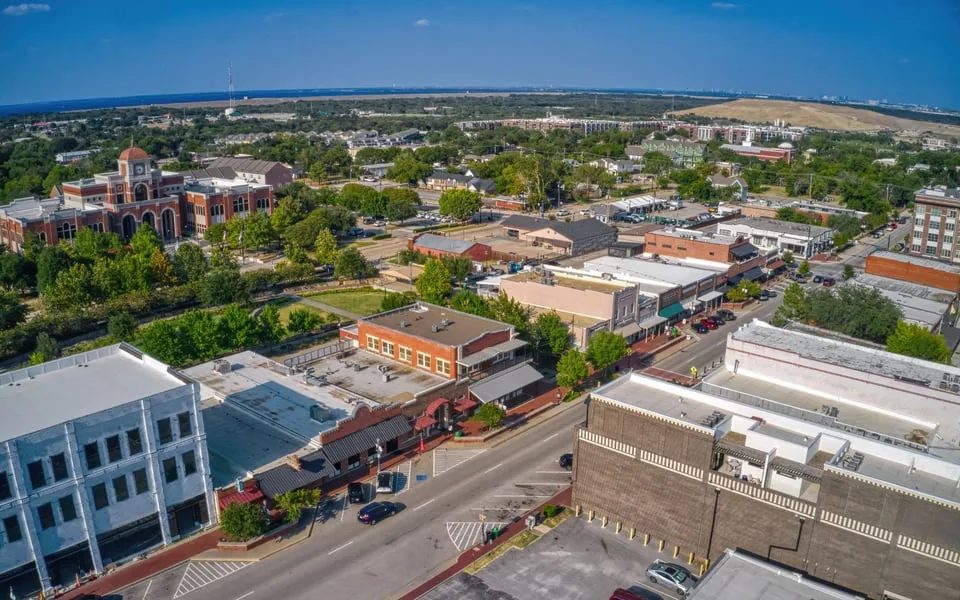
City planning describes retail within the Eastern Gateway at the SH 121 entrance and mixed-use investment at the Southern Gateway where SH 121 meets I-35E. The Colony describes commercial development along SH 121, and Highland Village names retail along FM 407 and FM 2499. On sites along these routes, lift routes, delivery docks and customer parking share the same approaches, and the roof plan has to respect all three.
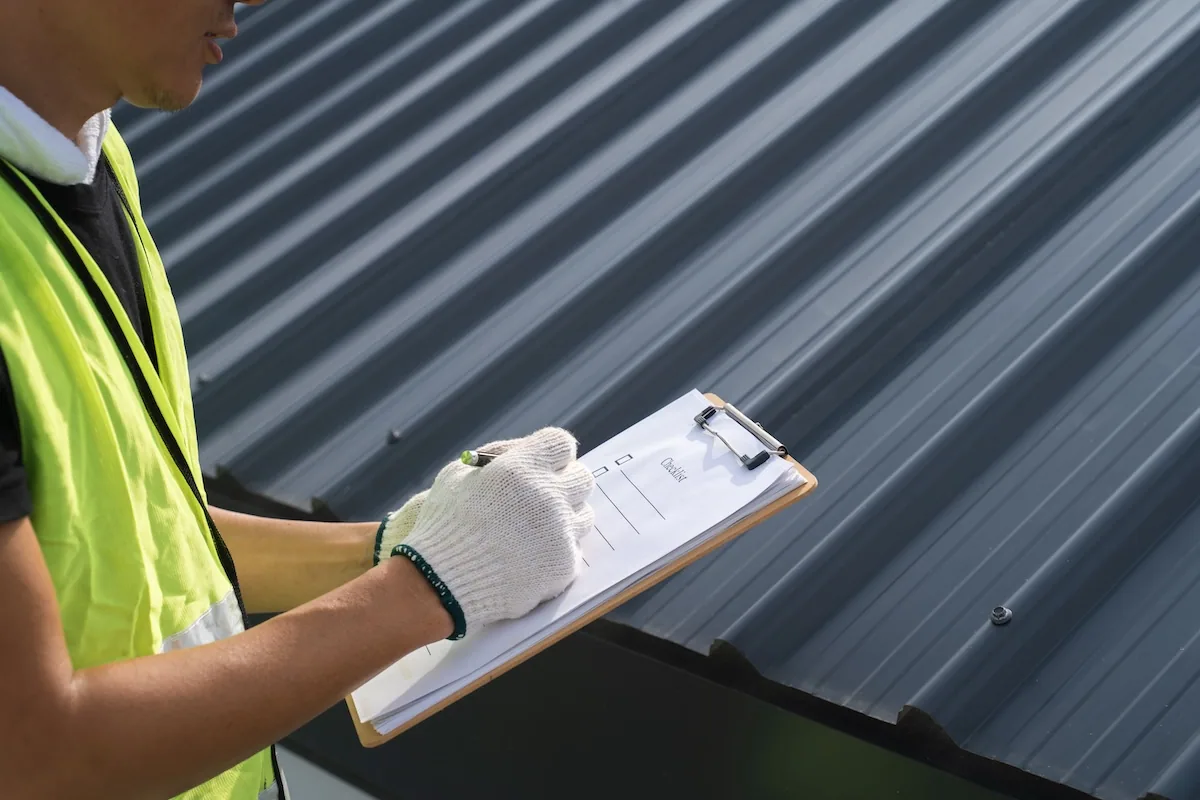
For a store in the Southern Gateway or elsewhere along the corridors, the scope starts from the building: drawings, a core in each section and a walk with the store's facilities manager.
Detail inventory: units, skylights, drains and edges
Each rooftop unit is numbered with its curb, flashing, line penetrations and support. Each skylight is numbered with its curb, glazing and sealant. Each drain and scupper is numbered with its bowl and clamp ring. The edges, from parapet caps to wall flashings, are broken into runs of known length. The result is a table the facilities team can sort and a plan on which every number appears.
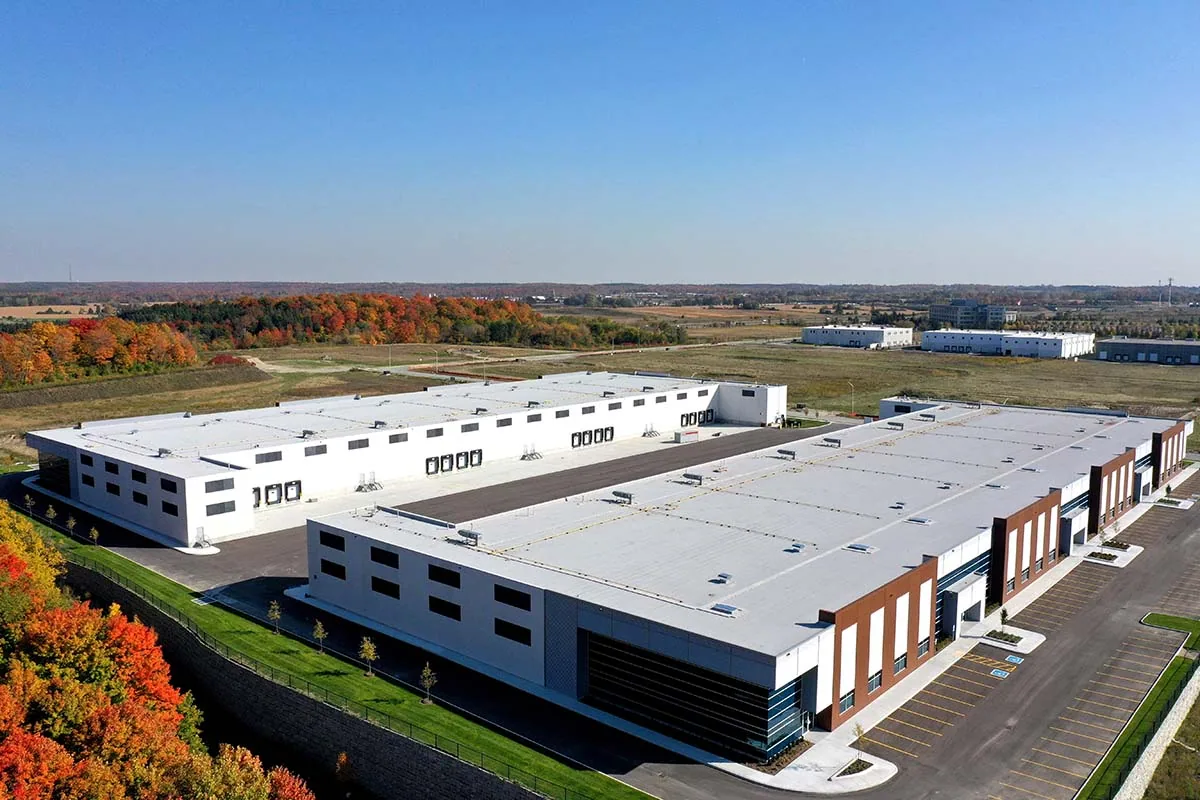
That table makes the repair scope concrete. Instead of a lump sum for flashing work, the owner sees each curb, each skylight and each drain with a condition, a photograph and a proposed fix. A skylight and penetration flashing program can then be phased across several budget cycles.
Skylights deserve their own sentence. Curbs crack, domes craze, glazing seals dry out and condensation drips are mistaken for leaks. The inventory records each one's condition from above and, where the store allows, from below, so a stain on a ceiling tile is matched to a skylight, a drain or a unit rather than assumed to be a membrane failure.
Drainage across a wide deck
Water on a large flat roof travels a long way to reach a drain, and any dip along the route becomes a pond. Ponds add weight, stain membranes and concentrate stress on seams. We measure each pond after rain, record its depth and extent and note whether a new drain, a scupper, a sump or tapered insulation would clear it.
A ponding water repair may be as modest as a new sump or as large as a tapered cover board section, and the record states which one the roof needs. Interior drain lines are scoped, too: a line cleared once can clog again if the pipe is crushed or sagging below the slab.
Overflow protection is the other drainage question. A deck with parapets on all sides depends on secondary scuppers to take water when primary drains clog, and those scuppers have to sit at the right height. We check heights against the plan and record any that were blocked, covered by a later roof layer or cut too high to work.
Storm evidence: wind, hail and tornado-producing weather
Tornado-producing storms, hail, high wind and flooding all show up in the Metroplex most years, per the weather service, and any one site may be missed. A big-box roof is exposed on every side, and its edge zones take the most wind. After a storm report, we walk the perimeter first, looking at coping, edge metal, displaced fasteners and membrane near the corners.
Then the field: bruises, punctures and ballast or debris scattered across the sheet. Findings are dated and compared with the last record. The point is a storm damage repair scope built on what this roof shows, with a dated file for the insurer.
Fasteners and plates deserve an eye as well. Where a mechanically attached sheet shows ridges or flutter, a pull test on a sample of fasteners tells whether holding strength has slipped, and the test results are logged by zone with the date and the location of each pull.
Work window: store hours, stocking and deliveries
A store runs on a schedule that roofing has to respect. Customers shop all day, overnight crews stock shelves and delivery trucks arrive on a fixed timetable. The access log lists the hours when the roof zones above sales floor, stockroom and dock can be entered, the points of entry and the person who confirms the floor below is protected.
Heat shapes the day. The long hot season trims the roofing day, since triple-digit afternoons arrive on roughly twenty days a year, so crews start early and the membrane is handled in the cooler hours. Any occupied building reroofing plan states the stop conditions: rain, wind and a forklift lane that cannot be cleared.
Security and loss prevention enter the plan too. Roof hatches and ladders tie into store alarms, so the access log records who disabled which sensor and when it was restored. A crew that leaves a hatch unlatched at night creates a problem larger than any leak.
Options review: repair, recover, replace or restore
With moisture mapped, the options are clear. A roof with dry insulation and isolated failures supports repair. A roof with sound but weathered membrane may take a coating. Wet insulation across a large share of the deck supports replacement. A roof coating restoration pushes replacement later when the readings allow it.
The review puts the paths next to each other with their disruption, cost drivers and records, and the owner picks. The decision file explains why.
Cost drivers on a store are the number of units to lift and reset, the penetration count, tear-off depth, the hours the store allows and the amount of staging needed to keep delivery lanes open. The scope prices each line, so the owner sees which store rule drives the number.
Closeout packet: the store's roof file
The packet holds the detail table, plan, moisture readings, product sheets, access log and dated findings with photographs. A shopping center or grocery store in the same portfolio can use the same layout, so a retail owner with many stores reads each roof the same way.
Because large retailers often manage many stores, the packet carries a one-page summary at the front with the detail count, the open items and the next inspection date, so a regional facilities manager can compare stores without reading every page. The full photographs and readings follow behind it.
Commercial Roofing Questions
How do you scope a roof with dozens of rooftop units?
By numbering each one with its curb, flashing, lines and support, then pricing repairs per unit. The table lets the owner phase the work.
Where do leaks on a big flat roof usually start?
At details: curbs, skylights, drains and edges, more often than in the field. The inventory ties each stain to a numbered detail.
Can the store stay open during a reroof?
Usually. Sections are worked in turn, protected below, and dried in daily, with stocking and delivery hours in the access log.
What does a storm report change?
It starts a walk of the perimeter and the field, with dated findings compared against the last record.
When does coating make sense on a big-box roof?
When insulation is dry and the membrane is sound but weathered. A moisture map decides.
Related
Related Roofing Work
Southern Gateway
Skylight and Penetration Flashing
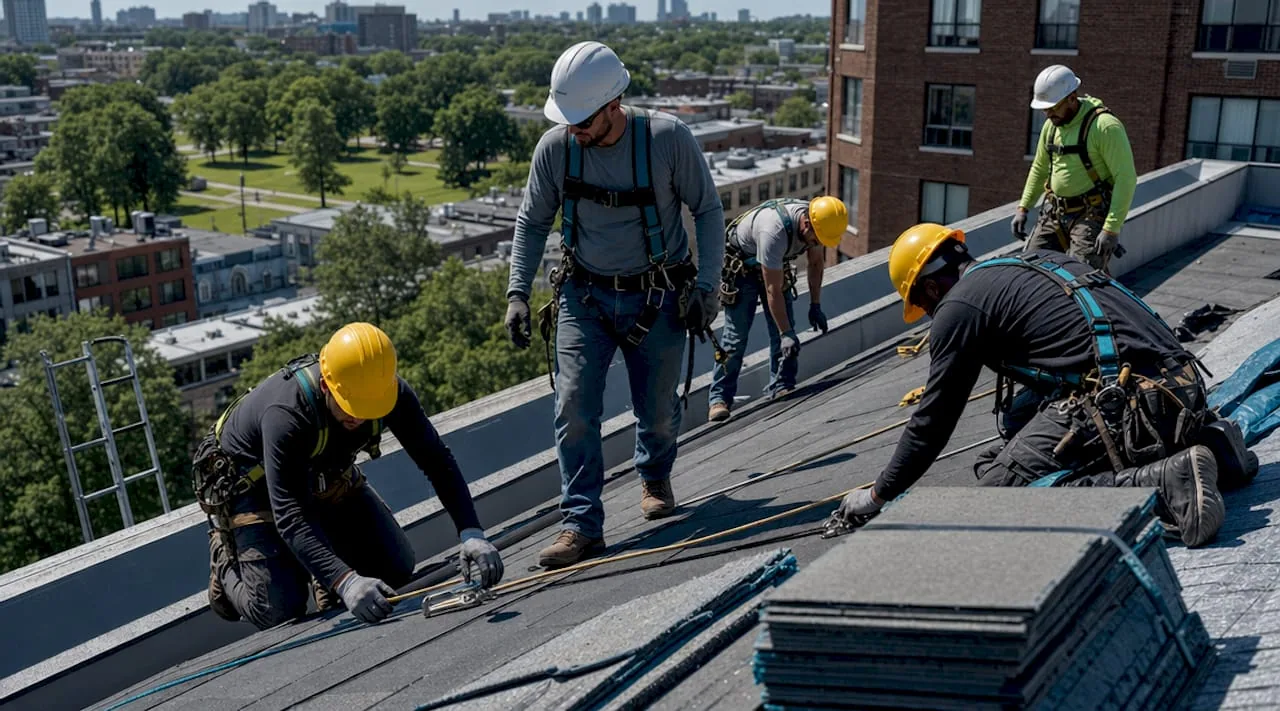
Ponding Water Roof Repair
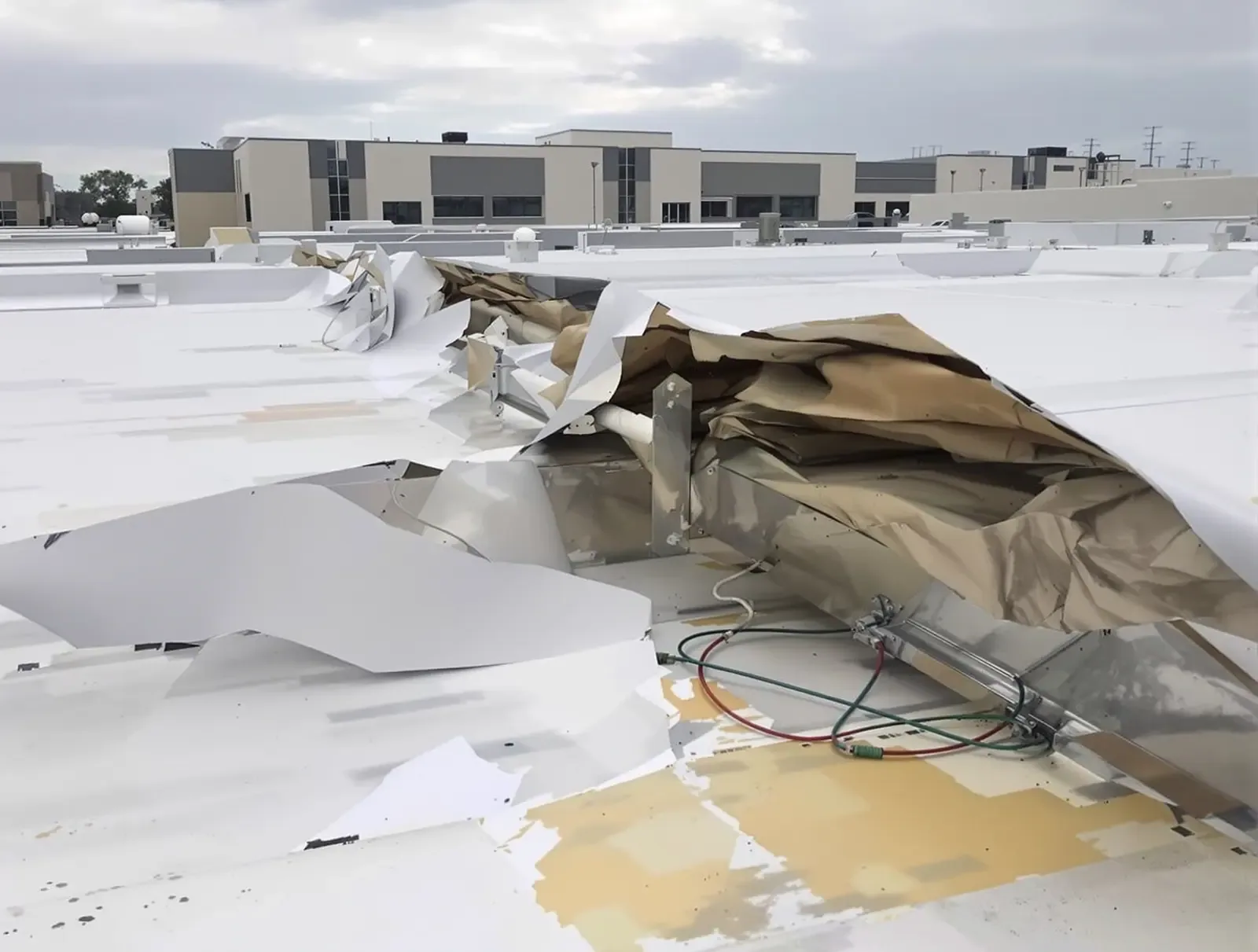
Storm Damage Roof Repair
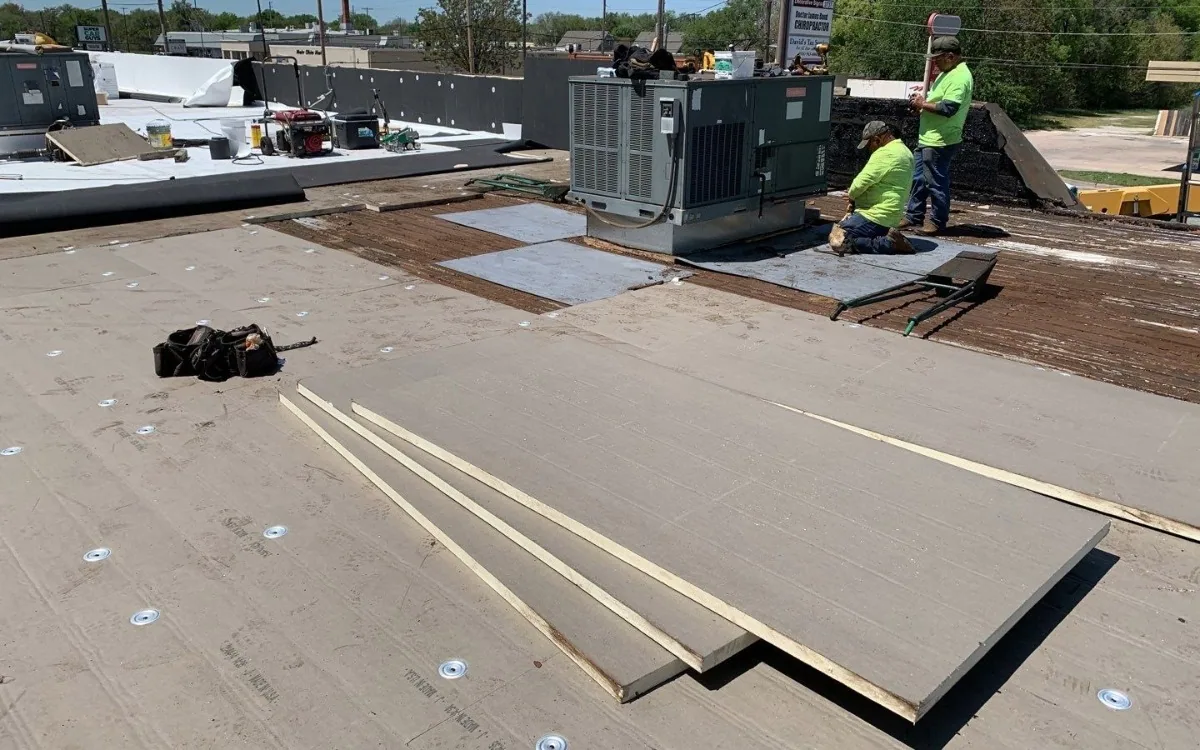
Occupied Building Reroofing
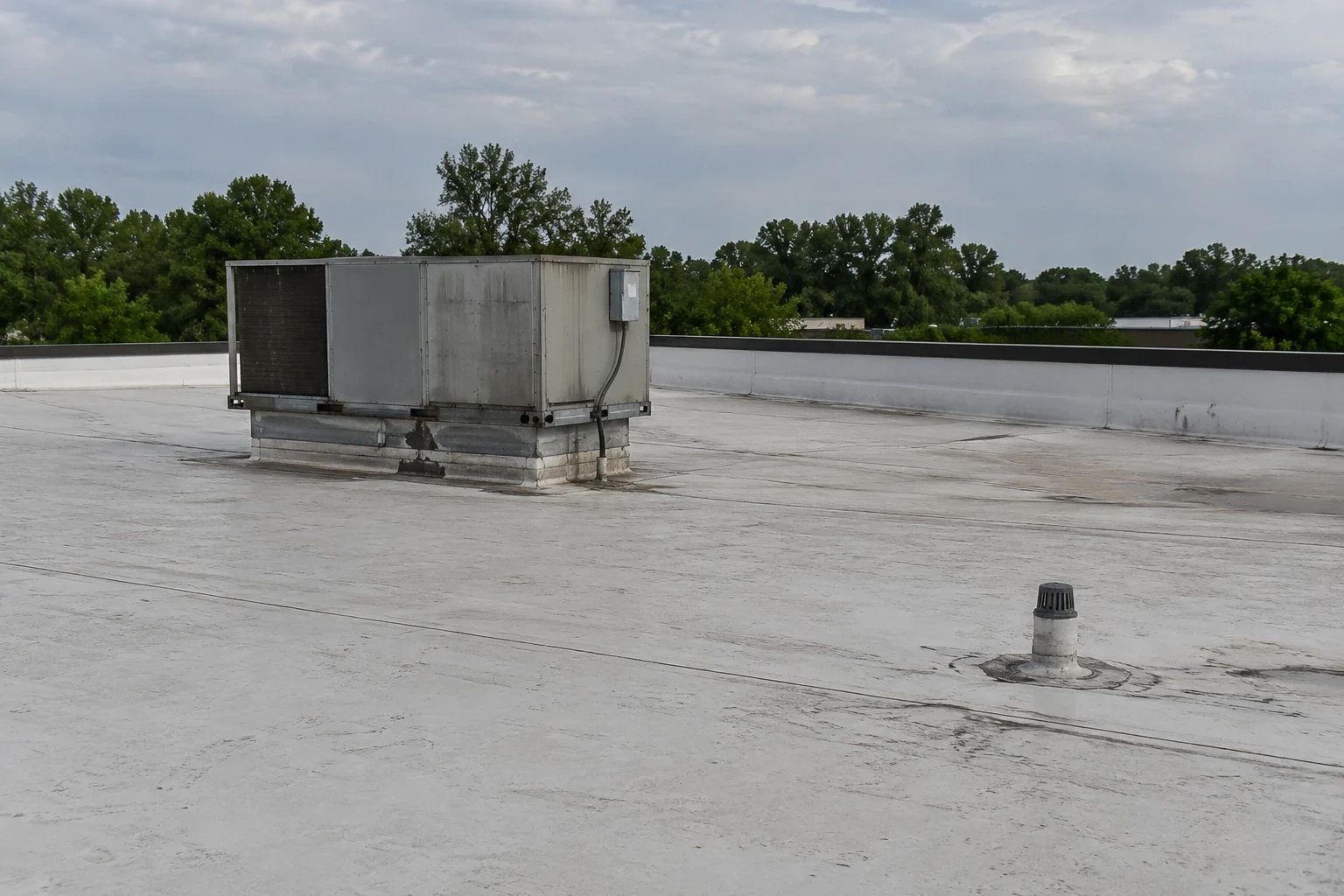
Roof Coating and Restoration
Schedule a detail-by-detail inspection
Send the roof plan and the store's operating hours, then schedule an inspection to receive a dated condition record with photos, findings and recommended next steps.