Commercial Roofing in Old Town North, Lewisville, TX
Home // Service Areas //
Overview
Old Town North in Lewisville
Ask a seller for the roof file on a building in Old Town North and the useful answer is a dated one: when the membrane went on, what was patched since, and what the last inspection found. The file is usually fragments: a receipt, a photograph on a phone, a tenant's email about a stain. Putting those fragments in order is the first step in deciding whether a roof needs a repair, a restoration or a replacement.
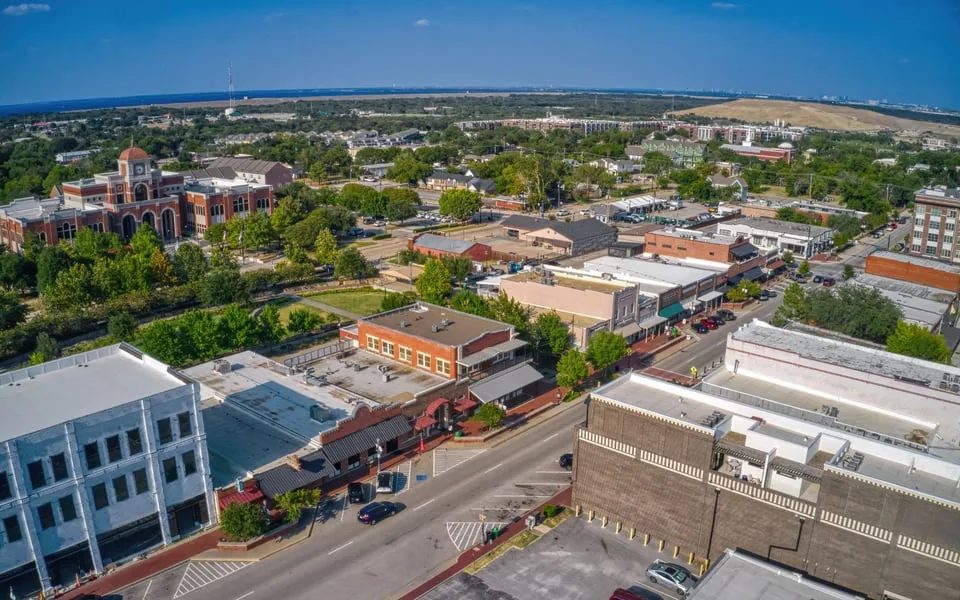
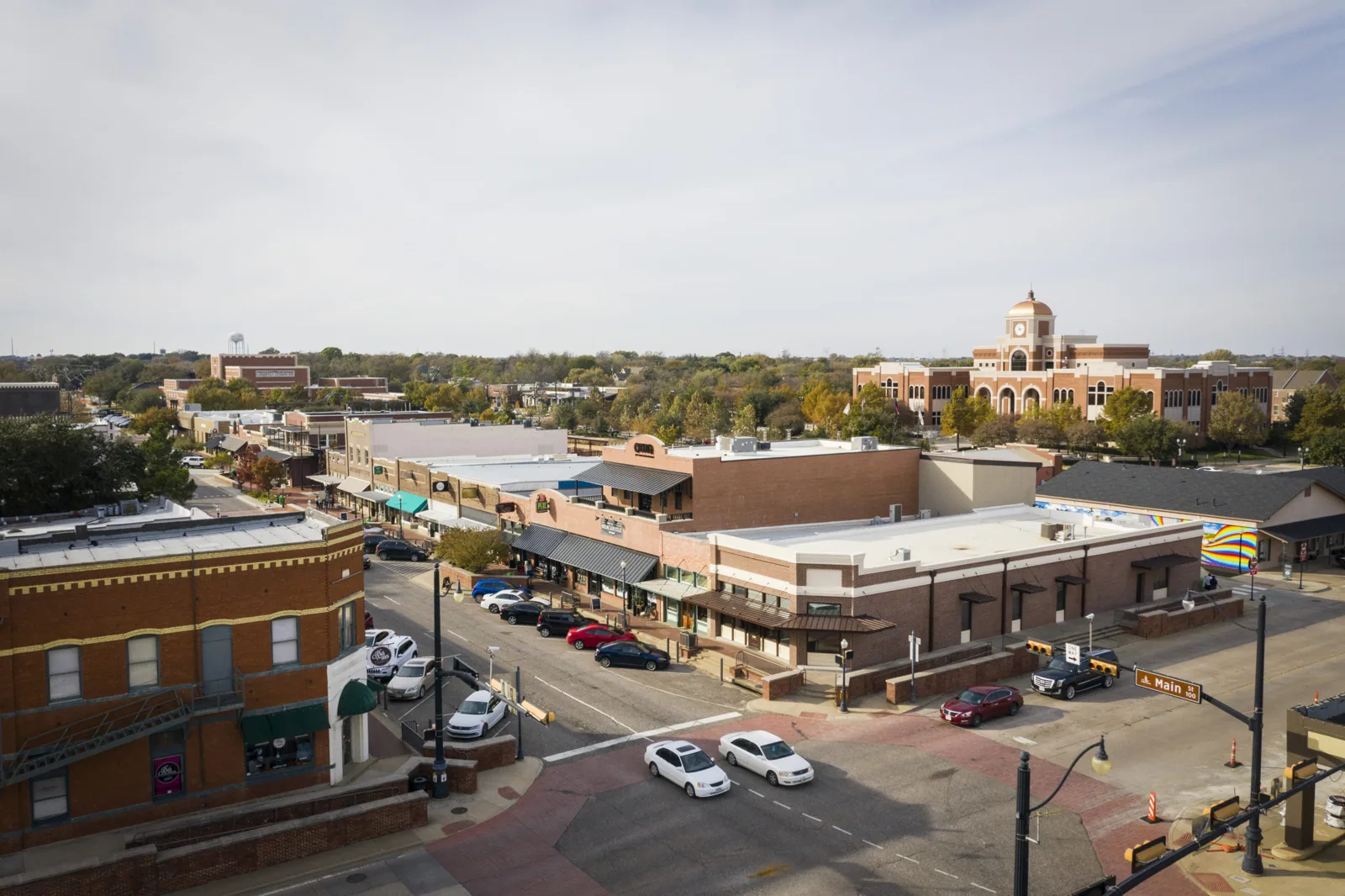
Old Town North is a district north of Old Town in Lewisville, TX, and it has an adopted small area plan that guides public and private investment there. City planning describes business locations in the district as connected to Lewisville and the wider North Texas region. A district under a plan is a district where ownership, tenancy and building use can change, and a roof record that survives those changes is worth more than one that lives in a single manager's memory.
Baseline: the inspection that starts the file
We begin with a photo sequence taken from fixed points so that the next inspection can repeat it. The whole roof zone first, then edges, penetrations, seam runs, drains and any rooftop equipment. Each image carries a date and a position on the roof plan, so a dent or crack found later can be compared against the same view.
Where the owner allows it, we pull a core in each roof zone. A core exposes the stack of layers, their thickness and the moisture state of the insulation, which the surface cannot. A roof that looks tired but is dry beneath may be a repair or a restoration candidate; a roof that looks acceptable but holds wet board is a replacement conversation waiting to happen. The moisture reading turns that guess into a finding.
The baseline records condition on the day, and it gives every later decision something fixed to measure against.
District plan: timing roof work against redevelopment
A small area plan guides investment, and investment tends to arrive in phases. Buildings change hands, tenants are replaced, façades are updated and rooftop equipment is added or moved. Each of those events touches the roof. A new tenant's mechanical unit lands on a curb that may or may not be flashed for it. A renovated interior leaves a roof drain in a different place relative to the new walls.
For that reason we like to time roof work against the project calendar. If a building will take on new equipment within two years, the roof beneath it should be assessed before the unit is set, not after. If a replacement is likely in the same window, doing it first is usually the lower-cost path, since the crane, the access route and the interior protection are already planned.
The owner's decision file records the reasoning: what was known, what the options were, what each cost in access and interruption, and why one was chosen. Years later that file explains the roof to someone who was not there. A due diligence survey follows the same format when a building is being bought or financed.
Storm record: separating the region from the roof
Spring and fall bring the thunderstorms, and the Metroplex sees hail, damaging wind, flooding or tornadoes most years. A roof in Old Town North may be missed in a given season, so the roof report states only what the building shows.
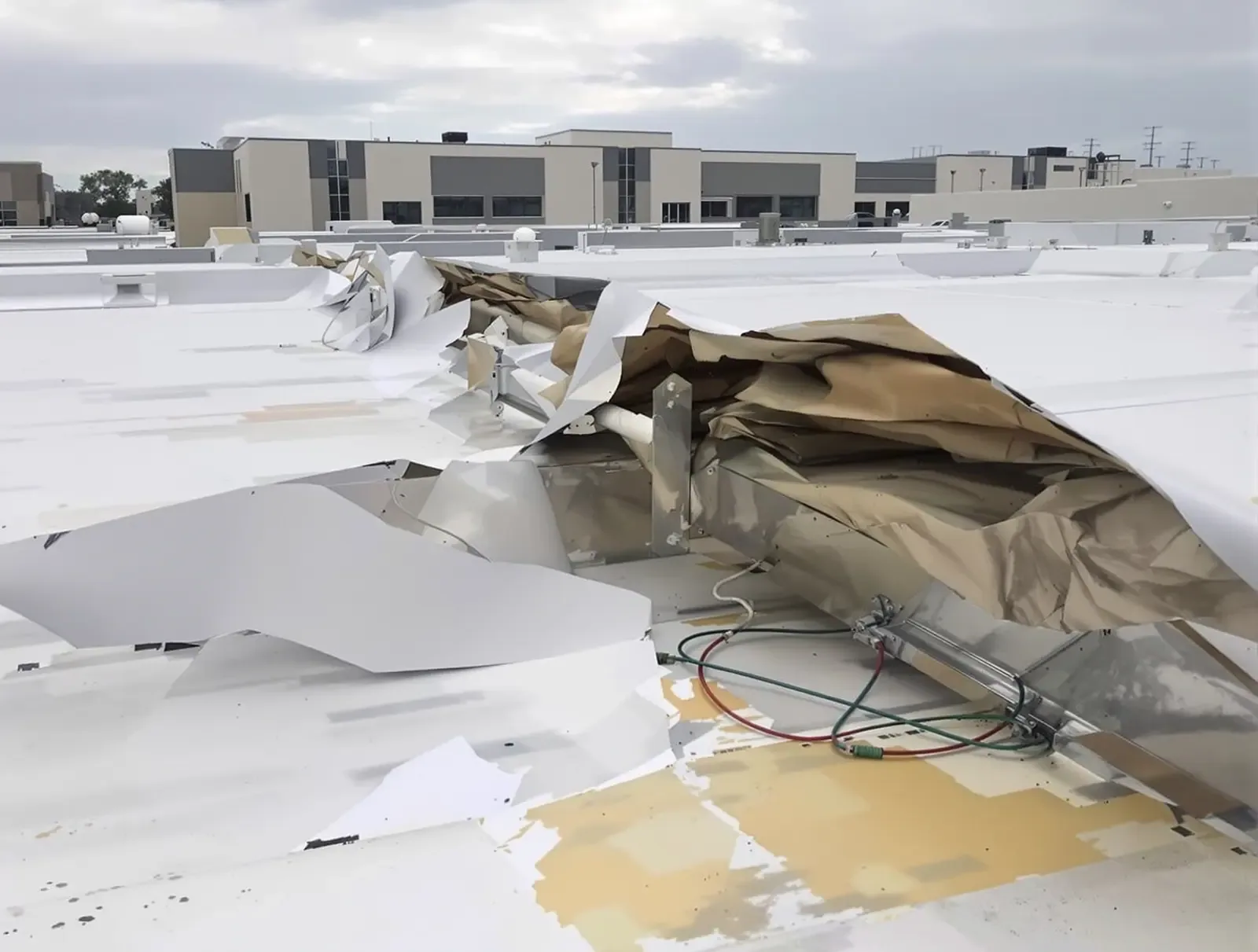
After a storm we inspect the building and write what is there. Hail damage, where present, shows as bruised or fractured membrane, dented metal and displaced granules, and each mark is located and photographed. A hail repair scope covers only what the record supports. Where wear predates the storm, the record says so, and the owner and the carrier read the same picture.
Heat is the quieter stress. At the regional airport, July and August highs sit near 96 degrees and 100-degree days average 20.2 a year. Membrane, sealant and flashing all age faster under that load, which is why the inspection checks sealed laps and edge metal before it checks anything cosmetic.
Options review: repair, restore, recover or replace
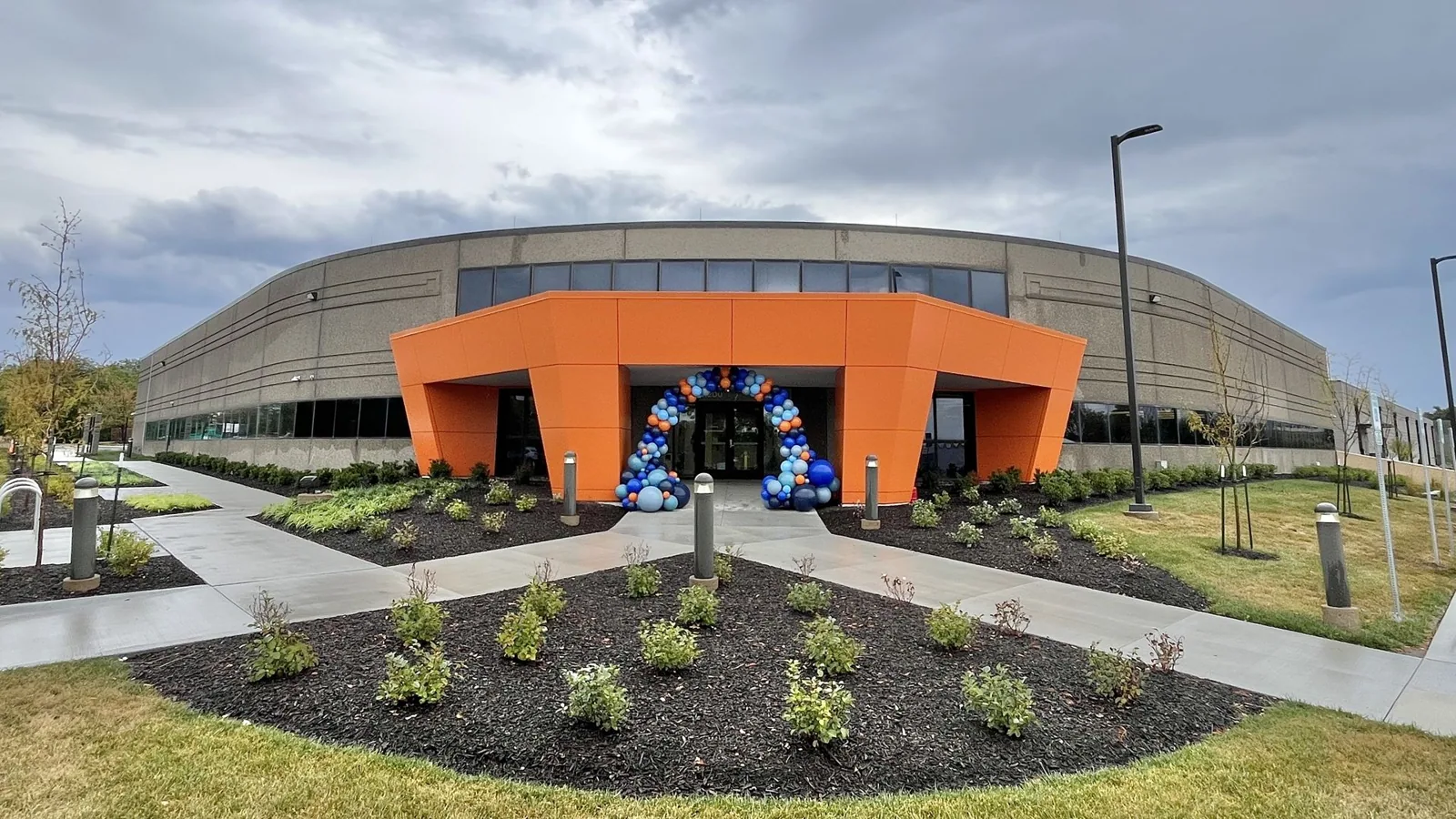
Every roof zone gets one of four recommendations, and each comes with the reasoning. Repair applies when the membrane is sound and defects are local. Restoration, such as a coating over a clean, dry membrane, applies when the surface is worn but the assembly beneath it is still good. A recover adds a new membrane over a dry, sound existing roof where the deck and insulation can carry it. Replacement applies when moisture is widespread or the layers have reached the end of their service.
Cost follows the choice and the building. Tear-off and disposal are larger lines on a replacement. Access, lift time and interior protection drive the price of occupied buildings. Weather holds add risk on any open section. The scope shows these as separate lines, so an owner can compare two plans on their parts and not just on a total. A coating restoration priced beside a replacement makes that comparison concrete.
Neighboring districts and the larger program
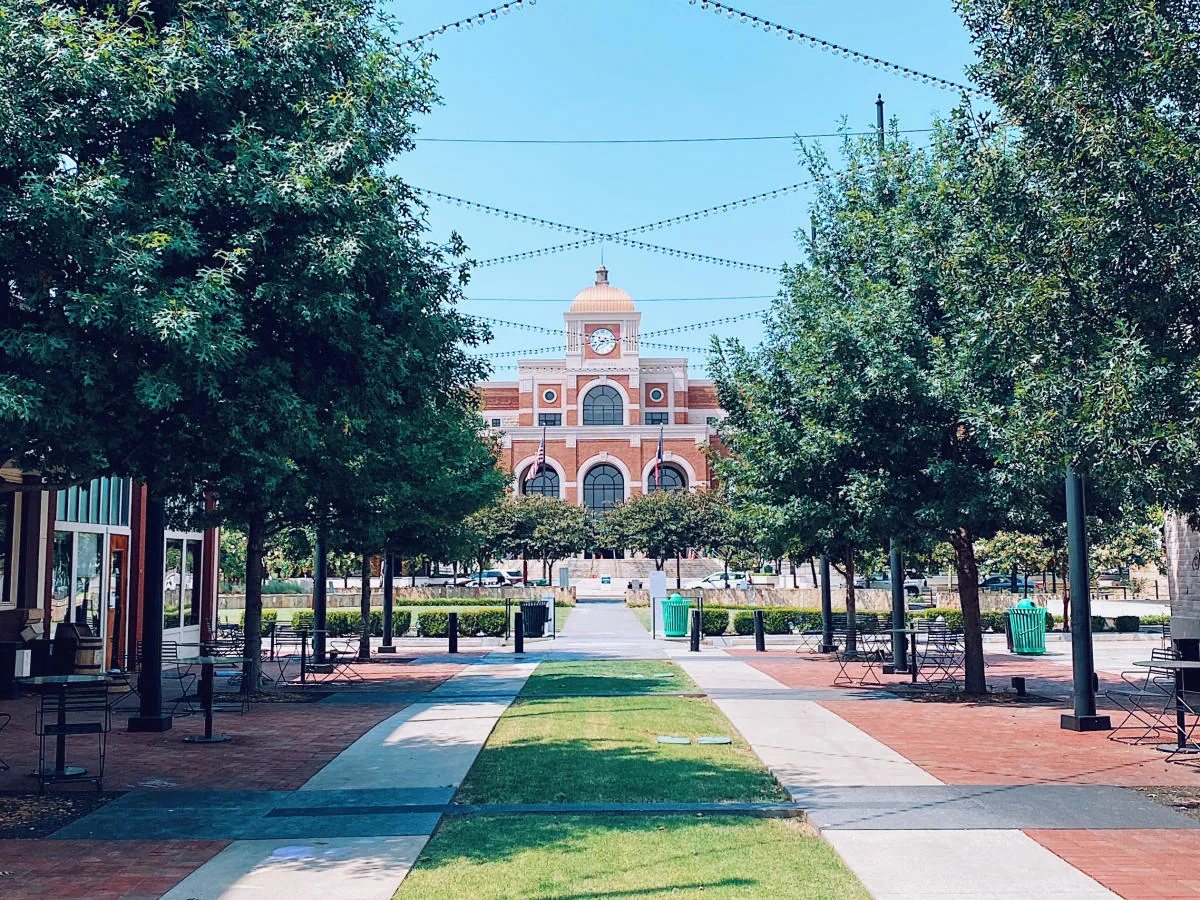
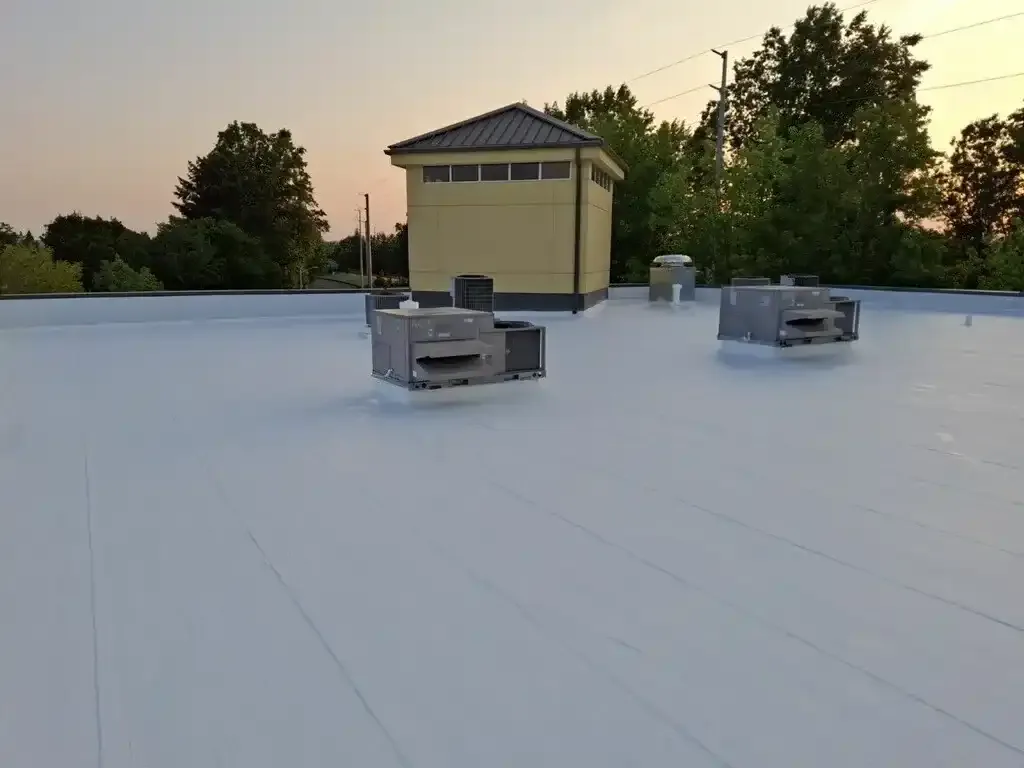
Owners in Old Town North often hold or manage property in the districts around it. Elsewhere in the city, Old Town is the city's historic downtown, and the Northern Gateway runs along the west side of I-35E. A manager responsible for buildings in more than one of them can use one inspection format across all, which keeps records comparable and the capital request easier to defend.
At the end of a job the closeout packet gathers photographs, a plan of the repaired zones, materials and warranty paperwork for the next owner, lender or inspector, with every photograph tied to the roof-plan position where it was taken. Roofs under a manufacturer warranty add a step: the warranty terms are read before repair work starts, so that a patch made outside the required method does not put coverage at risk. The warranty file stays with the roof record.
Commercial Roofing Questions
What should an owner gather before the first roof inspection?
Any earlier roof plan, repair receipts, warranty papers and tenant complaints about leaks. They need not be tidy. We sort them against what the roof shows, and the dated record that results replaces the loose pile.
Does a district plan change what a roof must meet?
The plan guides investment and does not itself set roof specifications. Permits follow the codes in force. Lewisville has adopted the 2021 International Building Code, and the permit office names the edition and amendments before design begins.
When is it worth replacing a roof before a tenant fit-out?
When the roof is near the end of its life and the fit-out adds equipment or penetrations. Opening the roof once for both saves access cost and removes a future leak path. The survey shows whether the roof is in that position.
How can a hail claim be kept separate from older wear?
By having a dated record from before the storm and a new inspection after it. The photo sequence from the same positions shows what changed. Without the earlier record, the core and moisture readings help sort fresh damage from age.
What does a coating restoration need in order to work?
A clean, dry, well-attached membrane with sound seams and flashing. The moisture reading and a core confirm that. A coating over wet insulation traps the problem, so the survey decides before any product is chosen.
Related
Related Roofing Work
Due Diligence Roof Surveys
Hail Damage Roof Repair
Roof Coating and Restoration
Old Town
Northern Gateway
Roof Warranty Management
Schedule an inspection pass and start the file
Send what you have: the roof plan, repair history and tenant complaints. You will receive a dated condition record with photos, findings and recommended next steps, marked by roof zone for repair, restoration, recover or replacement.