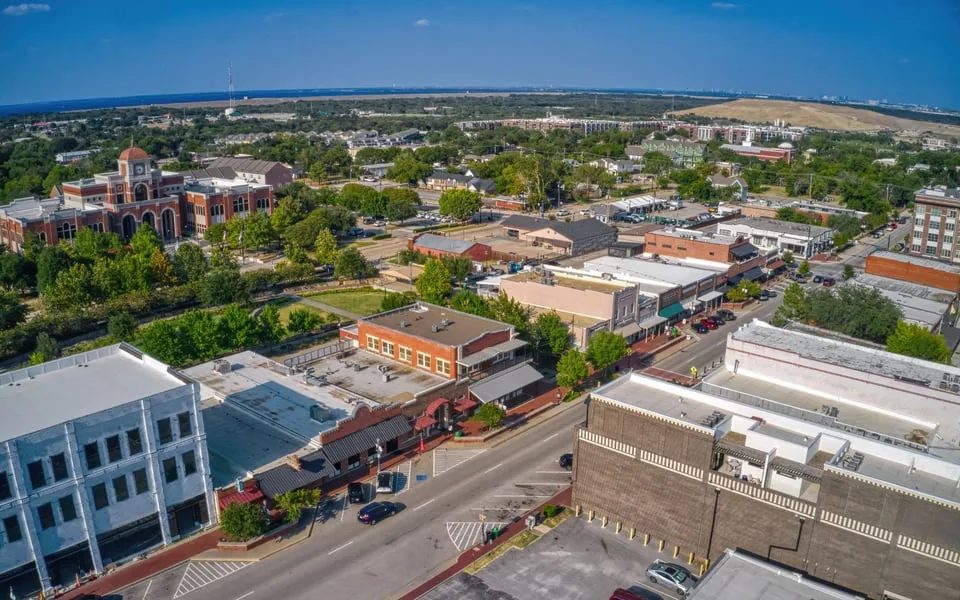
PVC Roofing in Lewisville, TX
Home // Roof Systems //
Overview
PVC Roofing in Lewisville
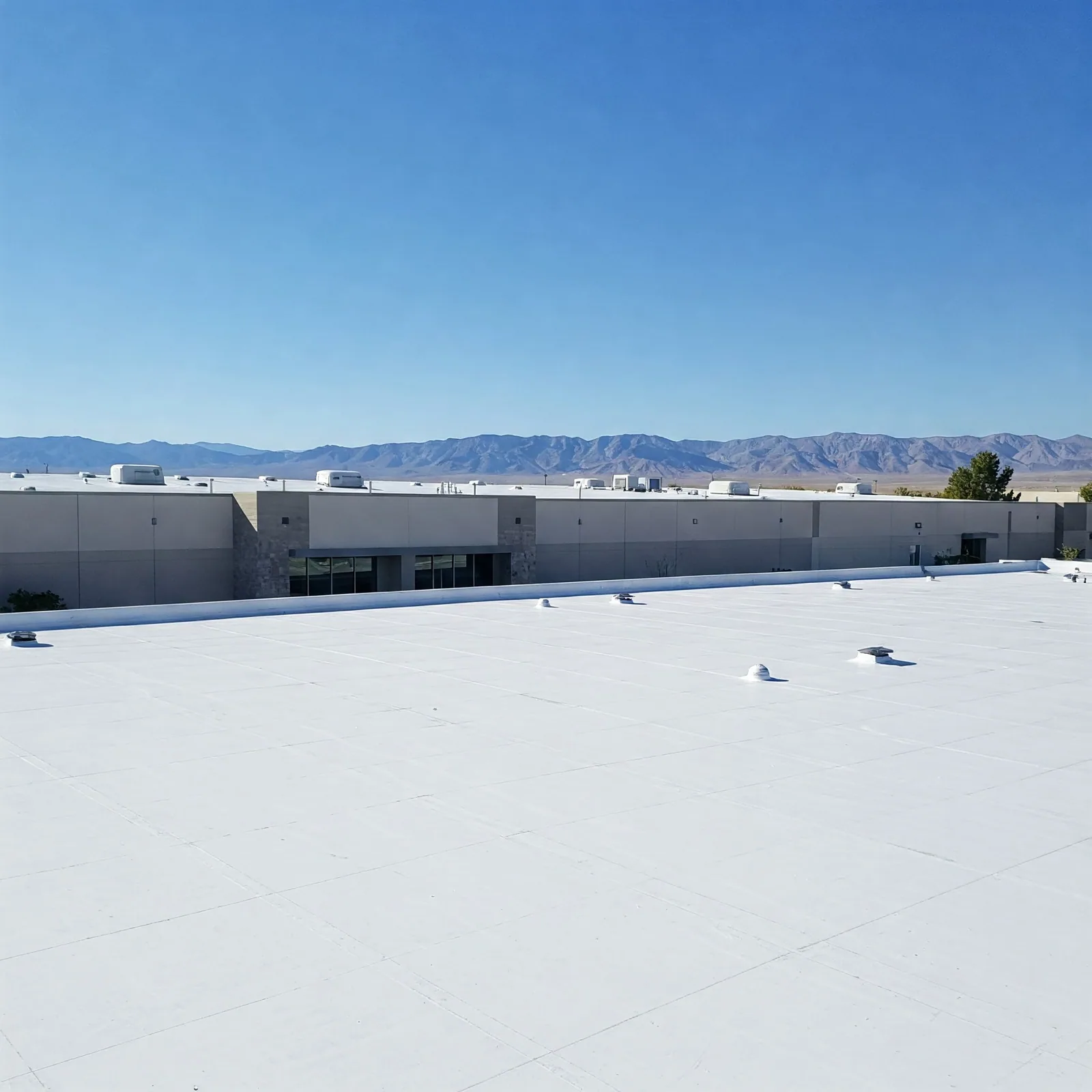
A white PVC roof with a dark halo around a kitchen exhaust fan tells a short story: the sheet has been taking something from the air for years, and the question is what that exposure has done to it. PVC is a single-ply thermoplastic membrane with hot-air welded seams, widely used where roofs meet grease, oils or chemical vapors. In Lewisville, TX, with retail, restaurant, healthcare-related, industrial and office buildings spread along I-35E and SH 121, it is a system that fits a roof where exposure is the problem.
We start with the roof's exposure record: what vents onto the roof, where it lands, how long it has done so and what the membrane looks like where it lands. The condition record that follows ties each finding to a source.
Evidence sequence: tracing exposure to its source
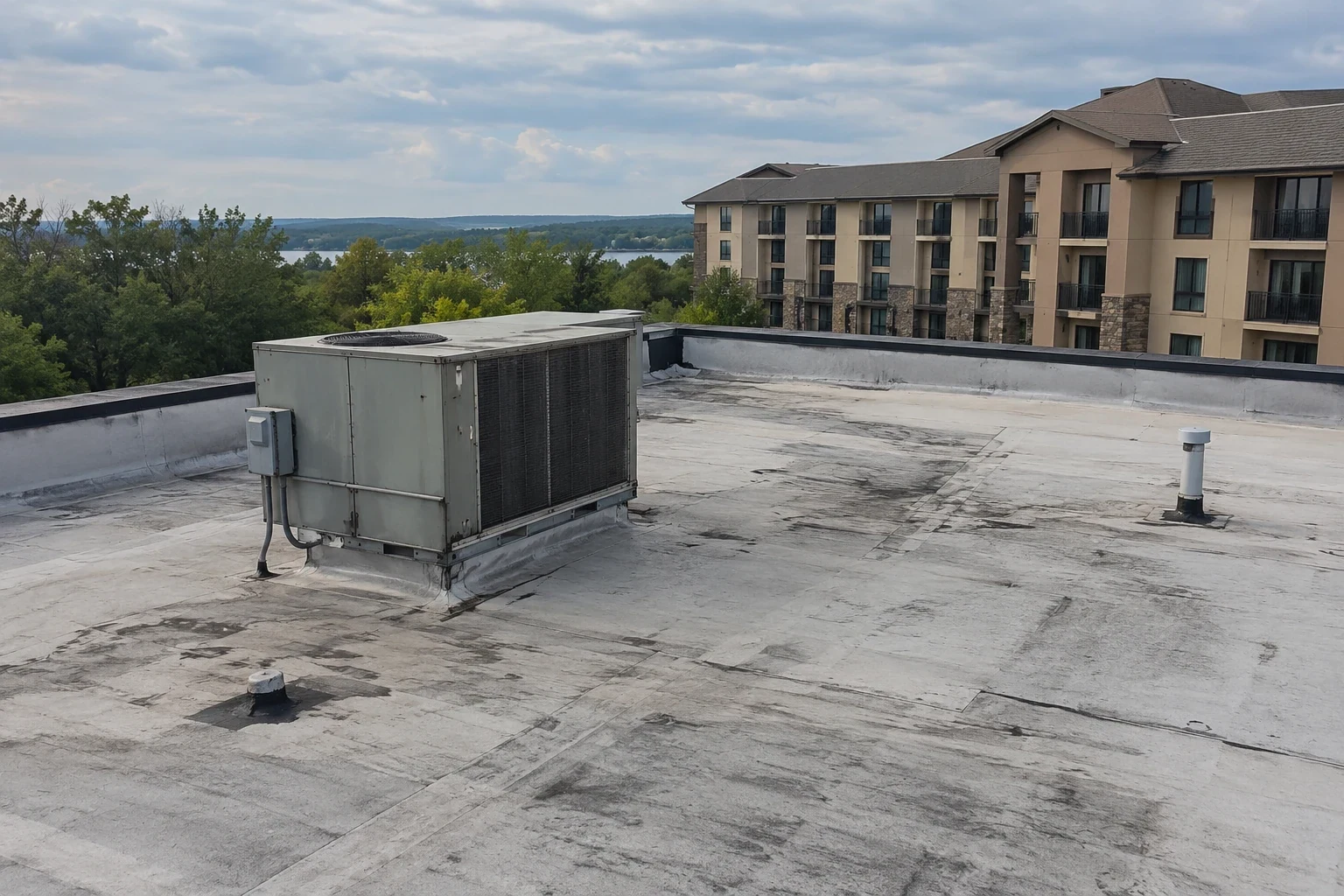
A PVC roof records its history on the surface. Grease from an exhaust fan darkens a plume downwind of the fan; chemical vapor from a process vent leaves staining and sometimes stiffens the sheet; ponding water leaves a ring. We photograph the whole roof zone first, then work toward each stain, so the exposure pattern is visible before the detail is.
The point is to find the source and decide whether it is controlled. A grease pan that is full or missing will keep feeding the membrane and will keep staining it. A vent that discharges at the roof surface instead of above it will do the same. Where the source can be fixed, the repair holds. Where it cannot, we record that the area will age faster, and the options review prices a protective layer or a different system for that zone. The sequence is a dated set of photographs and a roof plan with each source and each stain marked.
Inspection record: seams, flashings and surface condition
PVC seams are welded, and like any welded system the quality of the weld is the first thing we check. We probe seam edges, look for an even bead along each lap and mark any place where the edge lifts. At walls, curbs and penetrations we look at the flashing termination, the corners and the prefabricated boots.
- Seam laps and the intersection of three sheets, where a weld is hardest to make
- Flashing terminations and sealant joints at the top of each wall
- Prefabricated corners and pipe boots, checked for cracks and splits
- Surface condition near vents, hoods and fans
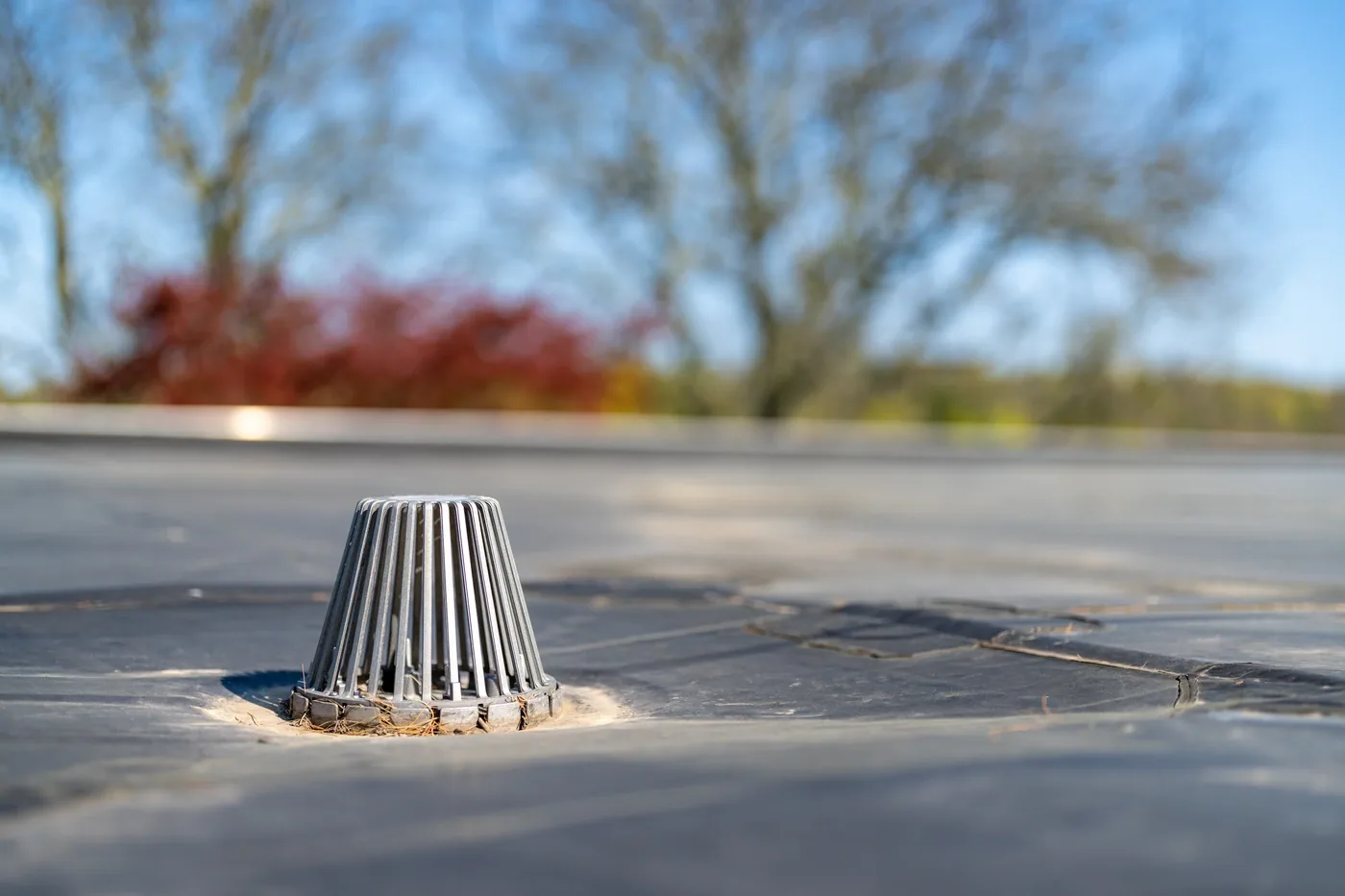
- Drains, ponding and the membrane around them
We also look at how the membrane is attached. A mechanically attached sheet has fasteners and plates along the seam; a fully adhered sheet is bonded to the substrate. Each is checked for the failure it is prone to, and each finding goes on the roof plan with its date.
Attachment detail: plasticizer loss and the aging membrane
PVC contains plasticizers that keep the sheet flexible. Over years of heat and exposure, some plasticizer can leave the membrane, and the sheet can stiffen and shrink. That shows first at details: a flashing pulled tight against a curb, a corner that has opened or a seam end that has lifted. Heat speeds the process, and a Dallas-Fort Worth summer supplies plenty of it, with mid-nineties highs through July and August and some twenty days a year at 100 or more.
We press, flex and probe at the details to test flexibility, and we look for shrinkage at walls and curbs. A flexible sheet can be patched and welded. A stiff, shrunken one will often fail again beside a repair, so the record says so and the owner decides whether a short-term fix is acceptable. Compared with TPO, PVC generally carries more chemical resistance, and the choice between them comes from the roof's exposure.
Repair boundary: how a PVC repair is drawn
A small puncture or tear on flexible PVC gets a welded patch with generous overlap, after cleaning and a check of the surrounding sheet. A failed seam is cleaned and re-welded. A flashing that has pulled away is replaced with a formed piece or a prefabricated corner, with a new termination. Repairs on contaminated areas need the surface cleaned back to a weldable condition, and sometimes that means cutting out the area and welding in a new section.
Hail is the other major cause. It reaches the Metroplex almost every year without reaching every roof. After a storm we look for bruises, punctures and seam damage and mark them against older wear. A membrane puncture repair on dry, flexible PVC is routine; widespread damage or wet insulation points to a larger scope.
Work window: repairs on kitchens, clinics and process buildings
PVC roofs tend to sit above buildings that cannot easily stop: restaurants, healthcare-related offices, labs and process areas. A repair near an exhaust fan may need the fan off for a short period, and a tear-off above a kitchen needs a plan for odors, grease and fire safety. We ask the manager about operating hours, shutdown rules and any restrictions, then set a work window that keeps the occupied space protected.
Hot work is limited on many sites, and PVC welding uses hot air, not open flame, which helps. Still, we record the rules each tenant gives us and the times each section is opened and closed. For a full roof replacement or a staged project, the staging follows an occupied-building reroofing plan, with intakes covered and entrances kept clear.
Options review: keep, restore or change the system
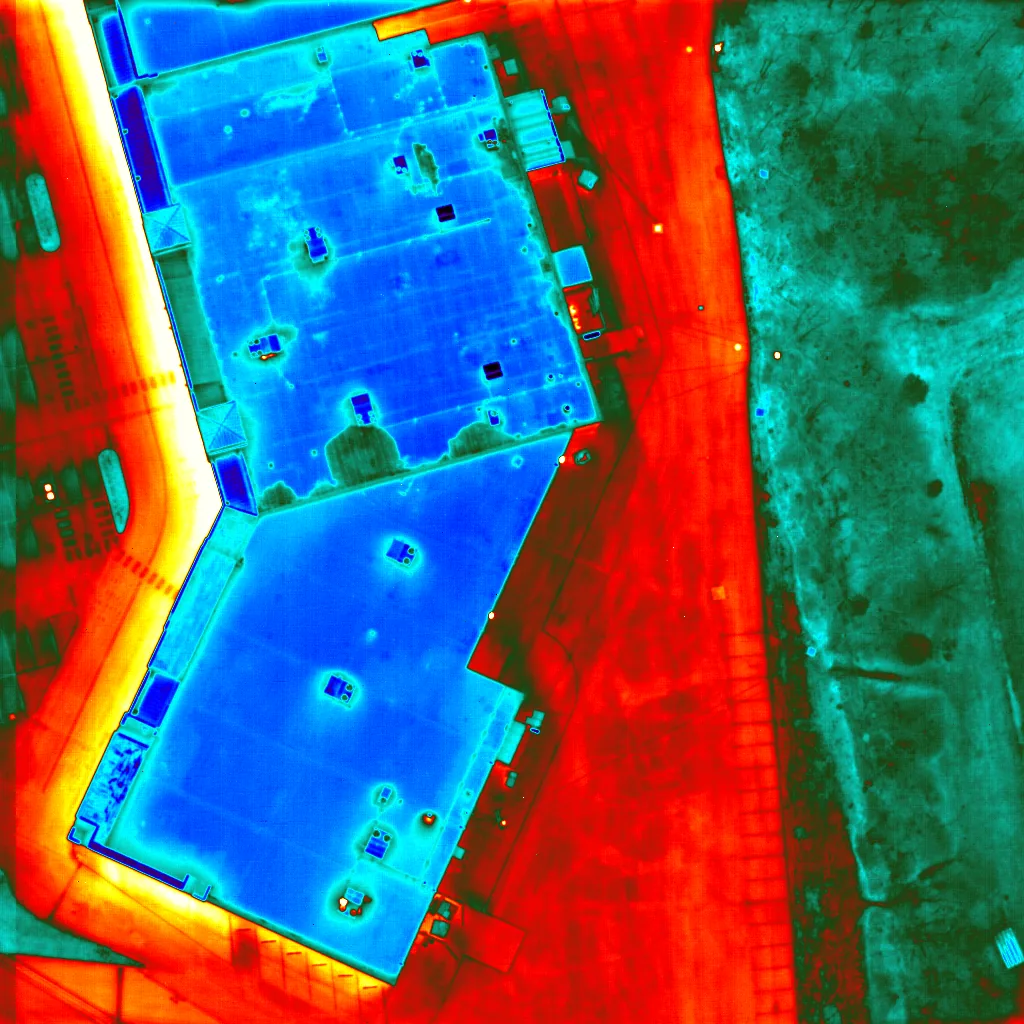
When a PVC roof has aged, the options are repair, a coating restoration where the roof qualifies, a recover or a replacement. The moisture reading is the gate: dry insulation keeps repair, restoration and recover open, while saturated insulation moves the decision toward removal of the wet material or replacement.
Where exposure is the issue, replacement is the chance to change the detail that caused it, for example raising a vent, adding a larger grease containment or putting a protective sheet beneath the fan. If chemical exposure is mild, KEE, a PVC-alloy membrane made to resist more exposure and plasticizer loss, may be worth pricing next to standard PVC. We lay out the options with the findings, so the manager sees why each route is open or closed, and an owner with several roofs can feed the result into roof capital planning.
Closeout documentation: the exposure file
The closeout packet records the membrane, thickness if known, attachment method, insulation, flashing details, seam test results and the exposure sources found on the roof. It lists the corrective steps taken and those recommended to the owner or tenant, such as grease containment maintenance. Photographs run by roof zone, with before and after views of each repair.
A permit for this work is reviewed under the city's current edition and amendments; Lewisville's adopted codes include the 2021 International Building Code. Owners with restaurants or clinics in Old Town Lewisville or along the Business 121 corridor can use the same packet at each site.
Commercial Roofing Questions
Why is PVC used above restaurants?
Many membranes soften with grease, and PVC resists it better than most. Even so, the grease source still has to be contained, or the area will age faster.
What does plasticizer loss look like?
Stiffness, shrinkage and cracking at details. Flashings pull tight against curbs and seams lift at the ends, so we flex and probe those spots.
Can an old PVC roof be coated?
Sometimes, if the sheet is sound and the insulation is dry. The surface must also be cleaned and tested for adhesion before any coating goes on.
Is hail damage visible on PVC?
Often as bruises or small punctures. Dry, flexible sheet can be patched, and the record separates new marks from older wear.
Who decides the code path for a PVC replacement?
The permit office, before pricing is final. The amendments in force at filing decide the details, and the adopted list that applies starts from the 2021 International Building Code.
Related
Related Roofing Work
TPO Roofing
Membrane Puncture Repair
Commercial Roof Replacement
Occupied Building Reroofing
KEE Roofing
Roof Capital Planning
Start with an exposure record
Schedule an inspection and receive a condition record with photos, exposure sources, seam findings and recommended next steps marked patch, repair or replace.