
Warehouse Roofing in Lewisville, TX
Home // Property Types We Roof //
Overview
Warehouse Roofing in Lewisville
The last roof plan and the service log, side by side, tell a warehouse owner whether a fresh dent or a fresh stain is actually new. A warehouse roof that has stood through a few Metroplex seasons collects small repairs, and without a dated record the next inspector cannot say which marks came from the spring storm and which were already there. So the first pass on any warehouse roof is not a repair. It is a photo sequence: the whole roof zone from a fixed point, then each penetration, seam run and drain, then the details that control water entry.
What the pass can establish is a baseline. It cannot, by itself, assign blame to a weather event, and it should not try to.
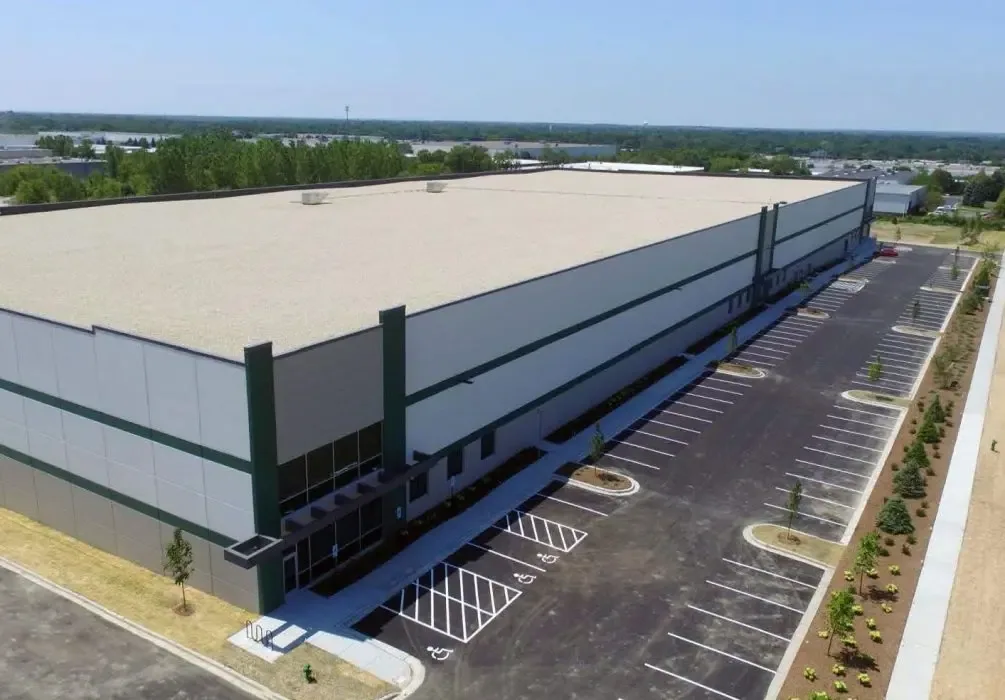
Demand context: warehousing along I-35E and SH 121
The Texas Comptroller lists warehousing and storage among the fastest-growing industries in the Metroplex between 2012 and 2022, and Lewisville's own planning materials set aside industrial park land alongside commercial and mixed-use districts. In The Colony, the city describes commercial and warehouse development along SH 121, and Flower Mound lists distribution among its local employers.
For an owner in the Eastern Gateway, where the city describes retail, industrial and higher-density development meeting at the SH 121 entrance, the practical point is access. A dock yard with trucks staged at all hours leaves a narrow window for lifts and material drops, and the work window gets written before the scope is priced.
Roof zone map: what lies under the membrane
We divide the roof into numbered zones and pull a core in each zone that the owner allows. Each core exposes the layer stack, its thickness and the moisture state of the insulation. Warehouses commonly carry a single-ply sheet or a modified bitumen roof over rigid board on a steel deck, but the core, not the building type, decides what repair method fits.
Attachment matters as much as the sheet. A mechanically fastened system relies on the pull-out strength of every fastener, and a ballasted or adhered system relies on something else entirely. The zone map records which one is under each section, so a repair on the north half is not specified from what was learned on the south half. A TPO membrane over fasteners is repaired differently from one fully adhered.
Where a zone has been recovered once already, the core also counts the layers. Two roofs stacked on one deck carry more dead load, hold heat between them and hide moisture better than a single roof does, so the layer count shapes the repair boundary and any replacement price.
Storm record: separating a report from the building
Large hail, damaging wind, flooding and tornadoes turn up somewhere in the Metroplex almost every year, per the weather service, and a given warehouse may be missed in any of them. So a storm headline works as a prompt to look, and the roof itself supplies the finding. We compare the current photo sequence with the prior one, mark bruises, punctures and displaced fasteners, and note which ones sit near older repairs.
Where hail damage is visible, a moisture reading shows whether the concern stays at the surface or has reached the insulation. A hail damage repair scope follows from that finding, and an insurance conversation, if there is one, starts from a dated record and not from a forecast.
Heat load: summers that work the membrane
Summer here is long and hot: the regional airport averages about 20 days a year at 100 degrees or more, with normal July and August highs near 96. A dark or aged membrane on a large warehouse deck runs hotter than the air, and the daily swing stresses seams, flashing terminations and sealant. Expansion shows up first at long straight runs: parapet flashings that pull loose, and coping joints that open.
We check those runs on every pass and log what we find with a location and a clear image. A reflective surface can help, and a cool roof conversion is worth pricing when the existing membrane is near the end of its life anyway. It is rarely worth doing to a roof that is otherwise sound.
Work coordination: dock schedules and racking below
Roof work above stored goods needs protection below and clear stop conditions. The access log names who may be on the roof, which hatch or ladder is used, and who confirms that the dock side is clear before a lift moves. If product sits under a section, the plan marks it and the section is worked in the driest part of the week.
Rooftop equipment is the other constraint. Exhaust fans, smoke vents and skylights each have a curb and flashing that can be reset only once. Our skylight and penetration flashing pass numbers every one of them and photographs it before and after, so the decision file shows which details were replaced and which were only resealed.
Weather is the second schedule. Spring is the wettest season in the region, so work above sensitive stock is planned around the forecast, with a temporary seal tested before the crew leaves for the day and the time of that test written into the access log.
Options review: repair, recover or replace
The moisture reading and the core set the options. A roof with dry insulation and isolated failures is a repair candidate, and the repair boundary is written on the roof plan. A roof with sound but tired insulation may take a recover. A roof with wet insulation across a large share of its area is usually headed for replacement, because patching wet board only moves the leak.
We put the three paths next to each other with their likely sequence, disruption and record requirements. The owner picks, and the file explains why.
Cost drivers are plain on a warehouse. Roof area sets material volume, penetration count sets detail labor, tear-off depth sets disposal, and the lift location sets how long crews spend moving material. A roof with a few dozen curbs and a busy dock priced like an empty deck would be a poor estimate, and the scope lists those items one by one so the owner can see where a change in the work window would move the number.
Closeout packet: what the owner keeps
The packet holds the zone map, core photographs, moisture readings, product sheets for anything installed, the access log and a dated finding for every detail touched. A separate distribution center or flex industrial building gets the same format, so a portfolio can be read the same way across buildings. When the next storm report arrives, the owner has a baseline to compare it against.
Commercial Roofing Questions
Should we inspect after every hail report?
The size of the report and the age of the roof decide. A small report over a young roof with a clean baseline may only need a short pass. A large report over an older roof with prior repairs justifies a full photo sequence and moisture reading.
What makes a warehouse roof repairable instead of due for replacement?
The insulation condition. Dry insulation and isolated defects keep repair on the table. Wet insulation across most of a zone moves the answer toward replacement.
Can crews work above racked inventory?
Yes, when protection below is in place, stop conditions are written, and the section is closed the same day. The access log records who confirmed it.
How is a new dent told apart from older wear?
By comparing dated photographs from a fixed point. Without a prior record, the inspection pass sets the baseline and later passes compare to it.
What does the owner get after the work?
A closeout packet: zone map, core and moisture results, product sheets, the access log and photographs of every detail touched.
Related
Related Roofing Work
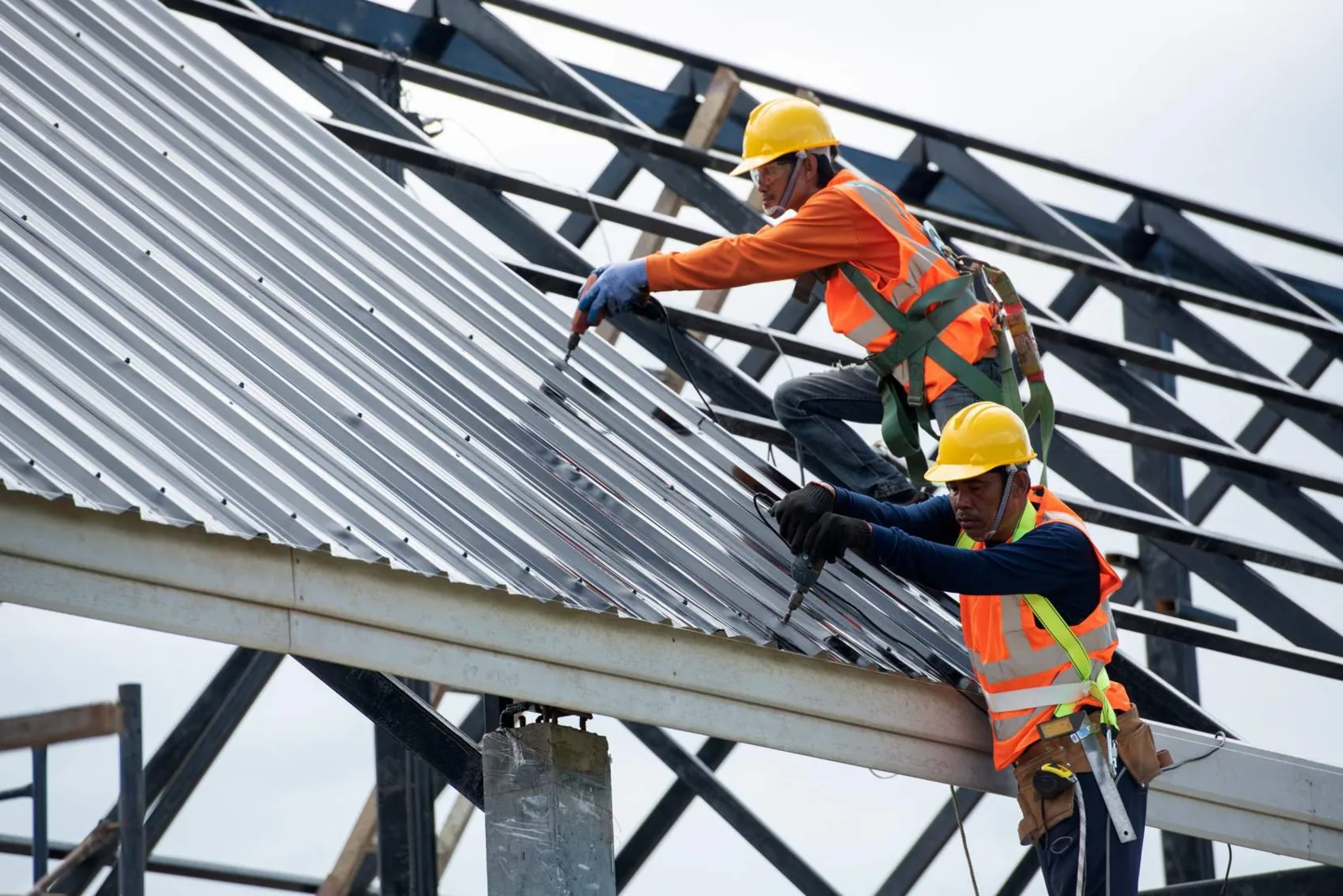
Eastern Gateway
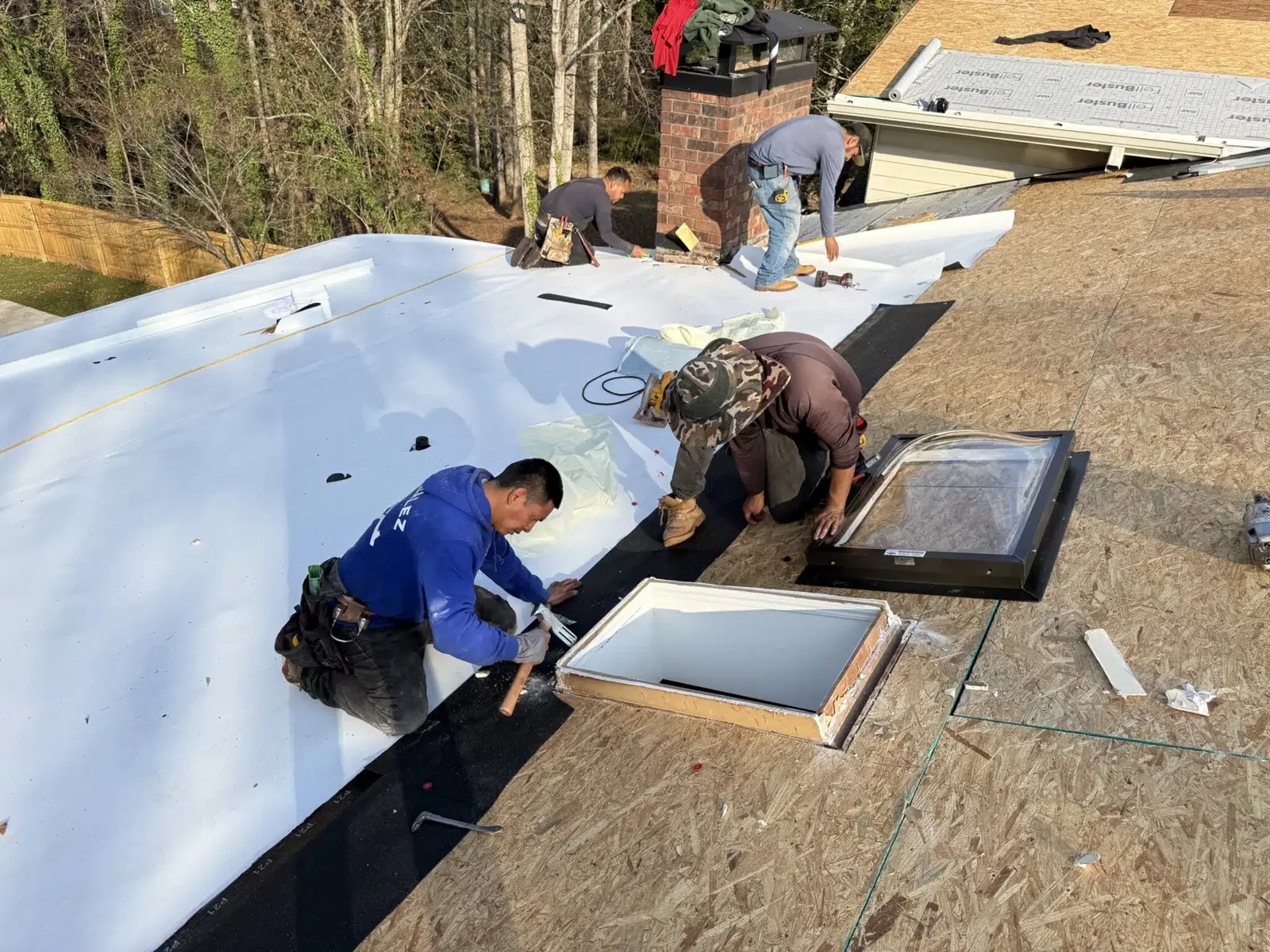
TPO Roofing
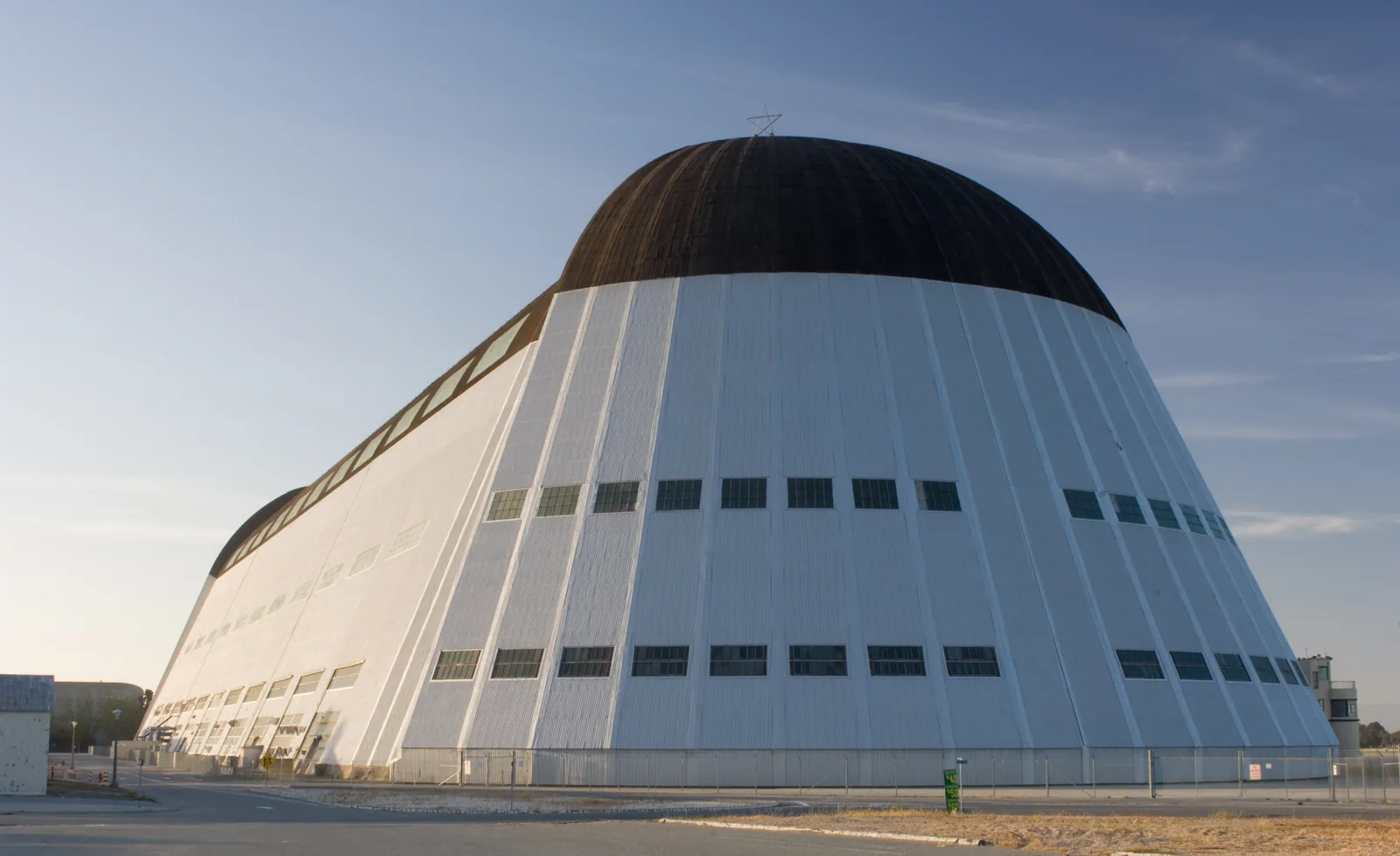
Hail Damage Roof Repair
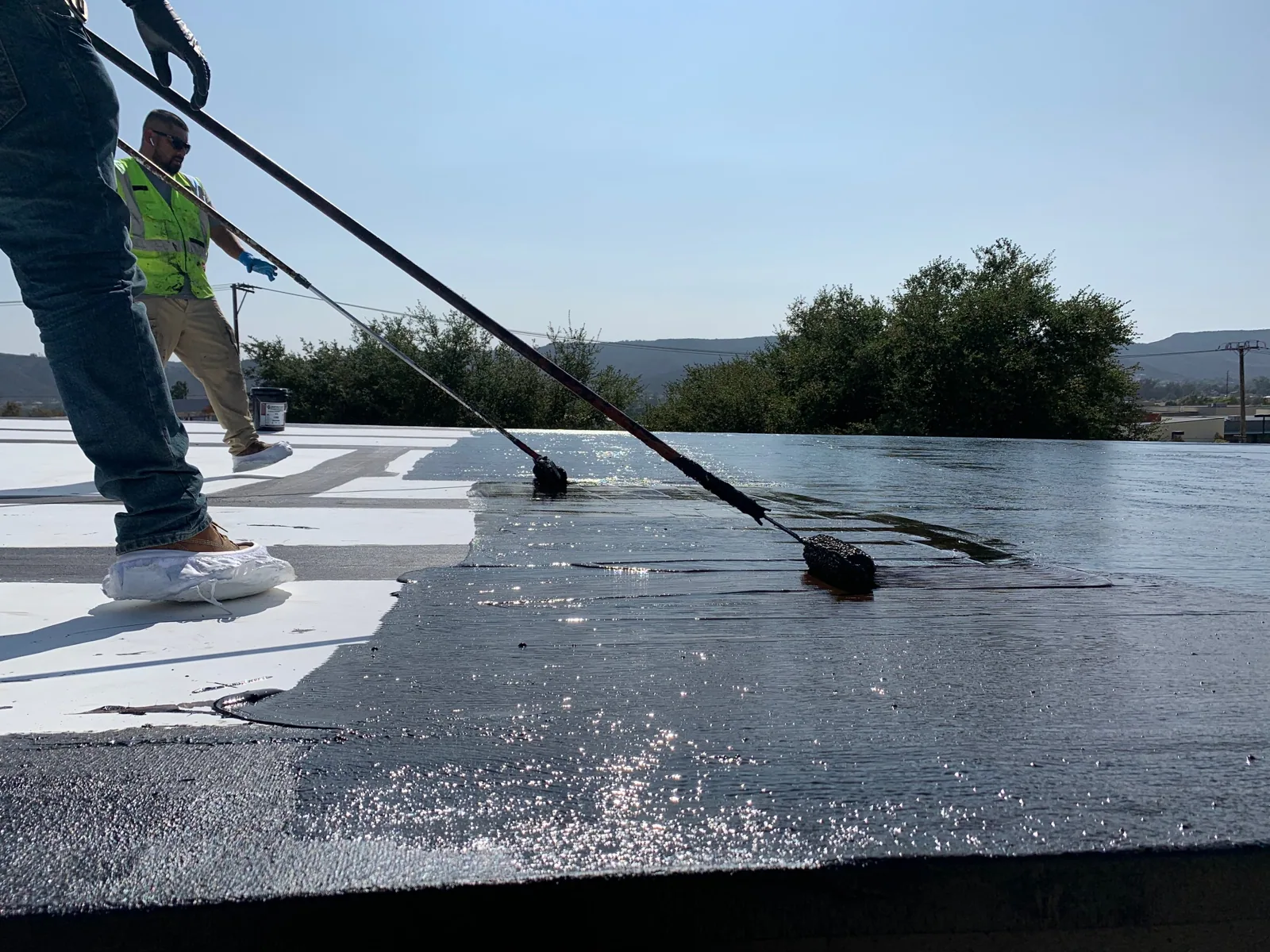
Cool Roof Installation
Skylight and Penetration Flashing
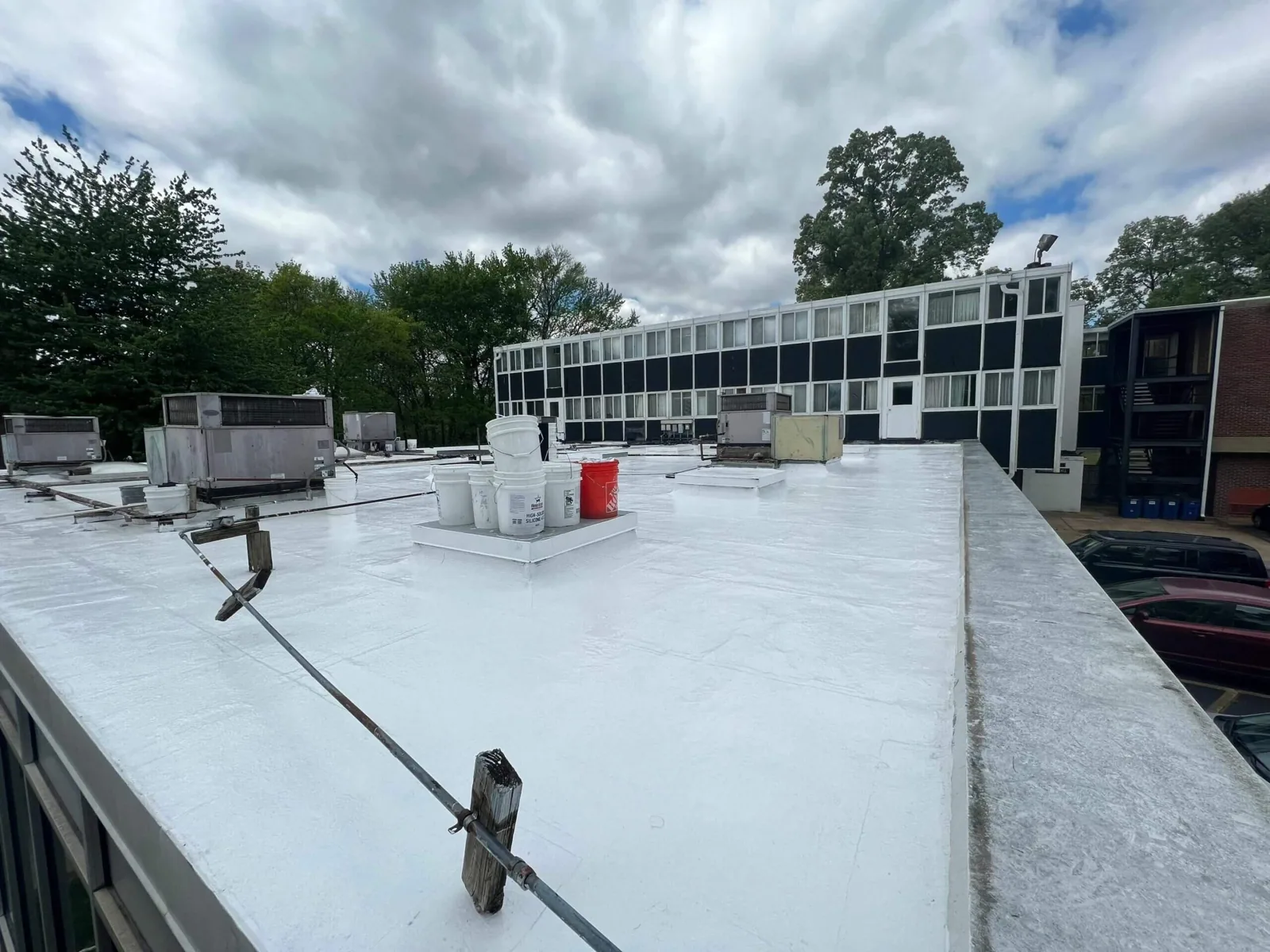
Commercial Roof Replacement
Schedule an inspection pass
Schedule an inspection and receive a dated condition record with photos, findings and recommended next steps, marked repair, recover or replace by roof zone.
