Roof Recover and Overlay Systems in Lewisville, TX
Overview
Roof Recover and Overlay Systems in Lewisville
The first document a recover needs is a moisture reading taken across the existing roof, not a quote. Laying a new membrane over wet insulation traps the water under a fresh surface, and the failure that follows is slower and harder to trace than the one you started with. For a building in Lewisville, TX, the question is whether the roof you have is a sound base, and the inspection pass is how we find out.
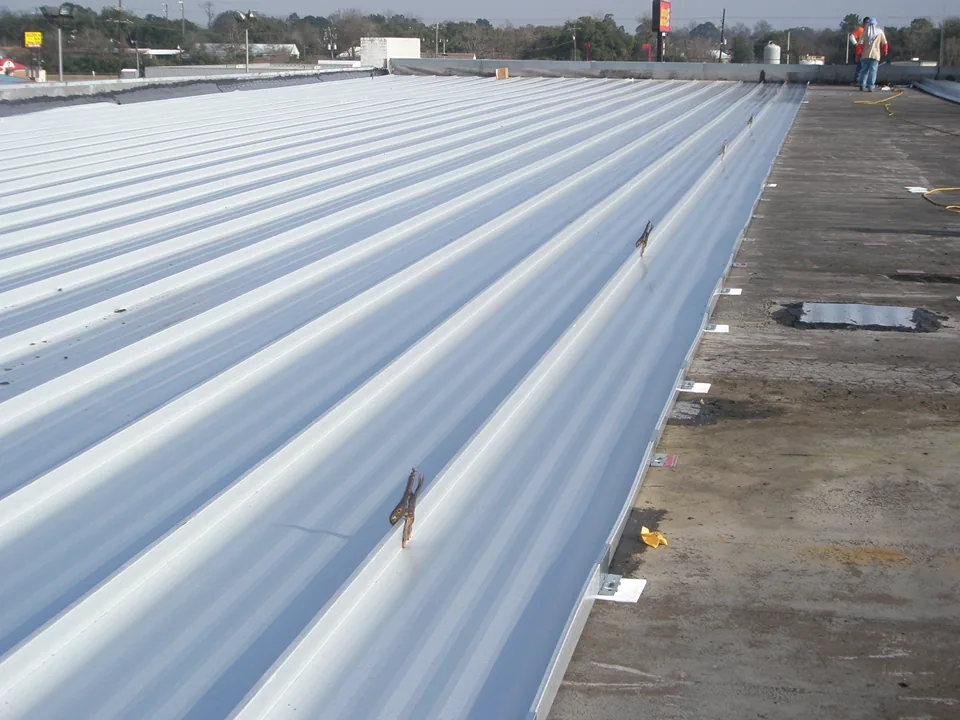
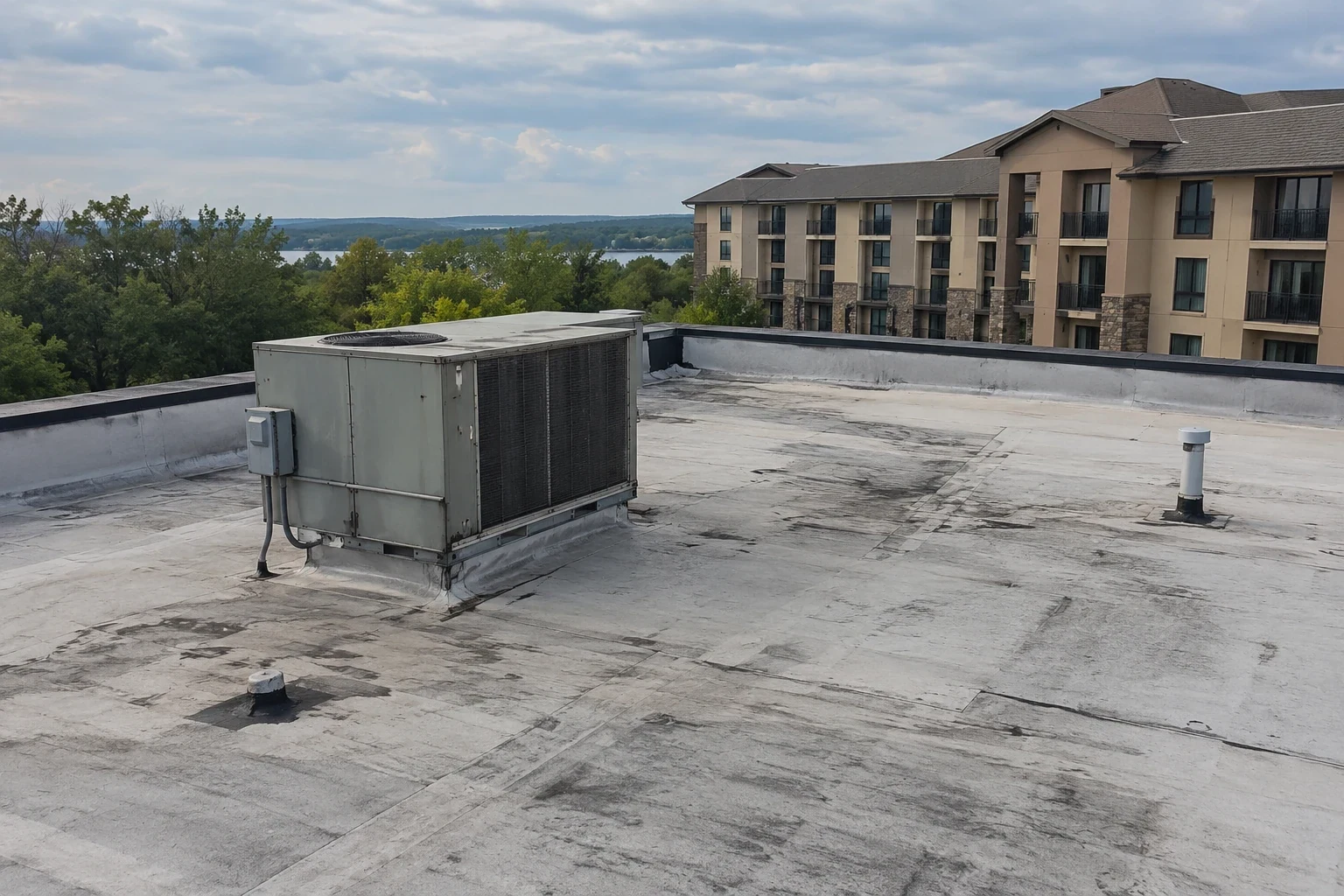
A recover, sometimes called an overlay, adds a new membrane or a new insulation and membrane assembly on top of the old roof instead of removing it. It leaves the tear-off and most of the tenant disruption out of the job. It also depends on conditions that have to be demonstrated one by one, because a recover that skips a failed test costs more in the end than a replacement would have.
Moisture reading: the test a recover has to pass
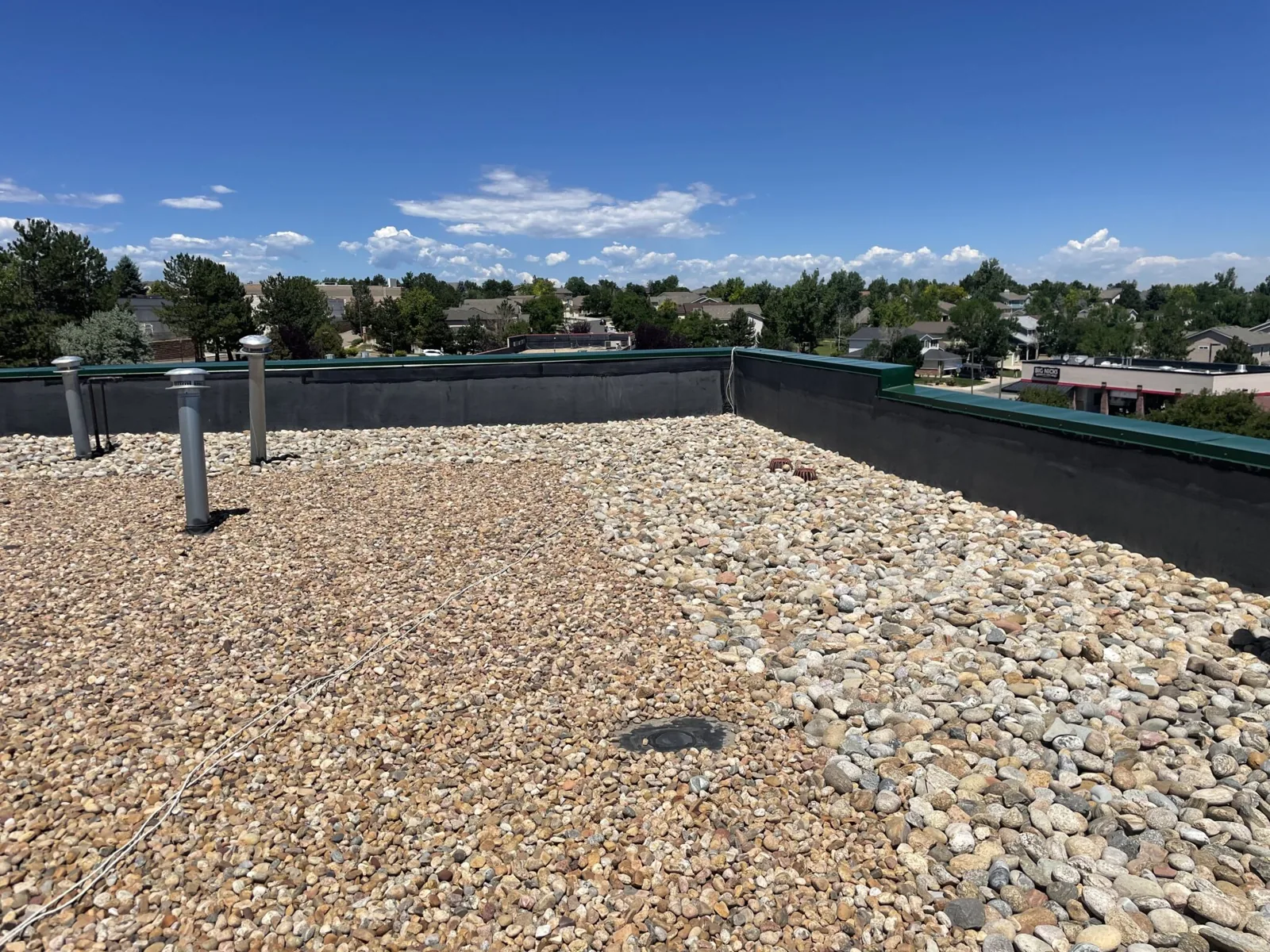
We begin with an infrared scan on a clear evening, when wet insulation holds heat longer than dry material around it. The scan marks suspect areas, and core cuts confirm what the scan suggests. Each cut is photographed, labeled by roof zone and patched the same day, and the result is a map of dry and wet areas.
The pass mark is simple to state. If the wet area is small and local, it can be cut out and replaced before the overlay goes down. If wet insulation runs through many roof zones, the base is not sound enough and a full replacement is the better decision. A moisture survey costs far less than the wrong choice, and it gives the decision file a number to point at.
Layer count: what the code and the deck allow
Codes limit how many roof coverings can sit on one deck. The city's adopted standards include the 2021 International Building Code, so the edition and local amendments in force for a given permit get checked before the scope is priced. Under the model code, a recover is generally not permitted where the existing roof already has more than one layer, where it is a certain tile or slate covering, or where the existing covering is not properly adhered.
The deck sets its own limit. Every added layer adds dead load, and a steel deck with corrosion at the flutes or a deck that deflects underfoot cannot take it. We walk the roof, probe the underside from the interior where we can, and record the deck condition at each test location. A recover goes ahead only when the layer count, the load and the deck all clear.
Attachment detail: fastening through the old roof
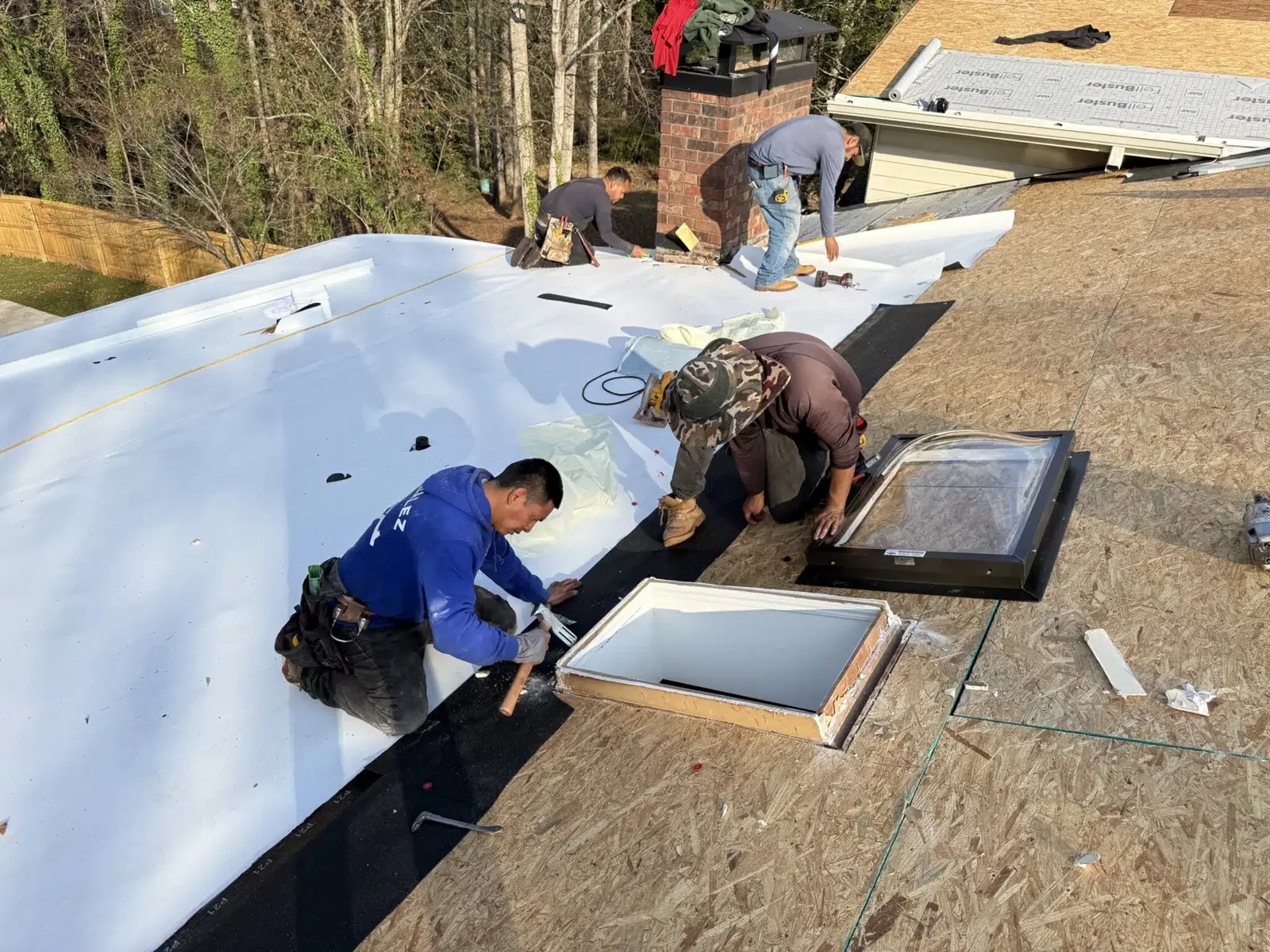
The new roof needs a base it can bond or fasten to. Over a smooth, clean existing membrane, a cover board may be adhered with foam or fastened through to the deck. Over an aged built-up or modified bitumen surface, loose gravel has to be swept or removed and blisters cut, flattened and patched. Each preparation step is photographed before the next layer covers it.
Fasteners need to reach the structural deck, which means penetrating the old roof and its insulation. A pull test on the roof shows the real attachment strength, and we record test locations and results because wind uplift ratings depend on them.
A cover board over the old membrane also gives hail a harder surface to meet. In a Metroplex that sees large hail nearly every year somewhere across the region, that impact resistance is part of the reason to specify one.
Repair boundary: the details a recover cannot hide
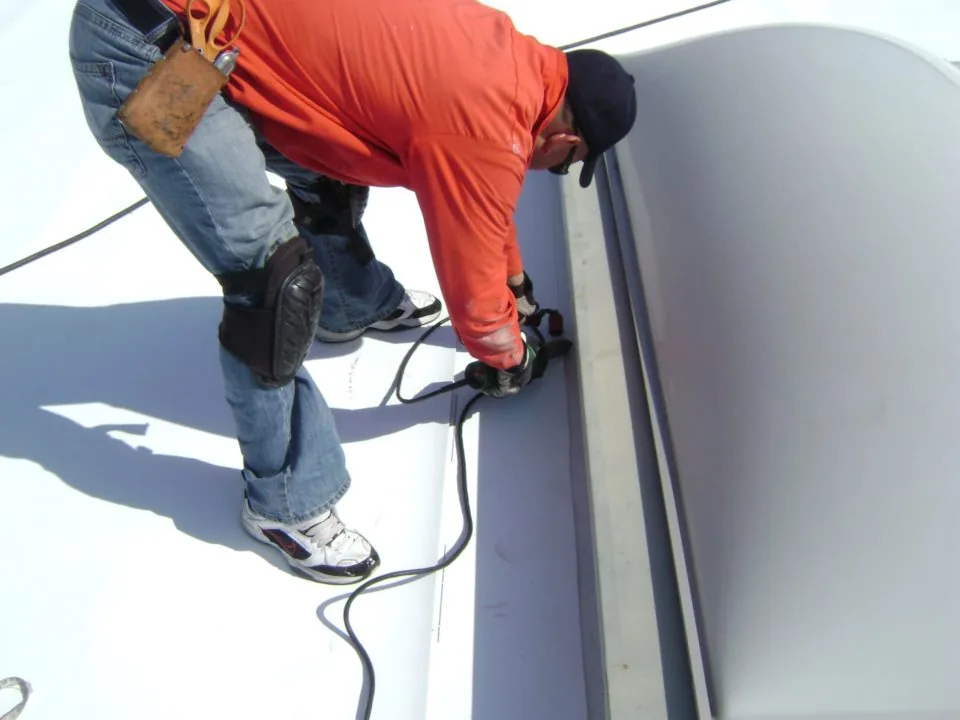
An overlay raises the roof surface by the thickness of the new assembly, and that has consequences at every vertical detail. Flashings at parapets, curbs and pipe penetrations have to be extended or replaced so they still stand high enough above the new surface. Drains and scuppers may need new sumps or extensions so water continues to leave the roof. We list them in the scope before any material is ordered.
Ponding is the other detail to settle. If water sits for more than a day or so after rain, a recover covers the problem without fixing it. We measure low spots, check the drain locations, and decide whether tapered insulation can correct the slope. Where it cannot, the owner learns that early, and the plan for ponding water becomes a line item rather than a callback.
Work coordination: a quieter job on a working property
Without a tear-off, the roof stays closed over the building during the whole job, and that matters on Business 121 and I-35E properties where offices, clinics and retail suites need to keep running. There is far less debris, no open deck after hours, and no demolition noise. Adhesives and heat welding still need to be timed away from air intakes, and rooftop units may need to be shut off briefly when the work reaches their curbs.
Along the Business 121 corridor, where commercial, office and mixed-use properties sit side by side, the sequence can follow the tenant list. The commercial buildings along Main Street in Old Town are each judged on their own roof plan. We start over the vacant bays or the storage suites, then move to the occupied ones, and the access log records what was open and when.
Options review: when a tear-off wins after all
A recover is the better path when the base is dry, the layer count is one, the deck is sound, and the existing membrane is adhered well. When any of those fail, the options change. A tear-off costs more up front, but it lets the crew see the deck, correct slope and replace insulation, which a recover cannot do.
Service life is part of that comparison. A new TPO or PVC membrane over a sound base can perform well, but the roof below still ages. If the existing assembly is near the end of its life, the owner may be buying a short-lived second roof. Summer heat runs the other clock, with about twenty days a year at 100 degrees or higher at the airport, and the new surface carries all of it.
Closeout documentation: what the recover leaves behind
The packet for a recover is more detailed than most, because two roofs now share one deck. It holds the pre-work moisture map, the core-cut photographs, the pull-test results, the layer schedule and the as-built flashing heights. A future manager reading the file can see that the overlay was a tested choice, and a later roof inspection has a clear starting point.
Commercial Roofing Questions
How do you know the existing insulation is dry enough to recover?
We do not rely on a visual check. An infrared scan finds heat patterns in the roof, and core cuts in the suspect areas confirm whether insulation is wet. The results are mapped by roof zone. Small wet areas are cut out and replaced, while wide wet areas rule out the overlay and move the decision toward replacement.
Which roofs are poor candidates for an overlay?
Roofs that already carry more than one layer, those with a deck that is corroded or deflecting, and those with widespread trapped moisture. Local code review under the adopted International Building Code edition is the final check before anything is priced.
Does a recover affect my roof drainage?
Yes, it can. The added thickness raises the surface relative to drains, scuppers and parapet flashings, so those details are reviewed before work starts. We may extend drain bodies, add tapered insulation or raise flashings to keep water moving off and the flashing height above the new surface.
What does hail do to a roof that has been recovered?
Hail impact is absorbed by the whole assembly, so a firm cover board and a membrane suited to impact make a difference. After a storm, the inspection pass looks for bruising, punctures and displaced seams on the new surface, and checks whether the layers below stayed dry.
Will tenants notice a recover is happening?
Much less than a tear-off. Nothing is opened to the sky and there is little debris, though adhesive odor and rooftop equipment shutdowns need planning. We agree the daily work zones with the property manager and keep the access log so tenants know what part of the roof is active.
Related
Related Roofing Work
Commercial Roof Replacement
Infrared and Core-Cut Moisture Surveys
Roof Insulation, Tapered Systems and Cover Board
Ponding Water Roof Repair
Business 121 Corridor
TPO Roofing
Find out if your roof can take an overlay
Schedule an inspection of your Lewisville building. You will receive a dated condition record with photos, moisture findings and a recommendation on recover or replacement.