
Roof Insulation, Tapered Systems and Cover Board in Lewisville, TX
Overview
Roof Insulation, Tapered Systems and Cover Board in Lewisville
Under the membrane sits the layer that decides how the roof drains, how it resists impact and how much energy the building loses, and that layer is rarely seen after the first day. Insulation, tapered board and cover board are chosen once and then live under the roof for its whole service life. A decision made on a Lewisville, TX roof has to account for hail that reaches the Metroplex nearly every year according to the National Weather Service, summer surface heat that sits near 96 degrees in July and August normals, and the drainage the building actually has.
We select each layer from evidence about the existing assembly, not from habit.
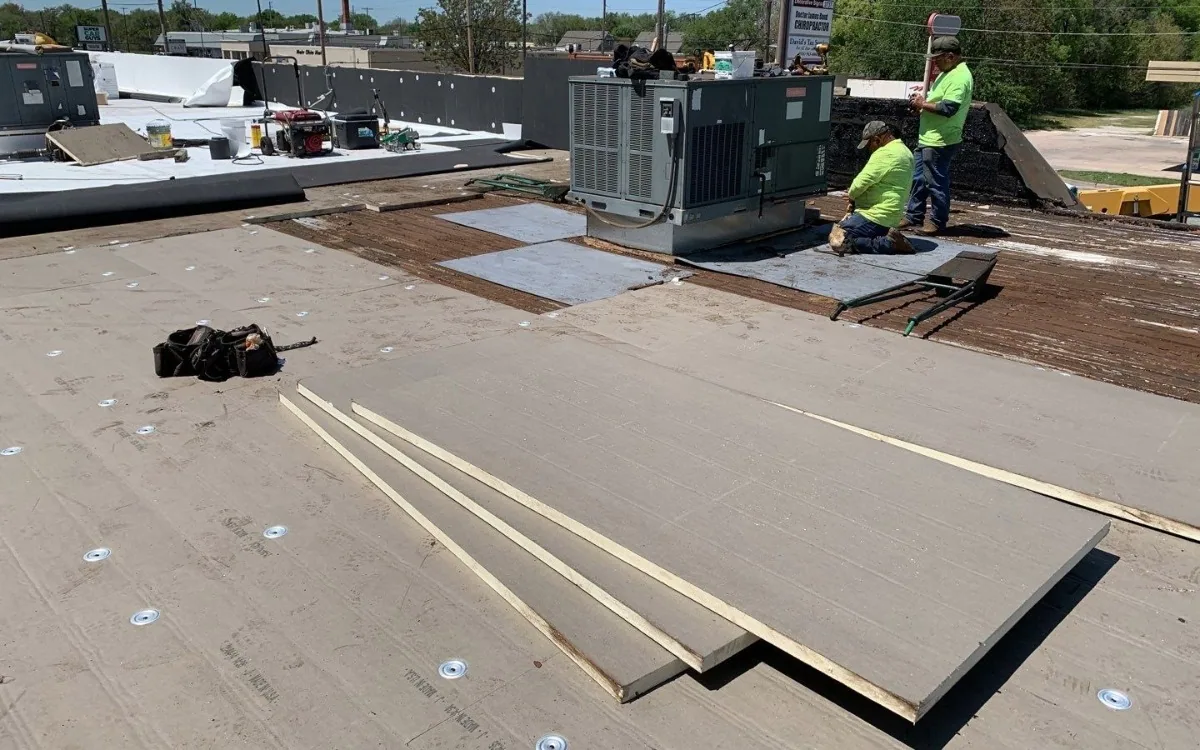
Moisture reading: what the current insulation is doing
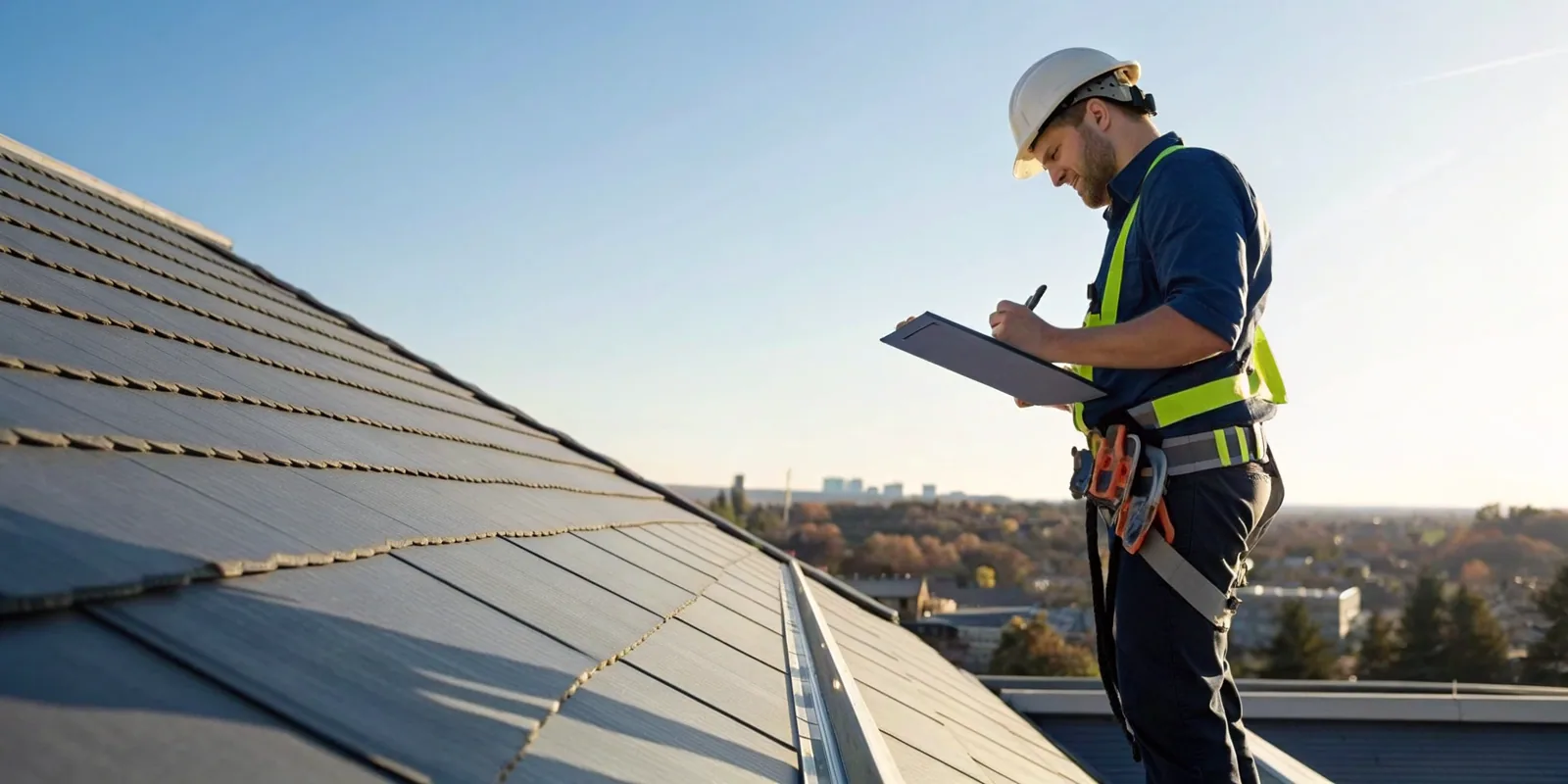
Before specifying anything new, we read what is there. An infrared moisture survey, a set of core cuts and a check of the deck show the type of insulation, its thickness, its condition and its moisture content. Insulation that is wet, crushed or delaminated is removed. Insulation that is dry, flat and well attached may stay, which saves tear-off and disposal.
The findings are mapped by roof zone. A building may have one wet corner under a leaking unit and dry insulation everywhere else, and the scope reflects that. The map is the evidence that separates a section replacement from a full tear-off, and it is the first page of the decision file. Where cores show different insulation types in different zones, which happens on roofs that were added to over time, each type is logged with its thickness and condition, because the old and new parts of a building rarely share a roof assembly.
Evidence sequence: where tapered systems belong
Flat roofs are rarely flat. Tapered insulation adds slope so water moves to drains instead of sitting in low spots. A tapered system is drawn from the actual drain locations: a plan shows the board thickness at each point, the high lines between drains and the crickets that divert water around obstructions.
Tapering costs more than flat board because it requires a plan, more pieces and careful layout, and it pays off where ponding has been recurring. When the existing roof will be replaced or recovered, adding taper is cheaper than doing it later, since the membrane and fasteners are already on the schedule. The drain and scupper review should therefore precede the insulation order, so the slope matches the outlets that actually exist.
Attachment detail: cover board and the hail question
A cover board is a thin, hard layer placed between the insulation and the membrane. It protects soft insulation from foot traffic and impact, gives the membrane a stable surface and can improve fire and puncture performance. In a market where large hail occurs nearly every year across the Metroplex, a cover board is one practical way to reduce the chance that an impact fractures the layer beneath a single-ply membrane.
Board choice matters. Gypsum, high-density foam and mineral-fiber boards differ in moisture tolerance, compatibility with adhesives and how they bond to TPO and other membranes. We select the board and the attachment method, adhesive or mechanical fasteners, to match the membrane and the wind uplift requirement, and we record the spacing in the field. Mechanical fasteners are checked for pull-out resistance on the actual deck, and an adhered board is checked for bond after cure, so the layer below the membrane is verified before the membrane covers it.
Options review: full replacement, recover or partial
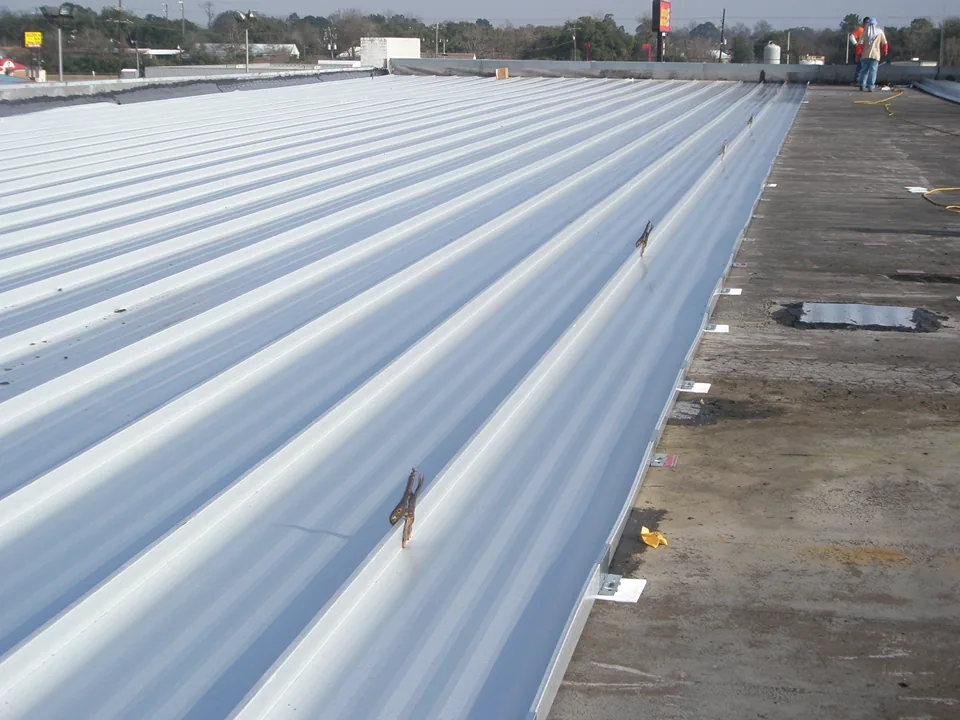
The insulation layer ties directly to the larger decision. In a roof recover, new insulation or cover board goes over a dry existing assembly, adding thickness and a new surface without tearing off. In a roof replacement, the old assembly comes off to the deck and a new assembly is laid. A partial replacement removes only the wet zones.
Each path has a different effect on height at walls, penetrations and doors, so flashing heights are checked before the choice is made. Added thickness raises the roof edge and can interfere with curbs, door thresholds and existing flashings, and we measure those transitions before ordering material. The decision file lists the options with quantities by zone.
Work coordination: energy provisions, permits and building use
Insulation thickness is tied to energy provisions in the adopted codes. The city's adopted code list includes the 2021 International Building Code, and which edition, amendments and energy requirements govern a given permit is something we verify before material is ordered. Whether a project triggers added insulation can depend on how much of the roof is replaced, so the scope is defined early.
Building use sets other needs. City materials describe office, industrial, retail, healthcare-related and multifamily development near I-35E and SH 121, and those uses differ in interior conditions, rooftop equipment loads and noise limits. In the Southern Gateway, as elsewhere, the work is sequenced by roof zone so that dry-in finishes before weather arrives and tenants are never left below an open deck.
Closeout packet: recording the layers no one can see later
Once the membrane is down, the insulation and cover board are out of sight for the rest of the roof's life. We photograph each layer as it is laid, with a tape or marker showing board thickness, and log the product type, the lot information and the fastener pattern. The packet also holds the taper plan with as-built changes marked, so a future roofer can see where the slope runs.
That record answers questions that come up years later: why a corner ponds, what is under a new rooftop unit, how thick the board is at a door. It also supports the next recover decision, because a reader can see whether the existing assembly was built to take a second layer. For a property manager managing several buildings, the packets line up side by side and show which roofs have a tapered system and which still rely on flat board.
Commercial Roofing Questions
Why would a roof with a sound membrane still need new insulation?
Because the membrane can be sound while the insulation beneath it is wet, compressed or sloped wrongly. A moisture reading and a core cut find this. If the insulation is wet, it must come out, and the membrane is reinstalled or replaced.
Is cover board worth adding on a roof that has not had hail damage?
It is a protective layer chosen for the exposure, not for past damage. Given that large hail occurs nearly every year across the Metroplex, owners can include it. Whether to pay for it depends on the roof age, the membrane and how long the owner plans to hold the building.
Can tapered insulation be added to an existing roof without a tear-off?
Sometimes, as part of a recover over dry insulation. The structure must carry the added weight, and flashing heights must allow the added thickness. A survey and a height check settle this before the order.
Does thicker insulation always mean a better roof?
No. Thickness is set by the energy requirement, the drainage plan and the flashing heights. More board can create problems at doors and curbs. We design for the thickness the building needs, not for the maximum the details allow.
What will the closeout record show about the insulation?
The type and thickness of each layer, the attachment method and spacing, photographs of each layer before it was covered, the taper layout and any wet areas removed. That record is the only way to see below the membrane after the roof is finished.
Related
Related Roofing Work
Infrared and Core-Cut Moisture Surveys
Roof Drains, Scuppers and Ponding Correction
TPO Roofing
Roof Recover and Overlay Systems
Commercial Roof Replacement
Southern Gateway
Have the roof assembly assessed
Book an assembly review and receive core-cut and moisture findings, a slope assessment and a recommendation on insulation, taper and cover board for each roof zone.
