
TPO Roofing in Lewisville, TX
Home // Roof Systems //
Overview
TPO Roofing in Lewisville
The most useful tool on a TPO roof is a thin probe, run along the edge of a seam while a photograph is taken of the exact spot. A TPO membrane is a white or light-colored single-ply sheet whose seams are welded with hot air, and the weld is where the roof is either one continuous surface or a series of overlapping sheets that only look continuous. On a Lewisville, TX warehouse, retail center or office near I-35E or SH 121, that distinction decides how the roof behaves in a Metroplex hail season and a long hot summer.
We start a TPO review by recording the membrane thickness if it is known, the attachment method, the seam condition and the details at curbs, walls and penetrations. The record shows what the roof is, how it is holding up and where the next test should be.
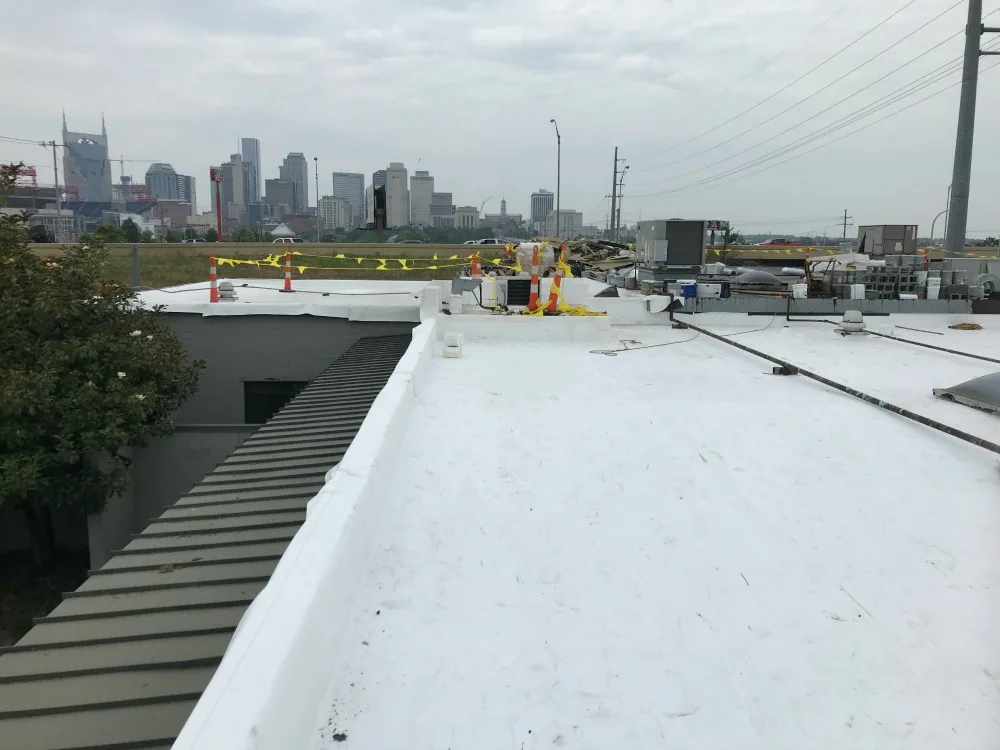
Inspection record: reading a TPO roof
A TPO roof is inspected in a pattern. We begin with the whole roof zone, looking at color, surface, ponding and general condition. Then we walk the seams, press along the edges, and mark any lap that lifts, wrinkles or shows a gap. We check flashing at walls and curbs, the termination at the top of each flashing and the corners where the sheet was cut and formed.
The attachment method sets what else we look for. A mechanically attached roof has fasteners under the seam plates, and we look for backed-out fasteners that raise bumps in the sheet. A fully adhered roof has bond to the substrate, and we tap for hollow spots. A ballasted roof has stone or pavers on the surface, which we move to see the membrane under them. The record has a dated photograph for each finding, a location on the roof plan and a next step marked patch, repair or monitor.
Evidence sequence: how TPO ages in heat
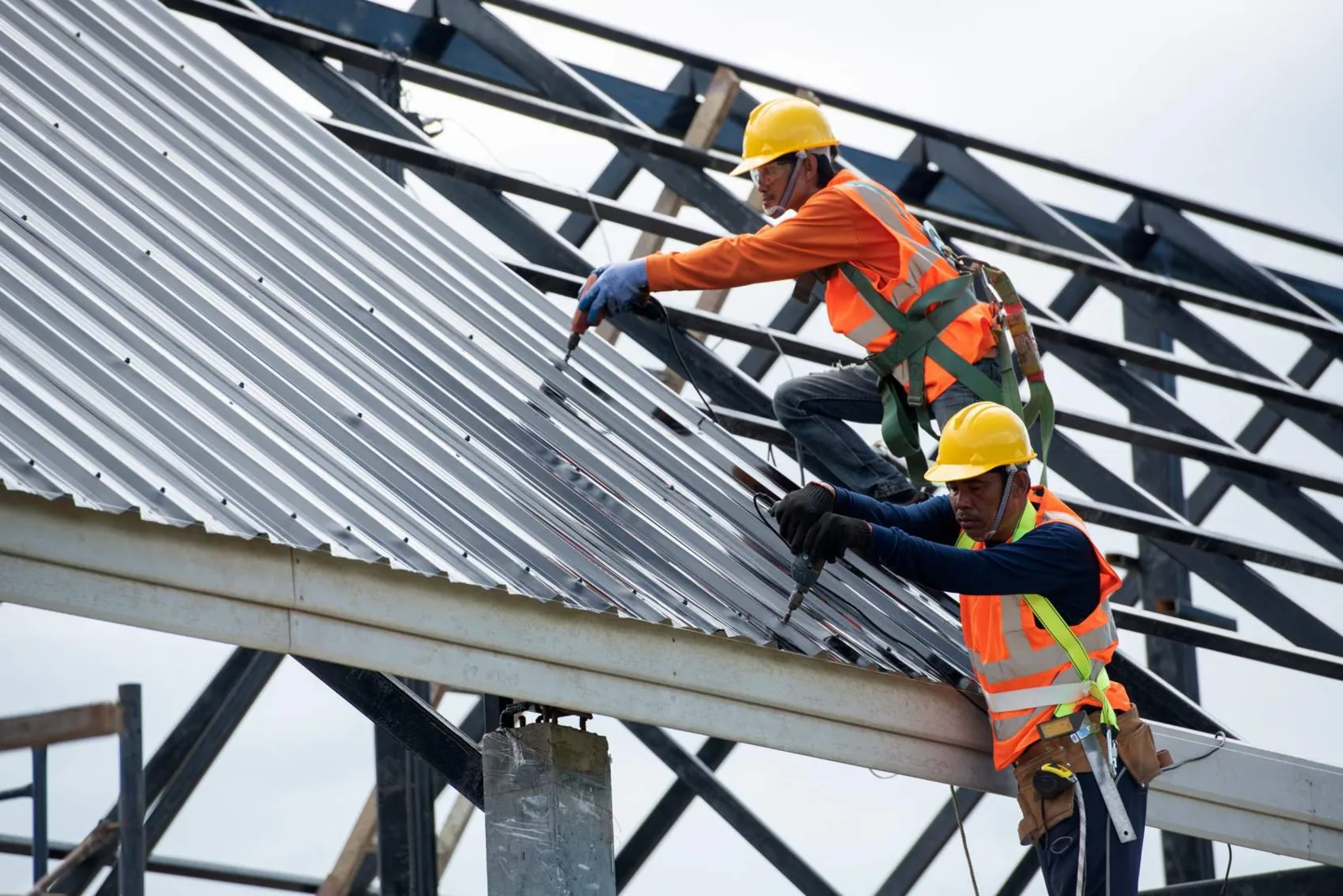
TPO is a reflective single-ply, and in the Dallas-Fort Worth region it works through long hot seasons. At the regional airport, July and August highs run around 96 degrees and the 100-degree count is about twenty days a year. A membrane in direct sun runs hotter than the air above it, and over many summers the surface can chalk, craze or lose flexibility. Seams and flashings, which carry the movement, show it first.
We look for crazing near the surface of the sheet, shrinkage that pulls the membrane away from a wall or a curb, and seams that have opened at the ends of laps. A heat and UV damage record sets out which areas are worst, so repairs go where the evidence is. Where the sheet is still flexible and clean, repairs hold. Where it is brittle, we mark the repair as short-term and flag the zone for a broader decision.
Attachment detail: seams, flashings and penetrations
A TPO weld is made by heating two overlapping sheets until they fuse. A good weld has a continuous bead at the edge, called a squeeze-out, and a probe slid along the seam edge should not catch. A cold weld, a weld over dirt or one made in poor conditions can look sound and still peel. We probe a section of every repair we make and document the result.
- Field seams, welded and probed
- Flashings at walls, curbs and parapets, with termination bars sealed
- Pipe boots and prefabricated corners, checked for cracks and gaps
- Walk pads and protection at service paths
- Fasteners and plates on mechanically attached sections
Flashing is where most TPO leaks begin. Field-formed flashings at curbs and corners are cut and welded by hand, and their quality varies. We replace a failed corner with a prefabricated piece or a properly formed flashing and test it, instead of covering the old one.
Repair boundary: patch, heat-weld or replace the section
A puncture or small tear on sound TPO is fixed with a welded patch that overlaps the damage generously, after the surrounding membrane is cleaned and checked. A split seam is cleaned and re-welded or covered with a cover strip. Wet insulation under the repair changes the picture, so a moisture reading comes before the patch where water has been present.
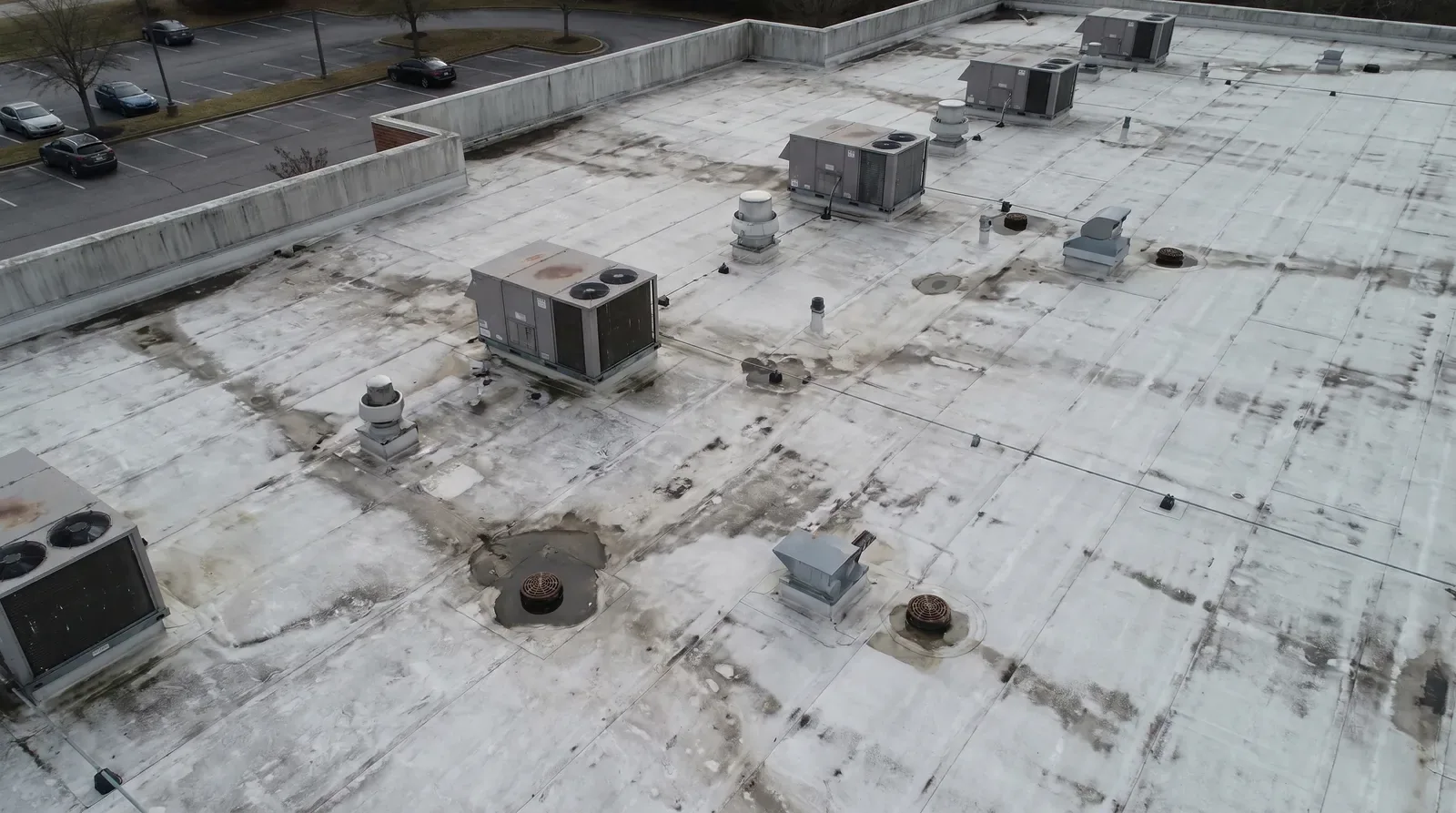
Hail adds a question. Large hail reaches the Metroplex nearly every year, and a given address can still go a season untouched. A hailstone can bruise or puncture a membrane, and its effect depends on the sheet's thickness, age and backing. After a storm we separate fresh impact marks from older wear and record each. When damage is widespread, the record supports either a section replacement or a full roof replacement, and it feeds insurance claim documentation if a claim is filed.
Options review: recover, restore or replace a TPO roof
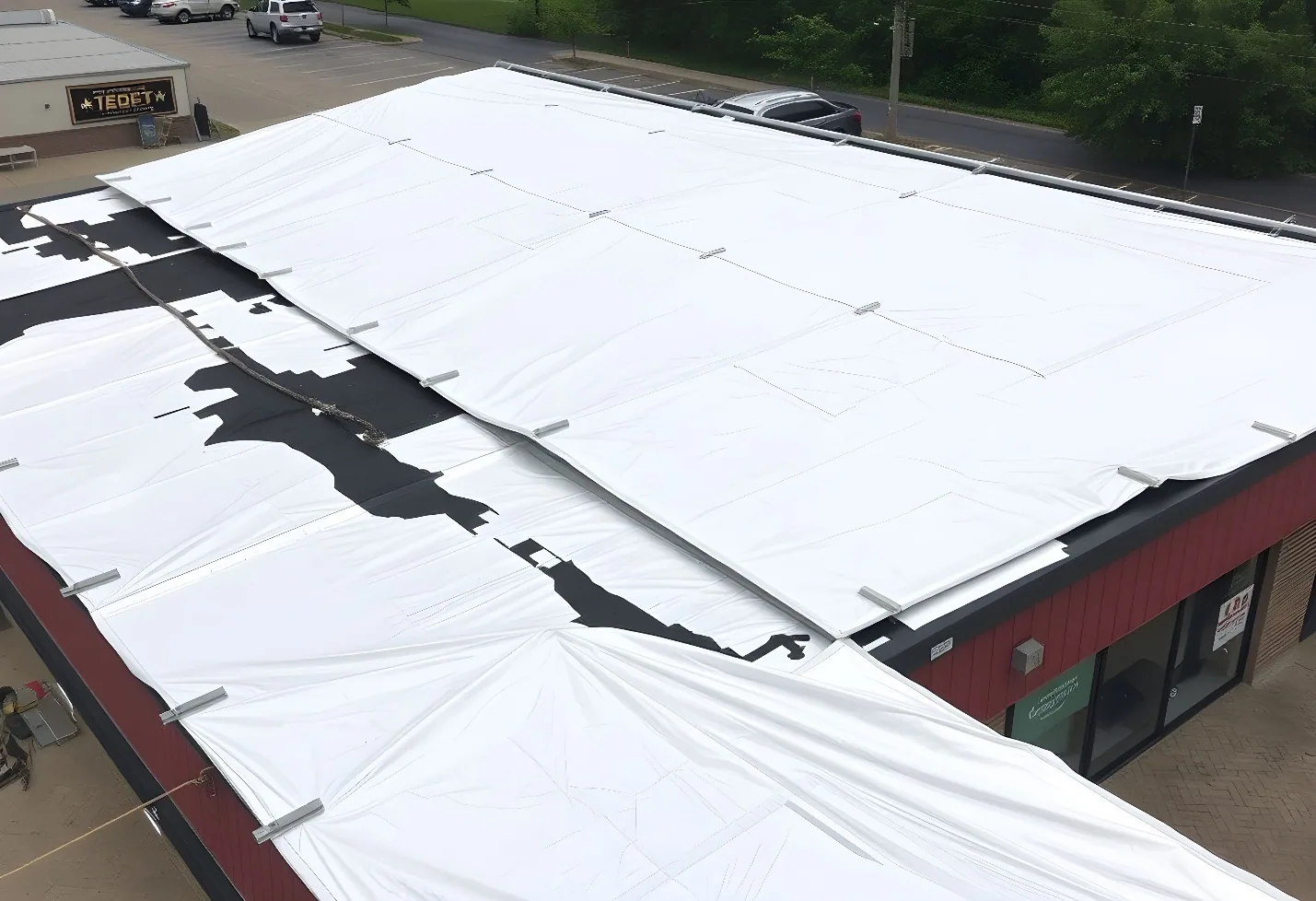
When a TPO roof has reached the end of its useful condition, the options are a replacement, a recover with new insulation and a new sheet, or in some cases a coating restoration over a sound base. Each depends on moisture, layers and seam condition. A TPO roof with dry insulation and sound seams can be restored. One with saturated insulation needs the wet material removed.
We compare the choices next to the findings. Owners with several buildings may also use a roof capital plan to sequence work, putting the worst roofs first. TPO suits low-slope roofs across the industrial park, commercial, retail and mixed-use areas Lewisville's planners identify, so one membrane can serve many property types. Where a roof sees grease, chemical exhaust or heavy rooftop traffic, we also weigh PVC, and where a budget favors a rubber sheet with a long track record on large flat areas, EPDM. We recommend a system after seeing the deck, the drainage and the use of the building.
Closeout documentation: the TPO file
The closeout file lists the membrane, the attachment method, the insulation and cover board, the flashing details and the seam test results. It includes photographs by roof zone and the final roof plan with penetrations marked. For a repair, it records the location, the materials, the weld test and the date. Seam probe results are kept by roof zone, so a later weld failure can be compared with what the probe found on the day of the repair.
Permit review uses the edition and amendments in force when the work is filed; the city's adopted codes include the 2021 International Building Code. We note permit and inspection dates in the file. Properties in Old Town Lewisville or Castle Hills can be recorded in the same format as a facility near I-35E.
Commercial Roofing Questions
How do you test a TPO seam?
A probe slid along the edge of the weld finds any gap or unbonded area. We probe repairs and suspect seams, and record the result with a photograph.
Why do TPO flashings leak before the field does?
They are cut, formed and welded by hand at corners and curbs, so quality varies, and they sit where movement is greatest.
Can TPO be repaired after hail?
Often, if the sheet is flexible and the insulation is dry. Widespread bruising or punctures point to a section replacement, and the record supports that call.
What is the difference between mechanically attached and fully adhered?
Fasteners hold the first; adhesive holds the second. Each fails differently, so the inspection looks for backed-out fasteners on one and hollow spots on the other.
Does a TPO replacement need permit review?
Usually, and the permit office names the code edition and amendments in force at filing before the scope is final. The city's adopted list includes the 2021 International Building Code.
Related
Related Roofing Work
Heat and UV Roof Damage Repair
Commercial Roof Replacement
Roof Insurance Claim Assistance
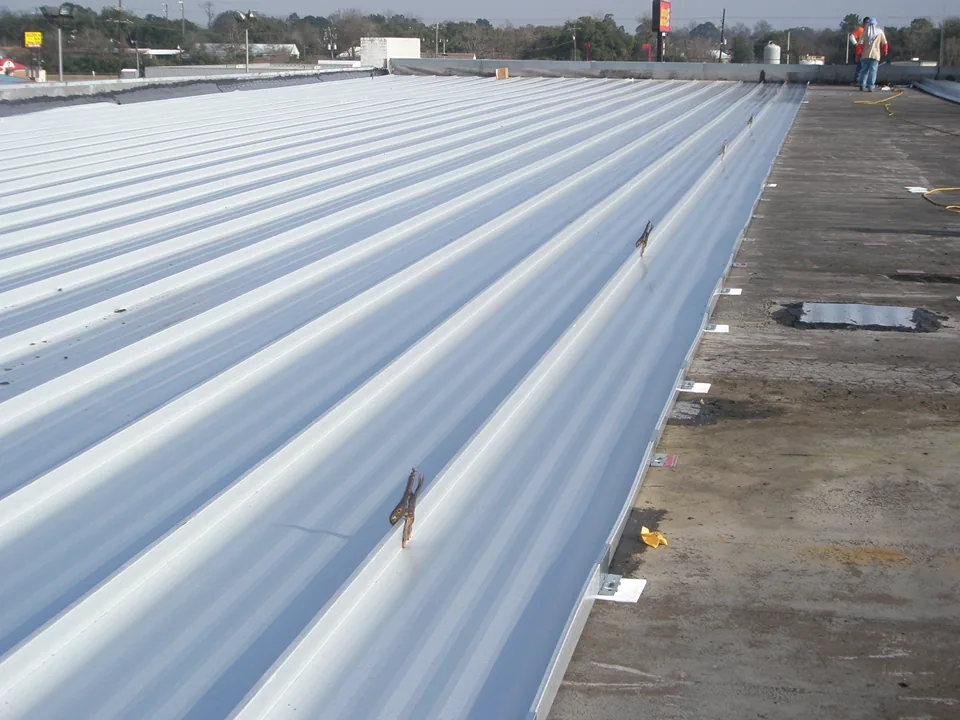
Roof Recover and Overlay Systems
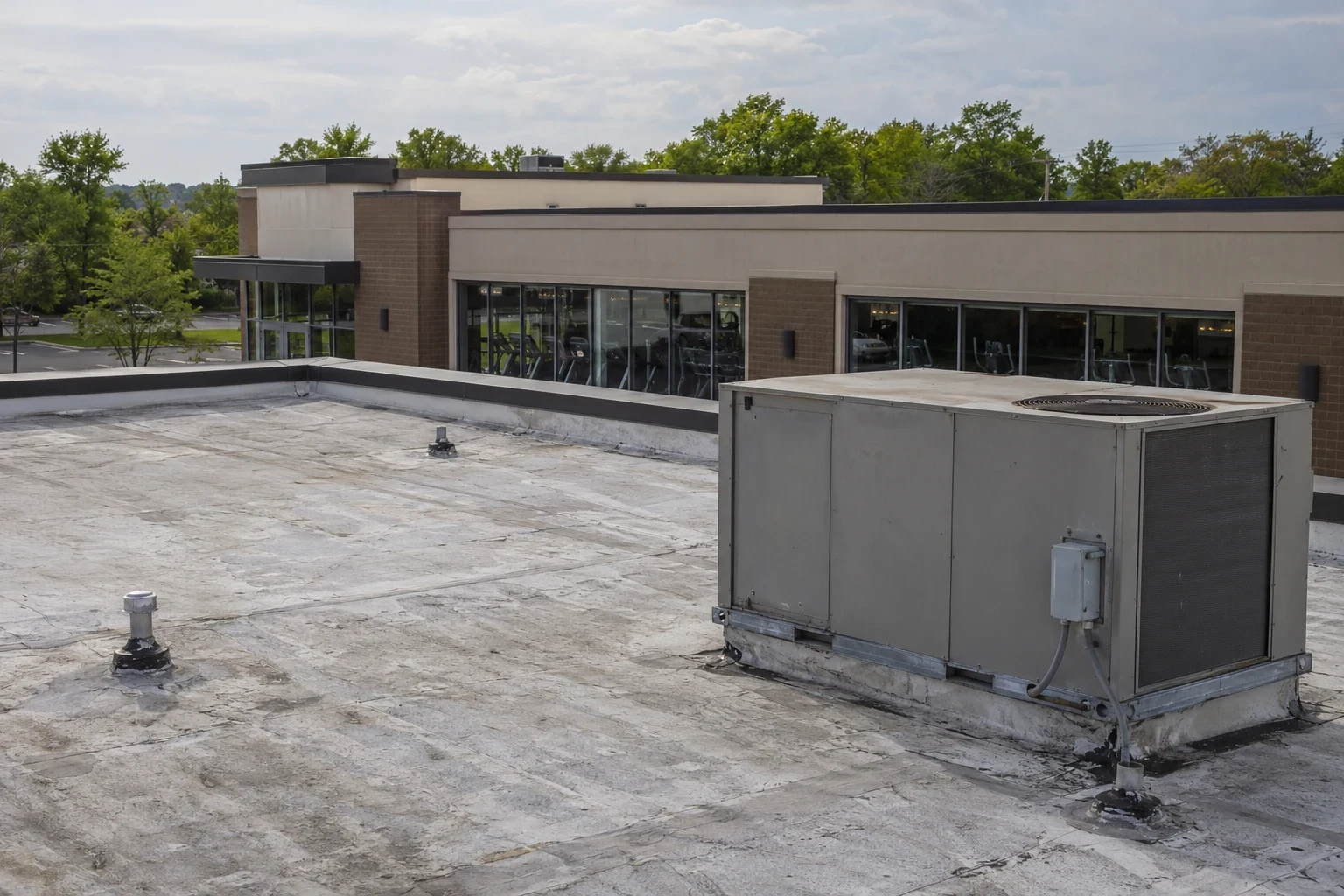
Roof Coating and Restoration
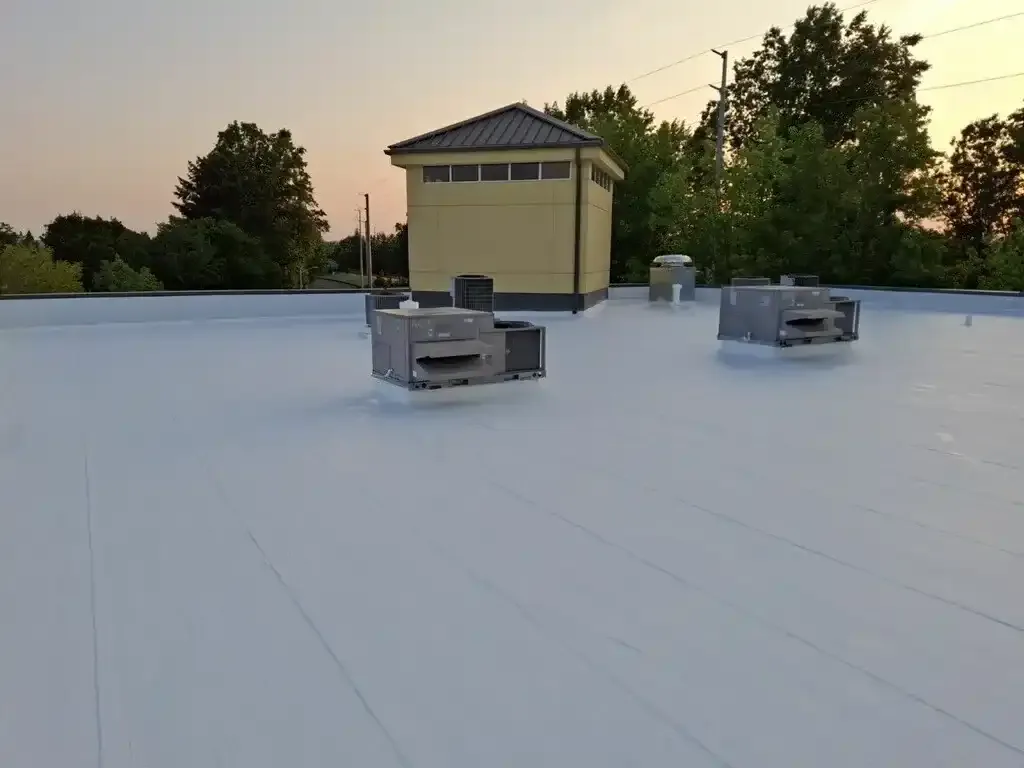
PVC Roofing
Start with a dated seam record
Schedule an inspection and receive a condition record with photos, seam test results and findings by roof zone, plus recommended next steps marked patch, repair or replace.
