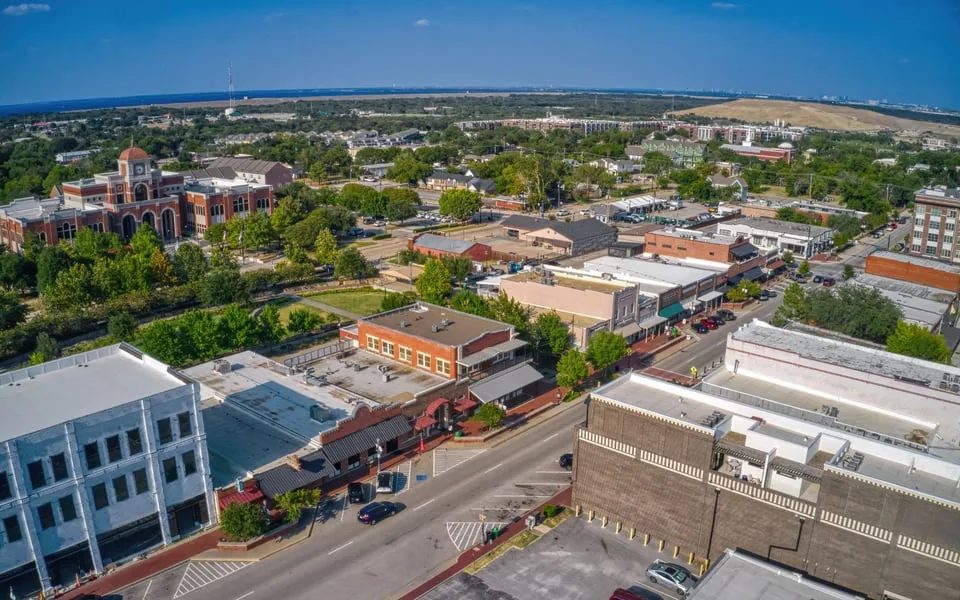
Commercial Roofing in Southern Gateway, Lewisville, TX
Home // Service Areas //
Overview
Southern Gateway in Lewisville
The call after a severe storm has a predictable shape. A tenant reports water, a manager asks what happened, an adjuster asks for proof, and a contractor is asked to be on the roof by morning. What decides how well the next two weeks go is whether a record of the roof existed before the storm. Without one, every party works from memory and photographs taken after the damage.
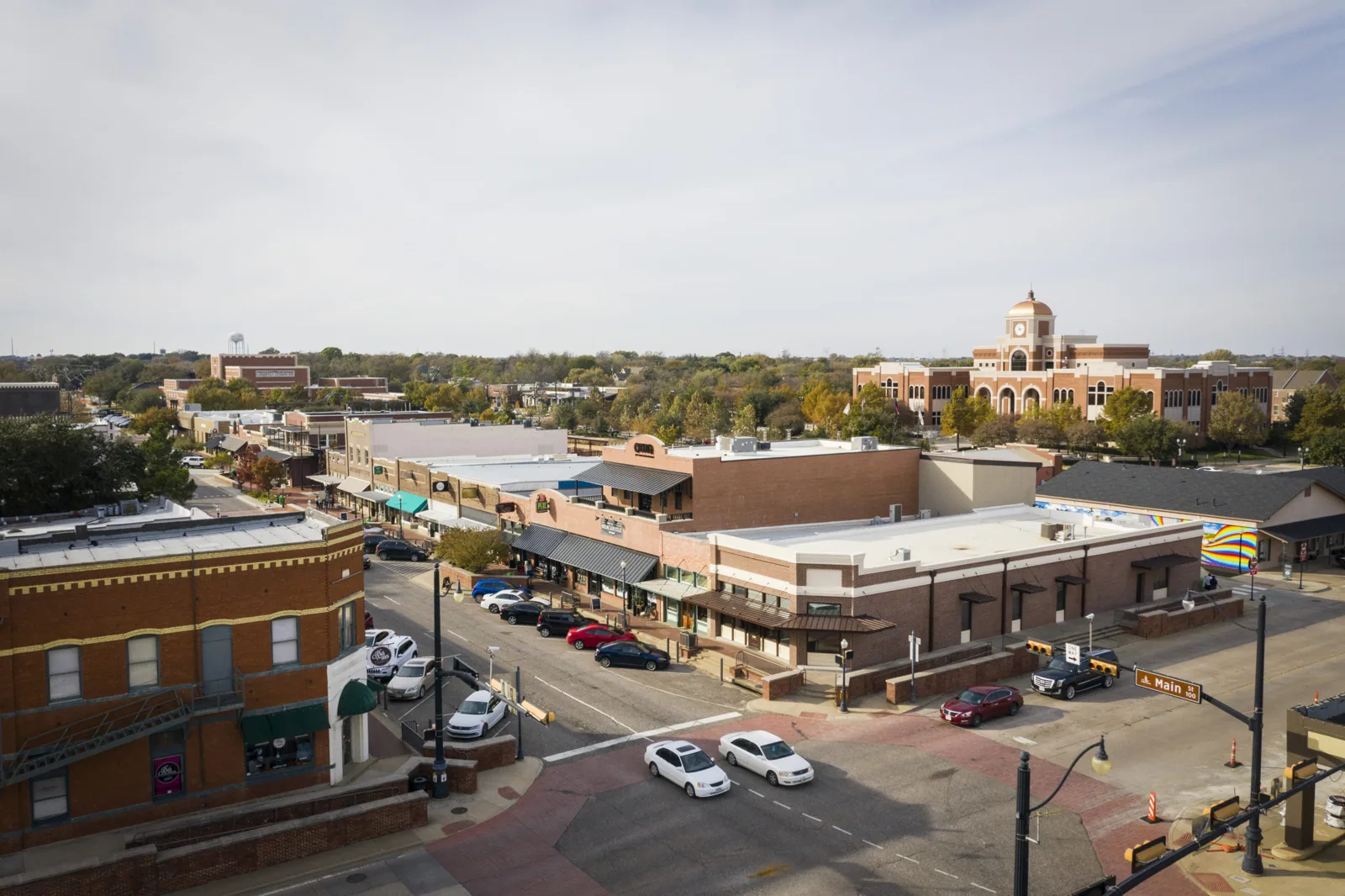
The Southern Gateway is identified at the SH 121 and I-35E intersection in Lewisville, TX, and a city plan guides mixed-use investment there. Planning also describes transit-oriented development around the Hebron 121 station and continued redevelopment in the gateway. Active redevelopment means roofs are being opened, equipment added and tenants moved, so a pre-storm record is worth building now, before the next severe weather season starts.
Before the storm: the record that settles later arguments
A pre-storm record is a photo sequence taken from fixed points, a roof plan with zones numbered, and a short list of known conditions: previous patches, ponding areas, aging seams. It takes one inspection pass to build. It is also the document that lets an owner say, with dates, which marks were present last spring.
We add a moisture reading for any area that looks soft or stained, and a core where the owner allows one. The core shows layer count and insulation condition; the reading shows whether water has entered. Together they separate a surface blemish from a wet assembly.
The record cannot predict damage; the Metroplex gets hail and damaging wind in most years, and a given address can be missed. Its job is to make the after-storm comparison clean, whichever way that comparison goes. The record also lists who holds the roof key and which entrance the crew uses, because that answer shortens the first visit after a storm.
After the storm: the first inspection pass
After a severe event we do the same walk from the same positions. Whole roof zone first, then edges, penetrations, drains, seam runs and equipment. Any difference from the earlier photographs is marked with a location and a close image. A dent in a metal cap that was not there before is a finding. A dent that is already in last year's photo is not, and it is recorded as existing.
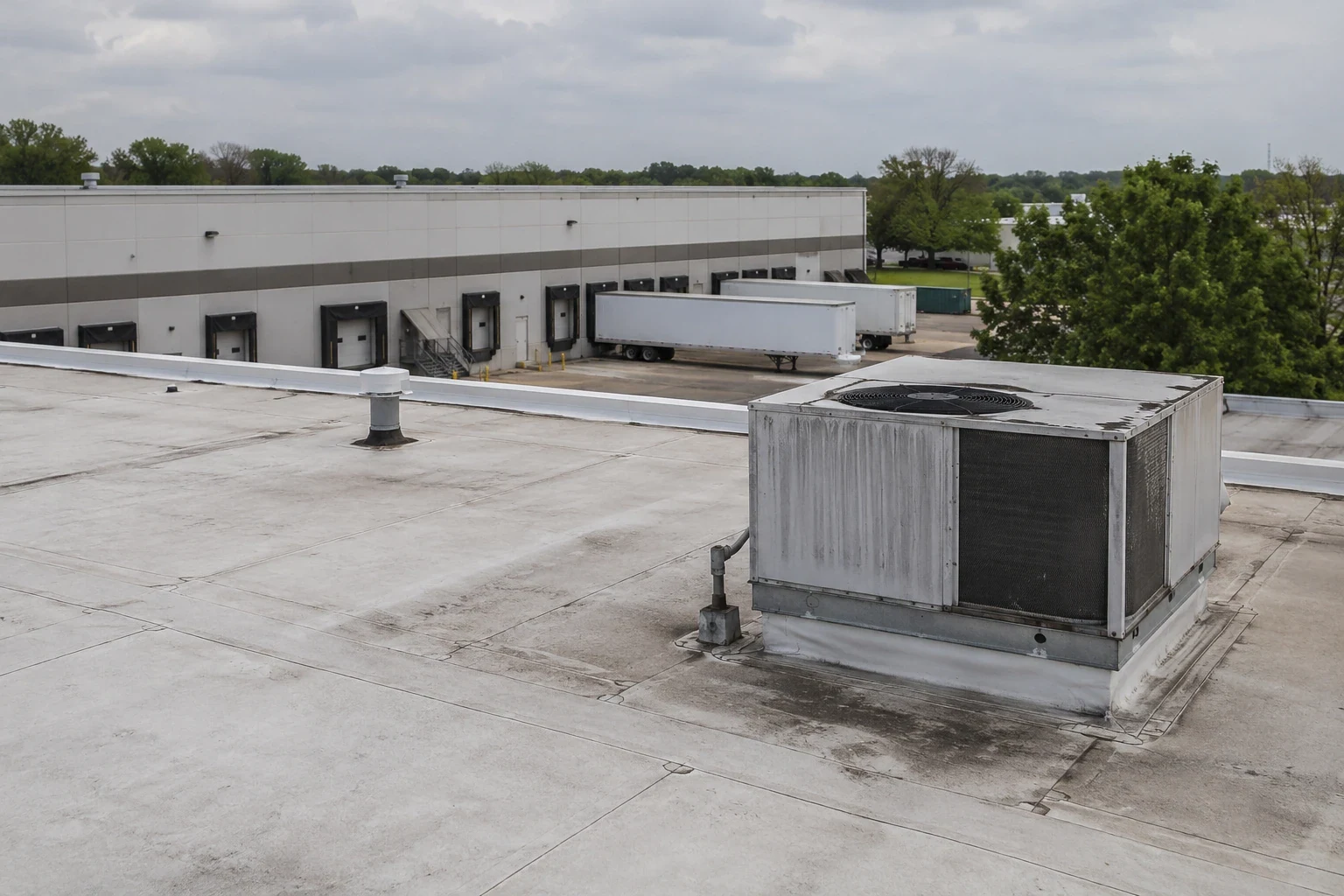
If water is coming in, the response comes first and the record second. A temporary dry-in goes over the opening, interior protection goes on, and the permanent repair is scoped after the water path is understood. Our emergency roof repair response runs at all hours, and the dry-in is photographed as carefully as the damage.
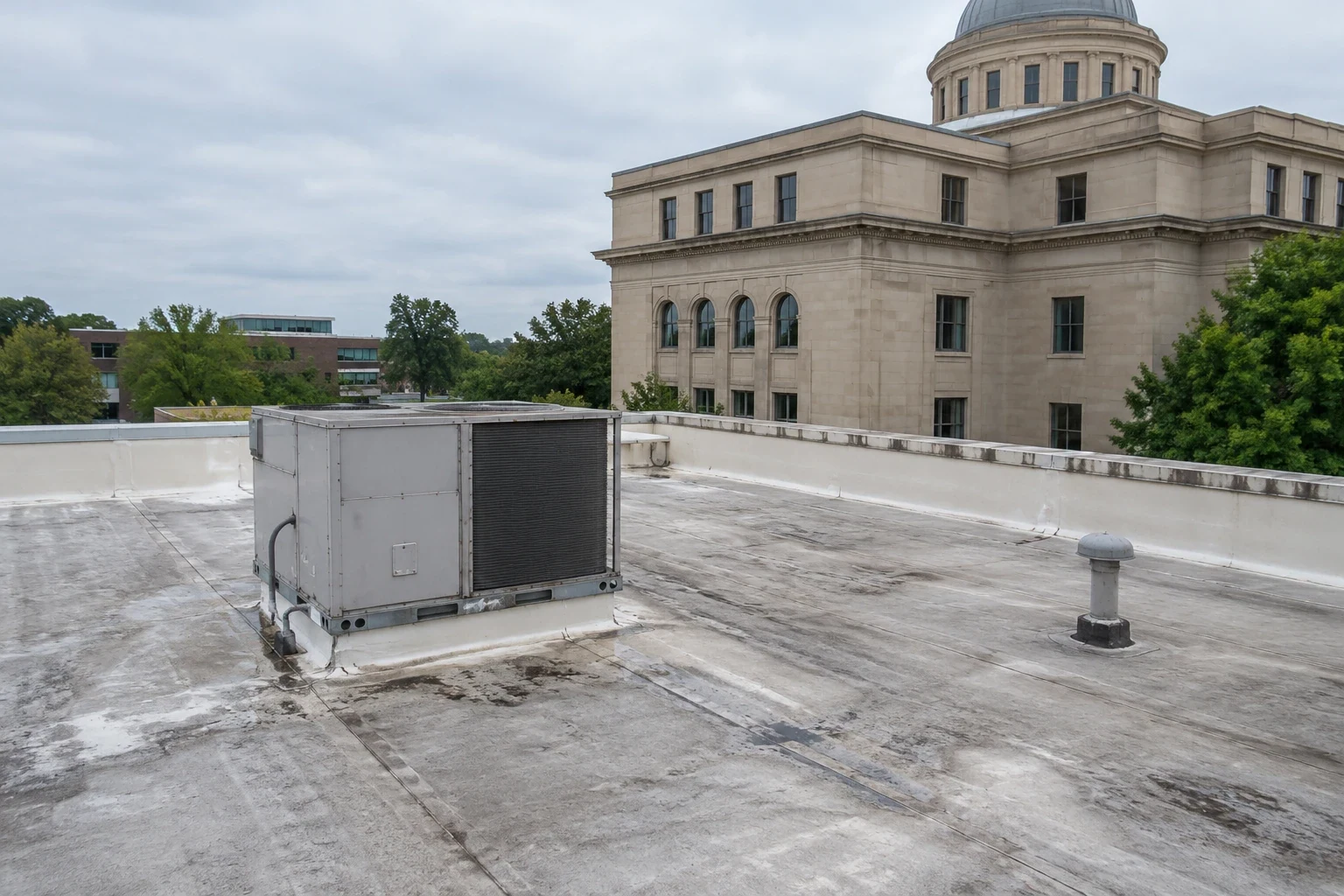
For the permanent scope, storm damage repair is written to what the record supports: the damaged zones, the repair method and the cost lines. Where tornado winds or flying debris are involved, the tornado damage scope adds decking, structure and attachment checks.
Repair or replace is decided by the readings. A roof with local punctures and dry insulation is repaired, and the repair boundary is marked with a margin so the next rain does not find the next weak spot. A roof with wet insulation across several zones, or a membrane fractured over a wide area, moves to replacement, and the scope shows the cost of each path side by side. Hail that has fractured insulation facers or bruised the membrane without a visible hole is the harder call, which is why the core and the moisture reading come before the recommendation and not after it.
Claim support: what a carrier will ask to see
A carrier looks for the date of loss, the damage tied to that loss, the condition before it and the cost to repair. A roof file that holds dated photographs, readings and repair history answers all four. It also protects the owner from a common dispute, in which wear is mistaken for storm damage or the reverse.
We prepare the claim documentation from the inspection record: location-tagged photographs, the roof plan with marked findings, the scope of repair and a statement of what was and was not observed. A weather report cannot settle cause on its own; the storm gives the date, and the roof gives the finding.
Where the carrier sends its own adjuster, the same record is shared and the walk is done together if the owner wishes.
Transit-oriented redevelopment and the roof schedule
Redevelopment near a rail station tends to mean tight sites, shared access and many parties on the same property. Roof work there needs the lift position, the delivery window and the haul-off route settled before anyone mobilizes. The access log records who controls each entrance and what hours are open.
Where a building is occupied, noisy tear-off is scheduled away from tenant peaks, and sections are dried in by the end of each shift. Rooftop equipment that must be lifted and reset is coordinated with the building engineer so that heating and cooling are down for as short a time as possible. The permit office confirms the edition and amendments before the roof design is set, working from the city's adopted list, which includes the 2021 International Building Code.
A capital plan puts each roof on a replacement timeline, so redevelopment budgets include the roof and do not discover it halfway through.
Heat matters to the schedule too. At the airport, July and August highs sit near 96 degrees and about twenty days a year reach 100 or more. Adhesives cure faster and crews tire sooner in that weather, so heavy tear-off is planned for early hours or milder weeks where the calendar allows, and material is kept shaded until it goes down.
Along the SH 121 and I-35E corridors
The Southern Gateway shares a highway pair with several other districts. Central I-35E sits where Business 121 meets the interstate, the Northern Gateway runs on the west side of I-35E, and the Eastern Gateway is where SH 121 enters the city. An owner with buildings across them can follow a single schedule and keep all the records in one format.
Each job closes with photographs, a plan of repaired zones, a materials list and any warranty paperwork.
Commercial Roofing Questions
Why build a roof record before a storm happens?
Because the comparison after a storm is only as good as the picture before it. Dated photographs and readings show which marks are old and which are new, which keeps repair scopes and claims focused on actual loss.
What happens first when water is entering after a storm?
Protection. A dry-in goes over the opening, interior protection goes on and affected tenants are told what to expect. The permanent repair is scoped after the water path is traced, and the temporary work is recorded.
Can weather reports prove damage to a specific roof?
No. A report describes the region and the day; it does not describe a given building. The inspection supplies the building-specific evidence: locations, images and readings that a carrier can review.
How do you handle a roof near an active construction site?
By fixing access, staging and haul-off with the general contractor before the crew arrives. Lift positions and delivery windows are written into the scope, and the roof sections are sequenced so that open areas are sealed the same day.
Does tornado damage need a different inspection?
It adds checks. Decking, attachment and structure are examined along with the membrane, since uplift can move parts of the assembly without tearing the surface. The scope records what was tested and what was found.
Related
Related Roofing Work
Emergency Roof Repair
Storm Damage Roof Repair
Tornado Damage Roof Repair
Roof Insurance Claim Assistance
Roof Capital Planning
Central I-35E
Schedule an inspection pass before the next season
Tell us the building and any storm history you know. You will receive a dated condition record with photos, findings and recommended next steps, marked by roof zone, ready to compare against whatever comes next.