
Tornado Damage Roof Repair in Lewisville, TX
Home // Roof Damage Repair //
Overview
Tornado Damage Roof Repair in Lewisville
Treat the building as unreviewed until someone qualified has looked at it. After a tornado-producing storm, a roof in Lewisville, TX may have lost sections of membrane, deck or edge metal, and the structure below may have shifted in ways that do not show from the ground. The first record is a clearance note: who cleared entry, which zones are open and which are barricaded.
Tornadoes, large hail, damaging winds and flooding all turn up in the Metroplex nearly every year, the NWS says, though a single location can go a year without any of them. A storm warning over the region does not prove damage at a particular building. The condition record separates the weather report from the dated findings on the roof, so a repair scope or a claim stands on evidence that can be checked.
Neighboring buildings matter to the record. Debris from one property can land on another, and a roof damaged by a neighbor's materials is documented as such, with photographs of the source where it can be seen from the ground. That record helps the owner pursue recovery from the right party and keeps the roof scope separate from that dispute.
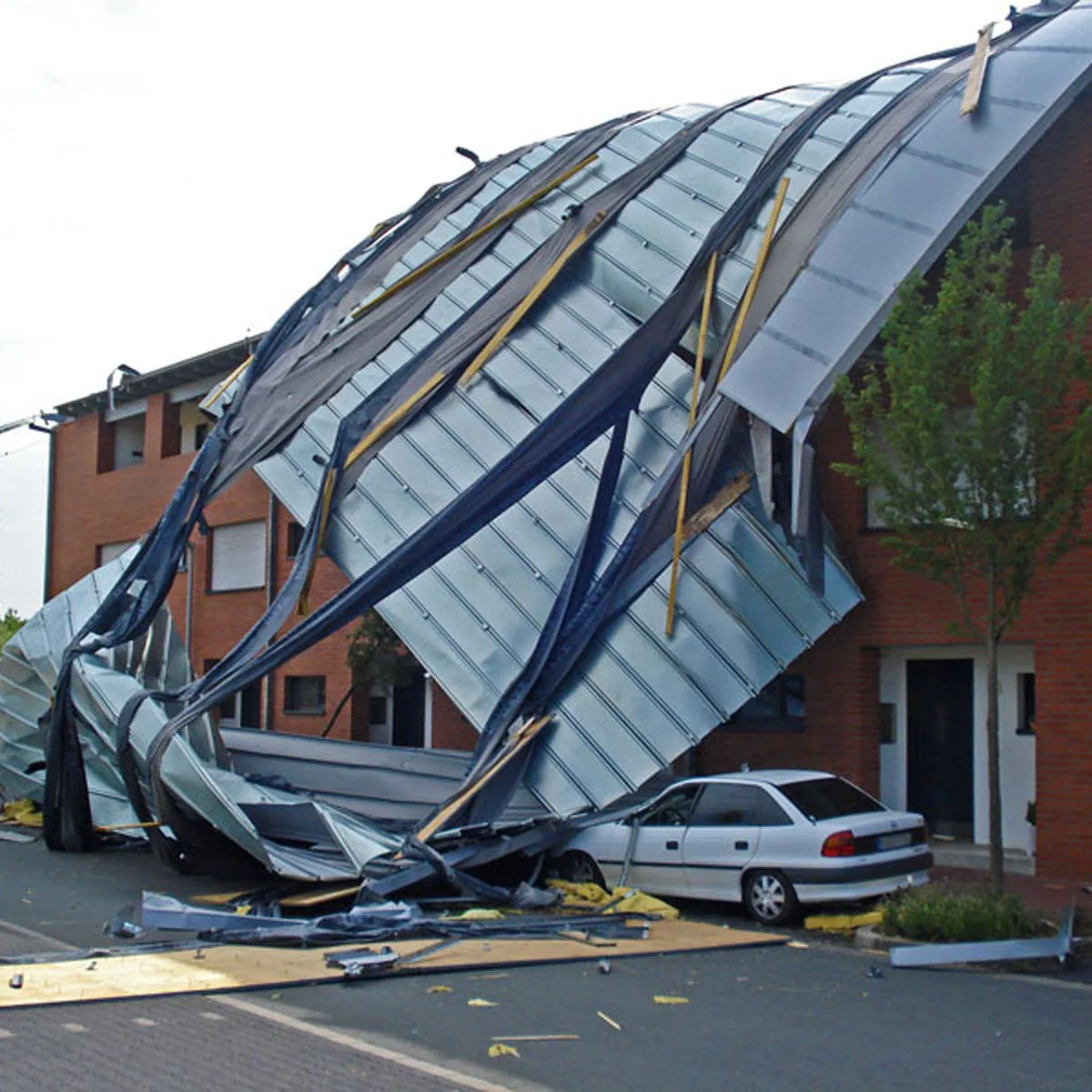
Inspection record: structural clearance and safe access
High winds can lift a deck from its supports, bend joists and loosen connections. A roof that looks whole can still be unsafe underfoot, so the building official or a structural engineer decides when entry is allowed. Until then, the crew documents from the ground or a lift, installs edge barricades and, where permitted, places emergency covers from outside the damaged footprint.
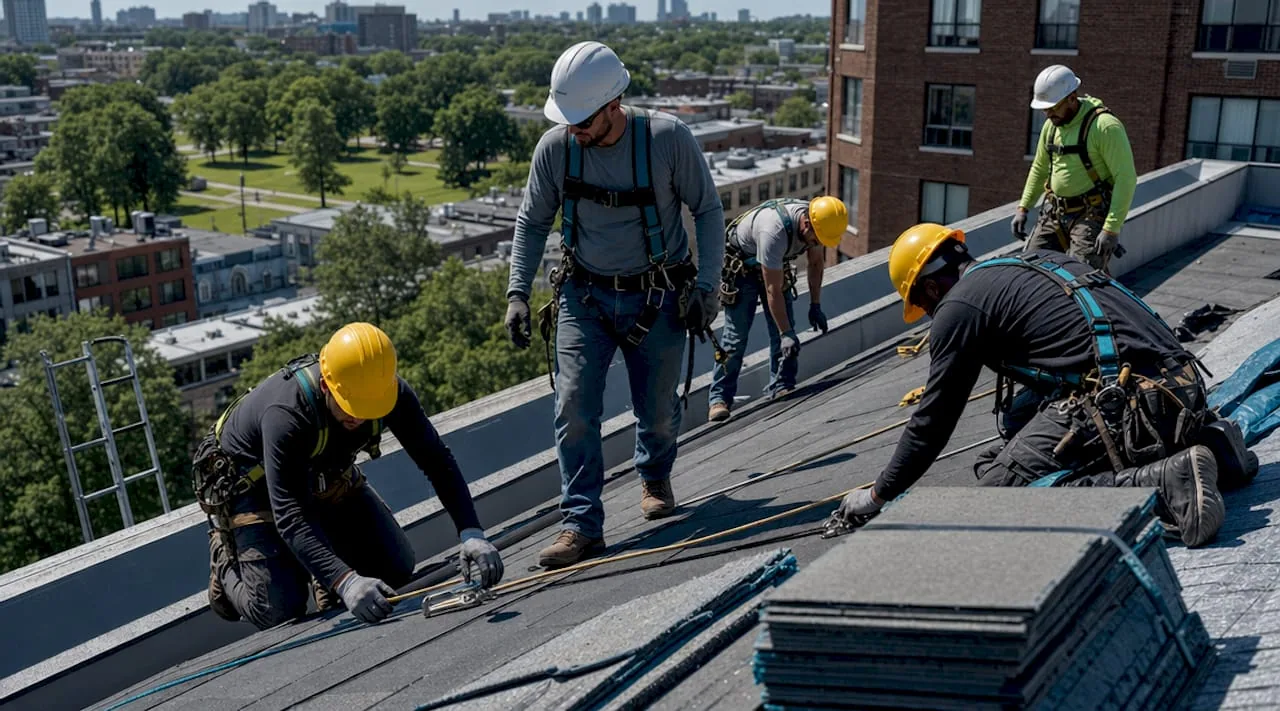
When entry is allowed, the access log opens: who goes up, when, through which hatch and under which limits. Walking boards, fall protection and a spotter are standard. Photographs are taken before debris is moved, because the position of fallen material helps show the direction of the wind and the sequence of failure.
Power and gas lines near the roof are the other hazard. A downed line, a leaking gas connection or a damaged rooftop unit is reported to the utility and the facility team before any work begins. We do not touch electrical or gas equipment, and the access log records who was told and when.
Evidence sequence: debris, openings and impacts
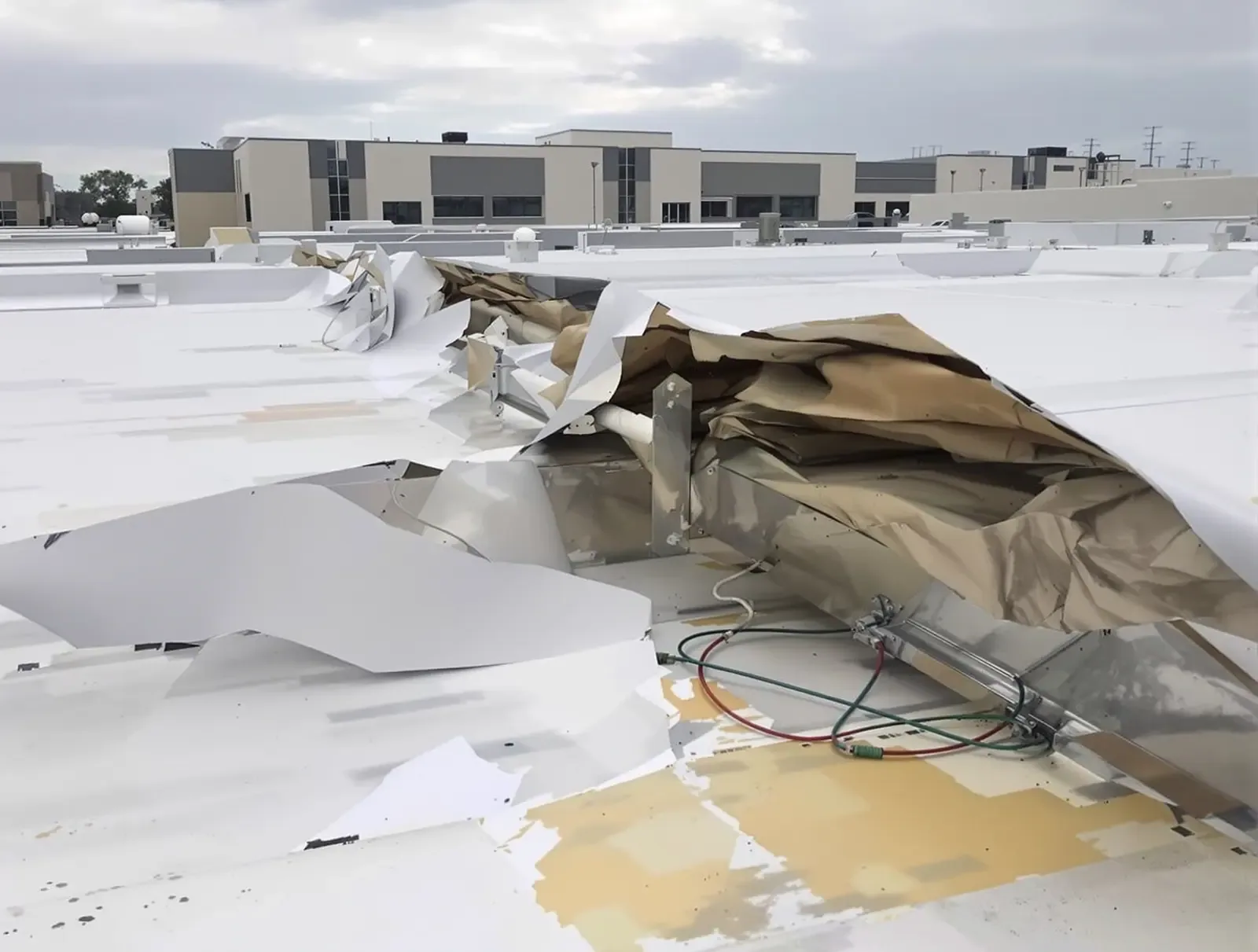
A tornado leaves three kinds of evidence on a roof. Missing material shows as open decks, torn membrane and absent edge metal. Impacts show as punctures, dents and crushed curbs from flying debris. Displacement shows as shifted equipment, bent supports and cracked skylights. We map each kind separately on the roof plan with photographs and positions.
Debris on the roof is catalogued before it is removed: what it is, where it landed and what it did. Foreign material can hide holes and torn laps. Once cleared, the pass checks the surface by probe and, where the sheet is intact, looks for lift at edges and seams. A wind damage record covers the edge and attachment findings alongside.
Membrane torn from its edge often leaves a flap that keeps moving in later winds. The flap is documented, then secured or cut back to sound material so it cannot damage more of the roof. A puncture from flying debris is sealed on the first visit with a temporary patch and dated.
Work coordination: emergency closure and interior protection
An open roof needs closing the same day when conditions allow. The crew sets a temporary membrane or heavy tarp over exposed deck, fastened to sound structure and weighted along the edges, with a slope that moves water off the roof. Large openings may need a rigid cover. Each closure is photographed with a date and rechecked after every storm that follows, because spring and fall run wettest and thunderstorms crest in spring.
Inside the building, interior protection runs in parallel: covering equipment, moving stock, isolating wet electrical areas and marking ceilings that have taken water. Tenants along I-35E and SH 121 may have different hours and needs, so the access log records the agreed times for each space.
Structural cracks and gaps in parapets, walls and rooftop screens are photographed and passed to the engineer. We do not make structural calls, and the file marks which items await the engineer's review before a roof repair can finish near them.
Repair boundary: deck, insulation and membrane
A tornado can damage a deck even where the membrane survives. We check the deck at openings and around the edges of any missing section for bending, tearing and loosened fasteners, and we core where the surface suggests damage below. Wet insulation is mapped with an infrared moisture survey once the roof is stable.
The repair boundary then covers the structure first, then the insulation, then the membrane and flashing. Rooftop equipment that shifted gets its supports checked before the curb flashing is rebuilt, and gas, electrical and mechanical connections are left to licensed trades until they are released. Small openings can be repaired by section. Large losses move the scope toward replacement, with the options review showing both paths.
Insulation boards that were wetted or torn are removed to sound material, and each removal boundary is marked and photographed. Replacing only the damaged board, instead of a whole section, saves cost when the readings support it.
Options review: permits and code
Lewisville's adopted codes include the 2021 IBC, so the permit file should name the edition and amendments in force today. A major roof repair after a storm often requires a permit and may trigger review of insulation, wind resistance and drainage details. The scope lists those questions early, so the schedule includes review time.
Cost drivers are plain: area lost, deck repair, insulation removed, rooftop equipment, access, and the work window. The decision file shows each as its own line. The decision file also records the split between emergency protection and permanent repair, which an insurer will want to see. Emergency roof repair response runs at any hour.
Material lead times and crew availability can shape the schedule after a large storm, so the options review names the date by which a decision keeps the permanent work inside the next dry window.
Closeout documentation: the packet
Inside the packet are the clearance note, the debris catalogue, before and after photographs, the repair-boundary plan, moisture readings, product sheets and the next visit date. It also holds the temporary closure record. Owners of buildings in the eastern gateway and nearby areas can use the same packet, and a visit after the first heavy rain confirms that the new roof sheds water as designed.
Commercial Roofing Questions
Who decides when a damaged roof can be entered?
Either the building official or a structural engineer. The clearance and its limits go into the log, and we stay off any zone that has not been released.
Why map debris before removing it?
Its position shows the wind direction and the sequence of damage, and debris can hide holes. The map becomes part of the record for the owner and the insurer.
How is an open roof closed in the first hours?
A temporary membrane or heavy tarp is fastened to sound structure and weighted along the edges. Large openings may need a rigid cover, and each closure is photographed and rechecked after storms.
Can a roof with torn membrane be repaired without replacing the deck?
If a check shows the deck is sound, yes. Where it is bent or its fasteners have pulled, the deck is repaired first and the membrane follows.
Does a regional tornado warning prove my roof is damaged?
No. A warning is a reason to inspect. The dated findings on the roof support a repair or a claim.
Related
Related Roofing Work
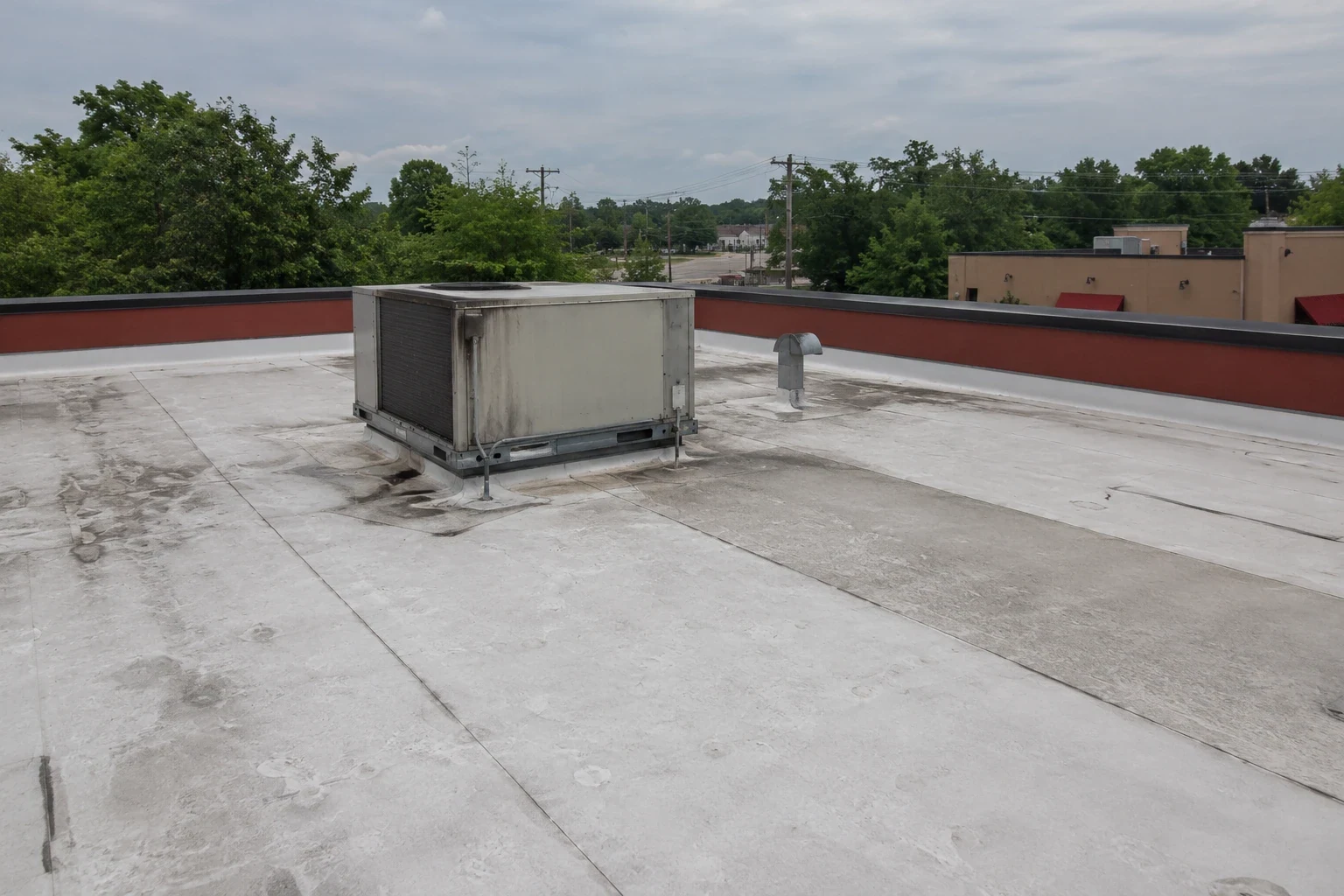
Wind Damage Roof Repair
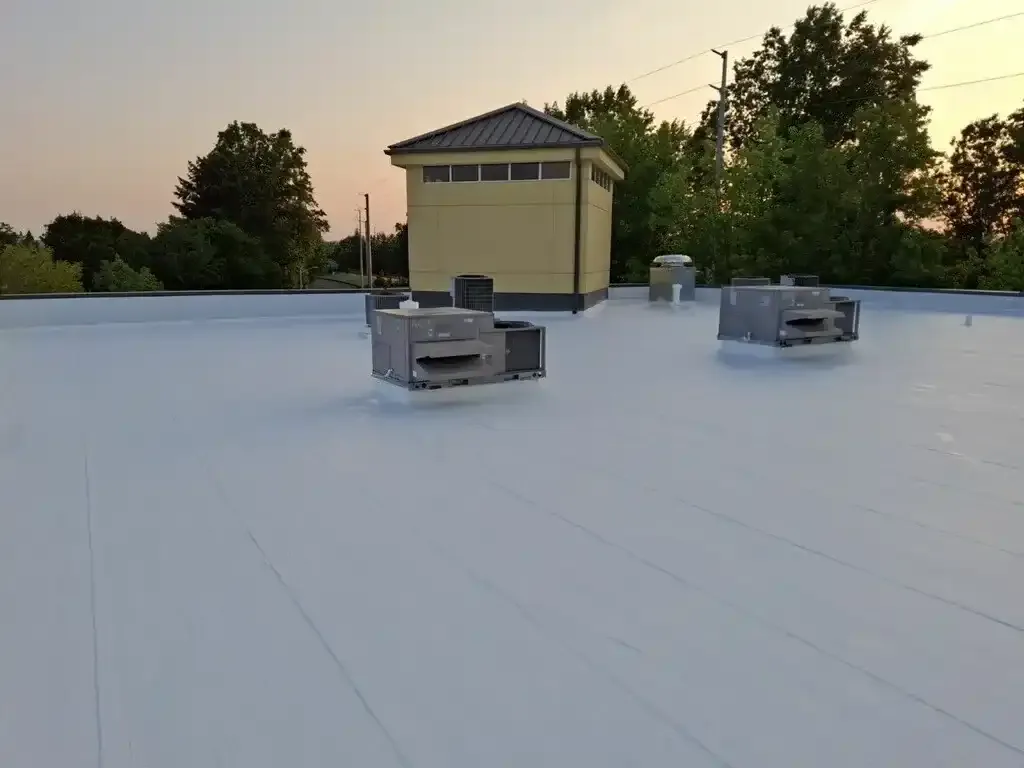
Membrane Puncture Repair
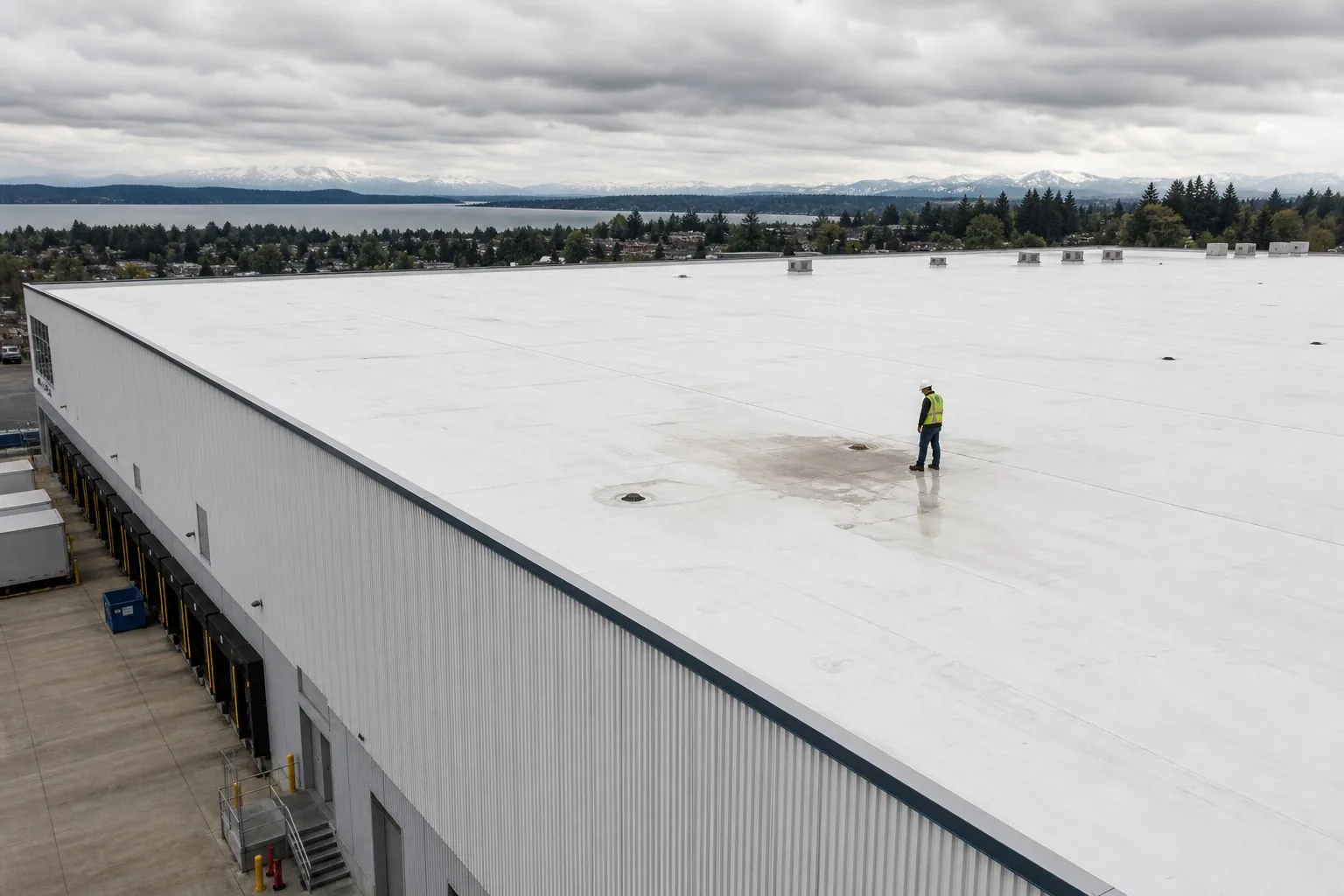
Infrared and Core-Cut Moisture Surveys
Commercial Roof Replacement
Emergency Roof Repair
Eastern Gateway
Schedule an inspection and get a dated record
Send the property manager's list of affected roofs, clearance status and access limits. We will return a dated condition record with photographs, findings and recommended next steps.
