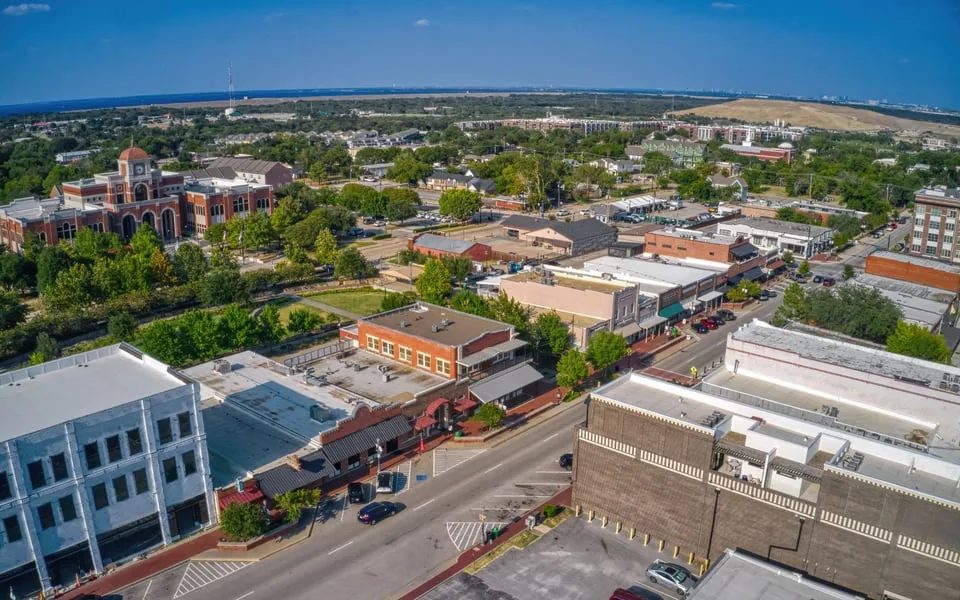
Membrane Puncture Repair in Lewisville, TX
Home // Roof Damage Repair //
Overview
Membrane Puncture Repair in Lewisville
Pull the access log before touching the roof. A puncture is usually made by someone who was up there for another reason, and the log of who entered, when and for which trade is the first piece of evidence the condition record needs. The inspection pass on a puncture report in Lewisville, TX begins with that log, then walks the route those visitors took, because damage follows foot traffic and tool drops along it.
Punctures are not tied to roof age. A new membrane can be cut by a dropped hand tool in its first month, and an old one by the same tool. What age changes is the sheet's resistance and the cost exposure behind the hole. The report that brought the crew to the roof usually describes one leak, and the walk finds the others, which are the ones nobody has noticed yet.
The first photographs show the whole roof zone before they move to any detail, so a new cut is not confused with older wear. Each puncture then gets a close image with a scale, a position on the plan and a note on what the next test is.
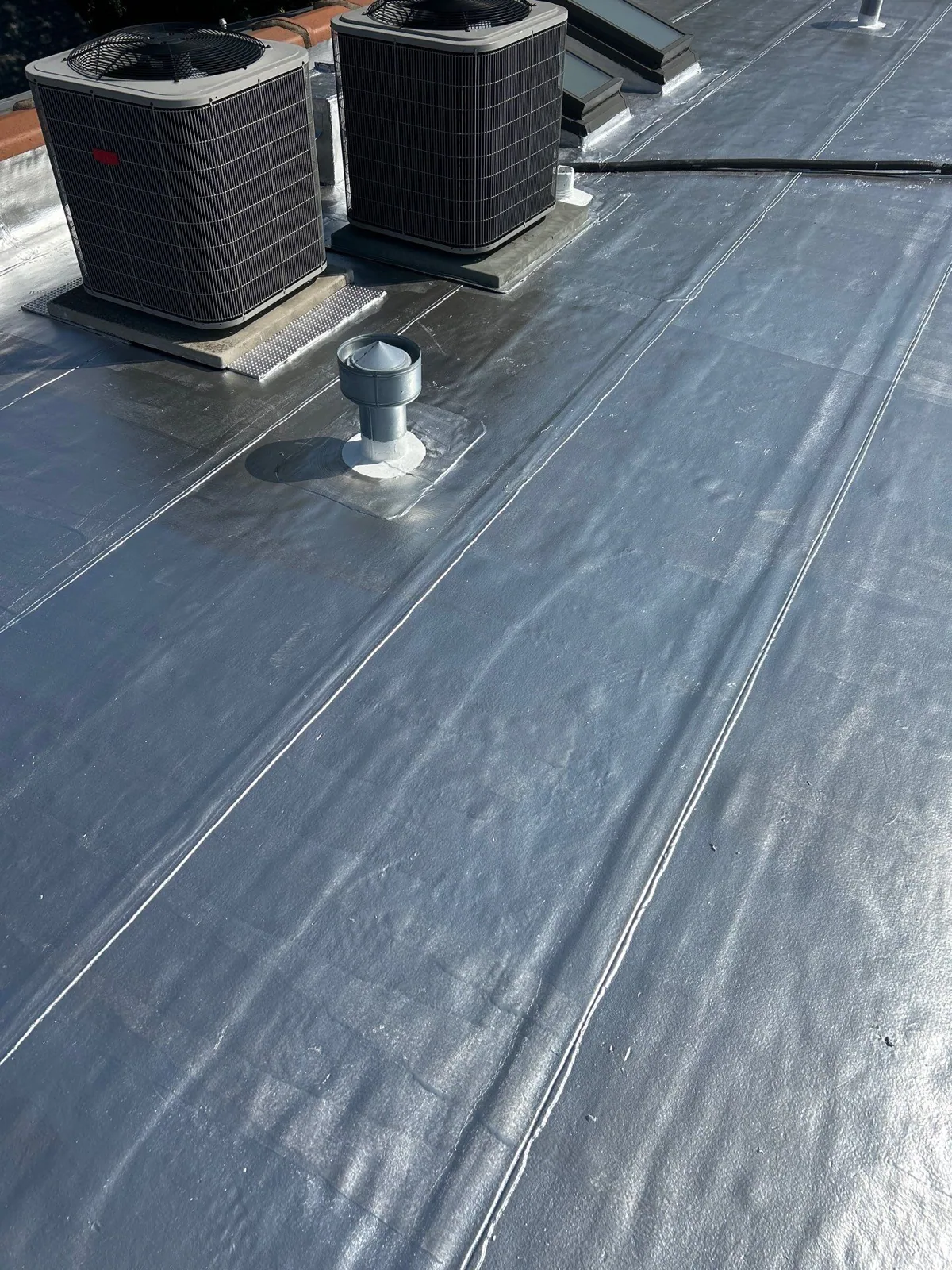
Inspection record: where punctures come from
Most punctures come from work done on the roof by someone other than the roofer. HVAC technicians drag tools, kneel on fasteners and drop panels. Window cleaners, antenna installers, solar crews and signage contractors all need access, and each can leave a cut or a gouge. Hail adds impact damage at random spots across the field; NWS records show large hail in the Metroplex almost every year, though one site can be spared.
We trace damage to its likely source by pattern. Linear scuffs between a hatch and a unit mean regular service traffic. Round holes near equipment suggest dropped screws. Scattered round marks across the field suggest hail, which is handled as hail damage. The pattern tells us where walk pads belong.
Evidence sequence: finding every cut
A visible puncture is the end of the search only if the insulation below is dry. Water that enters a hole spreads along insulation joints and deck flutes, so the stain and the hole may be far apart. An infrared moisture survey on a clear evening maps the wet area, and a core sample confirms it.
The survey also finds punctures nobody reported. We mark each with paint, photograph it from a fixed height with a scale and measure its size, so the repair can be priced as a list. A roof with a few cuts takes patches. A roof with dozens along a service route may need a protective layer, such as a cover board or a walk-pad system.
Equipment installation is a common source. When a new unit, conduit or antenna goes onto a roof, the trade that sets it often drills, cuts and drags material across the membrane. A before-and-after photo set from the roofer, taken at the start and end of that work, settles later questions, and we recommend owners require it in contracts with other trades.
Repair boundary: patch methods
Patch material has to match the roof system. On TPO and PVC, a heat-welded patch with rounded corners seals the cut and carries the load around it. On EPDM, a cured or uncured patch bonded with the right adhesive does the same. Modified bitumen takes a patch of cap sheet, torched or cold-applied. Rounded corners matter, since a square corner concentrates stress and peels first.
The repair boundary is the area of insulation and membrane replaced if moisture is found. A dry roof takes a surface patch. A wet area is cut out, the board replaced and the patch placed over the new section. A hole beneath a pond is handled with its cause, as in ponding water repair. Every patch is probed at its edges after it cools and logged on the plan.
Edges of a patch are the weak points. A patch rolled but not probed may have a channel open at one corner, so every edge is probed after it cools and the result is marked on the plan. A patch over a seam or a flashing is treated as a larger repair, with a cover strip across the full joint.
Work coordination: walk pads and traffic control
A patch repairs one injury and does nothing to prevent the next. Walk pads along the route to each unit spread the load and shield the membrane. A designated path from the hatch to the equipment tells every trade where to walk, and a sign at the access point with a short rule about tools and fasteners helps. We install pads in a pattern that follows the actual routes, with gaps so water does not pond behind them.
Near I-35E and SH 121, tenant hours and trade rules often limit roof entry, so the access log also protects the owner: dated photographs from before and after each contractor's visit show who caused a puncture, and the lease can then assign the cost.
Ladders, lifts and hoists leave marks too. A lift that sets down on a roof edge or a ladder that rests against a parapet cap can crack metal and crush membrane, so the access method is logged with the date, and the contact points are photographed before and after.
Work window: heat and weather
Patching needs a clean, dry surface. In a Texas summer the surface heats under sun that pushes regional airport highs close to 96 degrees Fahrenheit, so crews start early and avoid dragging tools across soft membrane. Spring thunderstorms can close a window quickly, so a temporary patch goes on the same day when water is entering, dated and photographed, and the permanent patch follows in dry conditions.
Skylights and hatches are special cases. A cracked dome or a hatch that does not close adds a path for water that looks like a membrane leak, and a skylight flashing repair goes into the scope when needed.
Closeout documentation: the packet
Puncture repair is priced by the number of patches, the area of any wet insulation, the access and the weather. Where the cause is repeated traffic, walk pads add a line. The options review separates these items so the property manager can approve each one, and the closeout packet holds the photographs, plan, moisture readings and product data. A larger scope should be checked against the 2021 IBC edition Lewisville enforces. Buildings in the Main Street subdistrict use the same packet.
Commercial Roofing Questions
How can one trade's damage be separated from another's?
By dated photographs taken before each visit. Without them, the pattern and the route to the equipment give a likely cause but not proof.
Is a patch enough for a hole in an older sheet?
If the sheet around it is flexible and clean, yes. A hardened or shrunken sheet gives the patch no sound edge, and the cut-out grows until it reaches good material.
Do walk pads replace repairs?
No. They reduce new damage on the routes they cover. Existing punctures still need patches.
What if the hole is over an occupied floor?
Interior protection goes up first, and the patch goes on the same day when the surface allows. A moisture survey then checks how far the water traveled.
Which punctures need immediate attention?
Any that is open to water above a protected space. Cuts in a dry area can wait for the next repair visit.
Related
Related Roofing Work
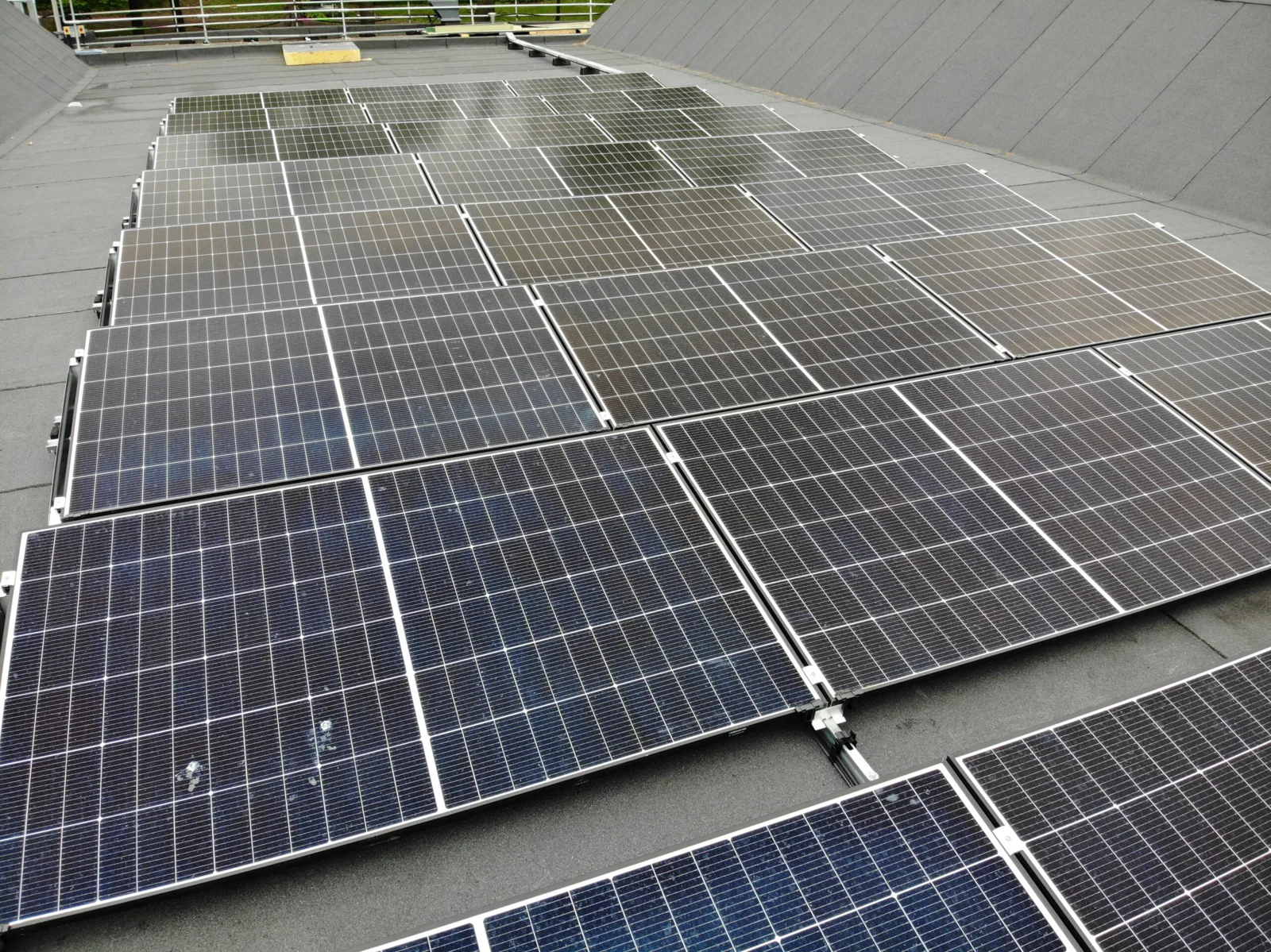
Hail Damage Roof Repair
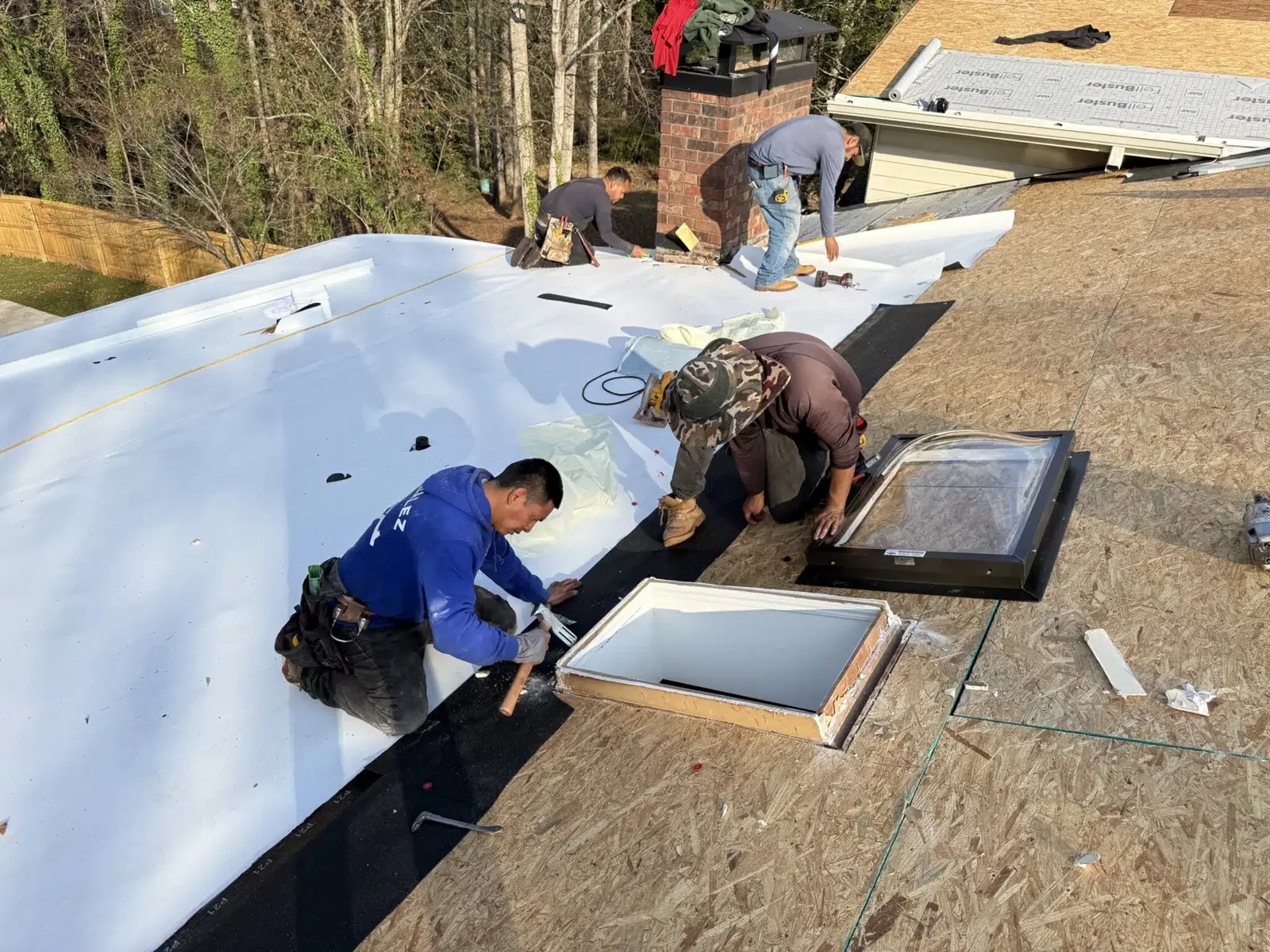
Infrared and Core-Cut Moisture Surveys
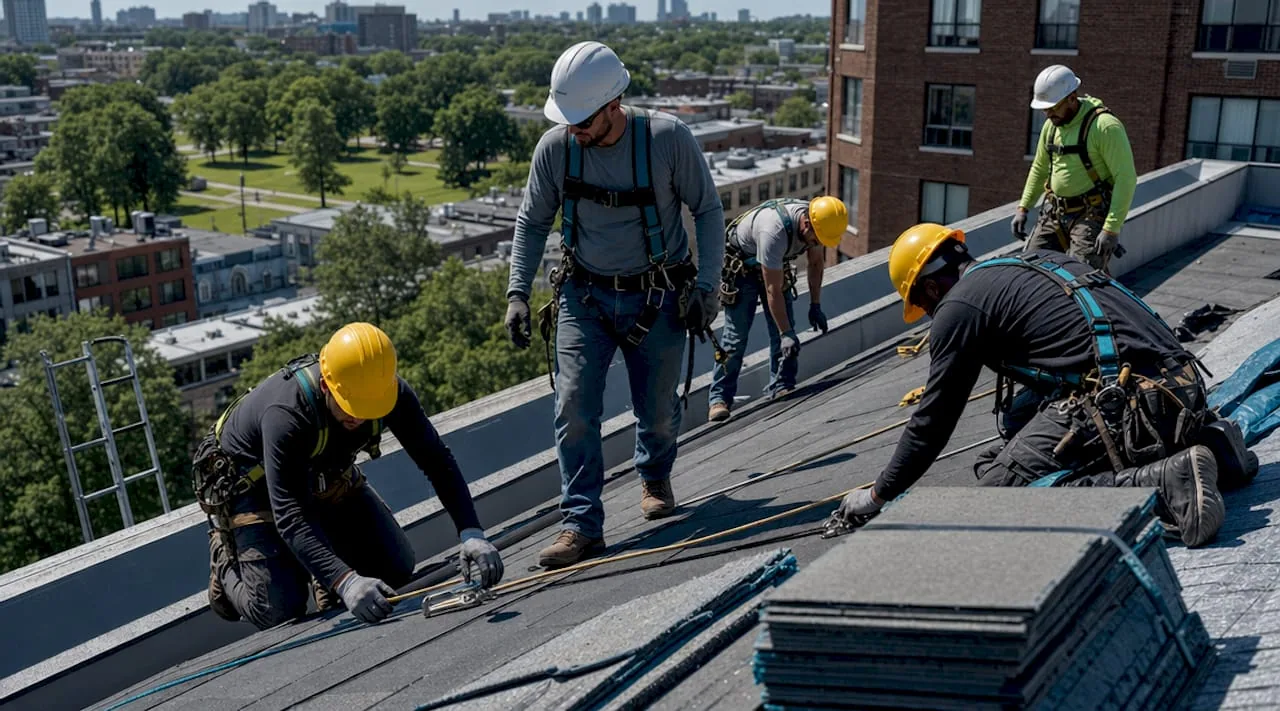
Ponding Water Roof Repair
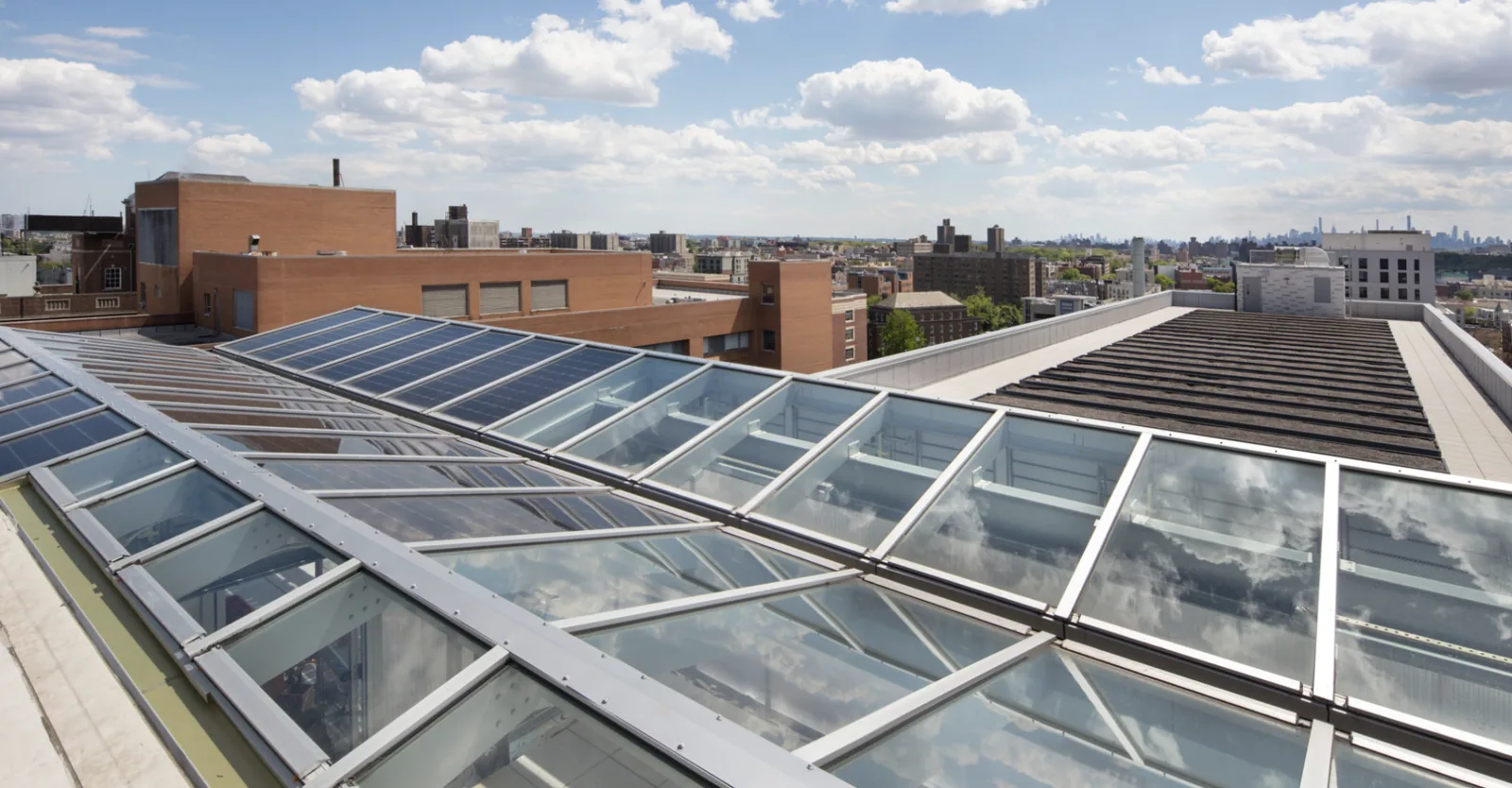
Failed Flashing Repair

Skylight and Penetration Flashing
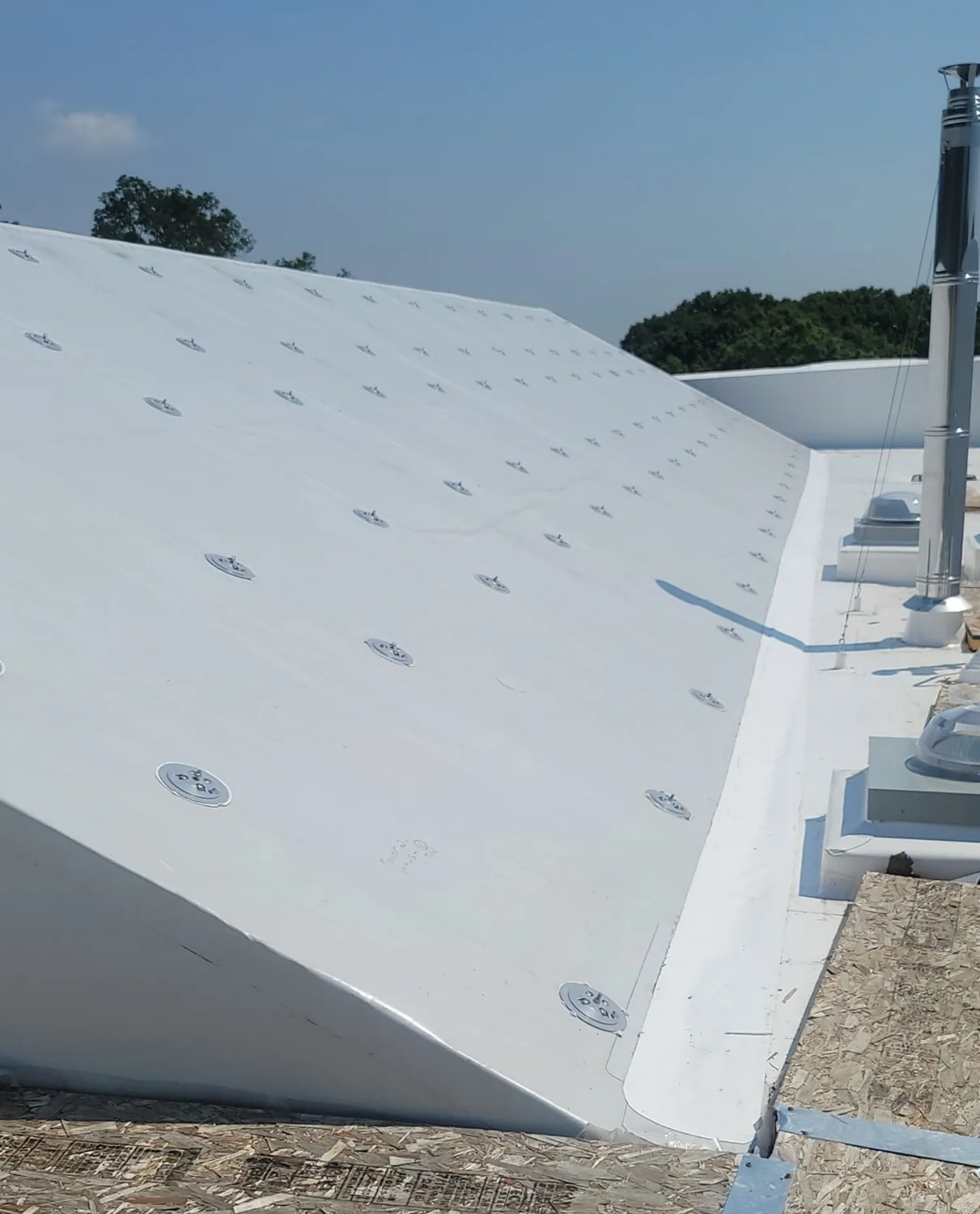
Main Street Subdistrict
Schedule an inspection and get a dated record
Send the property manager's list of leak areas, the trades that have been on the roof and how the roof is reached. We will return a dated condition record with photographs, findings and recommended next steps.