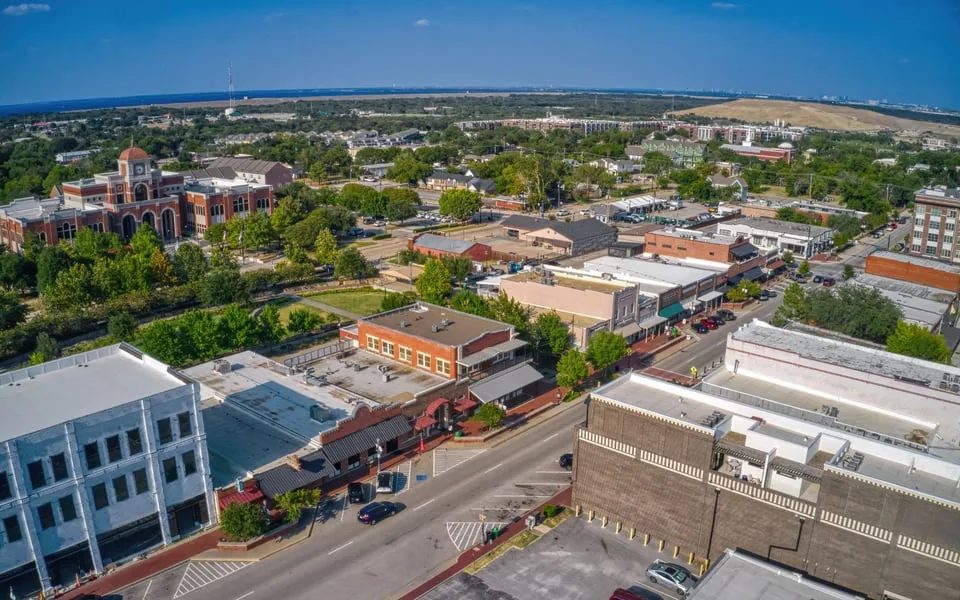
Ponding Water Roof Repair in Lewisville, TX
Home // Roof Damage Repair //
Overview
Ponding Water Roof Repair in Lewisville
Record the depth of every pond on the same day, at the same spot, with a ruler in the photograph. A pond that is described in a work order as large or deep is a worry. A pond measured at one and a half inches on a given afternoon, with a photograph beside it, is a finding. The first inspection pass on a ponding report in Lewisville, TX establishes those numbers before anyone proposes a correction, and the same positions are measured again after the next rain.
North Texas has a humid subtropical climate, and the wettest stretches are usually spring and fall. A roof that holds water through those seasons is exposed to repeated wetting and drying, and in a Texas summer the water warms under sun that reaches 95.6 degrees Fahrenheit in a July normal at the regional airport. The condition record keeps the airport figure as regional context and the pond measurements as building evidence.
Access comes with the measurement. We log how the roof is reached, who holds the key and which hours the tenants allow, so a second measurement after the next storm can be taken without a new round of calls.
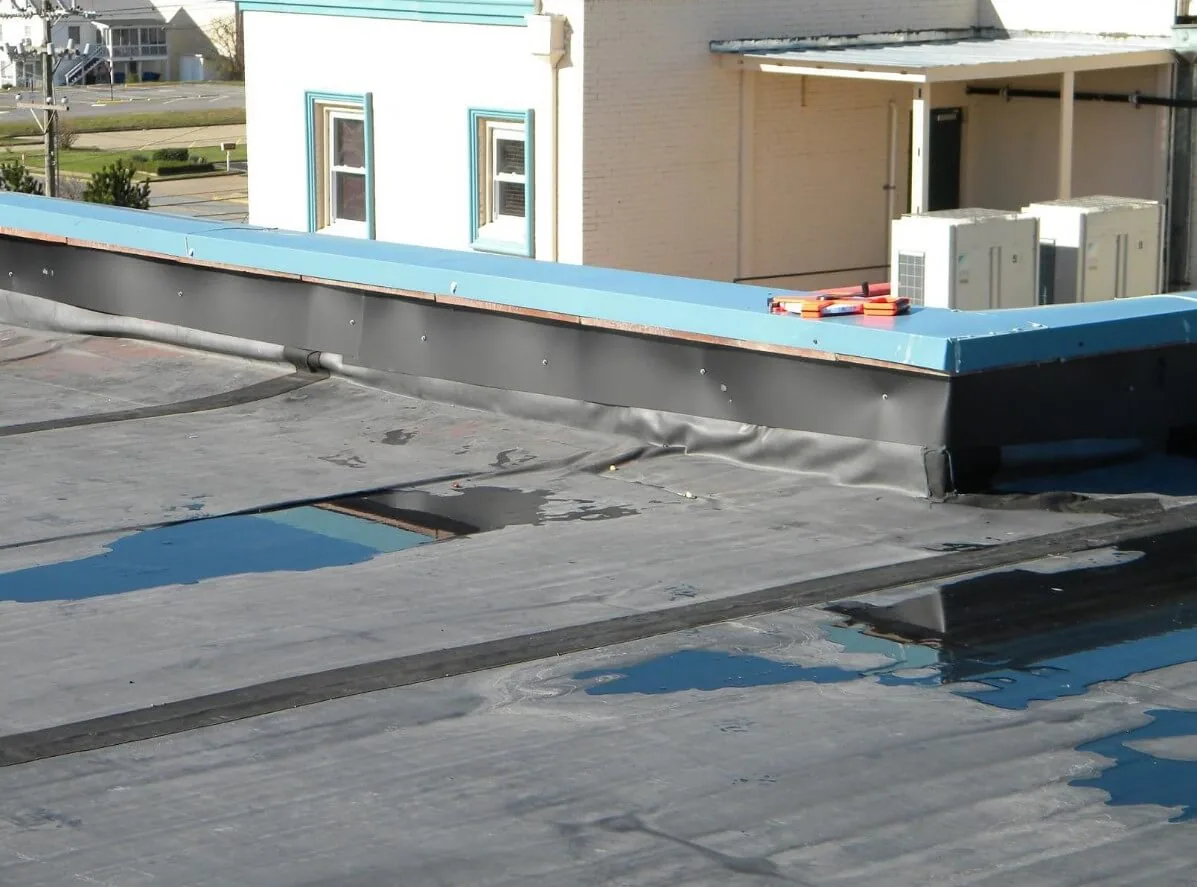
Evidence sequence: depth, duration and extent
Three readings define a pond: how deep it is, how long it stays after rain stops and how far it spreads. We take depth at the lowest point, note the time of the last rain and record the extent against column lines, drains and equipment. A film that clears within a day is documented and watched. A pond still present forty-eight hours after rain is treated as a defect, and its location goes onto the roof plan with the first measurement.
We also record what is around the pond: debris, algae, staining on the membrane and any seam, flashing or patch inside the wet area. A pond that sits on a seam adds a second question, whether the seam is still tight, and that follows the steps in seam failure repair.
Photographs are taken from the same marked positions at each visit. A pond that has grown shows it in two images, and a pond that has shrunk after a drain was cleared shows that too. The sequence runs from the whole roof zone to the pond, then to any detail inside it.
Causes: deck, drain, slope and insulation
Ponding has four usual causes, and each leaves different evidence. A deck that has deflected between supports holds water mid-bay. A drain set high, or a clogged sump, holds water around the bowl. A shallow original slope never moved water to the drain. Crushed insulation under equipment or a foot-traffic route leaves a depression. The photographs and positions sort one from another.
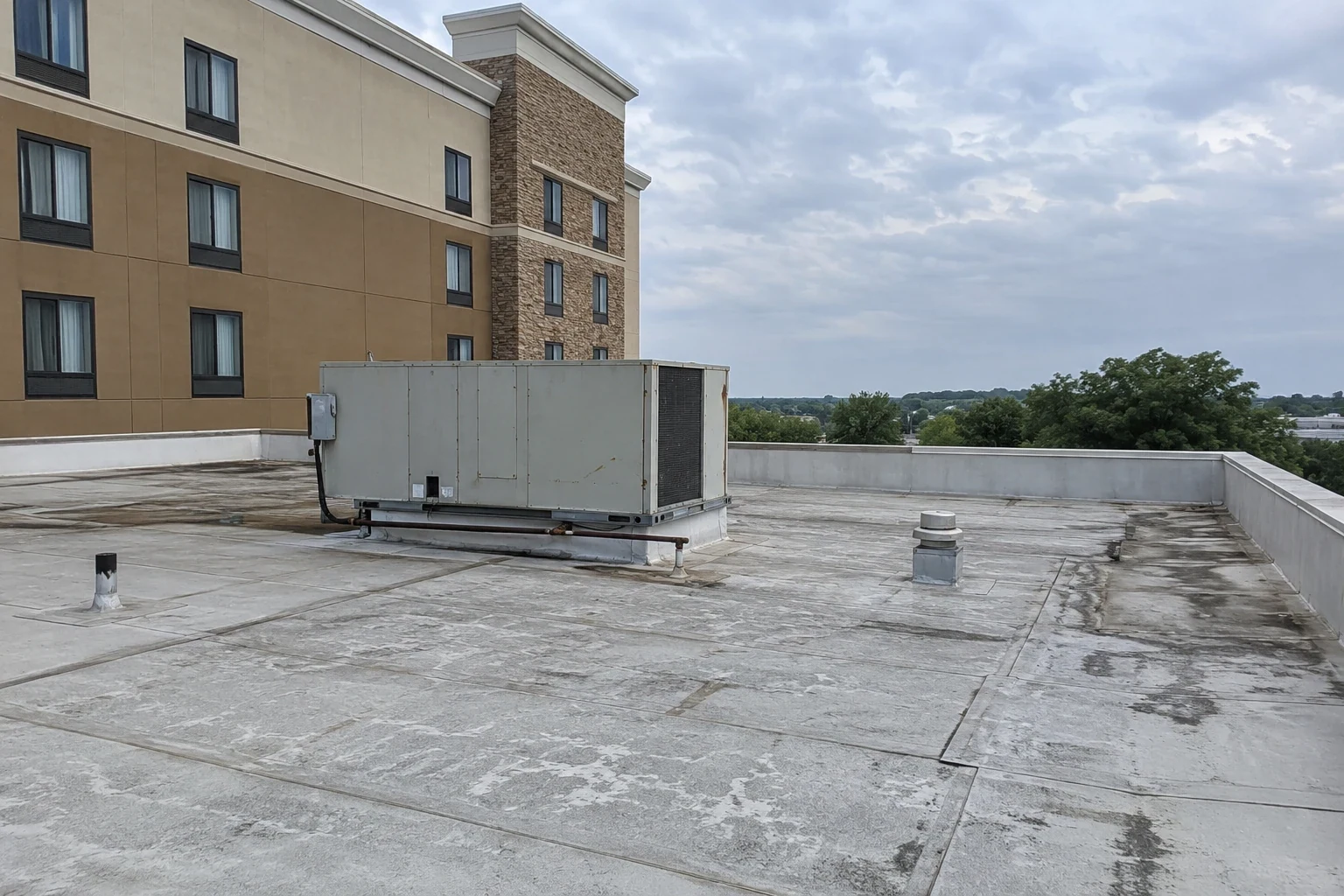
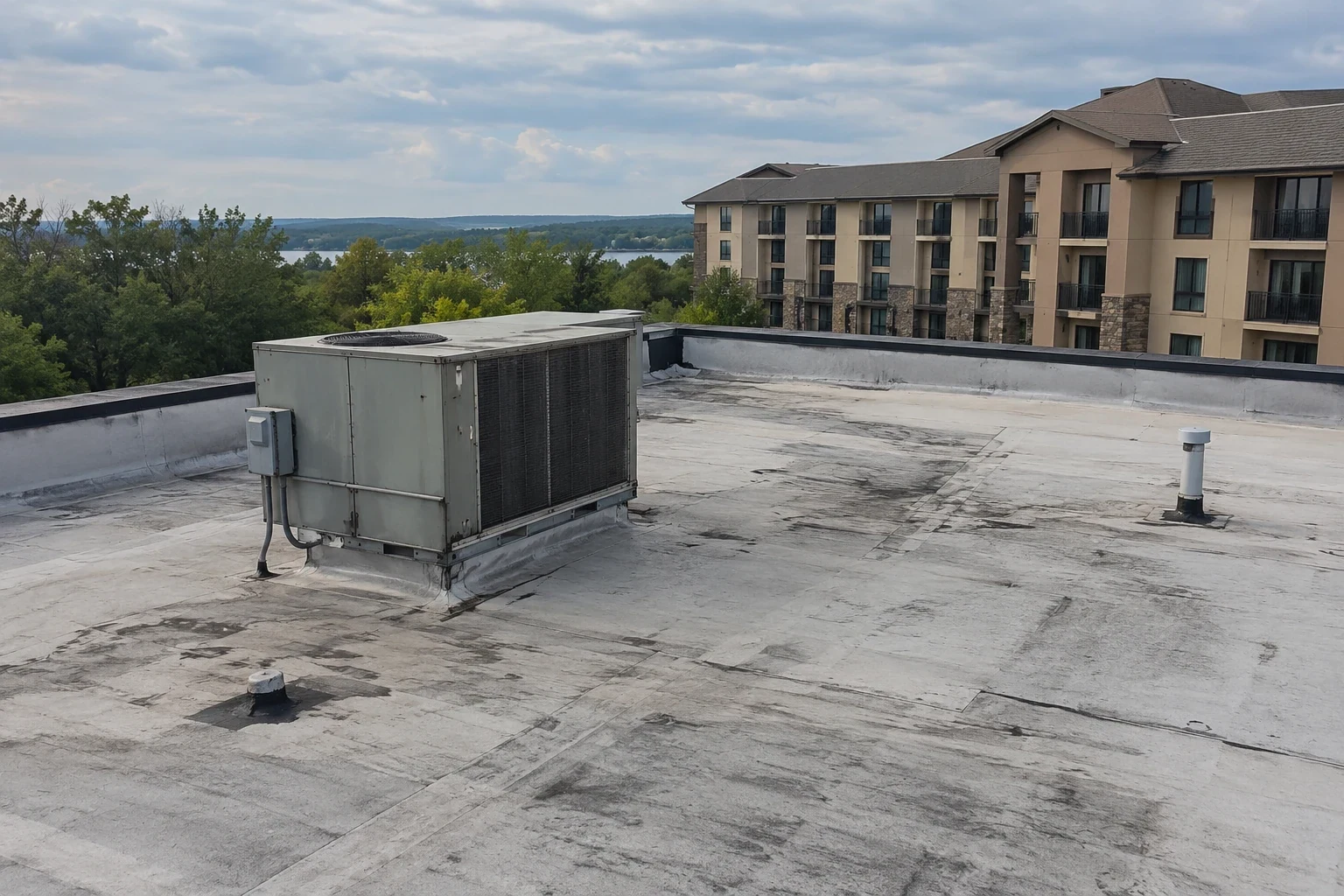
Equipment adds a fifth possibility. Heavy units on undersized supports can push the deck down and settle the curb, and the pond beside the unit is a symptom of that settlement. The curb and support check goes with every pond near a unit, since a moved curb will also open its flashing.
Where the cause is unclear from the surface, a small core at the low point shows whether the insulation is compressed, wet or missing, and whether the deck below shows corrosion or rot. Each core is photographed and patched the same day, and its position goes on the plan.
Drain pass: bowls, strainers and overflow
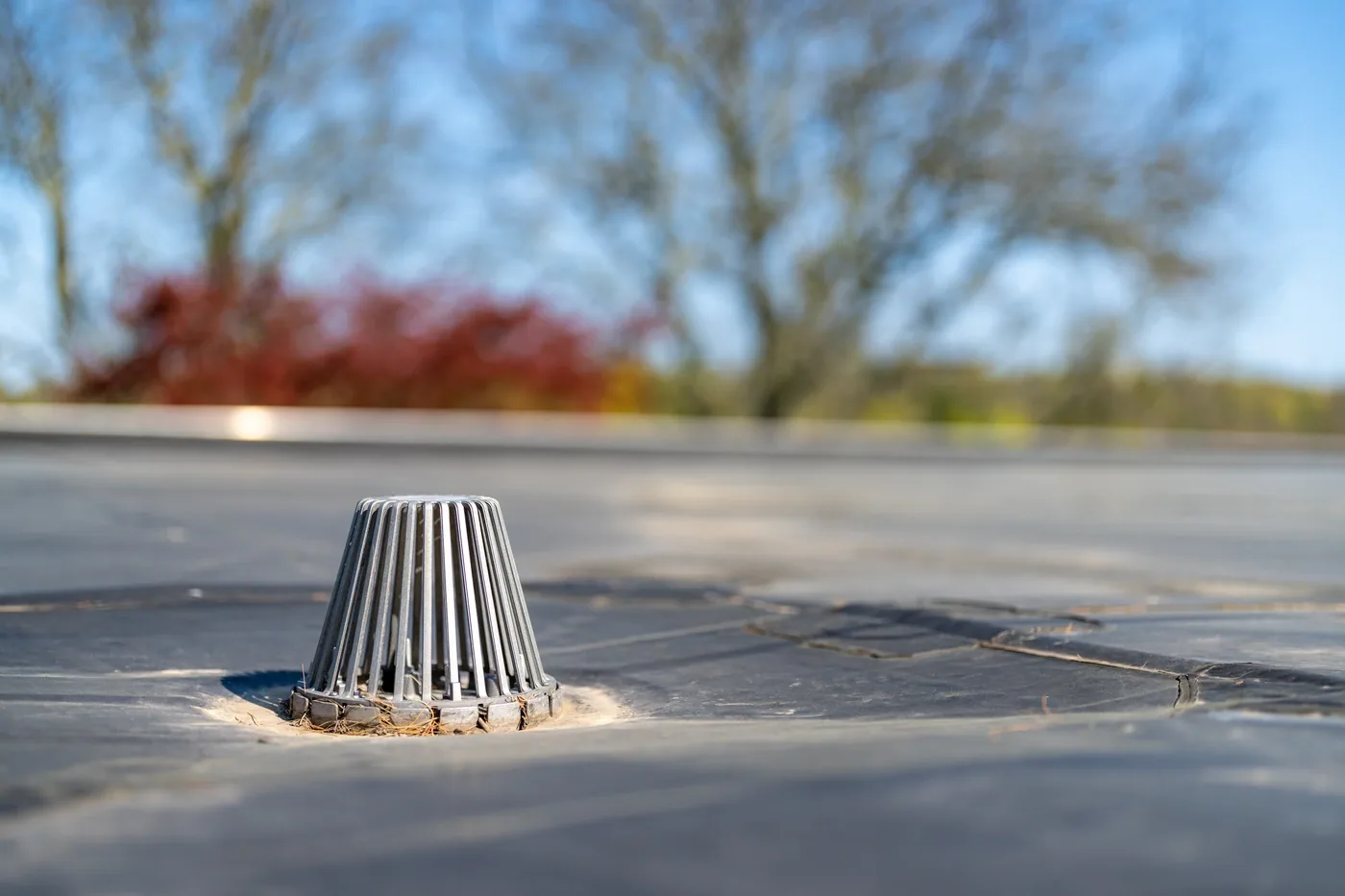
The drain pass runs before any slope work. We clear the strainer, lift it, inspect the bowl and clamping ring and run water in to see whether the line beneath takes it. A roof drain or scupper that backs up in heavy rain is partly blocked, and a line that never clears needs a camera or a plumber. Findings go into the record with a photograph of each drain before and after.
Overflow paths get the same pass. A secondary scupper or drain protects the roof when the primary path fails, and it must exist at the height the design requires and be clear. Metroplex thunderstorms can deliver rain faster than a partly blocked drain can take it, so the overflow check is part of every ponding record. A roof with a blocked primary drain and no working overflow carries the weight of the water until something gives.
Membrane condition: heat, wetting and warranty
Standing water does not destroy a sound single-ply sheet by itself, but it holds dirt, algae and heat against the surface. At the regional airport the normals count 20.2 days a year of 100 degrees or more, and a dark membrane under a warm pond runs hotter than the air. Over seasons, that can age the sheet faster than the dry field beside it. We compare the surface inside and outside the pond and photograph both.
Some warranties limit coverage for ponding beyond a stated depth or duration, so the decision file includes the measurements and the warranty paragraph that applies. A puncture found under a pond is flagged, since foot traffic across wet membrane and trapped debris makes cuts more likely.
Foot traffic across a pond is limited, because wet membrane is slick. Where a service route crosses a low area, walk pads and a marked path are added and photographed.
Options review: slope, drains and recover
Three corrections are common. Tapered insulation adds slope toward the drains. A new or relocated drain lowers the collection point. A leveling layer or cover board addresses a small depression. The right one depends on the cause, on moisture in the insulation and on the deck. A dry, sound roof can take a recover with tapered insulation. Wet board must come out first, and the scope moves toward replacement of that section.
An infrared moisture survey and core samples decide between those paths. The options review states each choice with its cost drivers: area, insulation depth, drains added, access and the work window. Any permit should be checked against the 2021 IBC edition and amendments Lewisville has in force.
Cost depends on the number of ponds, their area, the cause, the insulation depth and the access. A drain clearing is a short visit, a new drain involves plumbing coordination and a tapered system is priced by area and thickness. The options review shows each as its own line.
Closeout documentation: measured before and after
The closeout packet shows each pond before and after, with the same positions and the same ruler. It holds drain photographs, test results, product data and the follow-up date. Owners of properties near I-35E and SH 121 can use the same packet format across a group, and buildings in central Lewisville along I-35E are scheduled by the same sequence. A visit after the first heavy rain confirms the water now leaves the roof.
Commercial Roofing Questions
How long must water stand before it is a defect?
Forty-eight hours after rain stops is the usual test, though a warranty may set its own limit. The record shows depth and duration on each visit.
Does a ponded roof always need replacement?
No. Wet insulation moves a section toward replacement. Where the board is dry and the sheet is sound, drains, tapered insulation or a recover can correct the water path.
Who should clear drains between visits?
A trained person with fall protection. We offer drain clearing as part of maintenance, with before and after photographs for the file.
Can the roof be measured in summer?
Yes. Heat does not change the depth reading, but hot surfaces soften, so crews walk with care and avoid dragging tools across the membrane.
What if a pond keeps coming back after a repair?
Then the cause was not the one corrected. The next pass re-measures, checks the deck and supports and revises the scope with the new evidence.
Related
Related Roofing Work
Split and Open Seam Repair
Rooftop Equipment Curbs and Supports
Roof Drains, Scuppers and Ponding Correction

Membrane Puncture Repair
Roof Recover and Overlay Systems
Infrared and Core-Cut Moisture Surveys
Schedule an inspection and get a dated record
Send the property manager's list of ponding areas, access limits and past roof plans. We will return a dated condition record with measurements, photographs and recommended next steps.