Commercial Roof Repair in Lewisville, TX
Overview
Commercial Roof Repair in Lewisville
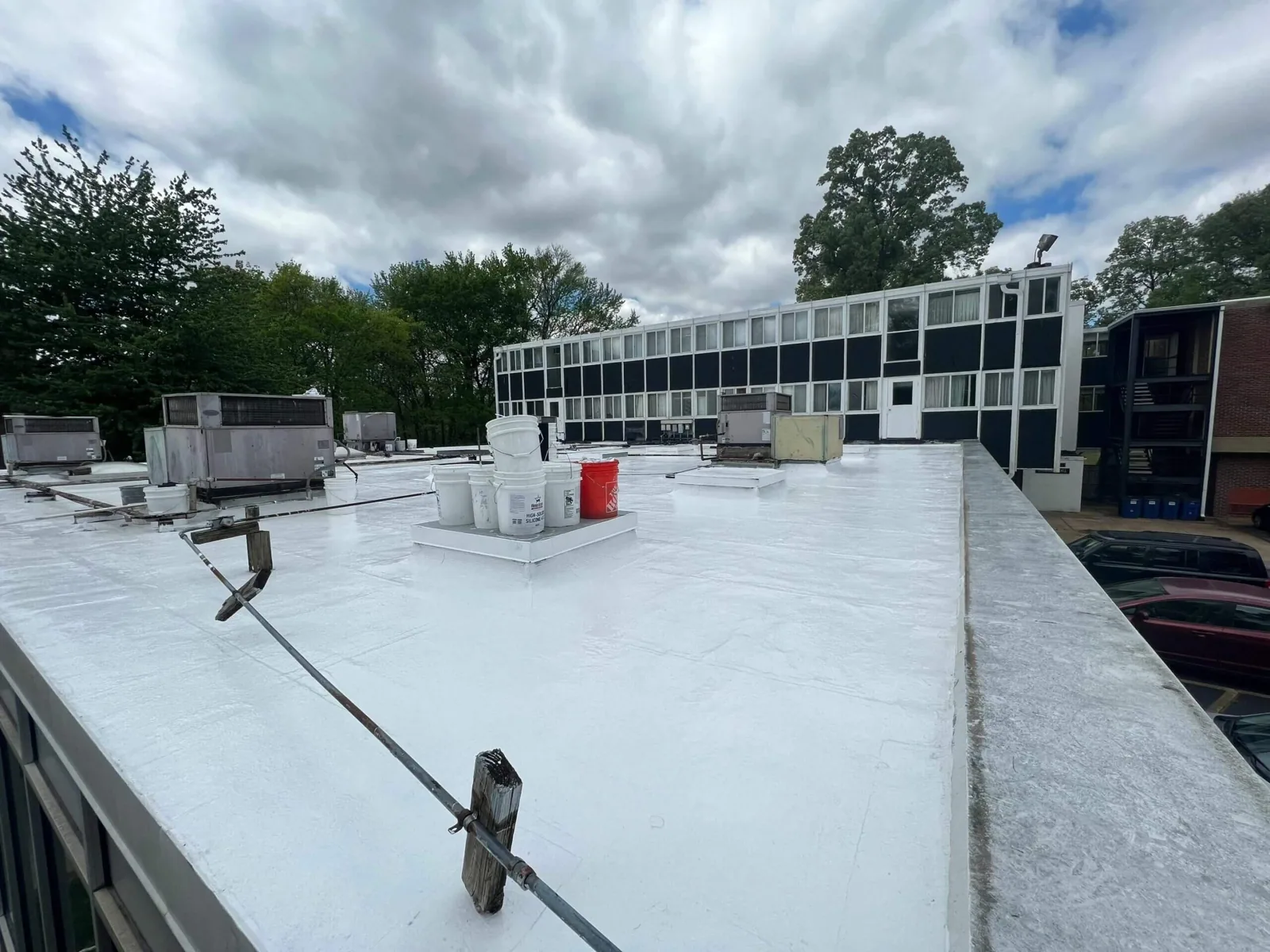
Two photographs make the start of any repair: the defect up close, and the roof zone around it from a few steps back. The second one is easy to forget to ask for, and it shows whether the split seam in front of you is a single failure or the first visible sign of a pattern. On a Lewisville, TX building, where spring storms and long hot summers work on the same surfaces, that context is what separates a useful repair from a temporary one.
Planned repair is the work you schedule before water finds its way into the ceiling. It covers membrane, seams, flashings, sealants and the small details that fail first. We mark each item on the roof plan, state what the fix will be, and record the finished condition.
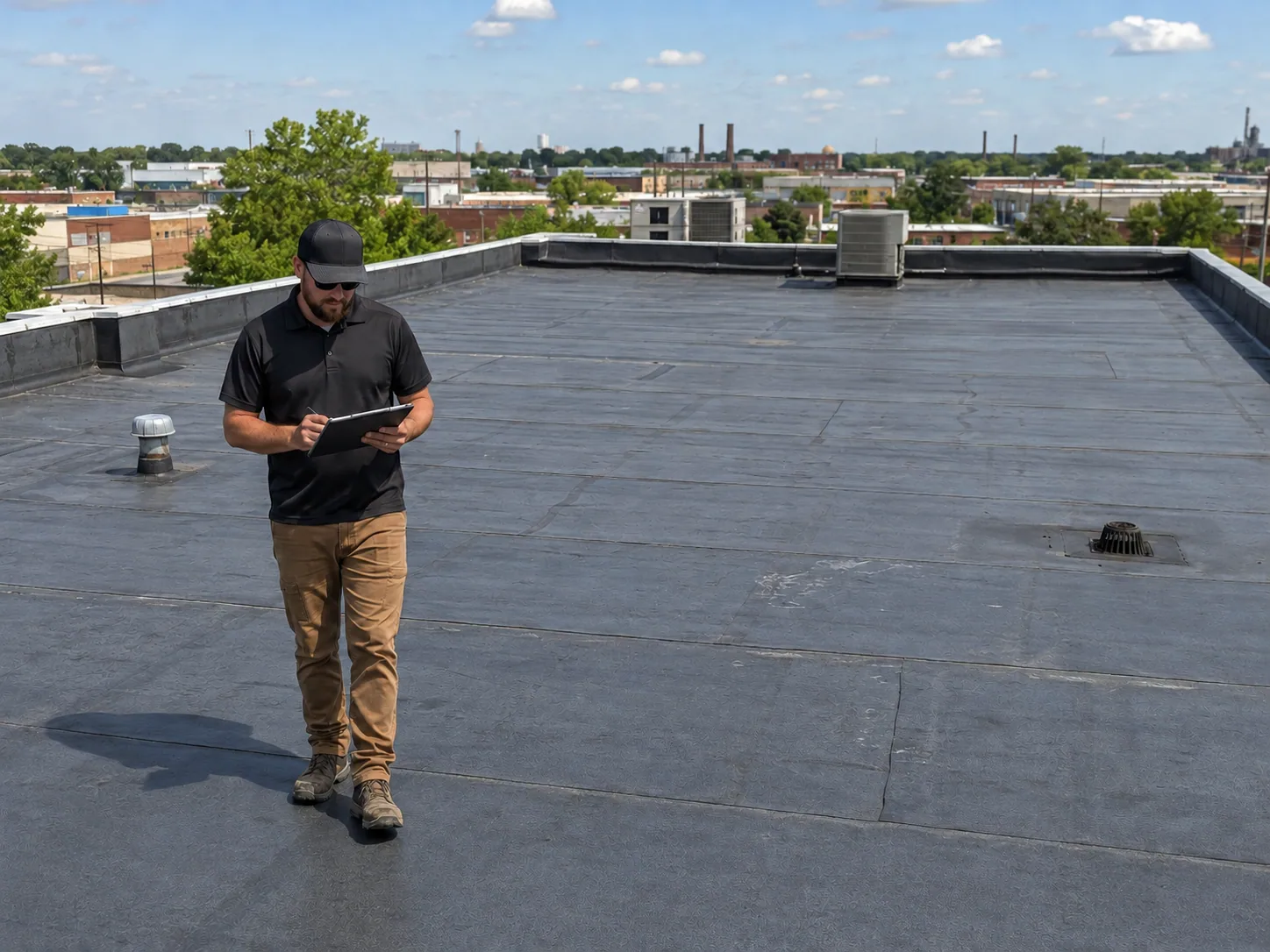
Evidence sequence: finding the cause before the patch
A patch placed over the symptom leaves the cause in place. So the first pass walks the roof in a fixed order, starting at the perimeter edge and moving through penetrations, seams and laps, drains and finally the open field. Each finding is photographed with a location mark, a short description and a reading of the surface around it. Wet or soft insulation under a defect changes the repair, and a moisture reading tells us if it has.
We also look at what the building is doing. Equipment vibration, foot traffic to rooftop units, a drain clogged with debris from a nearby tree line: these produce repeat failures in the same spot. A repair that ignores them will be redone. The dated finding names the cause when it can be named, and says so plainly when it cannot be settled without a further test.
Membrane and seams: how the common defects are fixed
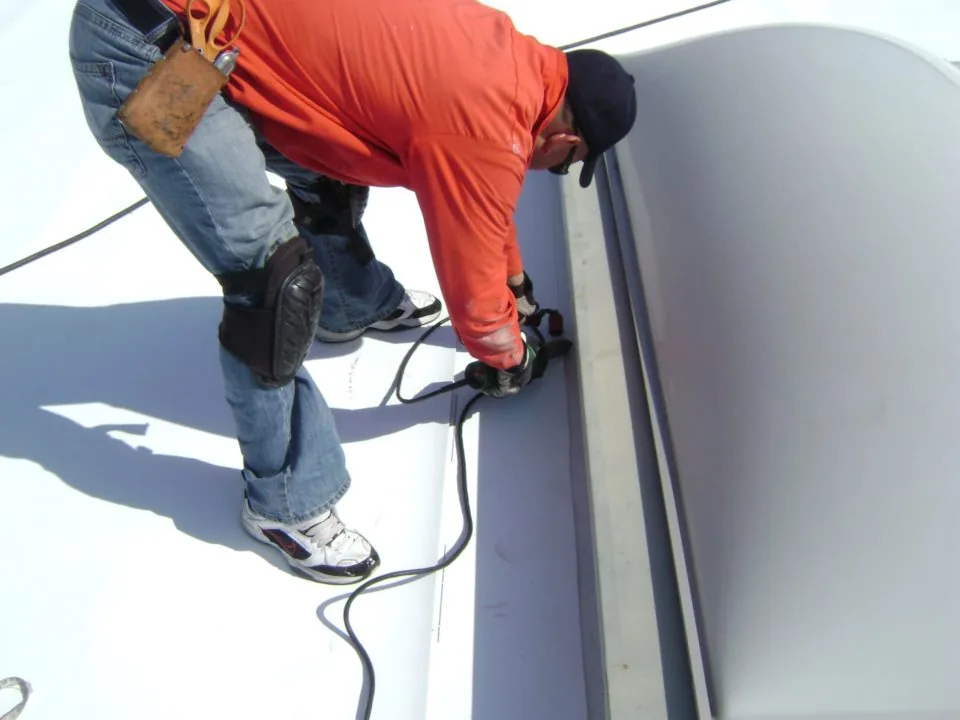
Single-ply membranes fail at their seams more often than in the field. Heat-welded seams in TPO and PVC can open where the weld was cold or contaminated, and the repair is a clean, probed weld with a cover strip where needed. An EPDM roof relies on seam tape or adhesive, and the repair there means cleaning the lap, applying primer and a new splice, then rolling it down.
Punctures and tears get a patch sized to the damage with generous overlap, but only after the surrounding membrane has been checked for brittleness. UV and heat harden older membranes, and a patch on a surface that has lost its flexibility tends to lift at the edge. When that surface condition shows up, the record says the repair is a short-term action and flags the area for a later decision on broader work. The related damage types, such as seam failure and membrane punctures, each have their own fixes.
Attachment detail: flashings, curbs and edge metal
Most active leaks start at a transition, not in the open roof. Base flashings pull away from walls, sealant dries and cracks around pipes, curb corners open, and coping joints separate as the metal expands and contracts through hot afternoons and cooler nights. Repairs here are mechanical as well as sealant-based: re-fasten the termination bar, replace the cracked boot, install a new corner patch, reset the coping and seal the joint.
Sealant alone is the weakest option for flashing, and we use it as a supplement rather than the repair. If the underlying attachment is failing, flashing failure repair means re-establishing the mechanical hold first. Each finished detail is photographed from two angles so the record shows what the termination looked like after the work, not just that someone visited the roof.
Repair boundary: when the fix has reached its limit
Repair is the right call when failures are isolated and the surrounding system is sound. It stops being the right call when the same roof keeps producing new failures. We track the count and location of repairs in the roof record. If one zone has been patched repeatedly, if the membrane is brittle across the field, or if moisture surveys show wet insulation spreading, the record tells the owner that the next stage is replacement or a restoration scope.
That boundary is a financial one as well as a technical one. Each repair is a cost with a decreasing return, and the record lets an asset manager see where the curve bends. Without it, a roof can absorb repairs for years while the underlying system loses ground.
Work window: repairs on properties that stay open
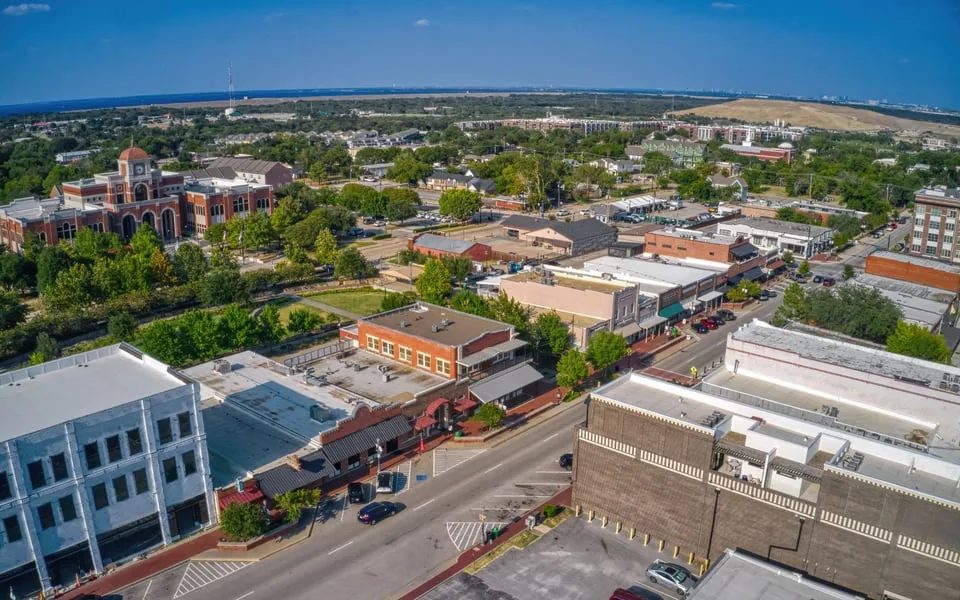
The properties in Lewisville that need repair vary a great deal. The Eastern Gateway at the SH 121 entrance has retail, industrial and higher-density mixed-use development, and each of those has different access rules. A retail center wants rooftop work finished before customers arrive, an industrial building wants clear access from the dock side, and a mixed-use building needs notice to its residential tenants before anyone steps on the roof.
We settle those windows with the property manager before the crew shows up. For work in the Eastern Gateway area or along I-35E, a short repair visit can be set for early morning when the roof is cool and the lot is quiet. Repairs on membrane depend on temperature for adhesive cure and weld quality, which is another reason to plan the time of day rather than take the first open slot.
Closeout documentation: what the repair file contains
Each repair visit ends with a short packet: the before and after photographs, the roof plan with every item numbered, the materials used, and any follow-up test. It goes into the decision file beside the earlier condition record. Over a season or two the file becomes the best argument for or against a bigger spend, and it is the first thing a lender or buyer will ask to see. Owners who want the work to continue on a schedule can fold it into preventive maintenance.
Commercial Roofing Questions
How do you decide whether a defect gets a patch or a larger repair?
The surrounding membrane decides it. If the material beside the defect is flexible, clean and dry, a patch holds. If it is brittle, wet underneath or already repaired, we mark the item as a short-term fix and note the area for a wider scope in the record, with photos of the condition that led to the call.
Why do seams open again after a repair?
Repeat openings usually trace to the cause rather than the splice. A cold weld, dirt in the lap, movement from rooftop equipment, or ponding at the seam can undo a clean repair. We look for the pattern in the first pass and address the source, then probe the finished seam so the record shows it was tested.
Does heat affect when repairs should be done?
Yes. Adhesives, primers and welds all cure and bond differently on a hot surface. With DFW averaging about 20 days a year at or above 100 degrees, we plan membrane work for cooler parts of the day and avoid forcing a repair on a roof that is too hot to bond properly.
What should a roof repair record show after the work?
Location, cause, method, materials and a finished photograph for every item, plus any test result such as a probed seam or a moisture reading. A repair with no record cannot be compared with the next one, so the packet lists what was done and what still needs watching.
Can repairs wait until after storm season?
Some can and some cannot. Open seams, torn membrane and failed flashings are exposed to the next thunderstorm, and spring is the peak severe-weather season across the Metroplex. Lower-risk items such as worn sealant can be scheduled, but the record should say which category each item is in.
Related
Related Roofing Work
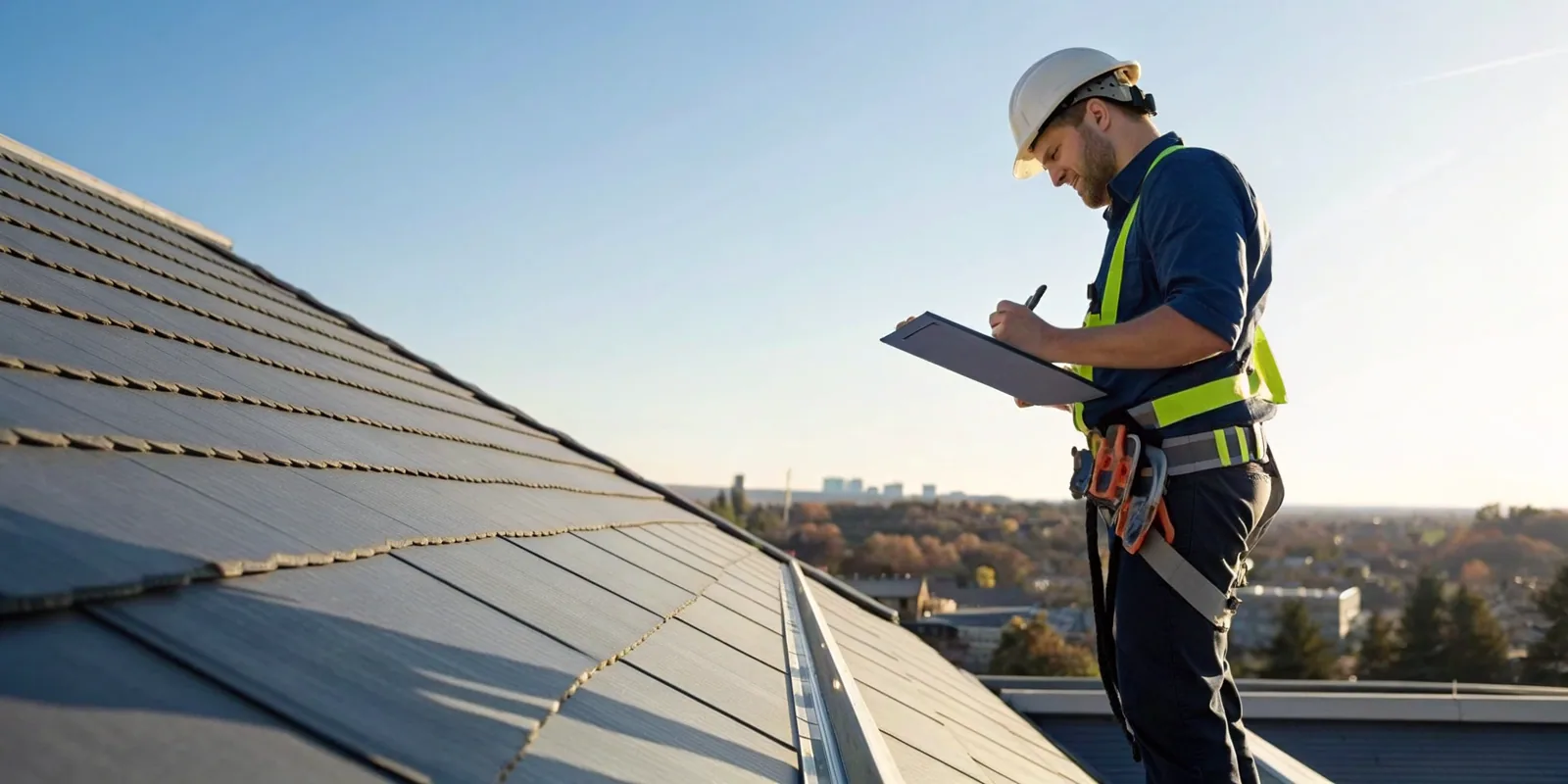
TPO Roofing
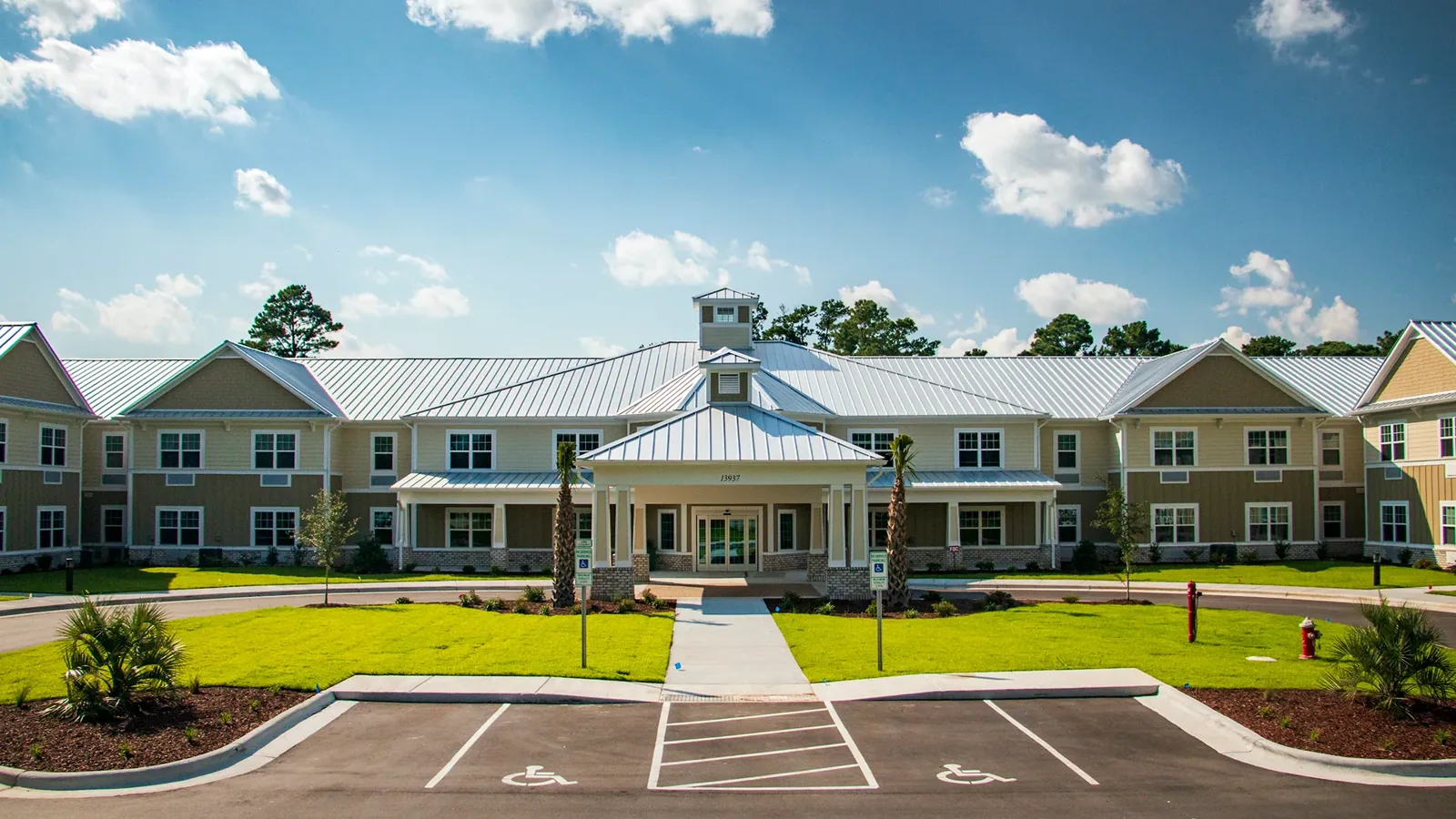
EPDM Roofing

Split and Open Seam Repair

Membrane Puncture Repair
Failed Flashing Repair
Commercial Roof Replacement
Start with a dated inspection
Schedule an inspection and receive a condition record with photos, findings and a repair list marked patch, fix or monitor, so each decision is clear before work begins.