
Cold Storage Roofing in Lewisville, TX
Home // Property Types We Roof //
Overview
Cold Storage Roofing in Lewisville
Ice on the underside of the deck, photographed with a date, is the finding that changes a cold storage roof job from a leak search into a moisture investigation. In a refrigerated building in Lewisville, TX the temperature difference across the roof is large for much of the year, and the summer air outside is humid. If the vapor control layer has a gap, water vapor travels through it and freezes in the insulation, where it builds up quietly until the board is a slab of ice and the compressors work harder to hold the setpoint.
The first inspection pass looks from both sides: frost patterns from inside, membrane condition from above, and the penetrations that connect the two.
Local context: cold chain along the Metroplex corridors
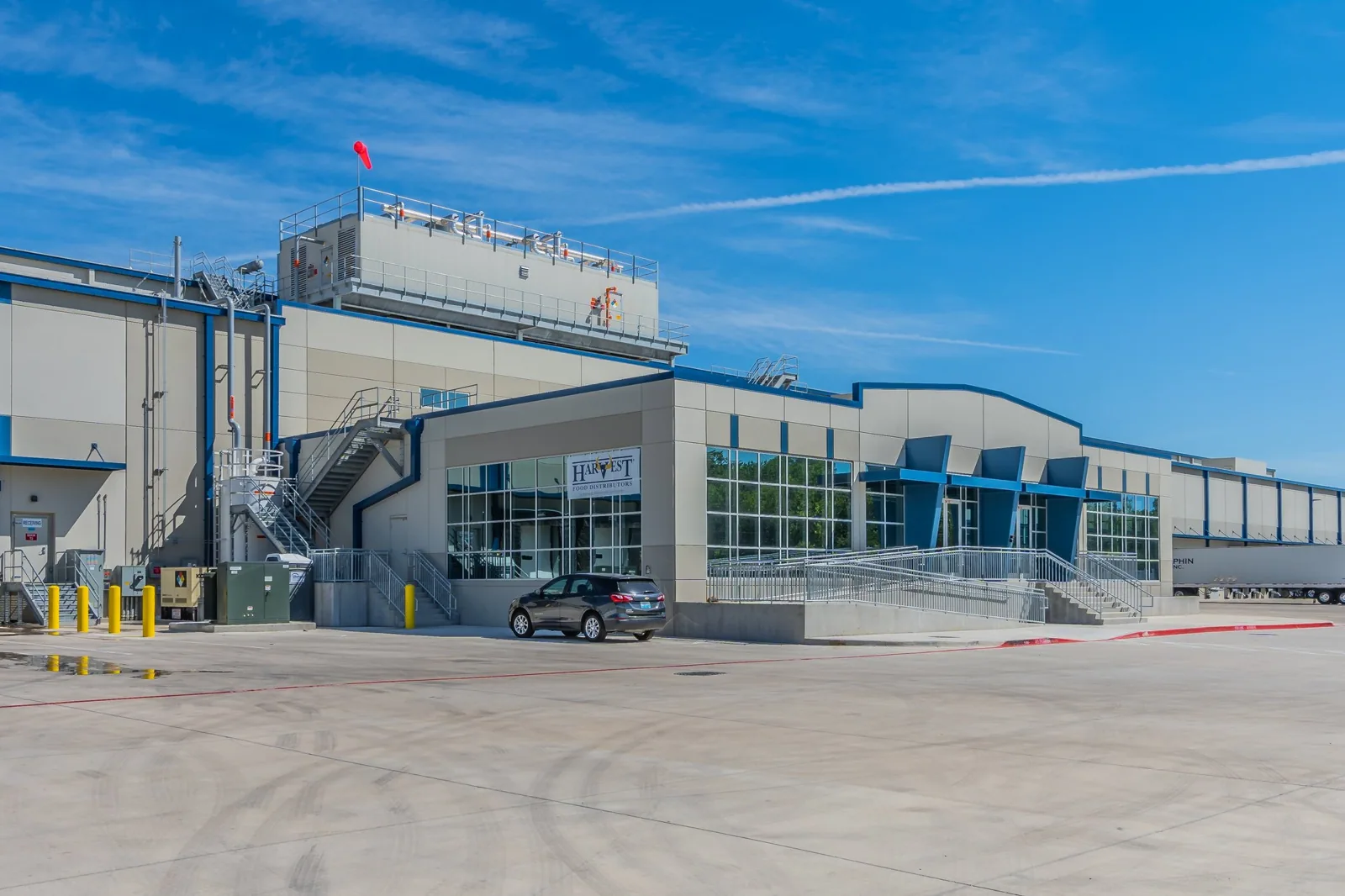
Warehousing and storage ranked among the fastest-growing Metroplex industries between 2012 and 2022 in the Texas Comptroller's figures, and the city's planning materials describe industrial park, commercial and retail areas along the I-35E and SH 121 corridors. Flower Mound lists distribution among its local employers, and Carrollton identifies Valwood Industrial Park and the Frankford Trade Center in its comprehensive plan. Cold storage fits inside that pattern as a building type, not as a fact about any one property.
That is why each scope starts from the building in hand. We do not assume a roof type or a refrigeration layout from the use. The condition record states what the roof is made of, how it is attached and what it covers.
Vapor path: where moisture travels
A cold storage roof has a warm side and a cold side, and the vapor control layer sits on the warm side of the insulation. Every refrigerant line, conduit, sprinkler riser or drain that passes through the layer is a possible gap. We number the penetrations on the roof plan and compare them with the frost map from inside, so each patch of ice can be traced to a point of entry.
Gaps can be tiny. A pencil-thin opening around a conduit moves enough humid air over a season to leave a visible ice mass. The repair seals the gap at the layer, and the finding goes into the decision file with a photograph from below and a photograph from above.
Penetrations are logged as a list, not a story. Each refrigerant line, conduit, sprinkler riser and drain that crosses the layer gets a number, a location on the roof plan, a photograph from below and a note on its seal. The list is checked again after the first cold-to-hot swing following repairs, because a seal that held in mild weather can open when temperatures change.
Moisture reading: locating wet insulation
Infrared scans behave differently over refrigerated space. The temperature contrast is high, so thermal patterns can come from wet insulation, thermal bridging at fasteners, or both. We combine the scan with core samples and probe readings, and we note interior setpoint, deck temperature and outdoor temperature at the time of the scan so a later scan can be compared fairly.
An infrared moisture survey sets the repair boundary. Wet board is cut out, replaced with insulation of equivalent thermal value and sealed to the vapor layer, and the membrane is repaired above it. The record shows the removed area and the readings that justified its size.
Readings are never reported as a bare pass or fail. The record lists where each probe went, what it read, and which areas could not be reached, so the owner knows which conditions were verified and which remain assumptions that a later test could settle.
Heat and storm: the exterior load
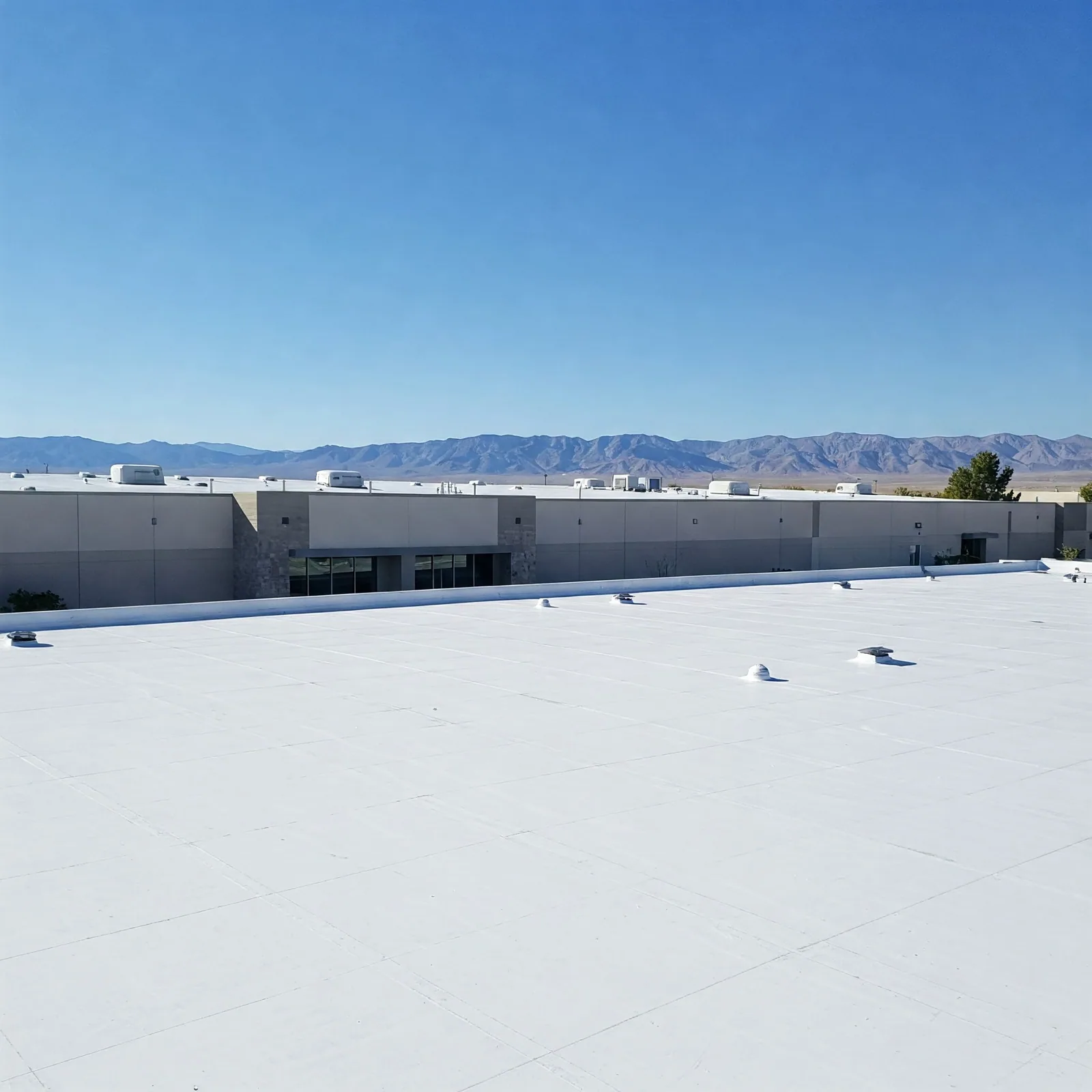
Mid-nineties July and August highs and about twenty triple-digit days a year put heavy heat on a membrane over a cold box. A dark sheet over refrigeration adds load to the compressors; a reflective sheet reduces it. A cool roof surface is therefore a refrigeration question as well as a roofing one.
Hail adds a second exterior test. The weather service lists large hail among near-annual Metroplex hazards, though a given building may be missed, and a bruised membrane over wet or frozen insulation is a different repair than a bruise over dry board. We photograph the zones in order and read moisture where the sheet is open, then record the dated finding.
Attachment detail: membrane and insulation choices
Common cold storage assemblies use a single-ply sheet over thick rigid insulation, or a spray-applied foam layer with a protective coating. Each has trade-offs. Mechanically fastened sheets can create thermal bridges at the fasteners. Adhered sheets avoid that but need compatible adhesives and a clean substrate. Spray polyurethane foam bonds without fasteners but depends on dry weather and careful surface preparation.
The city has adopted the 2021 International Building Code, and the assembly must meet whichever edition and amendments govern the permit in question, which we confirm before the scope is final.
Thickness is the other number worth recording. Freezer roofs carry far more insulation than ordinary commercial roofs, and a recover that adds weight to a deck already loaded with board needs a structural check before any new layer is ordered. The decision file shows the existing layers, the proposed layers and the load review beside them.
Work coordination: opening a roof over a cold box
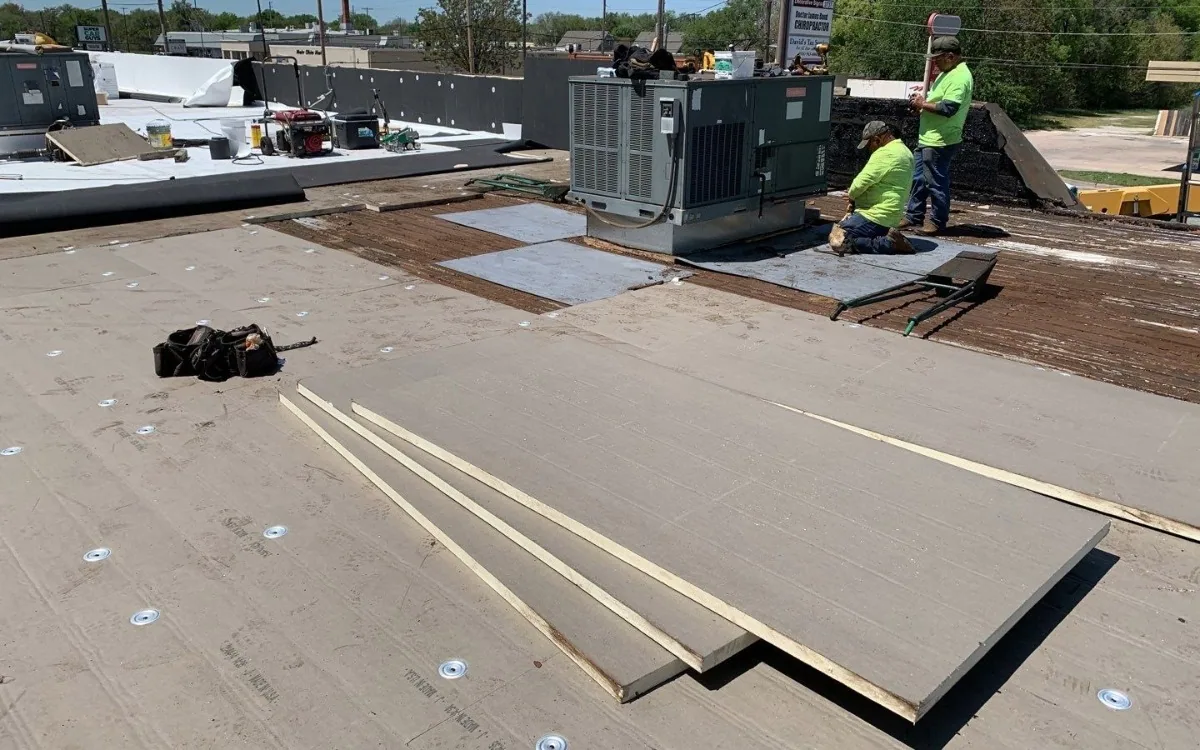
An open roof over a freezer admits warm, moist air to a space that cannot take it. Work is staged in bays small enough to close the same day, with temporary vapor protection at each opening. The access log names the facility contact, the product locations to protect, the defrost cycles to avoid and the hours when doors are least active.
Refrigeration equipment on the roof has its own rules: nobody on the roofing crew touches controls, shutdowns come through facility engineers and each one is recorded. The occupied building reroofing plan sets the stop conditions: rain, wind and any temperature drop that makes sealing unsafe.
Dock and door traffic sets the pace. Because freezer doors open on a schedule the facility cannot change, roof sections above door vestibules are worked at the hours when those doors are least active, and the access log notes who confirmed that the vestibule below was clear.
Closeout packet: the file for a refrigerated building
The packet holds the frost map, the penetration list, the moisture readings, product sheets for the insulation and vapor layer, the access log and dated findings with photographs. Owners with a neighboring warehouse, a distribution center or a plant under a different roof system can read the cold storage file next to theirs. Next to it sits an inspection date, set after the first hot season on the new work.
Commercial Roofing Questions
What does frost on the deck underside mean?
Moisture is moving through a gap in the vapor layer and freezing in the insulation. The source is found by matching the frost map to the roof penetrations.
How is wet insulation found in a cold building?
By combining an infrared scan with core samples and probe readings, and by recording the interior and exterior temperatures at the time of the scan.
Does roof color matter over refrigeration?
Yes. A reflective surface lowers the heat load that the compressors have to carry, so the surface choice belongs in the replacement decision.
Can the roof be replaced without warming the space?
The work is staged in small bays with temporary vapor protection at each opening, and bays are closed before the crew leaves.
What triggers a follow-up inspection?
The first hot season after repairs, and any hail report. Both prompt a fresh photo sequence and moisture reading compared with the baseline.
Related
Related Roofing Work
Carrollton
Infrared and Core-Cut Moisture Surveys
Cool Roof Installation
Spray Polyurethane Foam (SPF) Roofing
Occupied Building Reroofing

Warehouse Roofing
Schedule an inspection from both sides
Send interior frost photographs and the roof plan, then schedule an inspection to receive a dated condition record with photos, findings and recommended next steps.
