
Distribution Center Roofing in Lewisville, TX
Home // Property Types We Roof //
Overview
Distribution Center Roofing in Lewisville
Dock door counts and shift hours shape a distribution center roof job more than the roof does. A fulfillment building in Lewisville, TX may load trucks across two or three shifts, and the roof zones above the sort floor cannot be opened on the same terms as the zones above a quiet storage bay. Before anyone prices a repair, the access log should list when each zone can be entered, who has to confirm the floor below is protected, and what the building stops doing if a section is open at five o'clock.
The first inspection pass records those constraints beside the roof findings, so the repair boundary and the work window are written together.
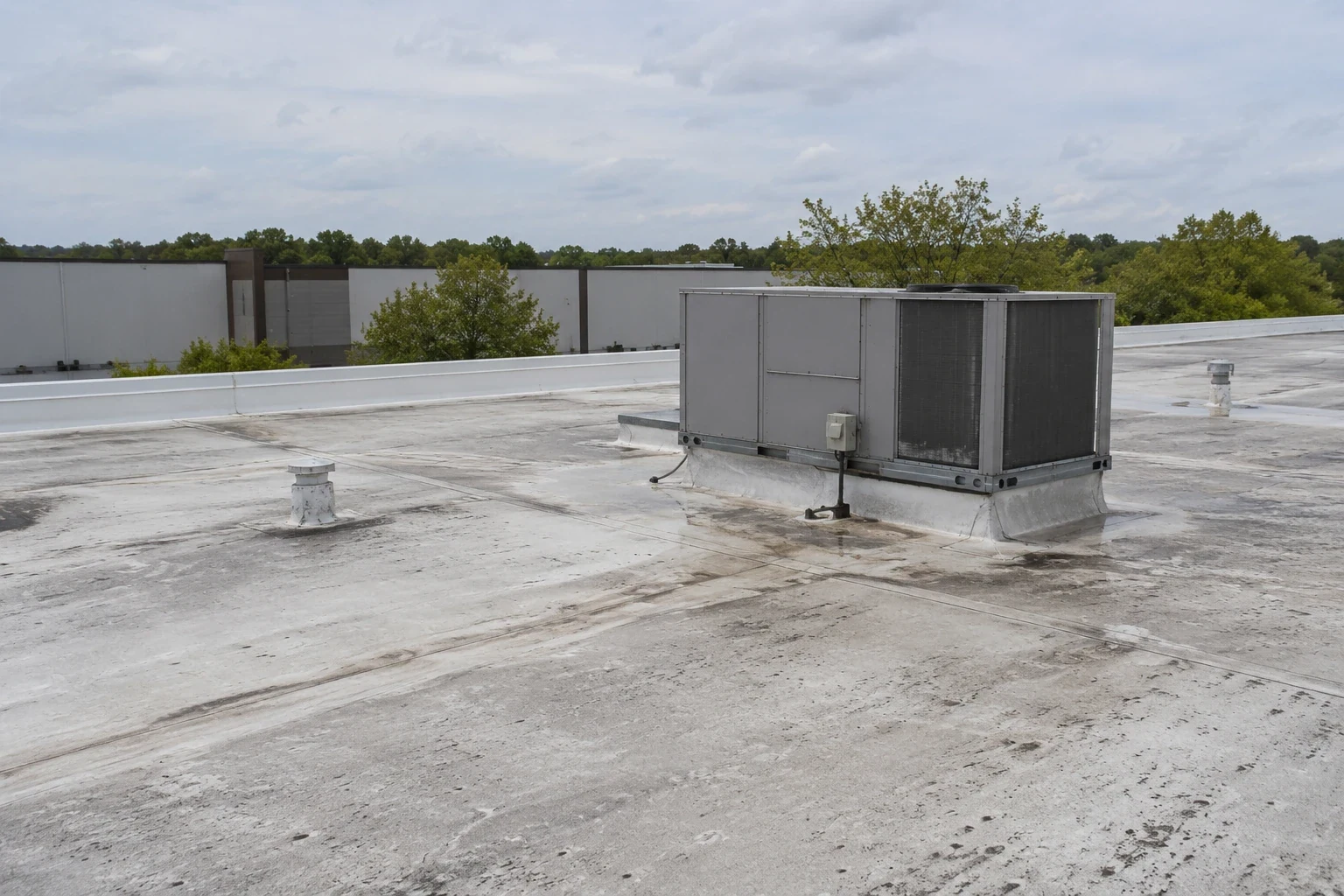
Location context: the I-35E and SH 121 grid
I-35E runs through Lewisville and meets SH 121 and Business 121, and the city keeps plans for the I-35E and Business 121 corridors. Economic-development materials describe investment and employment activity near I-35E, SH 121 and Old Town. For a distribution operator, that grid brings freight to the door, and it is also why roofing trucks and lifts compete for the same approach roads.
The Colony reports commercial and warehouse development along its stretch of SH 121. In Coppell, the latest financial report names industrial as the largest commercial-space category. Owners holding buildings in more than one of these places can run a single inspection format across all of them, which makes the roof condition of one site comparable to the next.
Roof zones: sort floor, dock side, mezzanine offices
We split the roof by what it covers, not only by geometry. The sort floor and any conveyor systems sit in one zone class, the dock side in another, and the offices and mezzanine in a third. Each class has its own tolerance for a leak and its own sequence. A drip over an office costs a day of disruption. A drip over a conveyor can stop a shift.
The zones are numbered on the roof plan, and every finding carries its zone number into the condition record. When a finding in zone four needs a second look in March, the number gets the inspector to the right place without a walk-through of the whole roof.
A mezzanine office under a low roof section deserves its own line. Condensation from rooftop units, ceiling tile stains and a musty smell can all mimic a roof leak, so the finding records the ceiling-side evidence next to the roof-side evidence before any repair is assigned to the membrane.
Storm evidence: hail reports and building-specific findings
The weather service describes large hail, damaging winds and flooding as near-annual events across the Metroplex, while any given site may be spared in a given year. A distribution center is a large target and a large uncertainty. We do not infer damage from the report. We photograph the zones in sequence, mark bruises and punctures with a repeatable reference, and take moisture readings where the membrane is open or the insulation feels soft.
If the evidence points to storm damage, the dated findings support a storm damage repair scope and, if the owner pursues one, a claim file. The record shows what was found and when, not what a storm must have done.
Roof age enters the reading too. A membrane that is already near the end of its service life may show bruising that a younger sheet would shrug off, and the record notes the age of each zone so the owner is not left comparing a ten-year-old sheet to a two-year-old one without knowing it.
Attachment detail: rooftop units, conduit and sleepers
Large buildings accumulate rooftop equipment as operations change: new makeup air units, conduit runs for lighting, refrigerant lines, sleepers carrying pipe. Each one touches the membrane somewhere. We list them by zone and photograph the curb, the flashing and the support. Pipe supports that rest on bare membrane get logged, since they wear into the sheet as the roof moves with the heat.
Heat does the steady work on those details: normal July and August highs run near 96 degrees at the regional airport, and the roof expands and settles with every cycle. Our rooftop equipment curbs and supports repairs replace a worn pad with a protected support and reset the flashing around the base, and the finding is dated so the next pass can check it.
Options review: solar, recover and replacement timing
Rooftop solar can enter the conversation for a distribution building, and the roof decision should come first. A membrane with a few years left should not carry an array it will outlive. A solar-ready roof review records the membrane age, the insulation moisture reading and the load path, and it sets the replacement timing so equipment is not removed twice.
For roofs not headed toward solar, the options are the usual three: repair inside a stated boundary, recover over dry insulation, or replace. Each is laid out with its sequence, the number of work windows it needs and the records it produces, so a facilities lead can compare them against the shipping calendar and the capital plan.
Work coordination: trucks, lifts and quiet hours
Material staging is a logistics problem on a site that already runs on logistics. The plan names a lift location, a drop route and a time of day when trucks are fewest. It lists the hatches or ladders used, assigns a spotter to the dock side, and states the stop conditions: rain, wind or a forklift lane that cannot be cleared.
On an occupied building reroofing job, the closing routine matters most. Every section is dried in and tested before the crew leaves, and the access log records who signed off.
Dust and debris control close the list. Tear-off over open racking or a sort line sheds grit that finds its way into product and equipment, so the plan names the protection overhead, the sweeping schedule and the person who inspects the floor below at the end of each day.
Closeout packet: the file a distribution owner keeps
The packet contains the zone map, moisture readings, product sheets, the access log, dated findings with photographs and the next inspection date. It is built so a lender, an insurer or a new operator can read it without a walk-through. A neighboring warehouse or cold storage building uses the same layout, which lets an owner compare roofs across a portfolio.
The packet also lists open items by zone and the date each was last looked at. A roof is never finished in the sense that a floor is finished, and the open list tells the next inspector where to begin.
Commercial Roofing Questions
Which roof zones should be worked first in a fulfillment building?
The ones above the least tolerant operations, scheduled for the quietest window. A drip over a sort line costs more than a drip over an empty bay, so those zones lead.
How does a hail report change the inspection?
It prompts a photo sequence and moisture readings in each zone. The findings are dated and compared with prior records before anything is attributed to the storm.
What decides whether solar should wait?
The remaining life of the membrane. If the roof will need replacement within a few years, replacement comes first so the array is installed once.
Can roof work continue during peak shipping?
Sometimes, in sections that close the same day and away from the busiest dock lanes. The access log and the stop conditions are agreed before the first lift.
What does the closeout packet let a new operator do?
Read the roof's history by zone: what was found, what was repaired, what was tested and when the next inspection is due.
Related
Related Roofing Work
The Colony
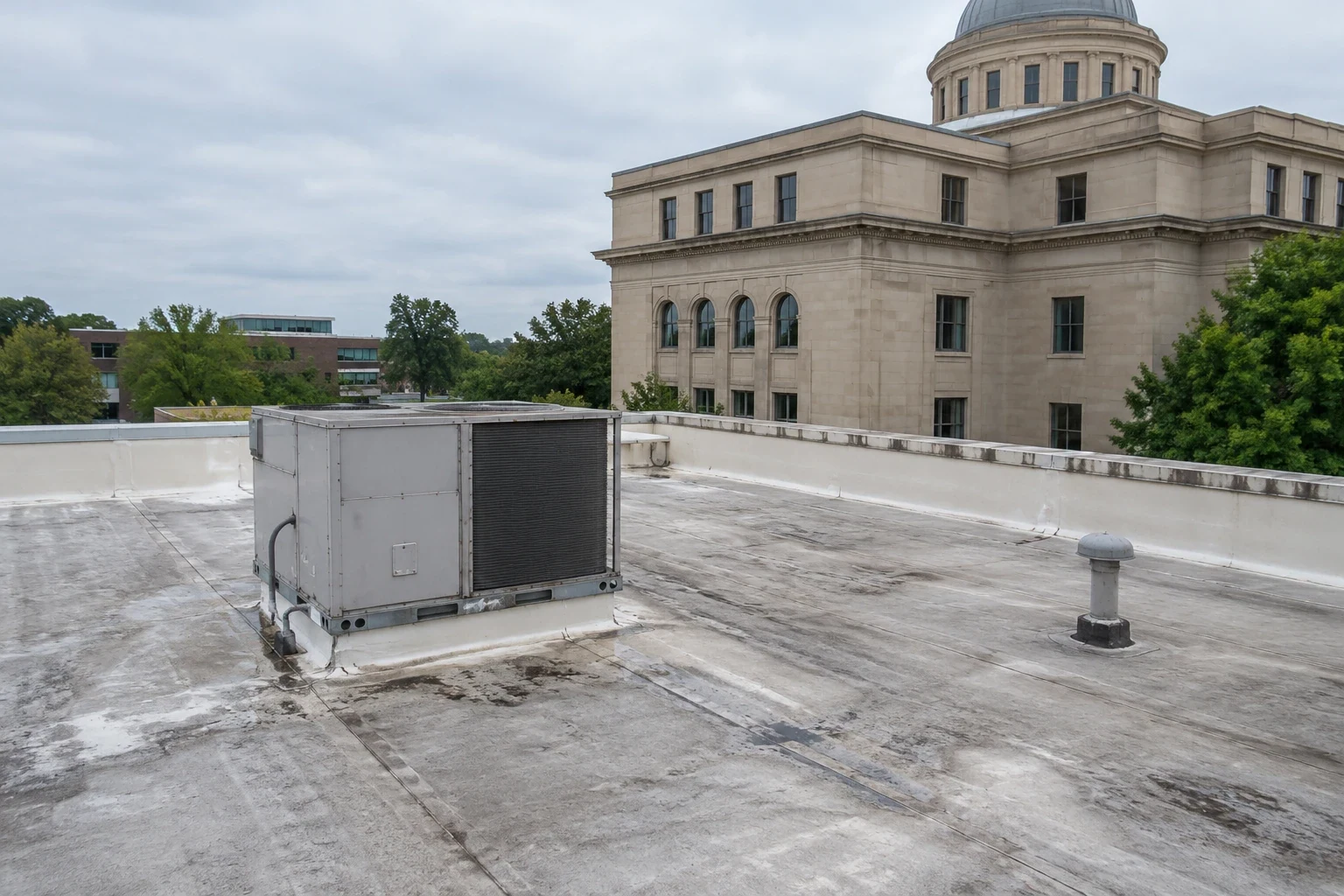
Storm Damage Roof Repair
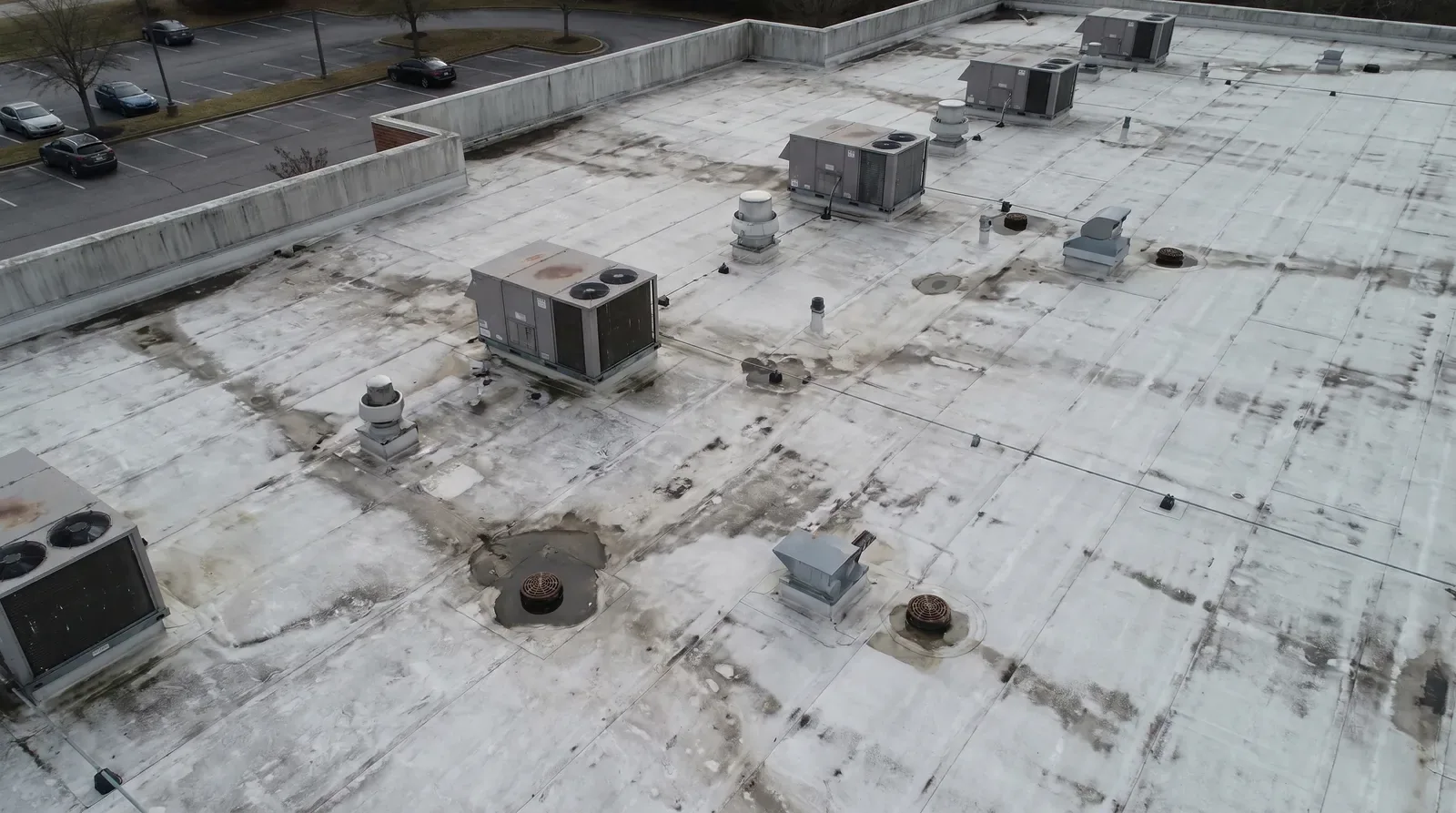
Roof Insurance Claim Assistance
Rooftop Equipment Curbs and Supports
Solar-Ready Roofing
Occupied Building Reroofing
Schedule a zone-by-zone inspection
Schedule an inspection and receive a dated condition record with photos, findings and recommended next steps, organized by roof zone and matched to your shipping calendar.
