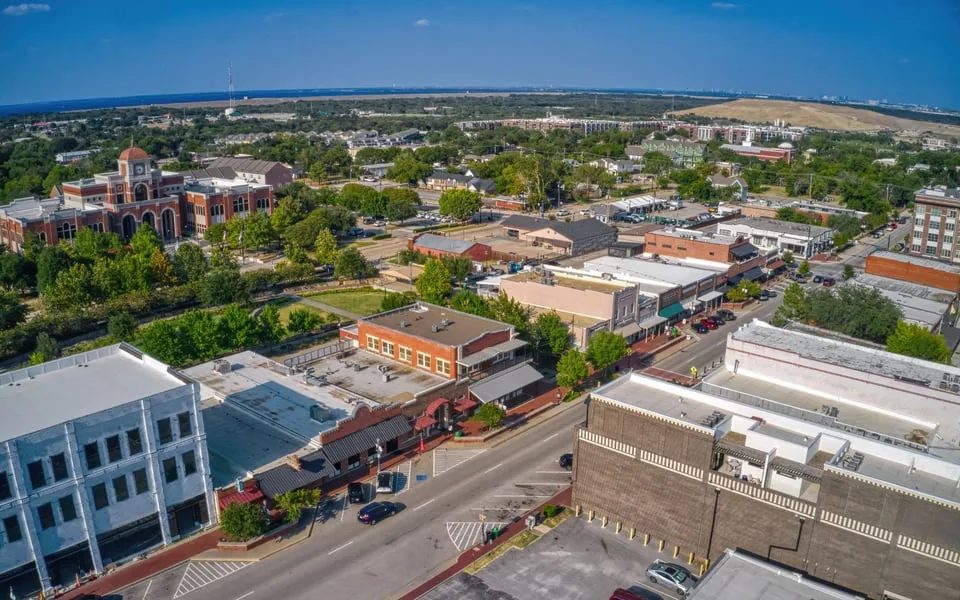
Storm Damage Roof Repair in Lewisville, TX
Overview
Storm Damage Roof Repair in Lewisville
A storm report tells you the weather reached the region. It does not tell you what happened on a specific roof, and the work of a storm repair is closing that gap with evidence. Somewhere across the Dallas-Fort Worth Metroplex, the National Weather Service reports, severe weather of one kind or another arrives nearly every year: large hail, damaging winds, flooding, tornadoes. A given location may not take each hazard each year. For a Lewisville, TX building, that means the useful first step after a storm is an inspection pass that records what is actually on the roof.
We separate three things in the record: damage that is new, wear that was already there, and conditions that need a test before anyone can say.
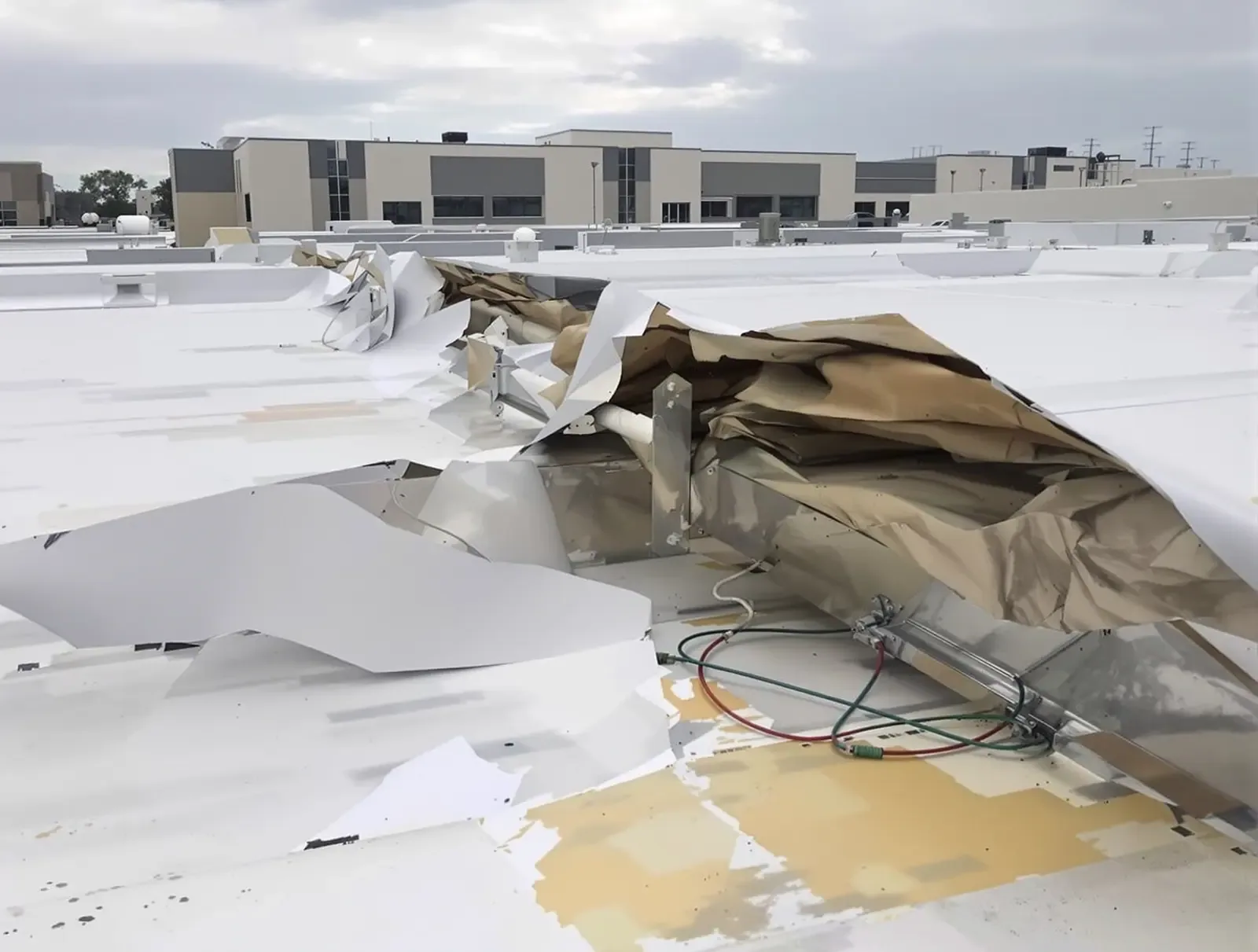
Access log: the first visit after severe weather
The first visit has a narrow job. We check for open penetrations, displaced membrane, lifted edge metal and blocked drains, and we stop any water that is entering the building. Interior ceiling stains, wet tile and active drips are photographed and logged with the time. If water is still coming in, the work becomes emergency roof repair and the dry-in comes before the full assessment.
After the building is dry, we return for the roof-wide pass. The access log records who gave roof entry, what equipment was running and which areas were off limits, so that anyone reading the file later knows how complete the inspection was.
Photo sequence: separating new impacts from old wear
We photograph each roof zone wide first, then close, so a dent or bruise is seen in context. Hail leaves a pattern of impacts that vary by exposure and surface, while foot traffic, dropped tools and old blistering leave other marks. A drone flight records the whole surface quickly and shows direction patterns that are hard to see from a few steps away.
Where there is a pre-storm record, we lay the new photographs next to it. Without one, we read the surface: oxidation or dirt inside a mark points to age, while a clean edge points to a recent fracture. When a mark could be either, it is logged as undetermined and tested rather than assumed in either direction.
Moisture reading: damage that does not show on the surface
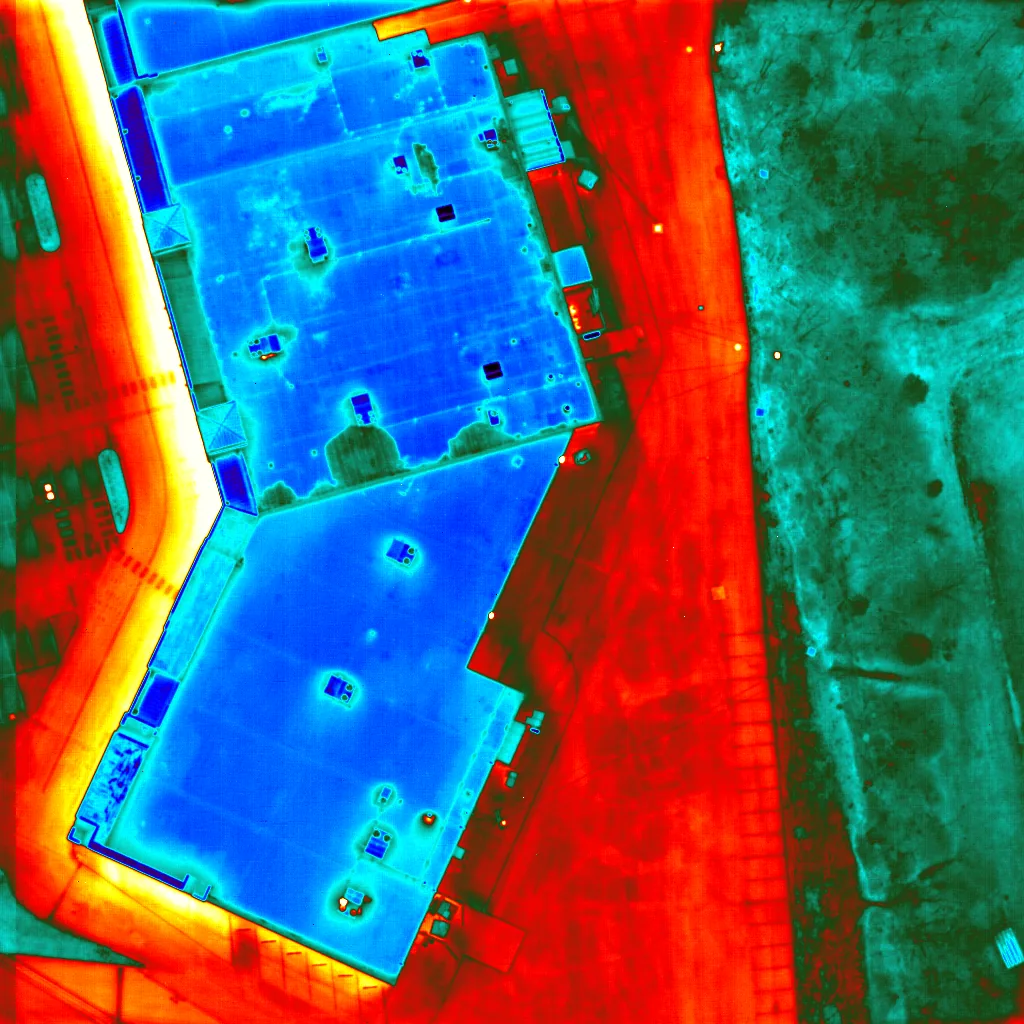
Hail and wind can compromise insulation and seams without a visible hole. A roof that looks intact on the surface may hold water in its insulation within days. An infrared scan, followed by moisture meter readings and a core cut where needed, shows whether the concern stops at the membrane or extends into the assembly.
Metal panels and coated surfaces behave differently. Dents in standing seam panels may be cosmetic, or they may open a seam. Fasteners on a metal roof can back out after sustained wind, and a panel clip that has shifted can let a seam open weeks later. We log each finding with its type, its location and the test that settled it, so a second reviewer can repeat the check and reach the same reading.
Repair boundary: wind, hail and debris damage in practice
Wind damage tends to start at edges, corners and penetrations, where uplift is highest. A lifted edge or a peeled flashing is repaired by securing the metal and resealing the joint. Our scope for wind damage also checks the adjacent field for membrane that has been stressed even though it did not tear.
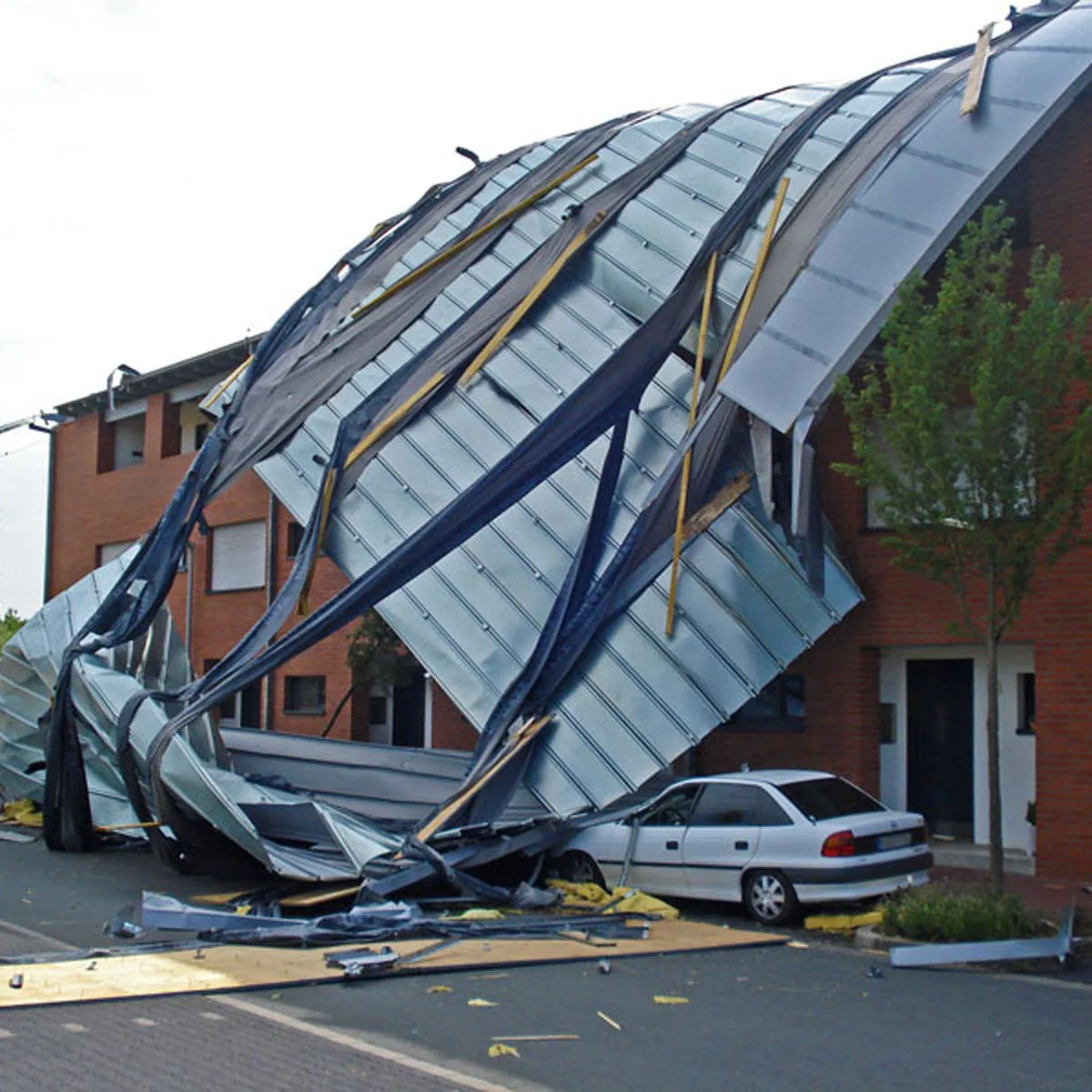
For hail damage, the repair boundary is set by the extent of fractured membrane and wet insulation. Isolated impacts can be patched. Widespread bruising that reaches the insulation, or repeated leaks at the same zone, may be a replacement scope. After a tornado-producing storm, debris punctures and displaced rooftop equipment add another list of items. Tornado damage is handled by sorting what is structural, what is membrane and what is equipment, and by securing the structural items first. Each item is priced in its own line so the owner can see which part of the loss belongs to which trade.
Work window: scheduling repairs between storm cells
Severe thunderstorms in Dallas-Fort Worth peak in spring, and spring and fall are typically the wettest seasons. A repair scheduled in that stretch needs a dry window and a plan for covering any open section before the next cell arrives. We check the forecast at the start of each day, open only as much roof as can be closed that afternoon, and keep temporary covering and ballast on the roof until the work is dry-in complete.
Heat has its own effect. About 20 days a year reach 100 degrees at the airport, and adhesives, sealants and membrane welding all have temperature limits. Hot afternoons may push the schedule toward early starts, and the log shows when each repair was made and under what conditions, which matters if a seam is later questioned. Where tenants stay in the space, we agree on noise and access hours before the first day and keep them in the file.
Decision file: keeping the repair and the claim in step
If the owner is filing an insurance claim, the file we build supports the conversation between the owner and the adjuster. It contains the access log, dated photographs, moisture findings, and a repair scope with quantities by zone. It does not say what the policy covers, and it does not predict the outcome. Our claim documentation support keeps the roof evidence organized so it can be read quickly.
Office, industrial, retail, healthcare-related and multifamily buildings cluster around I-35E, SH 121 and the city's gateways. Those property types share the same storm exposure but have different access windows and tenant constraints. An owner in the Southern Gateway or in Castle Hills will have a different schedule for roof entry than a warehouse owner, and the file records the agreed window for each, along with the dates the building owner approved the scope and the dates materials were ordered.
Commercial Roofing Questions
How soon after a hail event should a Lewisville roof be inspected?
As soon as the roof is safe to walk and the building is dry. New impacts are easier to identify while the surface is fresh, and water that entered through a damaged area is easier to trace before it spreads. Waiting for a leak to appear can turn a repair into a wet insulation scope.
Is a temporary repair part of the permanent scope?
The two are tracked separately. A temporary dry-in protects the building and is logged with photographs and materials. The permanent scope then states what comes off, what stays and what is added, so the owner can see the cost of each.
Can storm damage be repaired without replacing the roof?
Often, when the damage is limited to isolated impacts, seams or edges and the insulation tests dry. When bruising or fractured membrane is widespread, or the insulation is wet over a large area, replacement of that section is more economical than repeated patching.
What if the roof was already worn before the storm?
The record shows it. Old wear and new damage often sit on the same roof, and we mark each separately with photographs. A prior condition record, if one exists, helps, but the on-roof evidence also shows weathering, oxidation and prior repairs.
Who coordinates with the adjuster or the general contractor?
The property manager decides who speaks for the owner. We provide the findings, answer questions about the roof evidence and meet the adjuster on site when asked. Any contractor or consultant working on interior repairs receives the same moisture map so trades do not duplicate work.
Related
Related Roofing Work
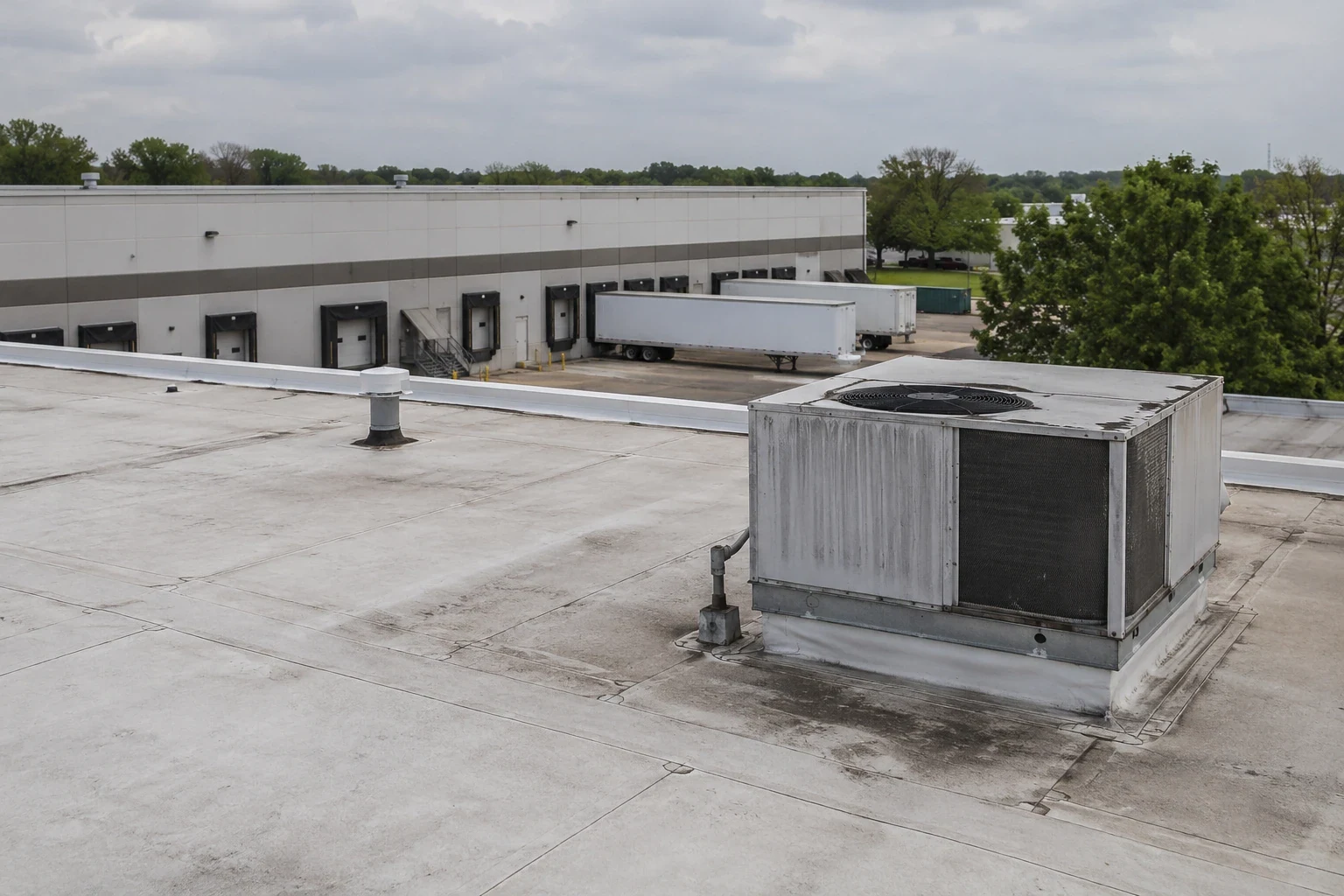
Emergency Roof Repair

Drone Roof Inspections
Wind Damage Roof Repair

Hail Damage Roof Repair
Tornado Damage Roof Repair
Roof Insurance Claim Assistance
Document the storm and plan the repair
After a storm, schedule an inspection. You receive a record that marks new damage and earlier wear separately, with photos, moisture findings and a repair scope by zone.