Wind Damage Roof Repair in Lewisville, TX
Home // Roof Damage Repair //
Overview
Wind Damage Roof Repair in Lewisville
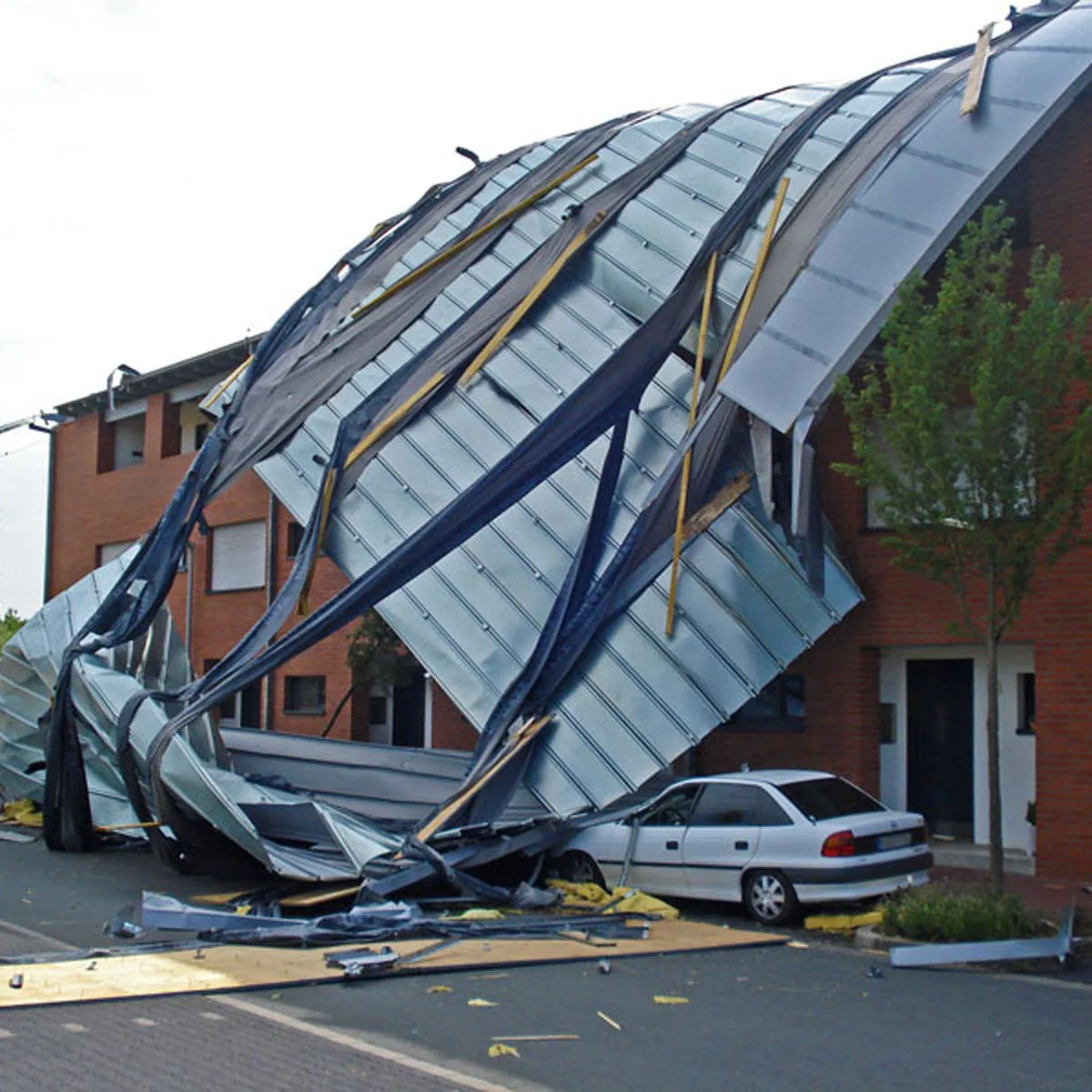
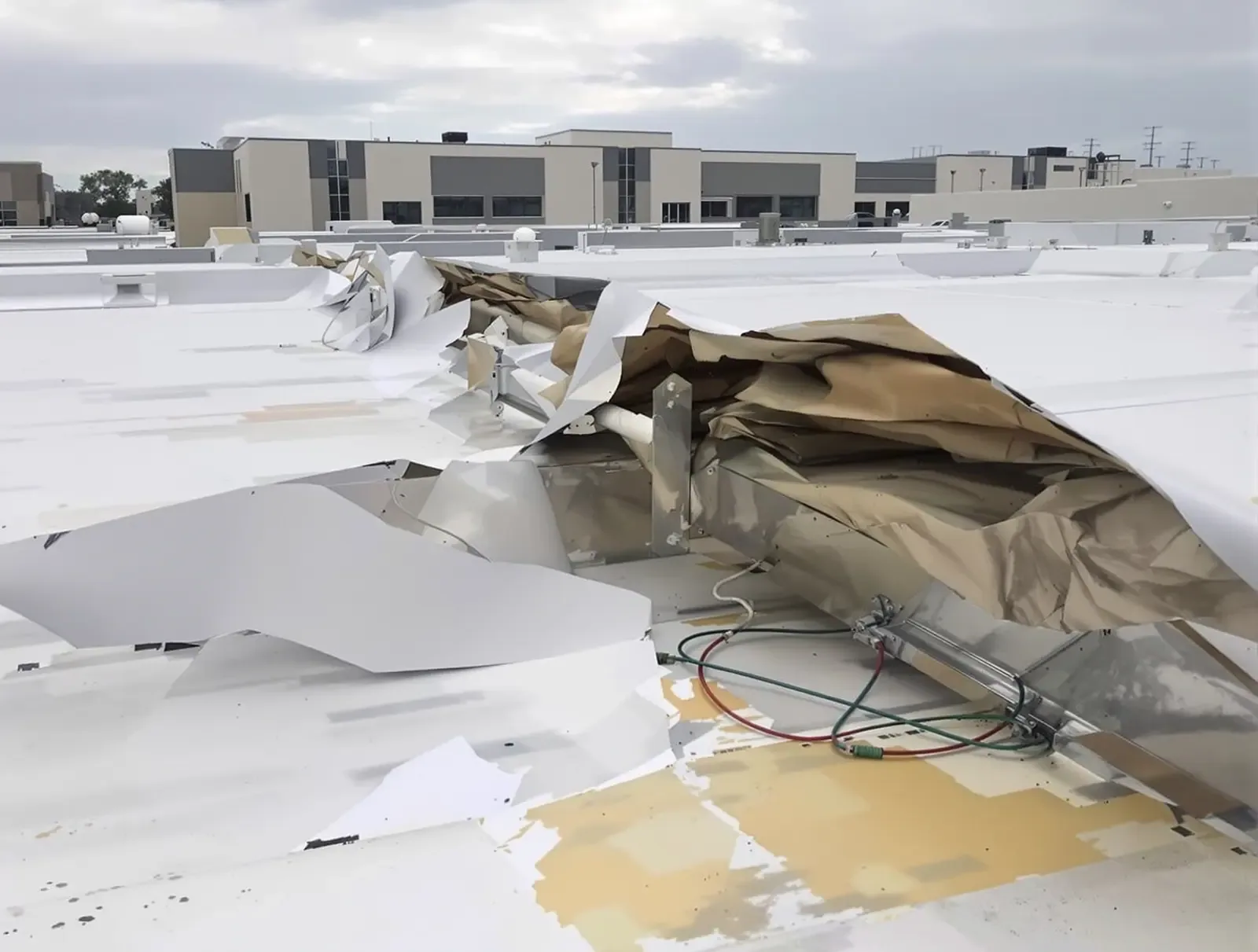
Photograph the coping before anyone straightens it. A strip of edge metal bent outward is the clearest dated finding a wind event leaves, and once it is hammered flat the record of how it failed is gone. The first inspection pass on a wind report in Lewisville, TX sets down what moved, in which direction and at which roof zone, so the next steps are tied to evidence and not to a forecast.
NWS data says damaging winds reach the Metroplex nearly every year, though any single address may go a year without one. That is a reason to look, not a finding about a particular roof. The condition record we hand the property manager keeps the weather report and the building evidence apart, so a repair or an insurance conversation rests on what the roof shows.
Rooftop equipment is the next place to look. A unit that shifted on its curb, a loose hood or a conduit pulled from its fitting each leaves a dated mark. We list every item on the roof plan and note its condition, because a unit that moved in a gust may have opened the curb flashing without showing any water yet. The flashing failure record starts from that list.
Inspection record: edges, corners and copings
Wind loads concentrate at corners and perimeters, so the photo sequence starts there. We sight along each edge, press on coping joints, check fastener spacing in the first rows of the field and measure any gap between metal and wall. Each finding is logged with its roof zone, a clear image and the test it needs next.
Edge metal that has lifted lets wind under the membrane, and a membrane that flutters pulls its own attachments loose. A bent piece with intact fasteners calls for reattachment. A bent piece with torn holes calls for new metal and new fasteners. The record notes which, so the repair boundary follows the condition and not a guess. For perimeter work, edge metal and coping repair follows the same sequence.
Gutters, downspouts and scuppers at the edge take wind load too. A gutter pulled away from the wall holds water against the fascia, and a scupper that has bent shut backs water onto the roof. Both go into the record with the position and a photograph, since a drainage fault found after a gust is easier to fix before the next storm.
Attachment detail: what holds the sheet down
How a membrane is attached decides how it fails. A mechanically attached sheet shows ripples, shiny fastener heads and plates that have pulled through. An adhered sheet shows a lifted flap or a blister where the bond let go. A ballasted roof shows displaced stone and bare patches. We identify the attachment method first, because the evidence needed and the repair differ for each.
The pass maps every area of lift, probes the surrounding sheet and notes where the membrane is still sound. If a lifted area reaches a seam, the work continues under the steps for seam failure repair. If insulation is exposed, a moisture reading comes before the area is closed.
Pavers, ballast stone and loose rooftop items can become projectiles in a gust and damage the roof they sit on or the one next door. When stone has moved, we map the bare areas and weigh the load that remains, since a ballasted system depends on its stone for wind resistance.
Moisture reading: whether water followed the wind
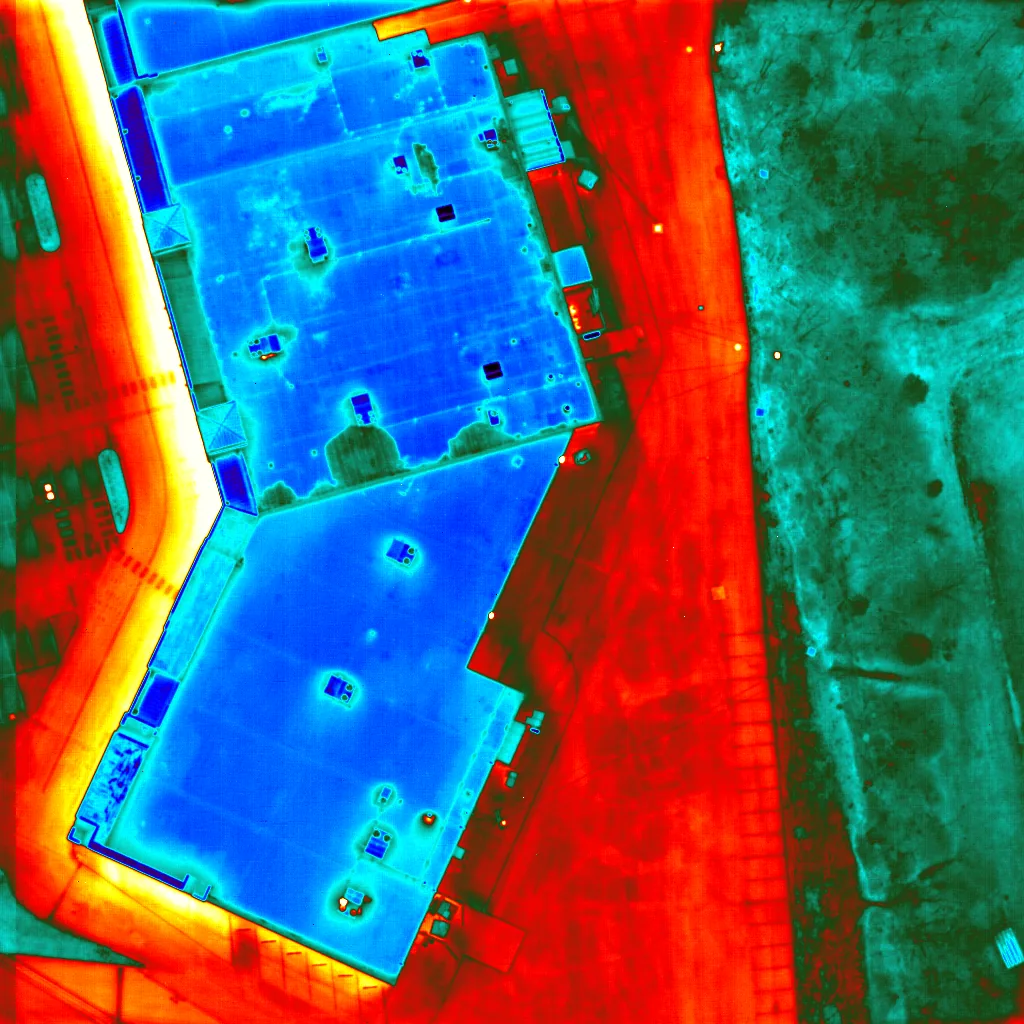
A gust that opens the roof is often followed by rain. Water that enters at a lifted edge can travel along insulation joints and deck flutes before it shows inside. A moisture survey on the first dry evening maps warm and cool areas, and a core sample confirms which are wet. The wet boundary goes on the roof plan.
This step keeps two questions apart. The wind finding says what failed and when. The moisture finding says how far the water went. A property manager needs both to decide between a surface repair and a section replacement, and a claim file needs both to separate storm loss from earlier leaks. Where only the surface is affected, the repair stays small.
Dates matter on this step. A moisture survey made two days after rain reads differently from one made two weeks after, and the record states both the reading and the day. When a second survey is needed to see change, the same positions are used.
Work window: Metroplex storms and access
Rain falls most in spring and fall across the Metroplex, and severe thunderstorms crest in spring, so a work window can close fast. We set a temporary dry-in the same day when the opening threatens the interior, then schedule the permanent repair for a dry stretch. The access log records who went up, when and by which hatch, a detail that matters on the I-35E and SH 121 properties where tenant operations restrict entry.
Buildings in Lewisville's office, retail, industrial and mixed-use districts differ in access, from roof hatches to exterior ladders, and a lift may need a street or lot permit. We confirm the lift position, the escort and the tenant hours before the date is booked.
Options review: repair, reattach or replace
The options follow the evidence. Localized edge damage over a dry roof is repaired. Widespread lift with sound membrane is reattached with new plates, adhesive or fasteners. A roof with wet insulation across a section, or an old sheet that no longer holds fasteners, moves toward replacement. The options review lists each path with its cost drivers: area, layers removed, access and the schedule the tenants allow.
The 2021 IBC is on Lewisville's list of adopted codes; the edition and amendments in force should be checked before any permit is filed. A repair that replaces a large share of the roof may bring code questions, and the scope states them early. Storm damage repair and Old Town Lewisville properties follow the same sequence.
The cost update comes in two parts. The first covers the temporary dry-in and the edge work. The second covers the membrane repair once testing has set the boundary. Each names the decision it supports and the date the next update will arrive.
Closeout documentation: the packet
At the end, the packet carries dated photographs, a roof plan with the repair boundary drawn in, moisture readings, product data and a follow-up date. It also holds the access log and the temporary dry-in record. For an insurance claim, the claim documentation keeps emergency and permanent items apart so each line ties to a photograph.
Commercial Roofing Questions
What separates wind damage from earlier wear?
Fresh breaks, clean tear edges and clusters at corners and the windward side point to a recent event. Chalking, shrinkage and weathered seams across the field point to age.
Can edge metal be straightened and reused?
If the metal is not creased and the fastener holes are sound, yes. Torn holes or kinks call for new metal, and the record notes which was done.
How soon should the inspection happen?
As soon as the roof can be entered safely. The first pass is photographs and probing, and testing follows once the surface is dry.
Does a regional wind report prove damage?
No. It is a reason to inspect. Building evidence, with dates and positions, is what supports a repair or a claim.
Which documents help with an insurer?
Dated photographs, the roof plan with damage marked, moisture readings, the dry-in record and a split between emergency and permanent work.
Related
Related Roofing Work
Failed Flashing Repair
Edge Metal, Coping and Gutters

Split and Open Seam Repair
Storm Damage Roof Repair
Old Town
Roof Insurance Claim Assistance
Schedule an inspection and get a dated record
Send the property manager's list of affected roofs, access limits and any past roof plans. We will return a dated condition record with photographs, findings and recommended next steps.