
Edge Metal, Coping and Gutters in Lewisville, TX
Overview
Edge Metal, Coping and Gutters in Lewisville
The roof edge is where a membrane ends, wind arrives first and water leaves, so it collects more stress than any other strip of the roof. A loose coping cap or a lifted drip edge may look minor from the parking lot, yet it can be the first sign that the membrane under it is about to peel. In Lewisville, TX the edge also takes the heat and the storms: summer highs that average in the mid-90s at the regional airport, plus damaging wind and large hail that the National Weather Service lists among the hazards of a typical Metroplex year.
Our work on edges starts with attachment, because metal that is not fastened correctly cannot hold a membrane. The repair scope that follows is written by stretch of perimeter, so the owner can fund the failing runs first and carry the sound ones into a later budget.
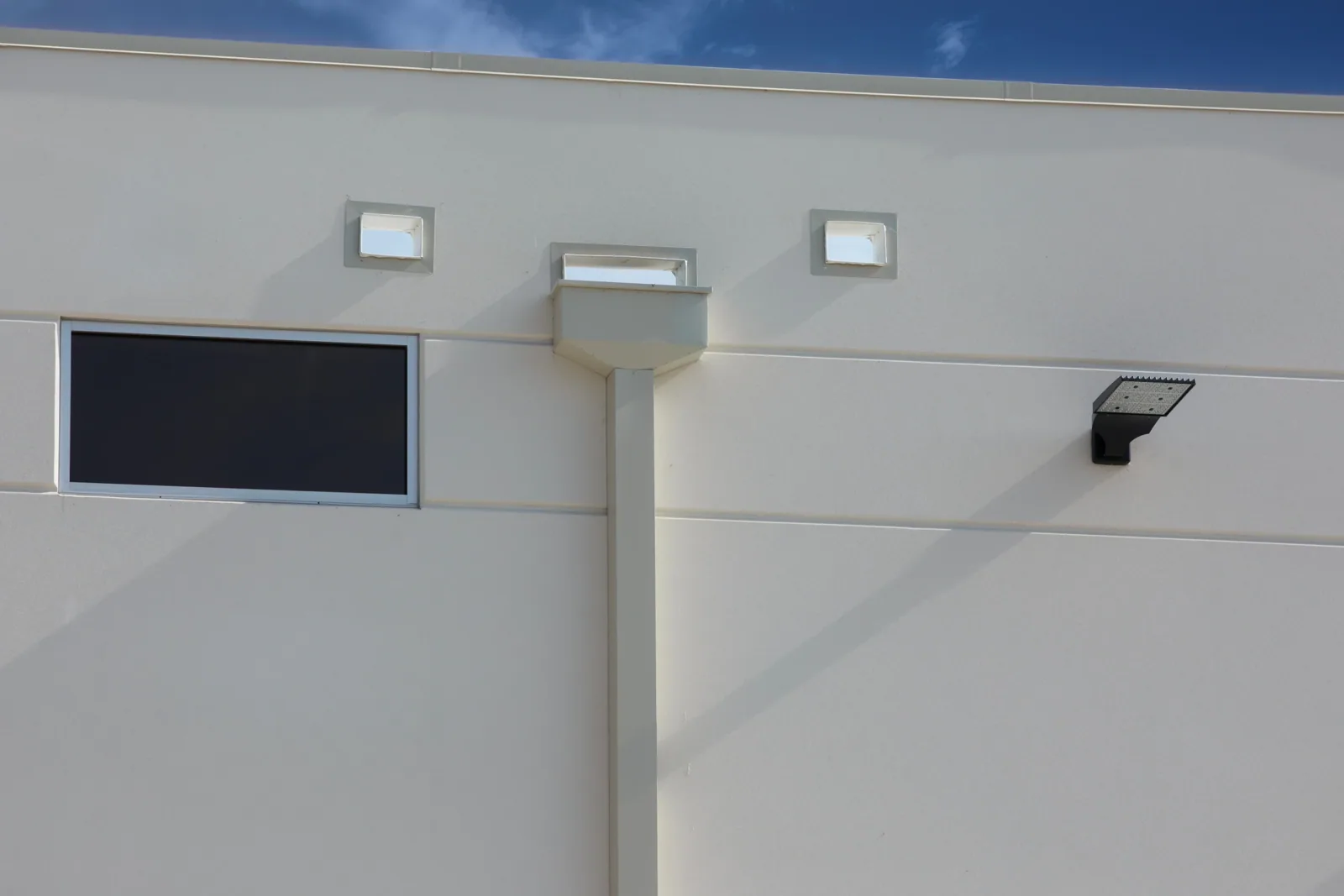
Inspection pass: walking the perimeter first
We walk the full perimeter before looking at the field. At each stretch of edge we check whether the metal is straight and tight to the wall, whether joints between lengths have opened, whether sealant has split, and whether fasteners have backed out or corroded. We tap the metal and press on it, since a cap that moves under a hand will move in a gust.
Each finding is photographed with its location on the roof plan: northeast corner, south parapet run, and so on. Gutters and downspouts are checked for sag, separation at the joints, blocked outlets and staining on the wall below. The photograph sequence follows the perimeter in order, which lets a reviewer compare the same stretch from one visit to the next. Along the I-35E and SH 121 corridors, where office, retail and industrial buildings sit side by side, the same walk applies to each building, but the equipment, parapet height and wall material change what we find at the edge.
Attachment detail: cleats, fasteners and the wind load
Edge metal is held by continuous cleats, by fasteners through the face or by clips, and the method decides how it behaves in a storm. A continuous cleat holds the lower edge of the metal and resists being pulled away. Face fasteners depend on sealant that ages, and they are the first thing to fail in sun and weather. Corners see higher uplift than the middle of a run, so they receive closer spacing and heavier metal. We record the fastener spacing we find and the spacing we install, with a photograph of a representative length, so the attachment can be checked later without removing the cap.
Wind that gets under a lifted edge can peel a membrane back across a large area. The repair for wind damage begins with the edge, because resealing a torn field does not help if the metal at its border is still loose. Replacement metal is selected for its gauge, its finish and its tested resistance to edge pull-off, a performance measure used in the industry for edge systems.
Dated finding: heat movement, hail dents and sealant failure
Long metal lengths expand and contract with temperature. At the airport, roughly 20 days a year reach 100 degrees or more, and the daily swing in summer opens joints that were tight in spring. We look for gaps at splices, cracks in sealant and edges that have walked out of position.
Hail damage shows up on metal as dents, scuffs and sometimes cracked finish. Some dents are cosmetic, and the record says so. Others crease a seam or a joint and let water in, and those go in the repair scope. Finish matters as well: a cracked or peeling coating on the metal invites corrosion at the cut edges, which shortens the life of an otherwise sound run. The log marks which dents were measured and which were only observed, so the owner and an insurer can see the same facts.
Repair boundary: gutters, downspouts and what happens to the water
Gutters and downspouts move water away from the wall, and when they fail water runs down the facade, stains masonry and collects at the base. A sagging gutter is re-hung with proper brackets. A split seam is resealed or replaced. A downspout that dumps onto a walkway gets an extension or a tie to the drainage below.
On roofs where water leaves through a parapet opening, the gutter system is only one half of the drainage plan. The other half is the drains and scuppers that feed it, and we size the gutter to the area it serves. Where sections are cracked or crushed, replacement is priced next to repair, because a patch on a worn run often fails next to its own repair. Staining on the wall below a gutter, a pooled spot at the base of a downspout and a lifted splash block all go into the record as evidence of where the water has actually been traveling.
Work window: edge replacement on occupied buildings
Edge work happens at the building's perimeter, which is also where people walk, park and enter. We set up protected walkways, close off pedestrian areas below, and schedule the noisy cutting and fastening away from tenants' key hours. On properties in the Northern Gateway and Old Town North areas, access is set per building, and the log notes who approved each closure. Where a lift or a dumpster must sit near a public entry, the setup is agreed in writing and photographed, so a later question about access has a dated answer.
Edge replacements are sequenced so no run of membrane is left unprotected overnight. Where metal is replaced, we reflash the membrane to it and seal the joint before leaving the stretch. If the edge work uncovers rot or a damaged substrate, that finding is photographed and a price for the repair is given before work proceeds. For standing seam roofs, the metal roof system and its trim details follow the manufacturer's detail drawings.
Commercial Roofing Questions
Why does a loose coping cap matter if the membrane below looks fine?
The cap protects the top of the wall and holds the membrane edge. Once it moves, water goes behind it and wind can lift the membrane from the wall. The damage appears later at the ceiling, away from the cap.
Can edge metal be repaired, or does it need replacement?
Short sections with intact metal can be re-fastened, resealed and rejoined. Metal that is bent, corroded or creased at the joints is replaced. The deciding point is whether the metal can be pulled back to a tight fit without cracking, and a quick bend test on a spare length at the edge shows it before we commit to a repair price.
What changes when a roof has gutters instead of scuppers?
A gutter collects water along the full edge and carries it to downspouts, so its capacity and slope matter. A scupper discharges at one point. Gutters need regular cleaning and tight joints, while scuppers need liners and a clear throat.
How does hail damage on metal edges get documented?
Each dent or crease is photographed with a scale, located on the roof plan and marked cosmetic or functional. Functional means it has opened a joint or seam. Photos taken at several angles show the depth of the mark.
Will edge work require a permit?
It can. The adopted codes in Lewisville include the 2021 International Building Code, so a permit review checks the edition and amendments in force. Like-for-like repairs and full edge replacements may be reviewed differently.
Related
Related Roofing Work
Commercial Roof Repair
Wind Damage Roof Repair
Hail Damage Roof Repair
Roof Drains, Scuppers and Ponding Correction
Northern Gateway
Old Town North
Have the roof edge inspected
Schedule a perimeter inspection and receive photographs of every stretch of edge metal, gutter and downspout, with findings marked repair, replace or monitor.
