Commercial Roofing in Frisco, TX
Home // Service Areas //
Overview
Frisco in Lewisville
Frisco's planning framework uses business-park and mixed-use place types and a thoroughfare plan, and its planning documents identify US 380 as an industrial-development corridor with highway and rail access. For a roof, that framework matters in practical ways: a thoroughfare plan sets how trucks and cranes reach a site, a business-park place type can put several similar buildings under one owner, and an industrial corridor with rail access can mean heavy operations under large roofs. We open every Frisco file with the access plan, because a roof that cannot be reached safely cannot be recorded or repaired well. Owners who also work in Lewisville, TX will find the same record format here.
Access plan: how the crew and the lift reach the roof
Before an inspection or a repair, we write down how people and equipment get to the roof: ladder, interior hatch, exterior stair, lift or crane. We note the staging area, the delivery route and any restriction from neighbors, tenants or dock traffic. On a business-park building with tight truck courts, that plan can decide whether work happens at dawn or on a weekend.
The access log then records every visit by date, trade and purpose. When a puncture or a crushed drain turns up later, the log narrows the list of visitors. For property managers with several buildings, the same log format keeps a portfolio comparable, and it gives a roofing sub something concrete to follow when a general contractor or a tenant asks who was on the roof.
Weather windows enter the plan too. North Texas spring storms can arrive with little warning, so the schedule keeps the roof dry-in ready at the end of each shift, with materials covered and tools secured. The crew lead holds the decision to stop work, and the manager gets a note whenever that decision is made.
US 380 industrial roofs: large areas, rail and truck traffic
An industrial corridor with highway and rail access draws operations that move product, and those operations stress roofs in particular ways. Vibration from trucks and trains is not a roof problem by itself, but heavy rooftop equipment, large exhaust systems and roof-mounted conveyors or ducts concentrate loads on small areas. We look at where equipment sits on the deck, whether the supports spread the load, and whether the membrane under them shows crushing.
For large flat roofs, the inspection pass is divided into numbered zones, each photographed from a fixed point. Moisture readings are taken where drains, curbs or seams suggest trouble, and the map of wet insulation sets the repair boundary. Our warehouse roofing practice applies the same zone logic to the long, low buildings common in industrial corridors.
Rooftop ductwork and piping deserve their own pass. Supports that rest directly on the membrane wear through it over time, and supports that sit on pads spread the load and shed water. We note which is which, photograph any wear and recommend raised supports where lines cross the sheet. Where a conveyor, stack or duct penetrates the roof, the flashing around it is probed for gaps.
Business-park buildings: one format, many roofs
Where a business park holds several similar buildings, the cluster is an opportunity. When several roofs share a manufacturer, an age range and a service history, one condition format covers them all. Findings can be sorted by building and by zone, and the owner sees which roof is declining fastest.
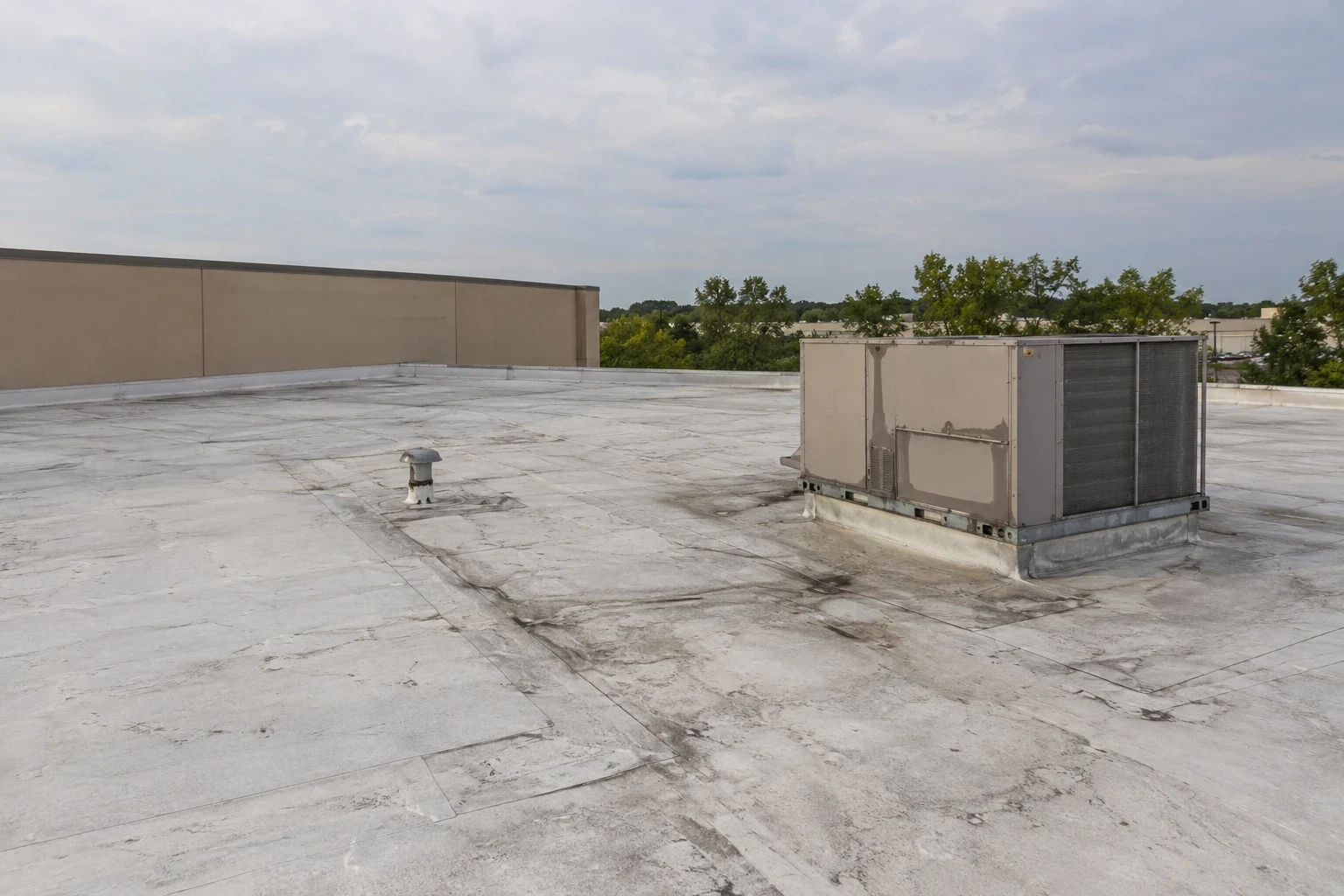
We do not assume the roof type or age of any particular building in Frisco. Each is read at a core cut or from existing records. A roof condition report then sets out membrane type, drainage, flashings, penetrations and moisture status, and a ranked repair list sits at the end for the manager's budget.
Warranty file: protecting coverage during repairs
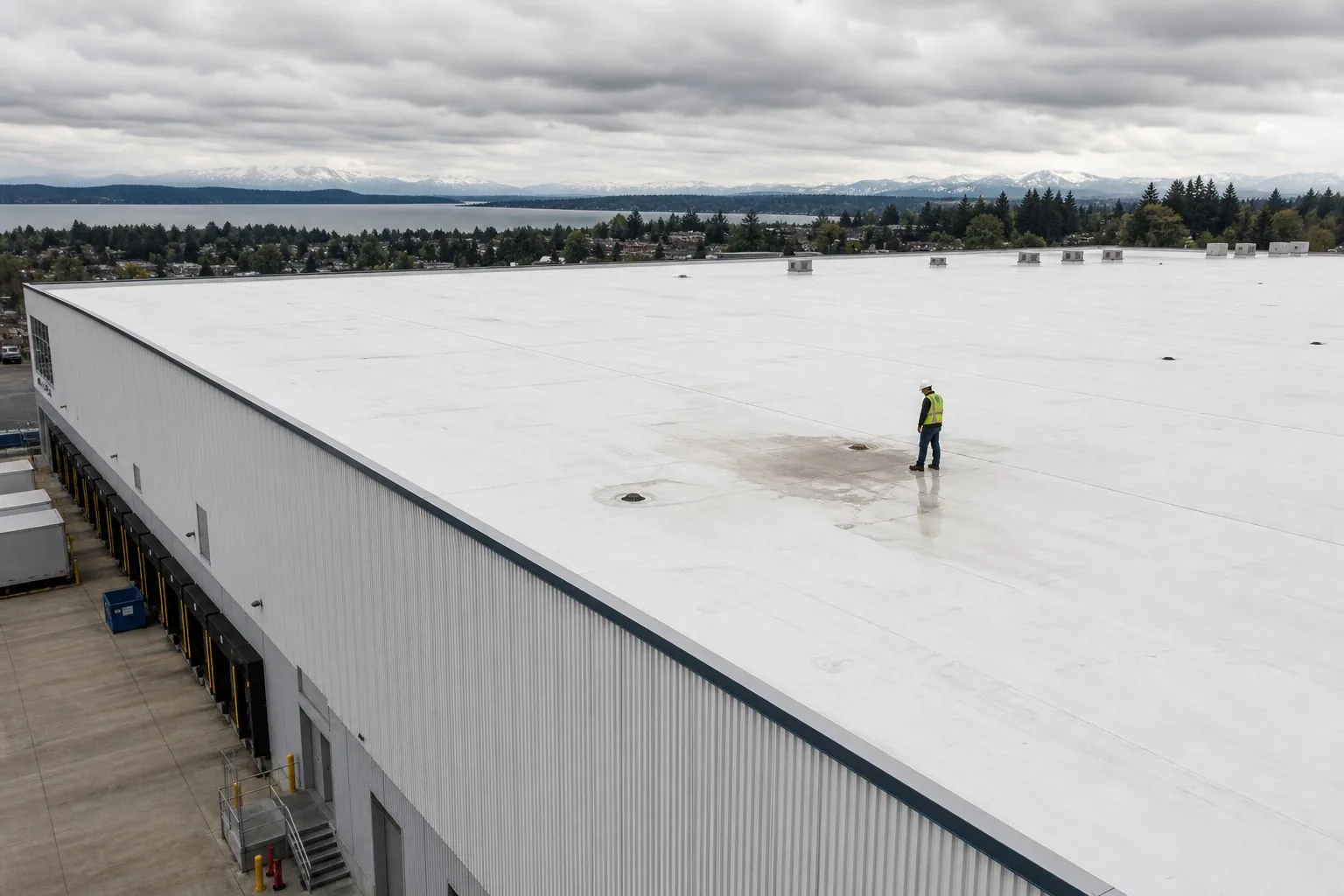
A newer roof often carries a manufacturer warranty, and unauthorized repairs can put it at risk. Before touching a warrantied roof, we ask for the warranty terms and the contact for the manufacturer, then plan repairs that follow the stated method. Our roof warranty management process logs each repair, notes the materials and keeps the paperwork in the decision file.
Warranty status also affects the choice between repair and replacement. A roof with years left and localized damage is a repair candidate, and a roof whose warranty has lapsed may justify a fresh look at a recover or replacement. The file shows which case applies.
Storm season: wind, hail and tornado-producing cells
Spring is the peak for severe thunderstorms in the Dallas-Fort Worth region, and the Weather Service lists tornadoes among the hazards that occur in the Metroplex nearly every year, without implying that any one location is hit. A Frisco owner should treat that as a reason to keep a current baseline. With a dated record before the storm, an inspection after it can show exactly what changed.
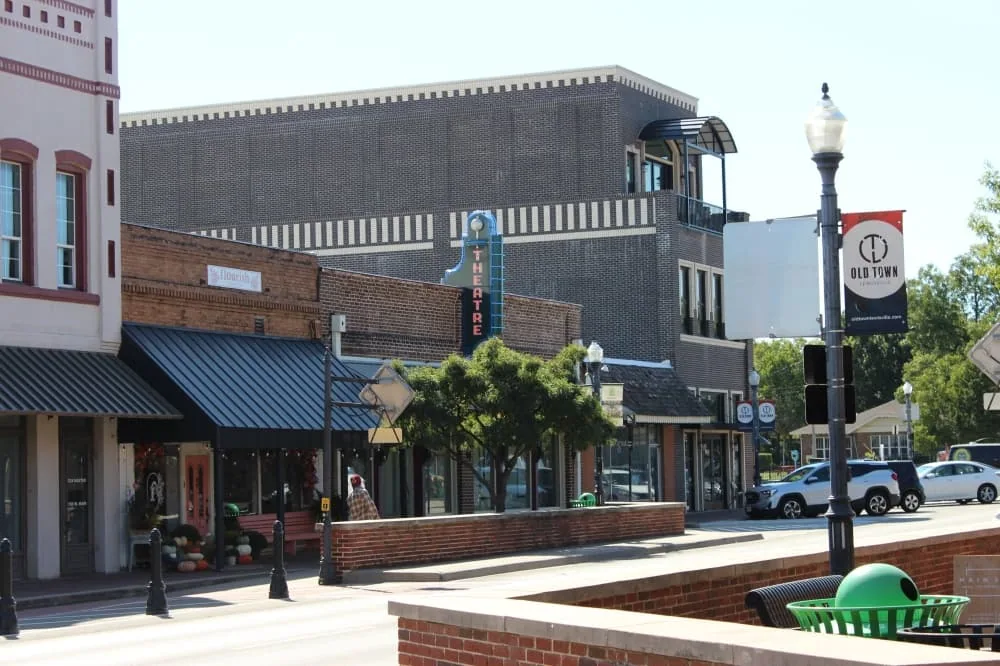
After a severe event, we look first at edges and corners, then at penetrations and rooftop equipment, then at the field. A tornado damage review adds a check for debris impact and structural movement. Findings are time-stamped and photographed, and temporary protection is recorded so the claim file separates storm damage from repair work.
Options review: repair, recover or replace with evidence
An owner choosing among options needs the same facts for each: what the record shows, what the option fixes, what it leaves alone and what it costs in time. A targeted repair deals with a known leak path and leaves the rest of the roof under watch. A recover places a new membrane over a sound existing system when moisture readings show dry insulation. A replacement removes the system down to the deck and allows changes to slope, insulation and drainage.
Cost follows the area, the amount of wet material, the number of penetrations, access for lifts and cranes, and the hours the building allows. We state those drivers in the proposal. Heat is part of the equation: DFW normals put July and August highs near 96 degrees, with roughly twenty triple-digit days in a typical year at the regional airport, and a dark membrane takes sustained thermal stress, and coatings or lighter surfaces may belong in the plan.
The comparison goes into the decision file, so the choice can be explained later to a lender, an auditor or a new owner. When the options are close, the one that corrects the cause of the leak wins.
Future equipment: planning the roof for additions
Owners along commercial corridors may add rooftop equipment or solar arrays over time. A roof that will carry such additions should have its drainage, deck condition and membrane life reviewed first, since mounting a heavy array on a tired roof means removing it later. Our solar-ready roofing approach sizes the roof for the load and records the penetration plan, so installers and roofers work from the same drawing. Owners in Little Elm and The Colony can use the same planning step.
Commercial Roofing Questions
What do you need before inspecting a Frisco business-park roof?
The access method, any service records and warranty papers, and the tenant contact. With those, we can plan the pass around operations.
Can repairs void a manufacturer warranty?
They can if the method or materials differ from the warranty terms. We review the terms first and log every repair.
How do rail and truck corridors affect roofs?
Mostly through the equipment and operations they serve. We check supports, exhaust and traffic paths rather than assume vibration damage.
What does a post-storm baseline give an owner?
A dated record to compare against. It shows what changed after the event instead of leaving it to memory.
Should a roof be reviewed before adding solar?
Yes. Deck, drainage and membrane life decide whether the roof can carry the load without a replacement soon after.
What drives the cost difference between repair and replacement?
Area, wet insulation, penetrations, lift access and work hours. Wet insulation across wide zones tips the balance toward replacement.
Related
Related Roofing Work
Warehouse Roofing
Roof Condition Reports
Roof Warranty Management
Tornado Damage Roof Repair

Solar-Ready Roofing
Little Elm
Schedule an inspection and receive a dated condition record
Tell us the building, how crews reach the roof and what you have seen. We will inspect, send photographs and findings with dates, and recommend next steps.