Roof Condition Reports in Lewisville, TX
Home // Roofing Capabilities //
Overview
Roof Condition Reports in Lewisville
The first page of a condition report is a roof plan with names on it. Zone A, zone B, zone C, each outlined and each tied to a set of photographs, so a reader who has never been on the roof can find finding 14 in under a minute. Everything after that page is organized by those names: what was seen, how it was checked, what it might mean, and what to do next. A report that cannot be searched this way is a narrative, and a narrative is hard to price, schedule, or hand to a lender.
For Lewisville, TX buildings, the report is the working document for decisions that come up on a regular schedule: a lease renewal, a refinance, an insurance question after a storm, or a budget request. It is built once, then updated, so the same roof zones carry the same names for as long as the owner holds the building.
Zone map: how the roof is divided and why
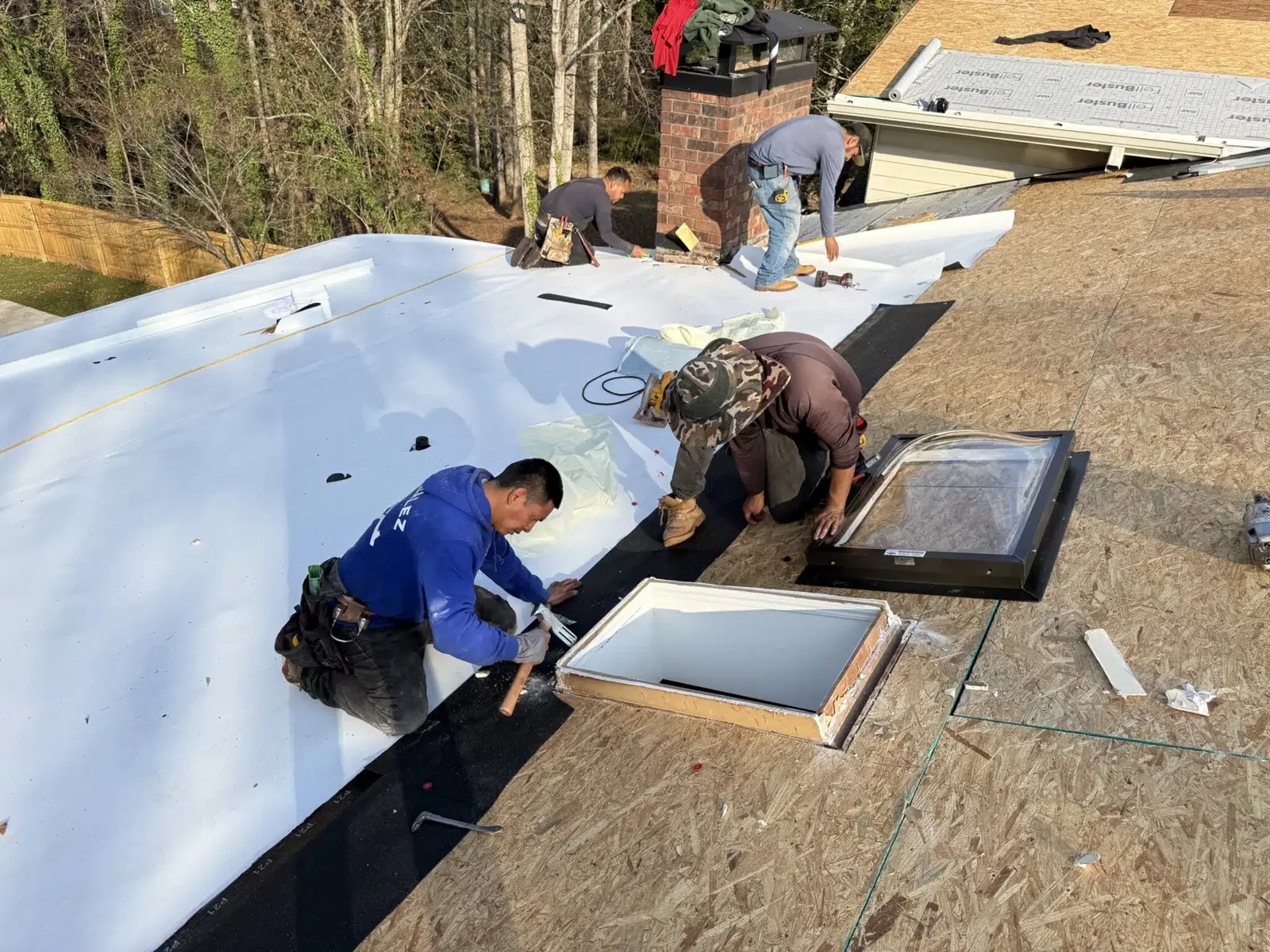
Zones follow the roof, not the floor plan. A new membrane section, a change in height, a different attachment method, or a distinct drainage area each earns its own zone. A building with an original field, a later addition, and a dock canopy has at least three. Each zone gets an area estimate, a system description, a list of penetrations and equipment, and a note on how it is reached.
The access note includes the hatch or ladder location, who holds the key, any hours limit, and any equipment that restricts movement. That note saves a day on the second visit and makes it possible for a different inspector to repeat the same pass without calling anyone.
Numbered findings: one observation, one photograph, one next step
Each finding has a number, a zone, a location on the plan, a photograph, a description of what is visible, a note on how it was checked, and a recommended action. The actions are plain: monitor, repair, investigate further, or plan for replacement. A finding that needs a test, such as suspected wet insulation, is marked for a moisture survey and not decided on appearance.
We do not collect vague remarks. A remark such as "roof looks tired" cannot be priced and cannot be scheduled. A finding such as "open lap at north end of zone B, eight inches, probe depth one inch, repair with welded patch" can be both. The difference is the habit that makes a report useful to someone who was not on the roof.
Findings also carry a priority. Active water entry is first, then conditions likely to admit water within a season, then wear that can wait for the next visit. The priority is written beside the number, so a manager with a short budget can see in one pass which items cannot be deferred and which can ride to the next review. The order is argued from the observation, with the photograph beside it, and not from a hunch about what a roof of this age ought to need.
Moisture readings: what the surface cannot tell you
A dry-looking surface says little about the layers below. Where a finding suggests water in the assembly, the report includes meter readings on a grid, an infrared image when conditions allow, and core cuts at the edges of any suspect area. Each core is photographed with a scale, patched the same day, and logged by location.
The report states what the readings establish and what they leave open. A wet core confirms water at that point; it does not map the whole wet area. A dry core at the edge of a suspect zone supports a repair boundary. These distinctions matter when an owner compares a limited repair with a larger scope, because the boundary is built from readings and not from a guess.
Storm and heat evidence: keeping the regional report separate
Large hail, damaging winds, flooding, and tornadoes touch the Metroplex nearly every year, the National Weather Service notes, but a given address may go a season without a hit. A hail report for the region is a reason to inspect and is not a finding about a particular Lewisville roof. The condition report keeps those apart: the storm date is listed as context, and the findings are listed as what was observed on this roof.
Fresh hail marks, old granule wear, foot-traffic scuffs, and heat checking can look alike from a distance, so the report notes the pattern, the spacing, and the surface type for each. A report that does this is useful to an insurer, a buyer, and the owner, because each can see which marks the evidence ties to the event and which it does not.
Report uses: lease, lender, claim, and budget
The same report serves several readers. A tenant reading a lease clause on roof responsibility sees the current condition. A lender sees age, system type, and open items. An adjuster sees the dated state of the roof before and after an event. A manager building a budget sees the findings ranked, and the capital plan picks up from there.
For a purchase or refinance, the report becomes the base of a due diligence survey. For a claim, it is the starting point of the claim documentation. The report does not change between uses. Its format is stable so each reader can trust that the numbers mean the same thing every time.
Where reports go: Old Town to Business 121
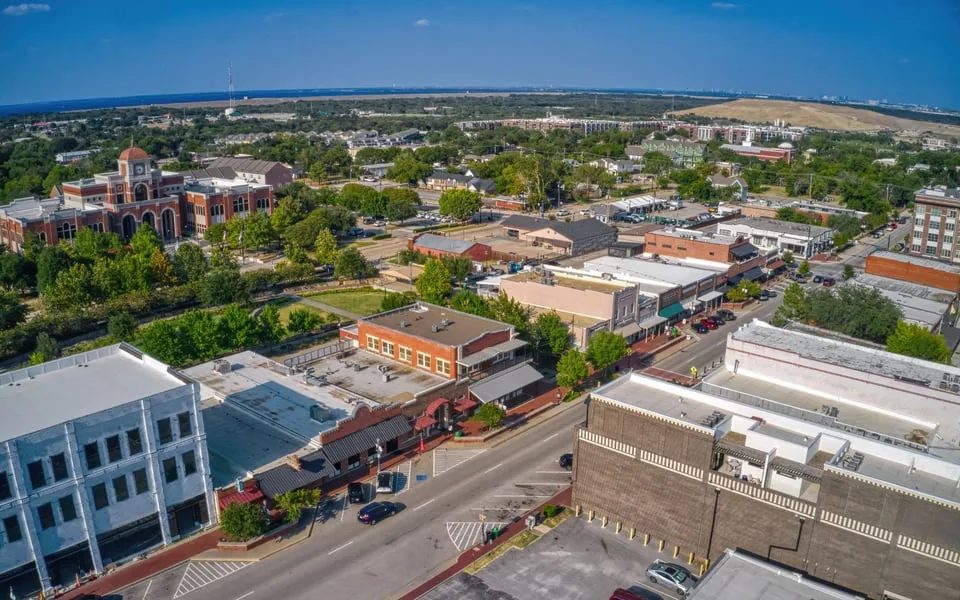
Old Town is Lewisville's historic downtown and includes commercial buildings along Main Street, and the city describes mixed-use redevelopment and transit-oriented development around it. A report for a building in Old Town Lewisville records party walls, shared parapets, and tenant access along with the roof surface. Lewisville also has an adopted plan to improve the 8.4-mile SH 121 Business corridor, whose planning documents describe commercial, office, and mixed-use activity; a report on the Business 121 corridor records parking-lot access and equipment loads along with the membrane.
The districts differ in how a roof is reached, which is why the access note sits in the report beside the findings.
Updating the record: what changes and what stays
A report is revised, not replaced. After each visit the findings table is updated, closed findings are marked with the date and the repair, and new findings take the next numbers. The zone map and the photo positions stay fixed. A reader can then lay the current report beside last year's and see what changed.
That continuity is what makes the report an asset. It supports the asset record, it feeds warranty files with dated proof of care, and it gives a new owner a history that would otherwise leave with the previous manager.
Commercial Roofing Questions
How long does a condition report take to produce?
The roof walk and the report depend on roof area, access, and whether moisture testing is included. We give a delivery date when the scope is set, and testing may add a visit.
Does the report include prices?
It includes recommended actions and the evidence for each. Prices come from defined bids, so the report separates the finding from the number.
Can the report be used for an insurance claim?
It supplies dated, photographed observations that support a claim. The carrier decides coverage, and the report does not predict the outcome.
What if the roof cannot be fully accessed?
The report says which zones were reached and which were not, and it records why. A return visit is scheduled for zones that were blocked.
Who receives the photographs?
The owner, in a folder organized by zone and date. The photographs are the owner's file and stay usable if the contractor changes.
Related
Related Roofing Work

Infrared and Core-Cut Moisture Surveys
Roof Capital Planning
Due Diligence Roof Surveys
Roof Insurance Claim Assistance
Old Town
Business 121 Corridor
Schedule the inspection and receive the record
Send the building address, the roof access details, and any past reports. We will inspect the roof and return a dated condition record with photos, numbered findings, and recommended next steps.