Roof Warranty Management in Lewisville, TX
Home // Roofing Capabilities //
Overview
Roof Warranty Management in Lewisville
The warranty sits in a drawer, and the roof is on the building, and nobody has compared the two. That comparison is the first task. We ask for the warranty document, the manufacturer's name, the installer's name, the date it began, and every repair or addition made to the roof since. Then we read the terms against what is physically on the roof: the membrane type, the flashing details, the penetrations added by other trades, and the repairs that were made, and by whom.
A warranty is a contract with conditions. Owners lose coverage less often to a failure than to a missed notice, an unapproved repair, or a rooftop unit added without involving the roofer who held the warranty. A Lewisville, TX owner who treats the document as a working file avoids most of those losses.
Warranty file: what we ask for and what we look for
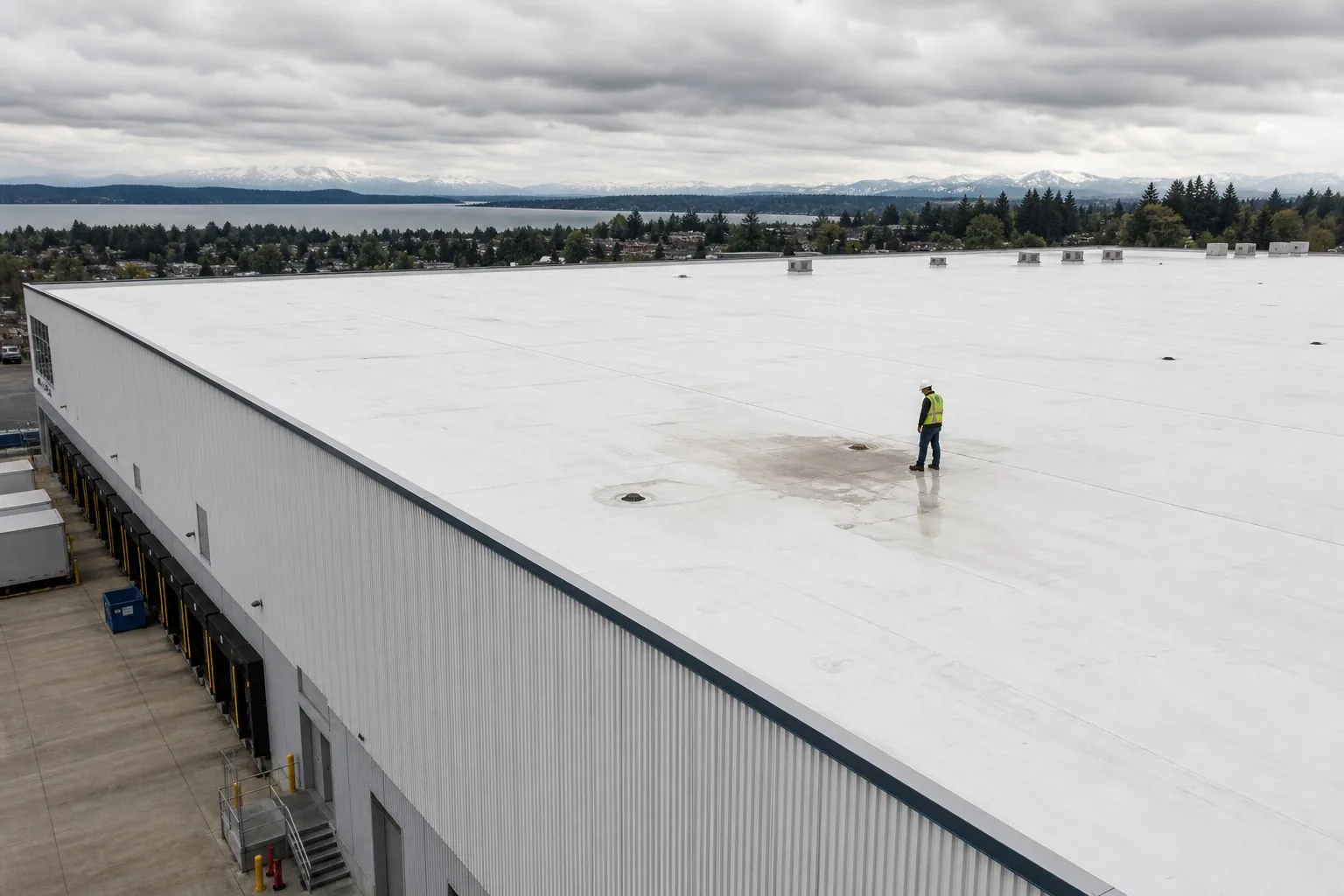
The file starts with the warranty itself, the manufacturer's specification for the roof, the installer's closeout papers, and any inspection reports. From them we pull the terms that matter day to day: what is covered, what is excluded, who may repair the roof, how long the owner has to give notice of a problem, and what maintenance the owner is expected to perform.
Terms differ widely between warranties, so we avoid general statements about what any warranty covers. We summarize the terms in plain language and flag the clauses that change what an owner can do. If the document is missing, we request a copy through the owner or the installer, and the roof's age and system are recorded in the meantime so the question can be answered when a copy arrives.
Repair rules: who may touch the roof and how
Many warranties set conditions on repairs: use the manufacturer's materials, follow its details, or involve an approved party. A patch made with the wrong product, or a curb flashed by a mechanical contractor to a different method, can give the manufacturer a reason to dispute a later claim. Before any work, we check what the document requires and match the repair to it where we can.
No repair can promise that coverage continues, so the work that matters is the record. We document every repair so the owner can show what was done, with what, and when. Photographs of the substrate, the product label, and the finished detail go into the file, and the file goes to the owner the same week.
Notice and timing: when the clock starts
Warranties commonly require the owner to report a problem within a stated period of discovering it, and some require notice before repairs begin. A leak found in July and reported in November can be disputed on timing alone. The practical habit is to log every leak report the day it arrives, with the room, the date, and a photograph, and to pass it to whoever the warranty names.
Our emergency work respects the same rule. Temporary dry-in measures are taken to limit damage, labeled as temporary, and recorded with a date, and the warranty holder is told before permanent work proceeds where the document asks for it. The record shows what was done to stop water and what was left for the permanent repair. If the warranty names a service number for emergencies, it is called first and the call is logged with the time and the name of the person reached.
Maintenance records: proof of care
Some warranties require periodic inspection or routine care, such as clearing drains and keeping debris off the surface. A record of scheduled maintenance visits is the plainest evidence that the owner met the obligation. Each visit lists the drains cleared, the seams checked, the repairs made, and the findings left open, with photographs.
Gaps in the record are visible. A year with no visit is a year the manufacturer may ask about. For portfolios, the multi-site program keeps the visits on a calendar so none are skipped when a manager changes or a building changes hands.
Hail, wind, and heat: reading the exclusions
Storm hazards in the Metroplex include large hail, damaging winds, flooding, and tornadoes, and the National Weather Service says they occur nearly every year somewhere in the region. Warranty terms often treat weather events differently from material or workmanship defects, and some exclude hail or wind above a stated limit. Read the exclusions before a storm, not after.
When an event occurs, the roof is inspected for hail damage and other marks and the findings are recorded so the owner can see whether the damage is the kind the warranty covers, an insurance matter, or neither. Regional airport records show about 20 days a year at 100 degrees or higher, a reminder that long heat wears a membrane in ways a warranty may call normal aging. The file keeps those distinctions visible.
Sale, refinance, and transfer
A buyer or lender often asks whether the warranty is still valid and whether it transfers. The answer depends on the document: some require notice or a fee to transfer, and some end at sale. We locate the transfer clause, note the steps, and include the warranty status in the due diligence package, with the repair history that bears on it.
For owners in Castle Hills, where the city describes a planned mixed-use development spanning Lewisville and Carrollton, or along the Business 121 corridor, a transaction can happen on short notice. A warranty file that is already assembled makes the request answerable in a day.
Claim packet: what goes to the manufacturer
When a failure looks like a covered defect, the claim packet assembles the warranty, the leak log, the condition report, photographs of the failed detail, core results if any, and the repair history. The packet states what was observed and leaves causation to the manufacturer's review.
We attend the manufacturer's inspection when the owner asks, bring the file, and record what the representative says. The owner decides how to respond to the result. The aim is a claim that is complete on the first submission and does not stall while documents are requested one at a time.
Afterward the file records the outcome: what the manufacturer accepted, what it declined, and the reason given. If a repair is approved, the work is scheduled in the first dry window and photographed against the manufacturer's detail. If a claim is declined, the owner has the packet, the response, and a clear view of the next options, including whether the failure belongs in an insurance conversation or a repair budget.
Commercial Roofing Questions
What if the warranty paperwork is lost?
We ask the installer and the manufacturer for copies, and record the roof system and age in the meantime. A core cut can confirm the assembly while the request is pending.
Does a repair by another roofer void a warranty?
It can, depending on the terms. Check the document before any repair, and keep photographs and receipts of the work. We review the clause with you.
Will adding rooftop equipment affect coverage?
It may. Many warranties set rules on new penetrations and who flashes them. The record of the work and the roofer's involvement is what the owner points to later.
Can a warranty be extended?
Some manufacturers offer extensions or inspections tied to roof condition. We do not set terms. We prepare the condition record the manufacturer would ask for.
How long should records be kept?
For the life of the roof and the warranty, plus whatever period the owner's lender or insurer requires. We hand over the files in a form that is easy to archive.
Related
Related Roofing Work
Preventive Roof Maintenance
Multi-Site Roof Programs

Hail Damage Roof Repair

Due Diligence Roof Surveys

Castle Hills
Business 121 Corridor
Send the warranty and the repair history
Send the warranty document, the installer's name, and any repair records. We will inspect the roof and return a dated condition record with photos, findings, and notes on how the terms apply to the work ahead.