
Multi-Site Roof Programs in Lewisville, TX
Home // Roofing Capabilities //
Overview
Multi-Site Roof Programs in Lewisville
Three buildings with three contractors produce three kinds of invoice, three styles of photograph, and no way to tell which roof is actually in the worst shape. A program replaces that with one inspection format, one calendar, and one place where results land. The property manager opens a single folder and sees every roof ranked, every open finding listed, and every scheduled visit with its date.
For owners in the Lewisville, TX area, the program is a way to carry the same standards across buildings that differ in age, system, and tenants. It starts with the first inspection pass on each roof and settles into a rhythm of seasonal visits, event-driven checks, and an annual review.
One format: the same fields for every roof
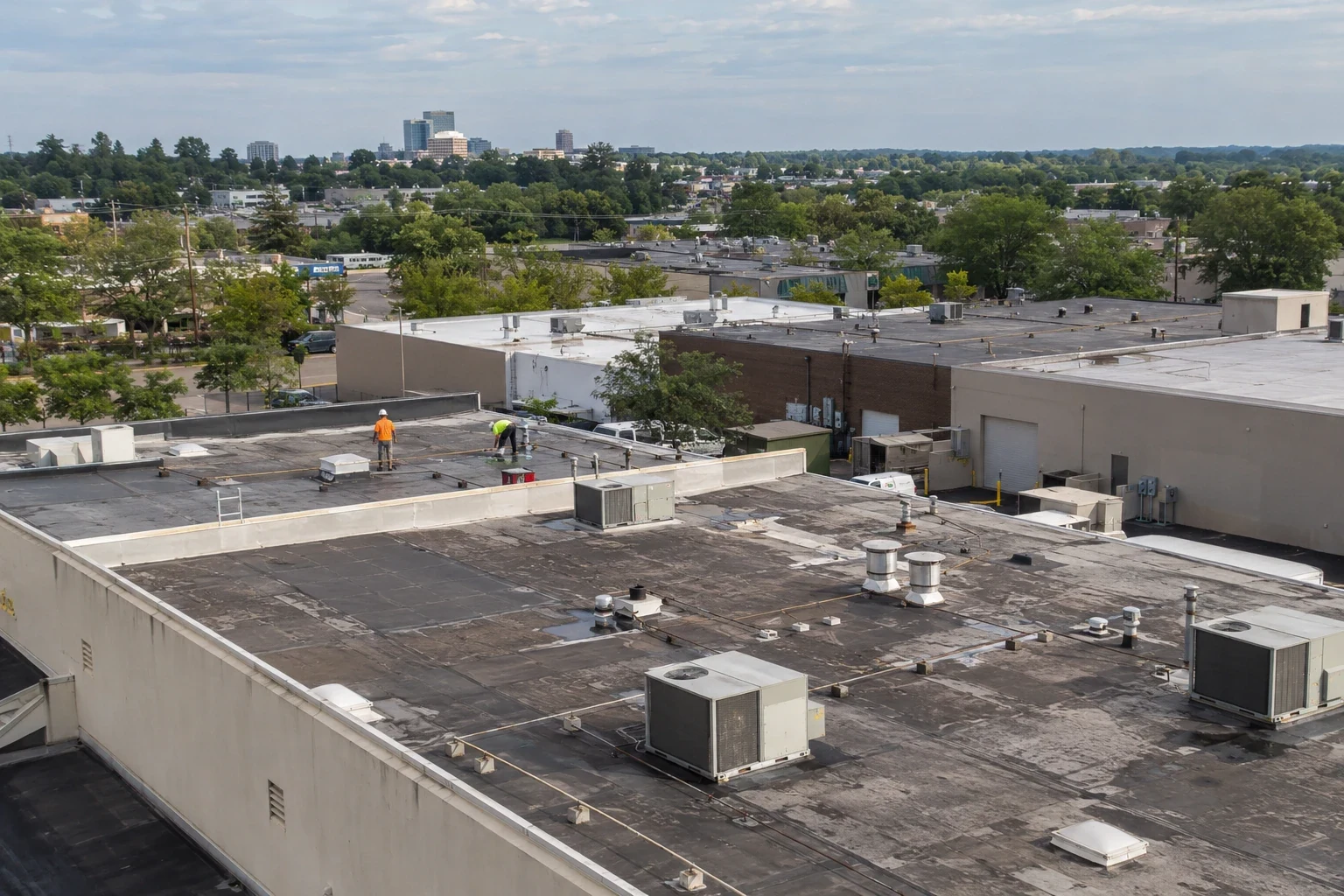
Each building is divided into roof zones, and each zone is described with the same fields: system type, area, attachment, drain count, penetrations, equipment, age if known, last finding, and condition step. Photographs come from fixed positions and carry the same file naming. A manager comparing a retail roof with a warehouse roof sees like with like.
The format is deliberately plain so it survives staff changes. A new manager can read the file in an hour, and a lender or insurer can follow it without a legend. When a building is sold, its folder can be lifted out with nothing missing, and the remaining program keeps running.
Onboarding: the first pass and the site standards behind it
The program opens with a baseline pass on all roofs inside a defined window, so conditions are compared as of the same season. Roofs are walked in a planned order, photographs are taken from fixed positions, and access notes are written down as each building is entered. A building that stays closed to the crew during that window is named, with the cause, and given its own date, so the baseline is complete before the first ranking is issued.
Documents are collected in parallel: roof plans, warranties, repair invoices, and loss runs. Gaps are recorded as gaps. After the first pass the manager receives the ranked list, the access plans, and a calendar for the next twelve months, and any building that surprised the pass, either way, gets a note explaining why.
A program sets one standard for how crews behave at every building. Fall protection is set at open edges before anyone works near them. Roof access is signed in and out. Tools and materials are kept off tenant parking and walkways, and debris is cleared at the end of each visit. Interior contact with tenants goes through the property manager, and noise or odor from roof work is announced before it starts.
The standard is written once and applied everywhere, so a tenant at one building experiences the same courtesy as a tenant at another. Incidents, near misses, and complaints are logged with the building file, and the pattern across sites shows whether a rule needs tightening.
Because the same rules apply from the first visit, a manager who adds a building later can extend the program without redrafting anything.
Visit calendar: seasons, storms, and lease dates
Visits are scheduled to the roofs' needs and the Metroplex calendar. Severe weather returns to North Texas nearly every year according to the National Weather Service, with thunderstorms peaking in spring, so a spring visit comes after the main storm season and a pre-spring visit clears drains and secures details. Summer visits look at heat wear, since the airport record counts roughly 20 days a year at 100 degrees or more.
Lease dates, tenant events, and building closures are mapped on the same calendar. A grocery tenant's holiday week, a school's break, or a retail center's peak season can put a roof off limits at a time that looks free. The calendar shows those windows, so work is scheduled where it fits and not where it was assumed to.
Storm triage: which roofs first after an event
After a hail or wind event, a portfolio faces a sequencing problem: not every roof can be visited in the first day. The program defines the order in advance. Roofs with known open findings, roofs over sensitive space, and roofs with recent repairs come first. Roofs with newer membranes and clean records follow.
A storm report for the region is only a reason to inspect, not a finding about any one roof. The inspection pass after the event compares each roof with its prior photographs, which separates new marks from old wear and tells the manager which buildings need a claim file and which need nothing. Emergency dry-in follows the same order, with emergency repair available at any hour for the roofs that cannot wait.
Shared decision file: ranking repair, restore, recover, replace
With every roof scored, the program produces a single ranked list of work. Roofs needing a repair go on the near list with scopes. Roofs suited to a coating restoration go on a list that can be bundled for efficiency. Roofs at replace-planning go into the capital plan with a proposed year.
Bundling is the program's practical advantage. Work of the same kind across several buildings can be scheduled in one mobilization, with common materials ordered together and one crew moving from site to site. The owner sees the savings in the scope comparison, not as a promise, because each building's scope is priced from its own findings.
Spread across Lewisville and neighbors: access differs by building
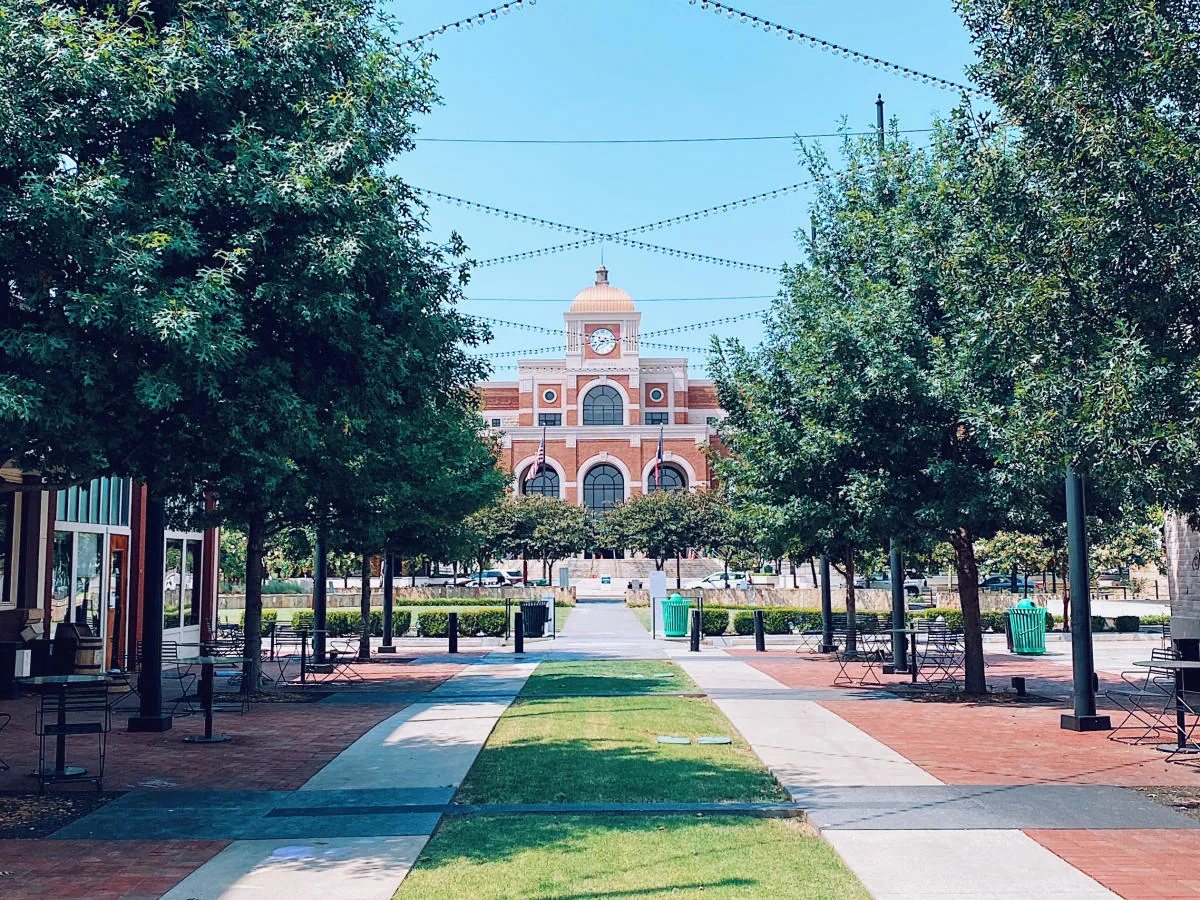
A Lewisville portfolio can hold an Old Town storefront, a mixed-use building near the Hebron 121 station in the Southern Gateway, and an office or industrial building near I-35E. Neighboring towns widen the spread: Flower Mound lists distribution and manufacturing employers, Denton markets its Westpark industrial zone, roughly 800 acres north of Airport Road, and the DCTA A-train connects Denton County to DART through Lewisville.
Every building carries its own access plan: hatch location, key holder, hours, tenant approvals, and equipment limits. The plan is part of the record so a crew arriving at an unfamiliar site can find the roof without a phone call, and so a missed visit is traced to a cause that can be fixed.
Reporting: what the manager receives each quarter
A quarterly summary lists visits completed, findings opened and closed, repairs made, roofs whose step changed, upcoming visits, and the reserve position. It runs two pages. The detail sits behind it in the folder: photographs, readings, and invoices.
Managers who report to boards or investors can lift the summary directly. Those who need more can follow the finding numbers back to the evidence. The program also feeds warranty files with dated proof of care for each roof under coverage.
Commercial Roofing Questions
How many buildings justify a program?
Three or more is a reasonable threshold. The format and calendar pay off as the count grows, because scheduling and ranking improve with more roofs in one table.
Can a program include buildings with different roofing contractors?
Yes. We inspect and record all roofs in one format. Repairs on roofs covered by another contractor's warranty are coordinated with the terms in mind.
What happens when a building is sold?
Its folder is exported with the full record, and the program continues for the remaining buildings. The buyer receives a file that stands on its own.
Does a program lock the owner into one contractor?
The record is the owner's and works with any contractor. Program terms are set in writing, and the owner decides what to bundle and when.
How are emergency calls handled across sites?
By the triage order and the access plans on file. A call opens the building's folder, and the crew arrives knowing how to reach the roof.
Related
Related Roofing Work

Commercial Roof Inspections
Emergency Roof Repair
Commercial Roof Repair
Roof Coating and Restoration
Roof Capital Planning
Old Town
Send the building list and the lease calendar
Send the property list, the way each roof is reached, and any tenant dates that limit work. We will walk each roof and return a dated condition record with photos, findings, and a ranked list of next steps.
