Commercial Roofing in Castle Hills, Lewisville, TX
Home // Service Areas //
Overview
Castle Hills in Lewisville
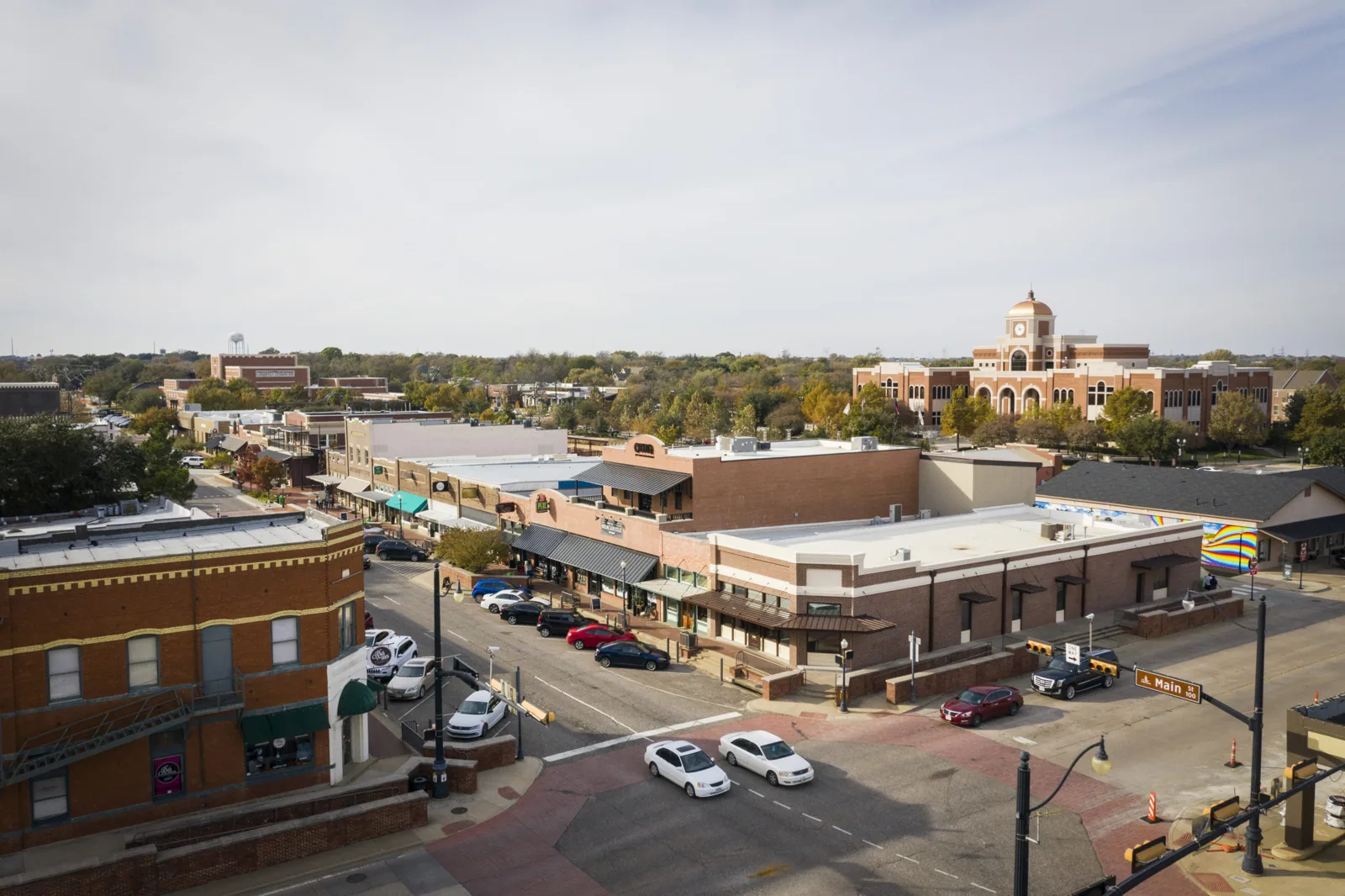
Before the crew picks a membrane, someone has to answer a plain question: which city permits the work? Castle Hills is a planned development area that spans Lewisville and Carrollton, with mixed-use development, so a roof on one side of a boundary and a roof on the other can fall under different offices. The inspection file for any building here starts by noting which side it is on and which code applies.
Lewisville's adopted codes include the 2021 International Building Code, and the edition and amendments in force for a given permit come from the permit office. The same step applies on the Carrollton side, with that city's rules. It costs little to ask early and can cost weeks if it is asked late.
Permit and boundary check: before anything is priced
We record the property address, the city of record, the permitting office and the code edition on the first page of the roof file. If the building sits near the boundary and the answer is not obvious, the owner confirms it with the city before the scope is final. A scope written for the wrong jurisdiction has to be rewritten, and the delay lands in the middle of the work window.
The same discipline applies to approvals inside the development. A planned community can carry design standards for roof color, edge metal and rooftop screening, and a replacement that changes visible material may need review. If an owners' association or design committee applies, its requirements go into the schedule, not into a change order.
Once those items are settled, the roof inspection proceeds as usual, with a photo sequence from fixed points and a moisture reading wherever the surface looks suspect.
Building uses: office, dining, multifamily
Crown Centre at Castle Hills is planned as office, retail, dining and multifamily development along SH 121. Whatever is built or already standing, those use types ask different things of a roof, and we sort the work by use.
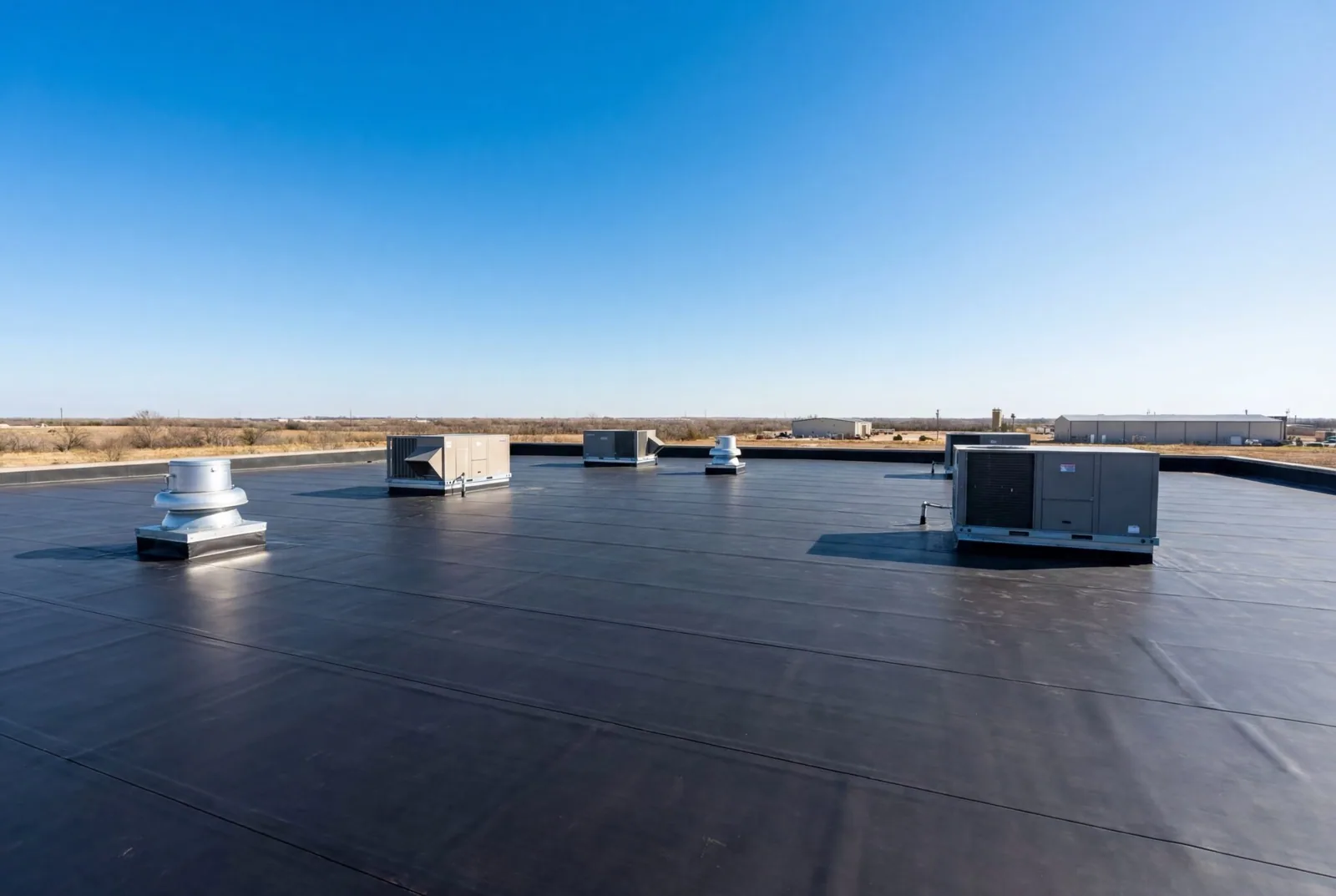
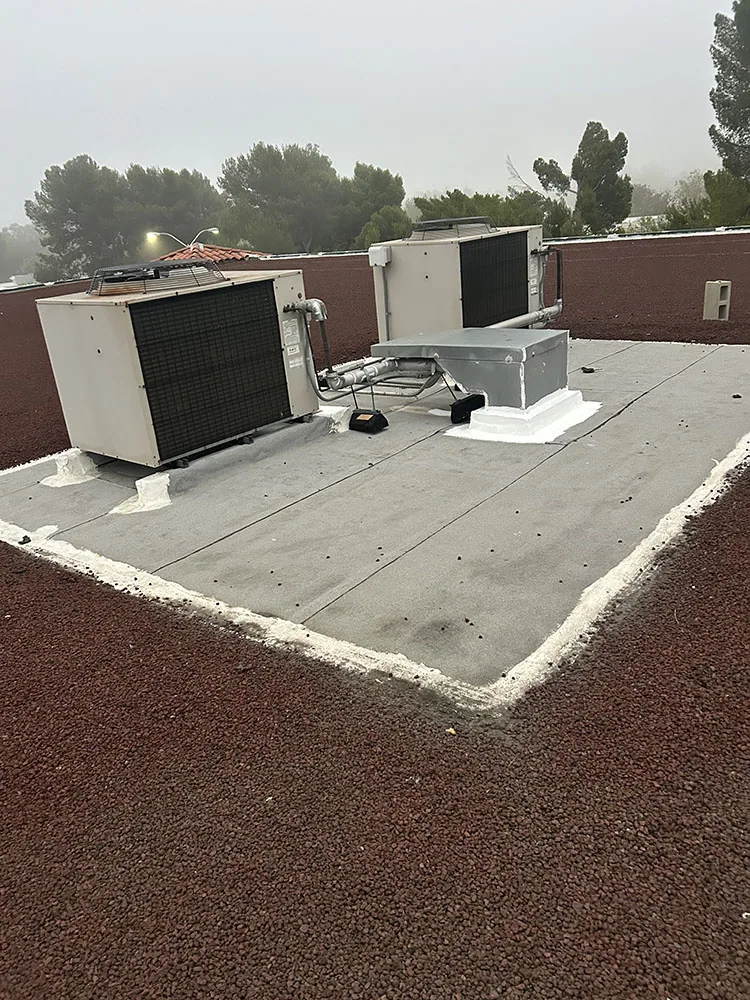
Office roofs carry building systems: air handlers, exhaust, cabling, antennas. The inspection counts penetrations and checks the curb flashing at each, since equipment service is the most common source of disturbed details. A leak above office space affects ceilings, equipment and records, and the repair note lists what sits below.
Dining adds grease. Kitchen exhaust fans put vapor on the membrane around them, and some roofing materials soften under it. We photograph each discharge point and the surface beside it, and recommend grease containment or a resistant membrane where the record shows wear. The same pattern runs through any restaurant roof, where the grease path is mapped before the fix is chosen.
Multifamily roofs bring residents, and residents report leaks within hours. The record ties each roof zone to the units below so the right door is knocked on quickly. An apartment roof repair is scheduled to limit noise and keep walkways clear.
Climate record: heat, hail and the wet seasons
Summers here are hot, and spring and fall run wettest. The regional airport counts July and August highs near 96 degrees and some twenty 100-degree days a year. Hail, flooding, wind and tornadoes reach the Metroplex most years, but a given Castle Hills roof may be missed in any season.
After a severe storm we inspect and compare against the prior photographs. Hail bruising, fractured insulation facers, dented metal and displaced membrane are located and imaged. Where a hail repair is warranted, its scope covers what the record shows and no more. Where the roof was already worn, the record says that too, and the carrier sees the same evidence the owner does.
Heat works more slowly. Sealant hardens, laps open and flashing pulls back from walls. The inspection notes each sign and uses it to estimate remaining service life. A roof with chalked, shrunken or split laps near the units is a roof whose repair window is open now, and the cost of waiting is stated in the report in terms of what the water would reach next.
Work coordination in a planned community
Roof work in a development with shared drives, landscaped areas and nearby residents needs a plan for staging and traffic. The access log records the route for deliveries, where the lift stands, the hours for noisy work and the haul-off path. Landscaping and sidewalks near the building are protected before equipment arrives.
For occupied buildings, one section opens at a time and is dried in by the end of the shift. Occupied building reroofing uses the same sequence, and interior protection is priced as its own line. Emergency leaks are handled outside the schedule: a dry-in goes on at once, and the permanent repair follows on a planned day.
Options review and neighboring districts
Each roof zone leaves the inspection with a recommendation and the reasoning behind it: repair, recover or replace, with cost lines for access, tear-off, insulation, interior protection and weather risk. A manager with buildings across the development can use one format for all of them.
The moisture reading carries most of the weight. Dry insulation under a worn membrane can support a repair or a recover; wet insulation across several zones cannot. In a development with several owners, a shared format also helps when two buildings face the same decision in the same year, because crane and mobilization costs can be split and the work scheduled for one visit.
Rooftop equipment deserves its own line. Office and dining uses bring fans, units and screening that must be lifted and reset during a replacement, and the cost of that handling is stated up front, along with the date the equipment is back in service.
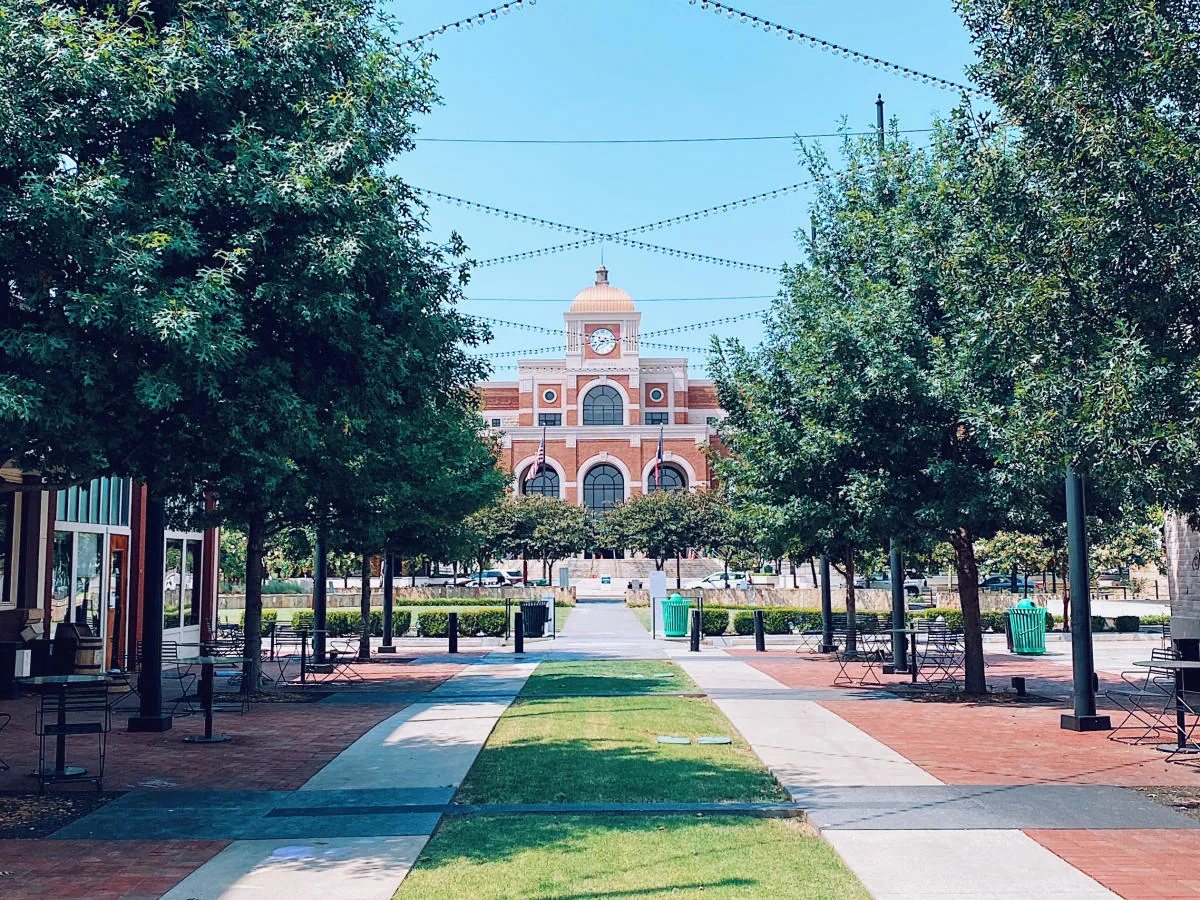
An owner can hold property in other parts of the corridor. The Eastern Gateway sits at the SH 121 entrance to Lewisville, the Business 121 Corridor runs through the city, and Carrollton lies on the other side of the Castle Hills boundary. At closeout the owner receives photographs, a repaired-zone plan, a materials list and warranty paperwork.
Commercial Roofing Questions
How do I know which city permits my roof work in Castle Hills?
Start with the property's city of record. Check the tax record or ask the city's permitting office before the scope is final. We note the answer on the first page of the file so the code edition and permit path are clear.
Does a planned development change what roof I can install?
It can. Design standards or an association may govern visible roof color, edge metal and screening of rooftop equipment. The requirements are identified first and built into the scope and schedule.
Why does grease from a restaurant damage a roof?
Exhaust fans discharge vapor that settles on the surface around them. Some membranes soften or degrade under repeated exposure. The record shows where discharge occurs and what the surface looks like, and the repair scope covers containment or resistant material.
How are residents protected during a multifamily roof repair?
With short work days, marked walkways, noise limits and a dry-in at the end of each shift. The roof record ties each zone to the units below so the affected residents are told what to expect and when.
Can hail damage be separated from older wear on an office roof?
Yes, with a pre-storm record or, failing that, a core and moisture readings. Fresh bruising and fractures show differently from weathering. The report states which marks are new and what that implies for repair scope.
Related
Related Roofing Work
Restaurant Roofing
Apartment Roofing

Hail Damage Roof Repair
Occupied Building Reroofing

Eastern Gateway
Business 121 Corridor
Schedule an inspection pass and confirm the permit path
Send the address, the use of the building and any design standards you know of. You will receive a dated condition record with photos, findings and recommended next steps, with the permitting city noted on the first page.