Restaurant Roofing in Lewisville, TX
Home // Property Types We Roof //
Overview
Restaurant Roofing in Lewisville
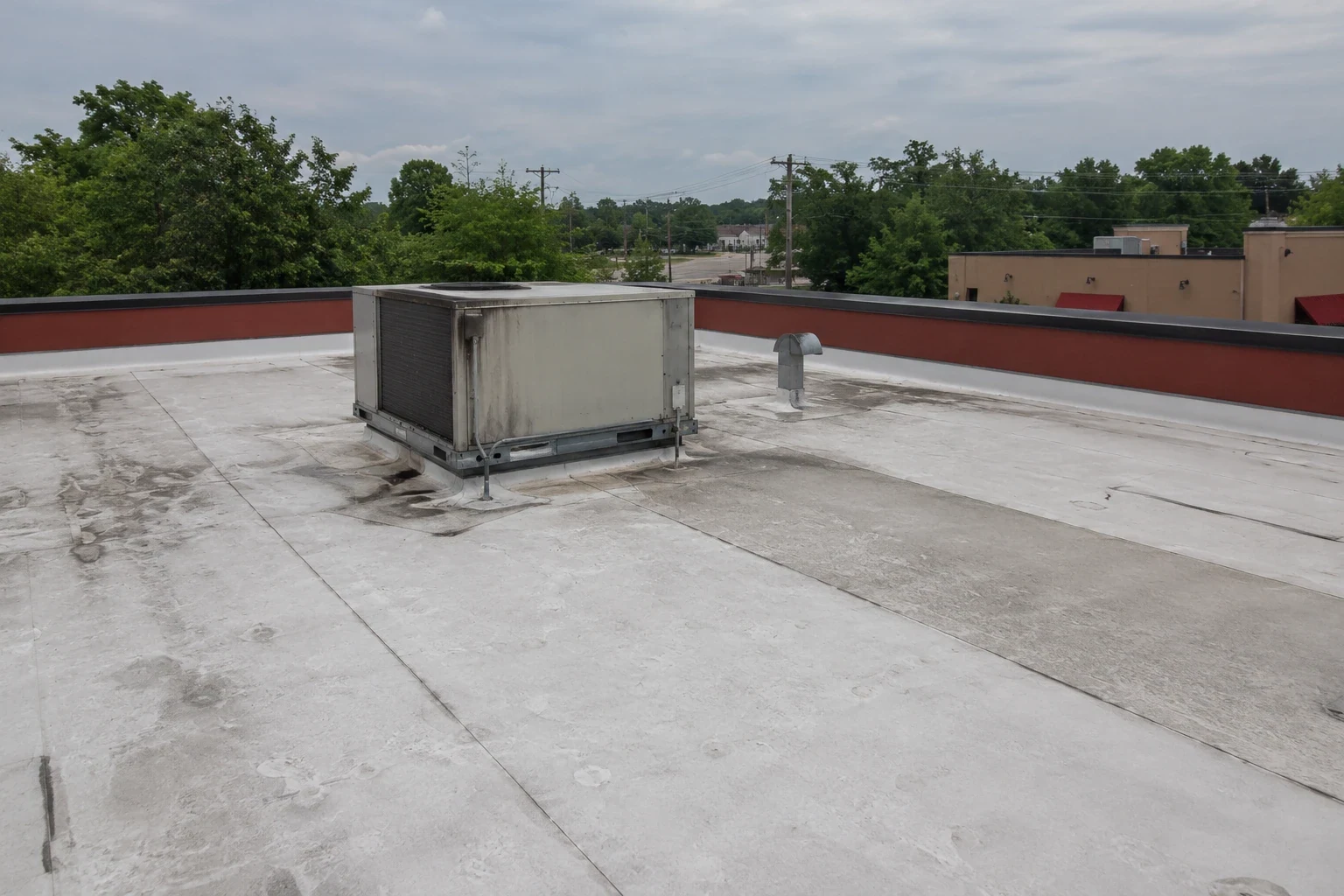
A dark stain trailing downwind from the kitchen exhaust fan is the roof observation that settles most restaurant questions. It shows how much of what leaves the hood lands back on the sheet, and it often predicts where the next leak will start. In Lewisville, TX the first inspection pass on a restaurant roof starts at the fan, photographs the stain pattern from a fixed point and then walks outward, looking at how far the residue travels and what it has done to the membrane in its path.
Everything else, from seams to curbs, is read against that grease map.
Local context: dining districts and strip sites
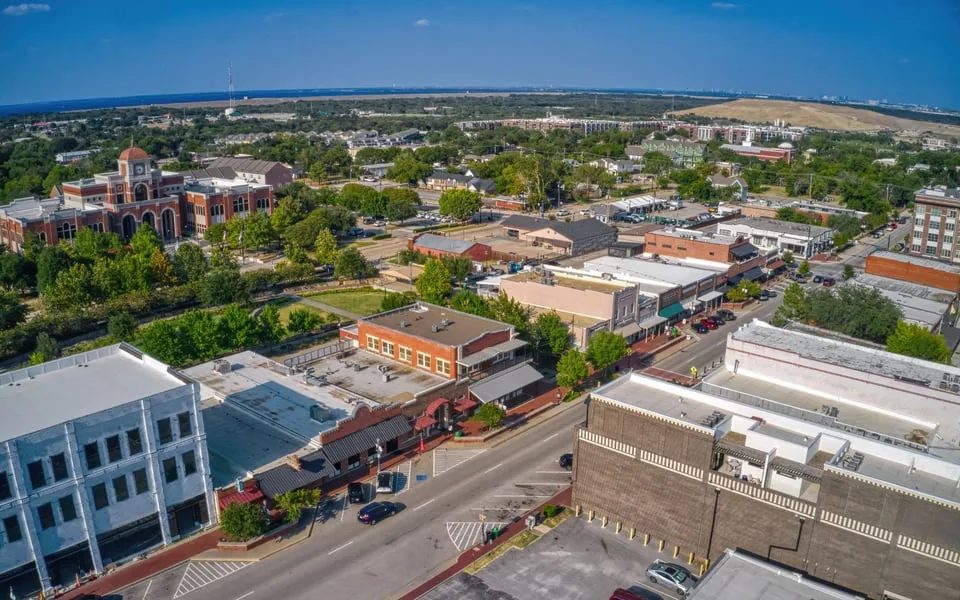
Crown Centre at Castle Hills is planned to include dining along SH 121, Old Town Lewisville's historic downtown has commercial buildings along Main Street, and Coppell's historic district has shops and restaurants around its town square. Addison describes a business community with hotels, retail and restaurants. Restaurants therefore turn up in many building types: freestanding pads, strip bays, mixed-use ground floors and older storefronts.
That variety matters for the roof. A freestanding pad has a roof to itself, a strip bay shares one with neighbors, and a storefront may share a wall and a drain with the building next door. The record states which case applies, using the lease exhibit where one exists, and the Old Town storefront gets different questions than a pad site on SH 121.
Grease exposure: fans, hoods and the discharge path
Kitchen exhaust throws fats and oils onto whatever lies downwind. Some membranes soften and swell under that load; others tolerate it. We record each exhaust fan, its curb, its grease containment and the discharge direction, and we compare them to the stain pattern. A fan with a damaged or missing containment pan is a finding on its own.
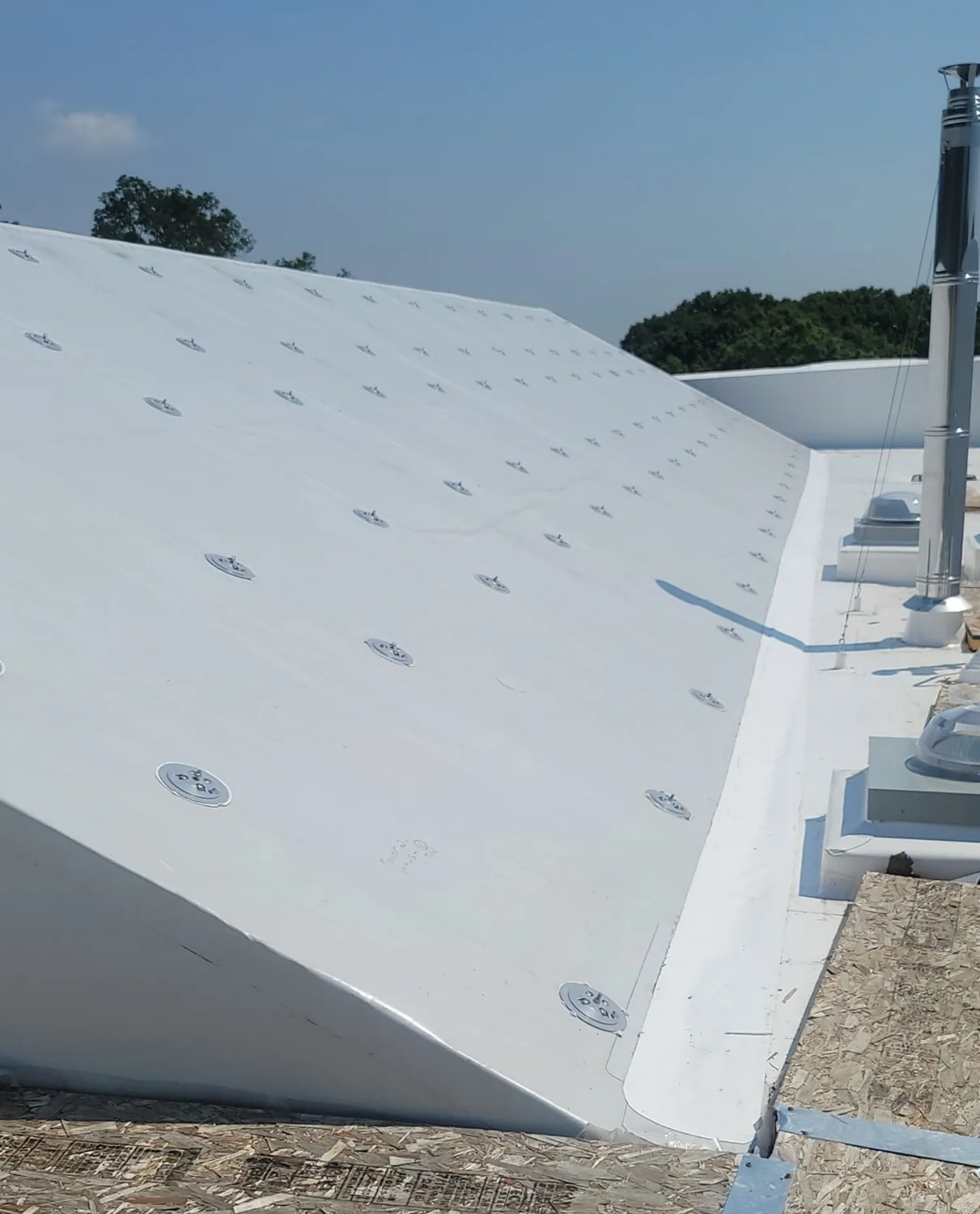
Where grease is steady, the scope names a grease-tolerant system such as PVC roofing, and it writes cleaning into the maintenance steps. Hood cleaning crews walk this same route on the same roof, and their traffic wears the sheet along the route, so a protected walk path goes down where they step.
Grease also finds its way into drains. Residue washed off a roof, or rinsed from a hood into a roof scupper, can coat the drain bowl and slow the flow, and a drain that has been dumping grease for years holds a layer of it that no cleaning crew sees from above. The pass checks the bowls nearest the fans first and records whether they run freely.
Cold-weather behavior matters less here than summer. A greasy sheet in the afternoon sun softens, and foot traffic leaves a permanent print. Walk pads and a no-step zone around the fan keep that from happening.
Attachment detail: curbs, makeup air and refrigeration
A restaurant roof carries more than the exhaust fan: makeup air units, packaged HVAC, refrigeration condensers for walk-in coolers, sometimes a gas line. Each has a curb, a flashing and a support. We number them on the plan, photograph each from a fixed position and log the condition of the sealant.
Units moved or replaced during a remodel leave unused curbs and open penetrations behind. Those get capped or removed, and the finding says. Rooftop equipment curbs and supports repairs are timed with the mechanical contractor so each unit is lifted once.
Gas lines and their supports need a note of their own. A gas line resting on small blocks can wear a line into the sheet within a few seasons, and any repair near a gas line follows the building's hot-work rules. The finding records the line, its supports and the plan for protecting the membrane under it.
Work window: service hours, health code and weather
A restaurant cannot lose a dinner service to a roofing schedule. The access log lists prep hours, service hours and delivery times, and the heavy work is planned for the hours when the kitchen is empty. Short repairs fit between lunch and dinner, with protection in place below.
Health code concerns the kitchen directly. Falling grit above prep areas, open roof penetrations over food and odors near fresh-air intakes all need controls. The plan seals penetrations during work above them, covers intakes before adhesives or heat are used and lists who confirms the kitchen below is clear. Heat is the other constraint: about twenty days a year reach 100 degrees at the regional airport, and a kitchen roof in July is hotter than most.
Staging is easier at a pad site than in a strip. Where a restaurant shares a lot, the lift goes where it will not block drive-through lanes, deliveries or fire access, and the plan names a spotter for the lane. In a downtown storefront, the lift location and the sidewalk closure are agreed with the city and the neighbors before the first day.
Storm evidence: wind, hail and the next service
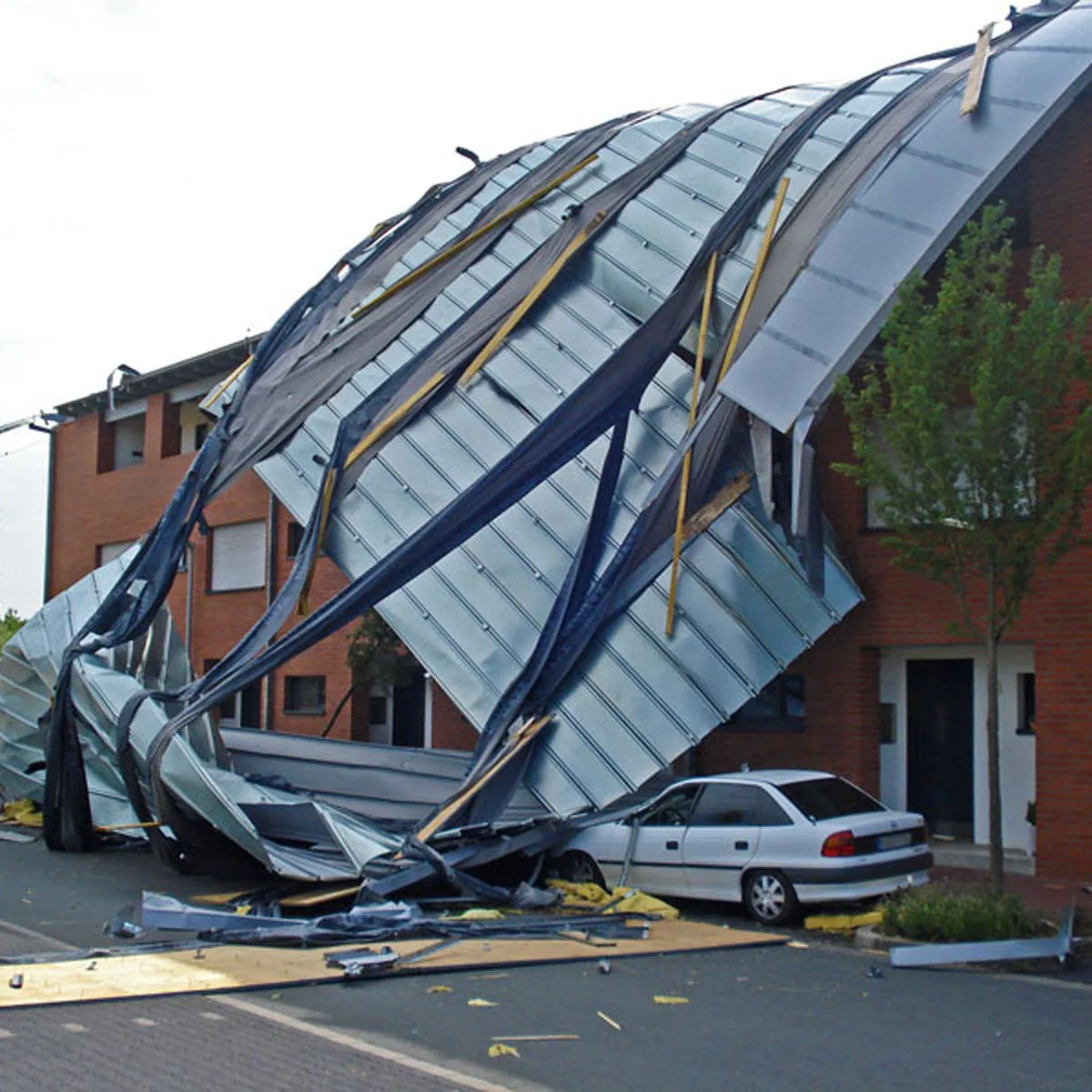
Hail, high wind and flooding visit the Metroplex most years, and thunderstorms peak in spring, though a given restaurant may be missed. A report is a prompt to walk the roof, not a conclusion about it. The first pass checks the fans and units for displaced covers, the perimeter for loose edge metal and the field for bruises and open seams.
Findings are dated and compared with the last record. A storm damage repair scope, when needed, rests on what the roof shows, and the dated file helps the owner talk to an insurer or a landlord.
Options review: tenant, landlord and lease
Who pays for the roof depends on the lease. A tenant in a strip center often owes for damage its exhaust causes, while the landlord owns the membrane. The record separates findings by cause: grease from the tenant's fan, wear from age, damage from weather. That separation gives both sides a basis for a decision.
The choices on the table are repair inside a stated boundary, a recover over dry board or replacement. A roof coating restoration can extend a sound roof, but it needs a clean surface, and a greasy one fails the adhesion test first.
Cost drivers are specific to restaurants: the number of exhaust and makeup air units, the grease system the roof needs, the hours of kitchen downtime the owner will allow and the depth of any tear-off. Each is priced by line so the owner can see how a different service schedule changes the number.
Closeout packet: what the owner keeps
Inside the packet sit the grease map, a penetration list, the moisture readings, product sheets, the roof access log and dated photographs. A grocery store or a hotel with its own kitchen can share its layout, and the file sets the next hood-cleaning and inspection dates.
Commercial Roofing Questions
How does kitchen exhaust affect a roof membrane?
Fats and oils soften some sheets and stain others. The grease map shows how far the residue travels, and the scope picks a tolerant system and sets a cleaning method.
Who owns a roof problem caused by a tenant's fan?
The lease decides. Our record separates findings by cause so both sides can see which are grease, which are age and which are weather.
Can the roof be worked during the lunch rush?
Usually not. Heavy work waits for empty kitchen hours, and short repairs fit between services with protection below.
Does a hood cleaning crew damage the roof?
Foot traffic and spilled cleaner can. A protected walk path and a cleaning method written into the file reduce both.
What does the decision file hold?
The grease map, penetration list, readings, product sheets, access log, photographs and the next inspection date.
Related
Related Roofing Work
Old Town
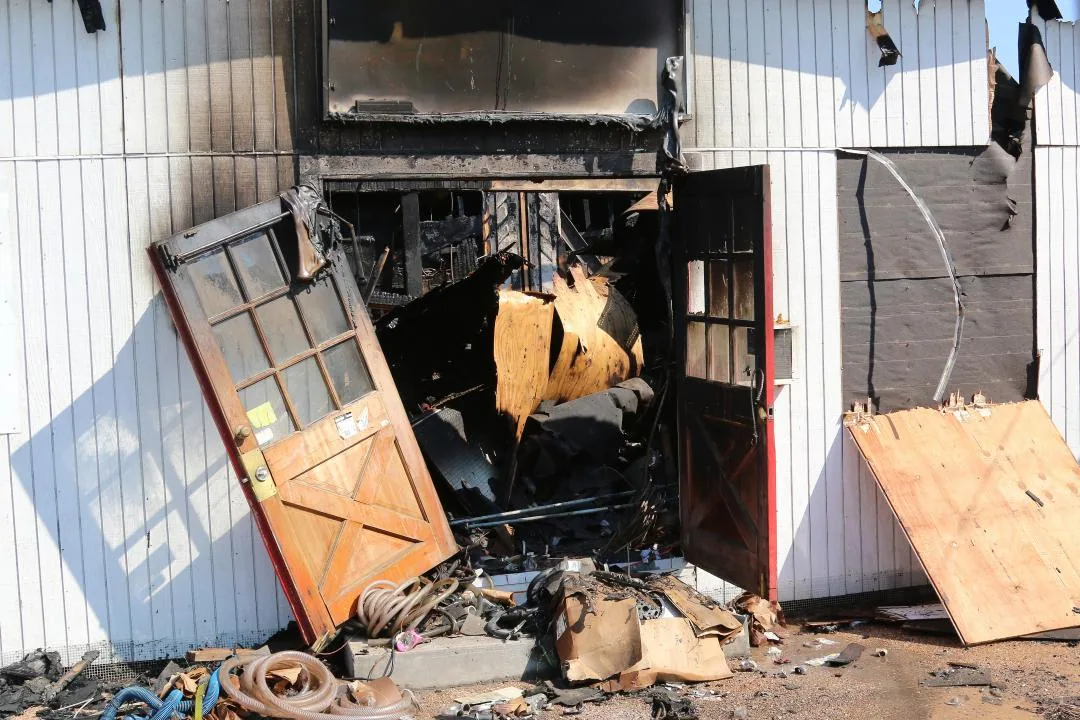
PVC Roofing
Rooftop Equipment Curbs and Supports
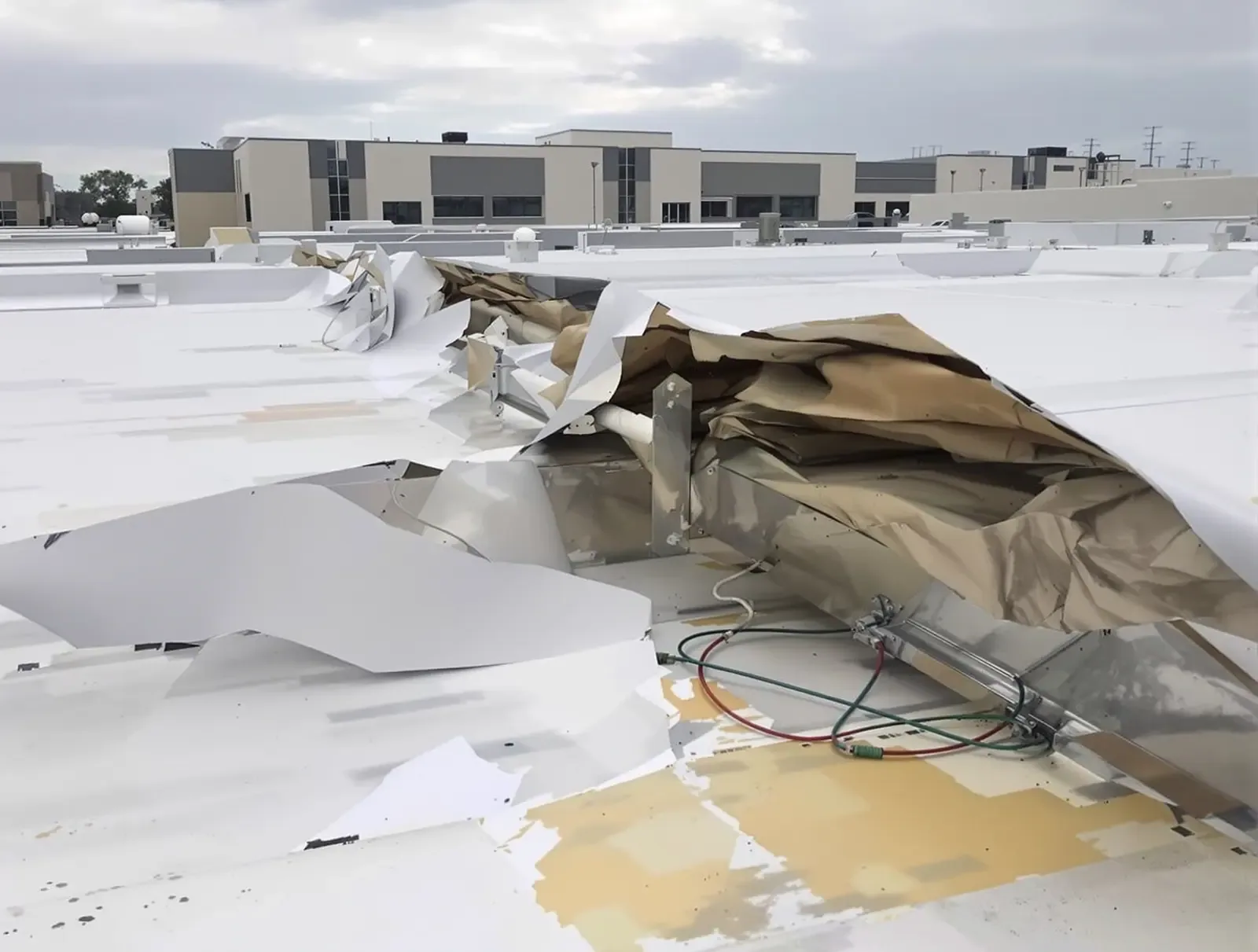
Storm Damage Roof Repair
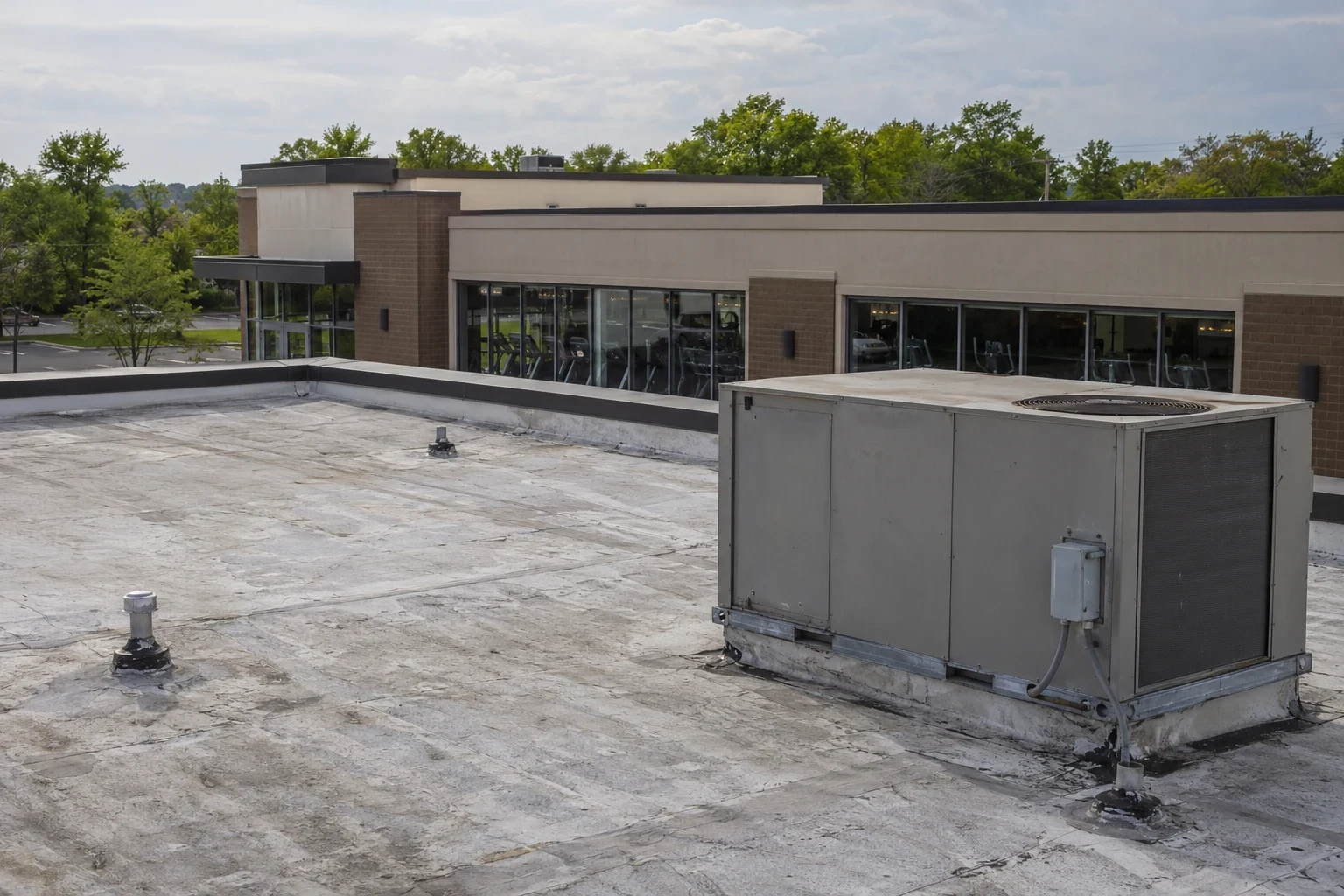
Roof Coating and Restoration
Grocery Store Roofing
Schedule an inspection pass
Send the lease roof exhibit and the exhaust fan list, then schedule an inspection to receive a dated condition record with photos, findings and recommended next steps.