
Commercial Roofing in Business 121 Corridor, Lewisville, TX
Home // Service Areas //
Overview
Business 121 Corridor in Lewisville
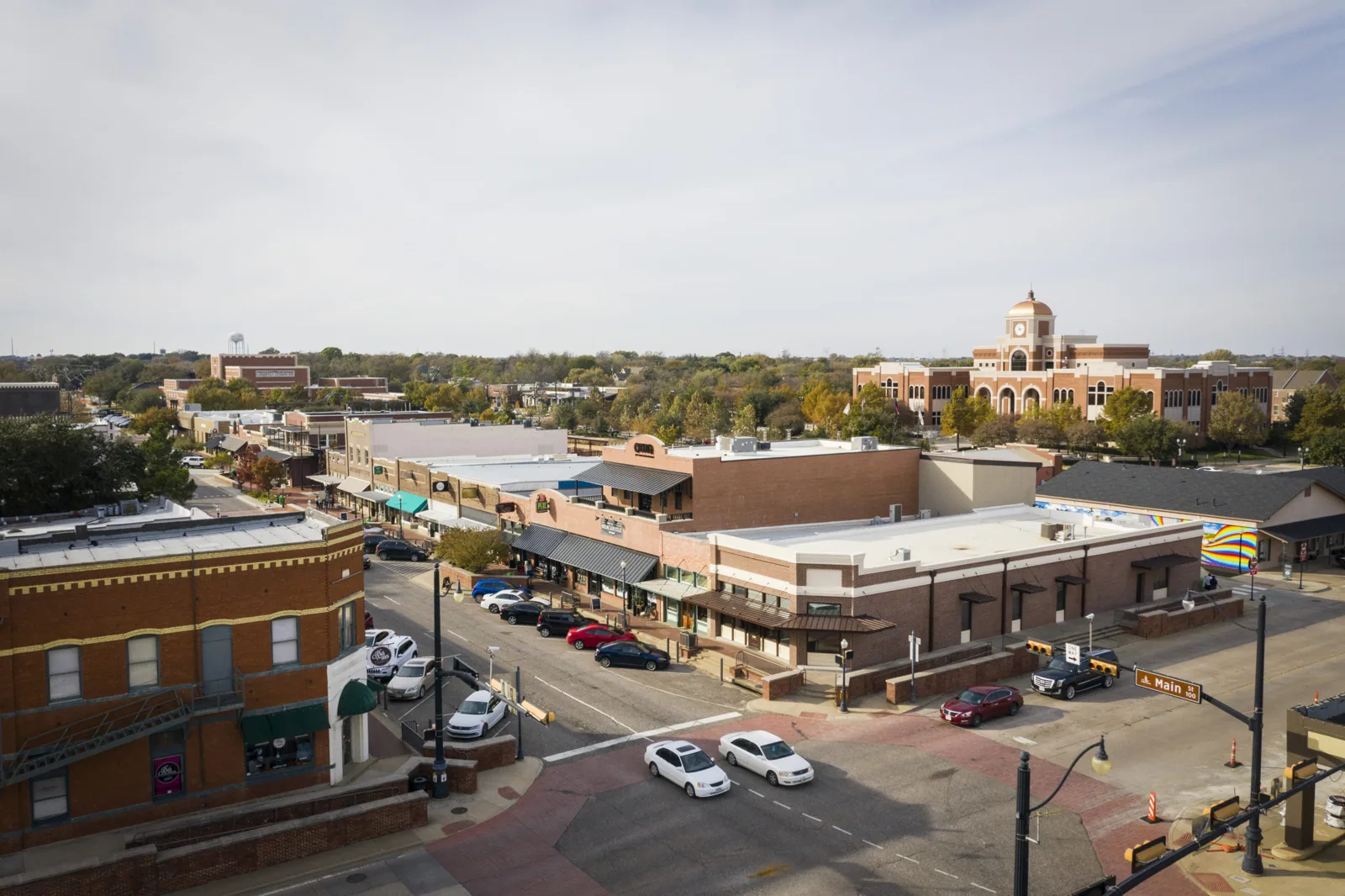
A long corridor is a routing problem before it is a roofing problem. The SH 121 Business corridor in Lewisville, TX runs 8.4 miles, and the city has adopted a plan to improve its function and economic vitality. City planning documents describe commercial, office and mixed-use activity along it. A manager with five properties on that one road can lose a morning to driving if the inspection order is chosen badly.
So the first piece of a corridor roof program is a route: which buildings are visited in which order, which are checked each season and which are held for a storm-response list. Roof work on a corridor is rarely about a single building. It is about the sequence in which a set of buildings is looked at, repaired and eventually replaced.
Route plan: the order of inspection
We build the route from three inputs: the condition of each roof, the consequence of a leak under it and the distance between buildings. A roof that is old and sits over valuable contents goes to the front. A recent roof with a clean record gets a lighter touch. Buildings that sit close together are grouped into a single visit.
Each building gets a roof file with a record number, a roof plan with numbered zones, a photo sequence and a list of known conditions. The route plan lists the file numbers in visit order, with the access arrangements for each: who has the key, whether a hatch or a lift is needed and what hours the tenants need quiet. A property manager who has this plan can hand it to anyone and have the same visit happen.
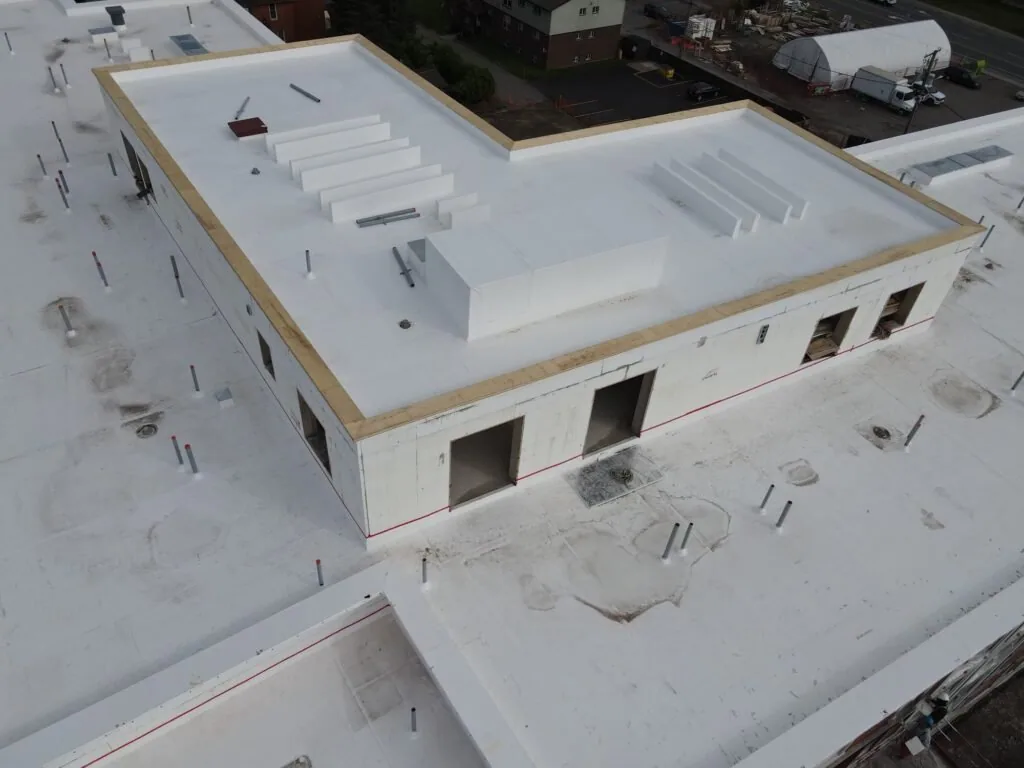
The multi-site roof program turns the route into a recurring cycle, and the cycle into a budget.
Mixed uses on one road
The corridor's commercial, office and mixed-use activity means very different buildings share a frontage. A small office building, a retail strip and a mixed-use block have different roofs, different tenants and different leak consequences. We tag each file with the use below the roof and with the system on it, so the report can sort by either.
On retail and office roofs, the checks center on rooftop equipment, drains and edges. Rooftop units, exhaust fans and conduit penetrations are counted and photographed. Walkways are checked where service staff travel. On mixed-use roofs, the zones above residential space are marked, since those leaks are reported within hours and the interior damage is costly.
Our leak repair response uses the file to find the zone fast. The record shows what was patched before, where ponding sits and where the flashing is weakest, so the search starts at the likely entry points.
Underused or vacant space is a particular risk on a redeveloping road. A suite with no tenant has no one to notice a stain, and water can run for weeks before it is found. We add vacant units to the route and look at the ceiling below each roof zone, not only at the roof, since a roof that appears quiet can still be wetting insulation that no one is watching.
Storm response along a long road
A typical year brings hail or damaging wind to part of the Metroplex, and a storm can cross part of the corridor and miss the rest. After one, we inspect the buildings most likely to be affected based on reports from managers and the weather record, and we compare each against its earlier photographs.
That is how we avoid a blanket claim. The record of each building shows whether anything changed, and the repair scope covers what is documented. When the road has been hit unevenly, a manager sees which buildings need work and which do not, with the evidence for each.
For a leak in progress, the sequence is immediate: dry-in, interior protection, then the permanent scope. Preventive maintenance visits before spring and fall keep drains clear so the storms that do arrive do less harm.
Heat, wet seasons and the maintenance cycle
Spring and fall run wettest along the corridor and severe thunderstorms peak in spring, while summers peak in the mid-nineties and the airport counts about twenty days a year over 100. Heat ages membrane, sealant and flashing, and wet seasons test drainage.
A maintenance cycle that respects those seasons has two main visits: one before the spring storm season and one after the summer heat. The first clears drains, checks edges and secures loose flashing. The second looks for heat damage, such as chalking, shrinkage and split sealant, while there is still time to fix it before fall rain. Each visit adds to the same decision file, and the file keeps the dates, the readings and the reasoning, and over a few cycles the file shows which roofs are holding and which are sliding.
The roof asset management record collects the findings and the repair history so the next budget can be built from them.
Where the corridor meets the districts
The corridor meets other parts of the city at several points. The Business 121 route joins I-35E at the Central I-35E focal point, and the Eastern Gateway and Southern Gateway sit along the SH 121 side of the city. An owner with property in more than one can fold all of it into a single route plan, and the closeout packet for each job, with photographs, repaired-zone plan, materials and warranty paperwork, goes into the same file.
Replacement planning follows the same logic as inspection. Roofs are ranked, a replacement year is assigned to each, and the program schedules the work so that mobilization is shared when two buildings come due together. Each filing is reviewed under the edition and amendments the permit office confirms, and Lewisville's adopted list carries the 2021 International Building Code. The options review for every zone shows repair, recover and replacement side by side, with the access, interior protection and weather lines separated, so a manager can see which line moves the price and which choice protects the building longest. Where the moisture reading shows dry insulation, the cheaper path often holds; where it shows wet board across zones, the report says so plainly and the replacement conversation begins with evidence.
Commercial Roofing Questions
How should a manager order inspections along a long road?
By consequence and condition first, distance second. Older roofs over valuable contents go early, and nearby buildings are grouped into one visit. The route plan lists the order and the access arrangements for each building.
What does a roof file contain for each building?
A record number, a roof plan with numbered zones, a dated photo sequence, moisture readings where taken, known conditions such as past patches and ponding, and access details. It is built to be passed to anyone who visits next.
After a storm, which buildings get inspected?
Those reported as affected and those that the weather record suggests were in the path. Each is compared against its earlier photographs, and the report records findings and the absence of findings alike.
Can maintenance visits really reduce leaks?
They remove the cheapest causes: clogged drains, loose flashing and open sealant. Those are common causes of avoidable leaks. The visit record also shows when a roof moves from maintenance to repair.
How are mixed-use roofs handled differently?
The zones above residential space are marked, penetrations are mapped and walkways are protected. Leaks over homes are reported fast, so the file ties each zone to the units below and the response starts with the right contact.
Related
Related Roofing Work
Multi-Site Roof Programs
Commercial Roof Leak Repair
Preventive Roof Maintenance
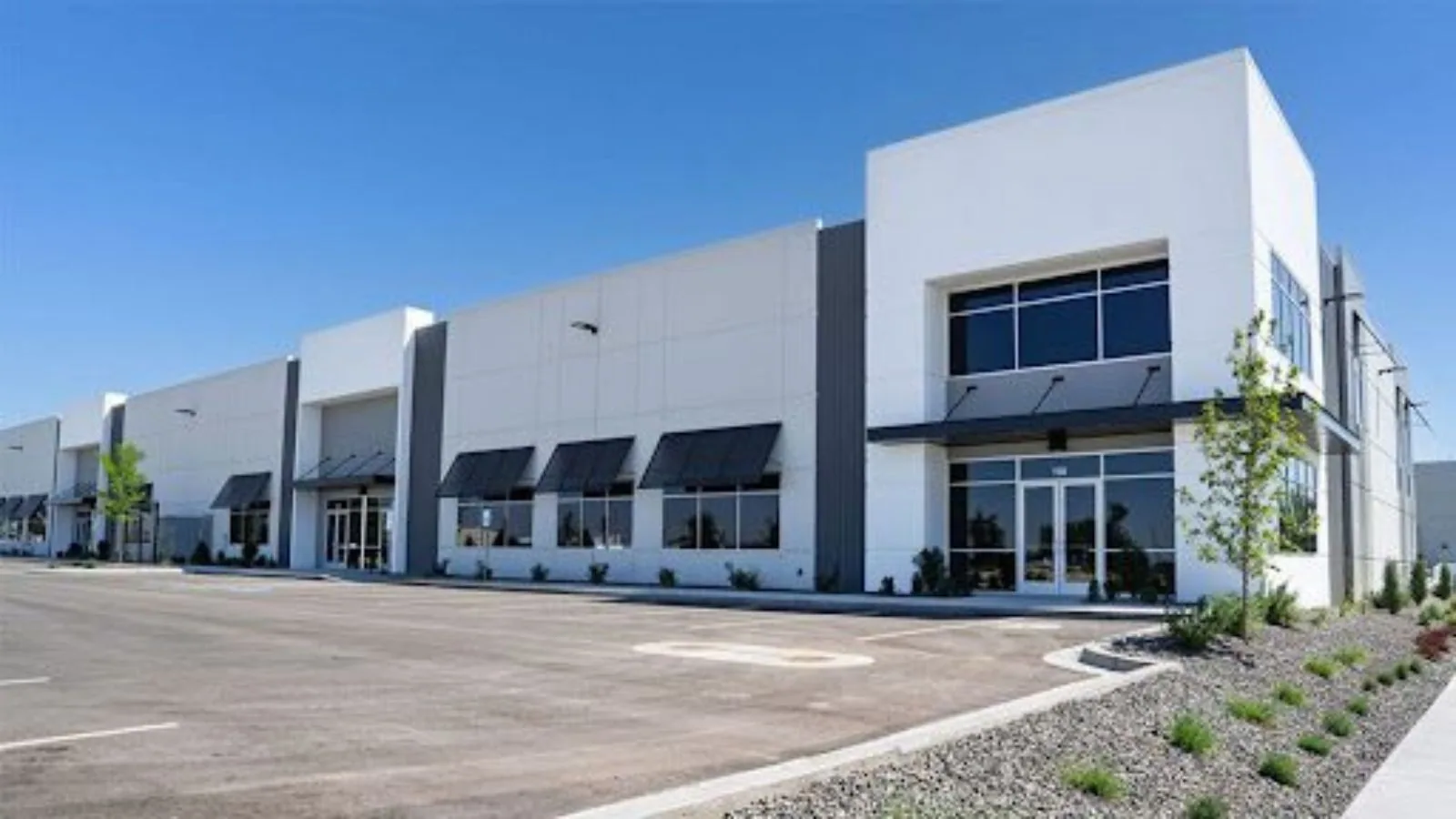
Roof Asset Management
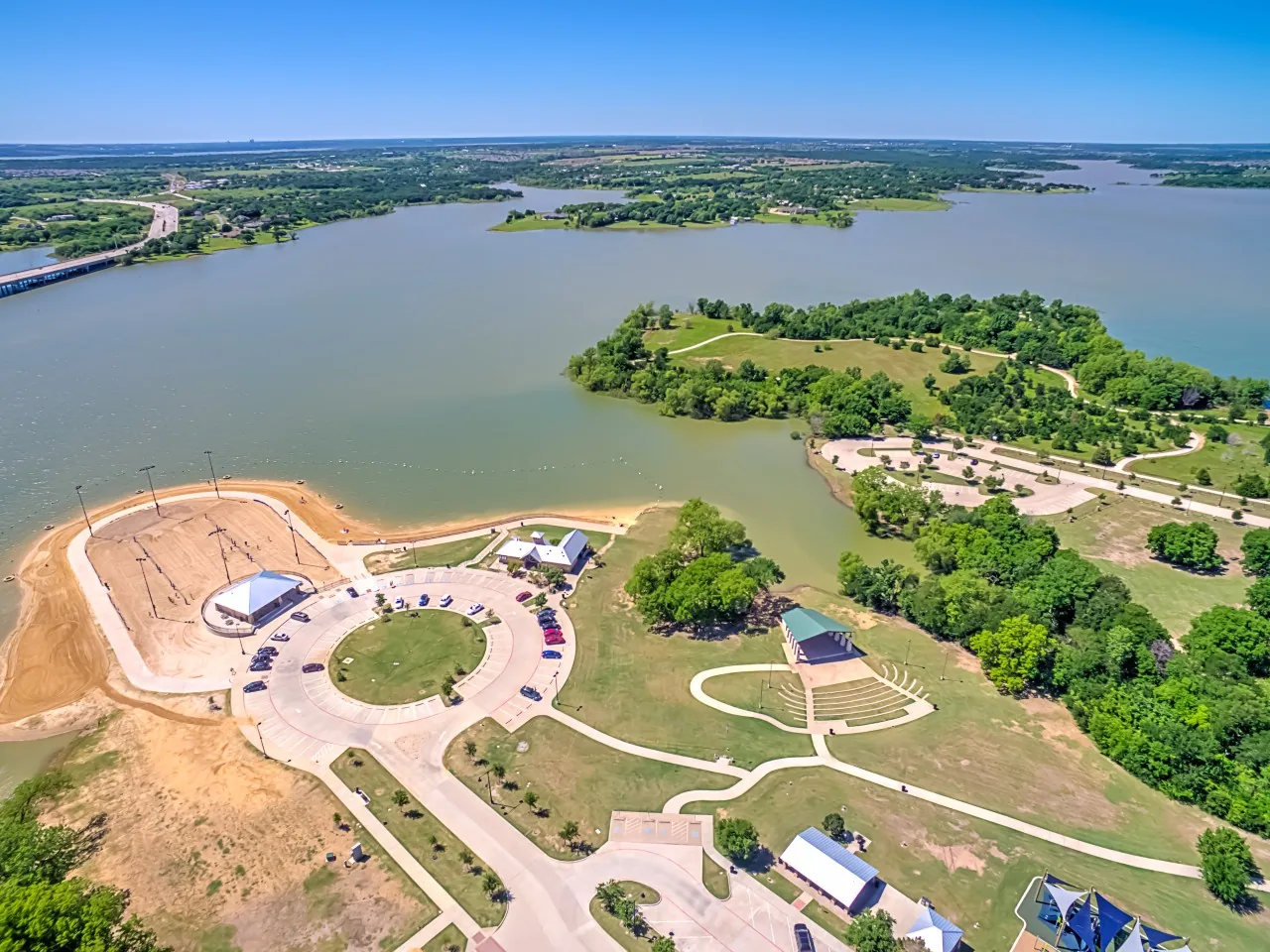
Central I-35E
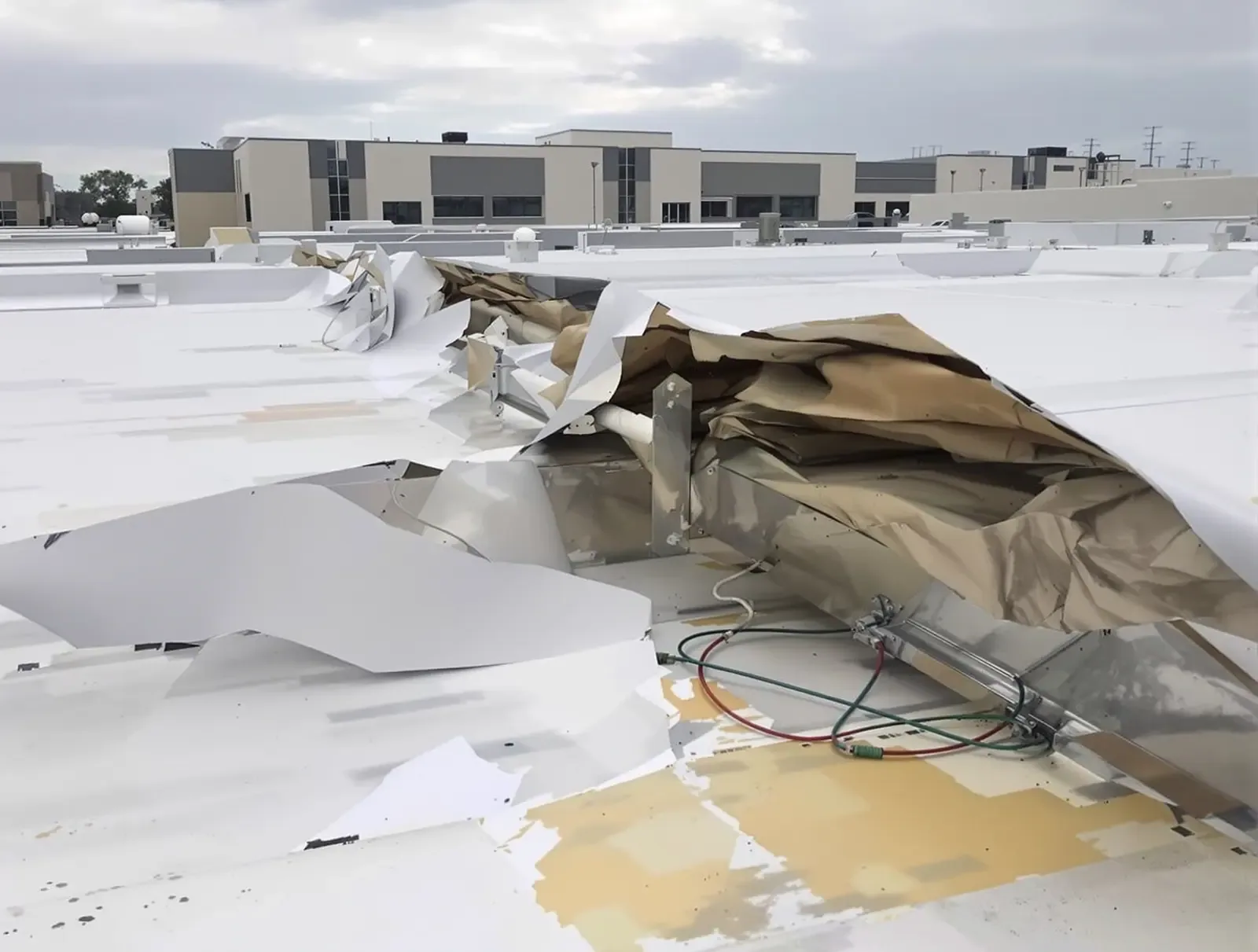
Eastern Gateway
Schedule an inspection pass and build the route
Send the list of properties on the corridor, their uses and the access arrangements. You will receive a dated condition record with photos, findings and recommended next steps, with the buildings ordered into a visit route.
