
Commercial Roofing in Irving, TX
Home // Service Areas //
Overview
Irving in Lewisville
Three different owners in Irving, TX, can ask the same question about a roof and need three different records to answer it. A tenant-occupied office wants to know what the ceiling stain says about the membrane above. A healthcare operator wants to know which roof zone can be opened without touching patient areas. An investor looking at an older building in a redevelopment area wants to know how much roof life is left. Irving's economic-development materials name Las Colinas and the Heritage District as development and redevelopment areas, and the city lists finance, energy, insurance, telecommunications, aviation, healthcare and technology among its business sectors, so all three owners are plausible.
Our inspection begins with the question the owner is actually asking, then builds the evidence for that question.

Office roofs: tracing a ceiling mark upward
A stain on a tenant ceiling is a starting point, never a finding. We ask for the date it appeared, what the weather was and whether anything on the roof changed that month. On the roof, we trace the water path from the likely entry back toward drains, seams, flashing and penetrations, because water often travels along a deck before it drops.
Findings are logged by roof zone with a dated photograph and a note on the next test. If an interior stain lines up with a wet reading in the insulation, the moisture boundary is marked and the repair is drawn against it. If the roof checks out dry and intact, the record says so, and the search moves to plumbing, condensation or an envelope detail at the wall. That outcome is useful too, because it stops a repair from being spent on the wrong cause.
Healthcare and sensitive spaces: set the protected area first
Where a roof sits over clinical, laboratory or technology space, the work plan starts below the roof. We list the rooms that cannot take a drip, the equipment that cannot lose power and the hours when disruption is least costly. Then the roof zones above those areas are scheduled last, with a temporary dry-in, covers over the rooms below and a stopping point agreed in writing.
A test cut over a sensitive room is placed with care, repaired the same day and logged with a photograph before and after. If rooftop units serve critical rooms, shutdowns are coordinated with the facility contact by unit and by hour. Our work on hospital roofs and medical office roofs follows the same sequence.
Older buildings in redevelopment areas: reading the layers
Buildings in a district being redeveloped often carry roofs that were patched, recovered or partly replaced over several ownership changes. We do not assume one membrane or one age. A test cut confirms the layers, a moisture survey shows where insulation has taken on water, and the photo sequence documents seams, flashing and prior repairs.
That record answers the investor's question in plain terms: which zones are sound, which need repair, and which are near the end of their service life. It also helps when a building is being repositioned, since new tenants, new rooftop equipment and altered drainage all load the roof differently. The due diligence roof survey format fits an acquisition review, and the same photographs and readings can be reused in a capital plan once the sale closes.
Storm season: matching the report to the roof
Irving sits in a humid subtropical region with hot summers, and the National Weather Service puts the worst thunderstorm activity in spring. It adds that hail, damaging wind, flooding and tornadoes show up somewhere in the Metroplex nearly every year, even if one property is spared in a given season. The response to that is evidence gathered on the roof, not an assumption made from a forecast.
After a storm, we photograph the roof from a fixed point and then close up at edges, penetrations and seams, comparing against earlier images. New dents in metal, bruised membrane or displaced flashing go into the record with a location. The same record supports an insurance conversation when damage is real, and it settles the question when it is not.
Heat exposure: what July leaves behind
Airport normals for the region reach the mid-nineties in July and August and include around twenty days a year at or above 100 degrees. A roof absorbs more than the air does, and heat works on every sealant line and seam. Common results are shrunken flashing, cracked pitch pockets and seams that have lost grip along their edges.
We probe the seams, check sealant and note any chalking or crazing. A reflective surface or coating can reduce surface heat, and our cool roof work can be compared with repair when a roof is aging evenly.
Work coordination: parking, cranes and shared walls
Office and mixed-use buildings in a busy district share more than a roof edge. A lift needs ground that can bear it, a drive lane has to stay open for deliveries, and a parking structure next door may be the only place to stage material. Before a scope is priced, we mark the hoist location, the haul route and any adjacent property that needs notice, and we ask the owner to confirm who can approve use of shared space.
Shared walls and party parapets get their own line in the plan. Where two roofs meet, the question of which owner pays for a flashing repair has to be settled before anything is cut, so the record shows who approved the work and on what date. A neighbor's rooftop unit that sheds condensate onto our work area is photographed and reported through the property manager, not corrected on the spot. Tenants with early or late hours are listed with the quiet windows they need, and the loudest tasks are placed outside them. Each of those details lands in the access log with a date, which gives the manager a reliable account if a question arises after the crew has left.
Options review and closeout
The decision file compares repair, recover and replacement for each roof zone, and it names what each path leaves unresolved. A repair sets a boundary and a follow-up date. A recover depends on dry insulation. A replacement resets the assembly and the service life.
At closeout, the owner receives photographs, a zone map, moisture results, material information and an access log. Owners in neighboring Coppell and Carrollton get the same format.
Commercial Roofing Questions
Who should be told before a test cut is made?
The facility contact and anyone responsible for the rooms below. We agree on the location, protect the interior and photograph the cut before and after it is repaired.
What do you do when the roof is dry and the ceiling still stains?
We record the dry result, then look at condensation, plumbing and wall details. The finding stops money from going into a roof repair that would not solve the problem.
Can a stale roof record be rebuilt for a purchase review?
Yes. A test cut confirms the layers, a moisture survey maps wet areas, and dated photographs document the surface. That gives a buyer a clear picture of remaining service life.
How is a clinical area protected during roof work?
We schedule the roof over protected rooms last, use a dry-in plan and interior protection, and agree on stop conditions in writing. Rooftop unit shutdowns are coordinated by unit and hour.
Does a cool roof fit every building?
No. It suits a roof with a sound base and a heat-stressed surface. If the insulation is wet, that comes first.
Related
Related Roofing Work

Hospital Roofing
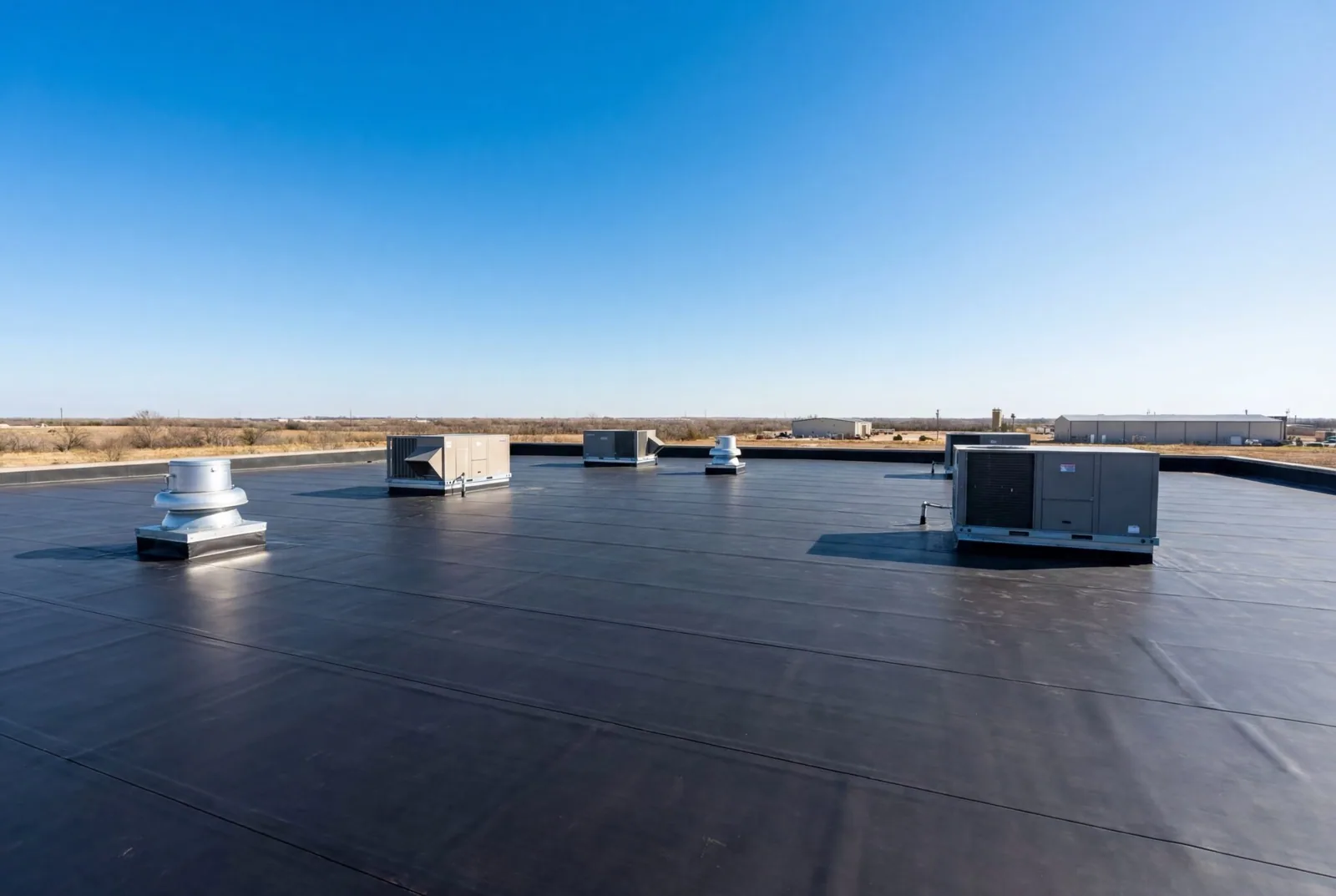
Medical Office Roofing
Due Diligence Roof Surveys
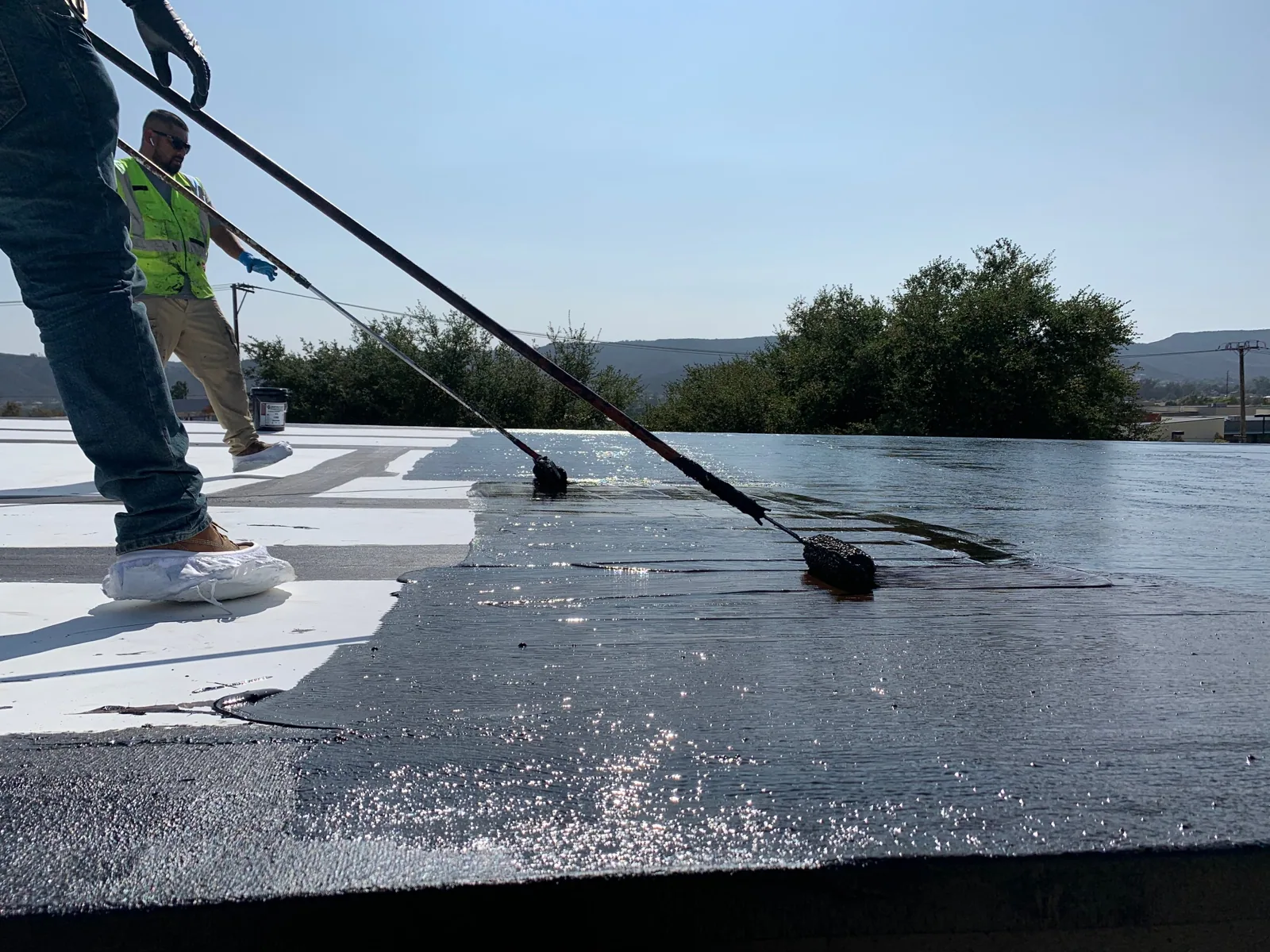
Cool Roof Installation
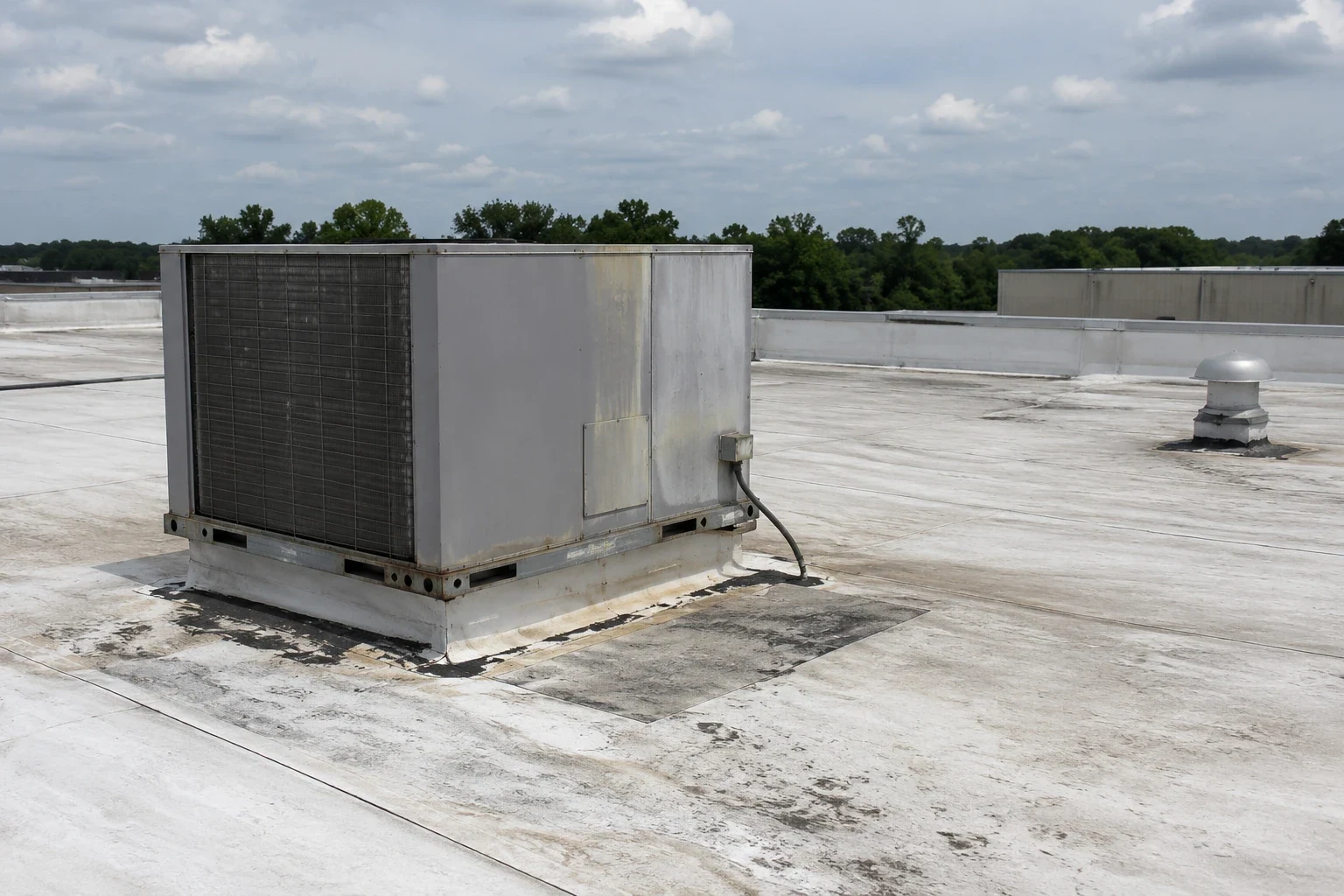
Commercial Roof Repair
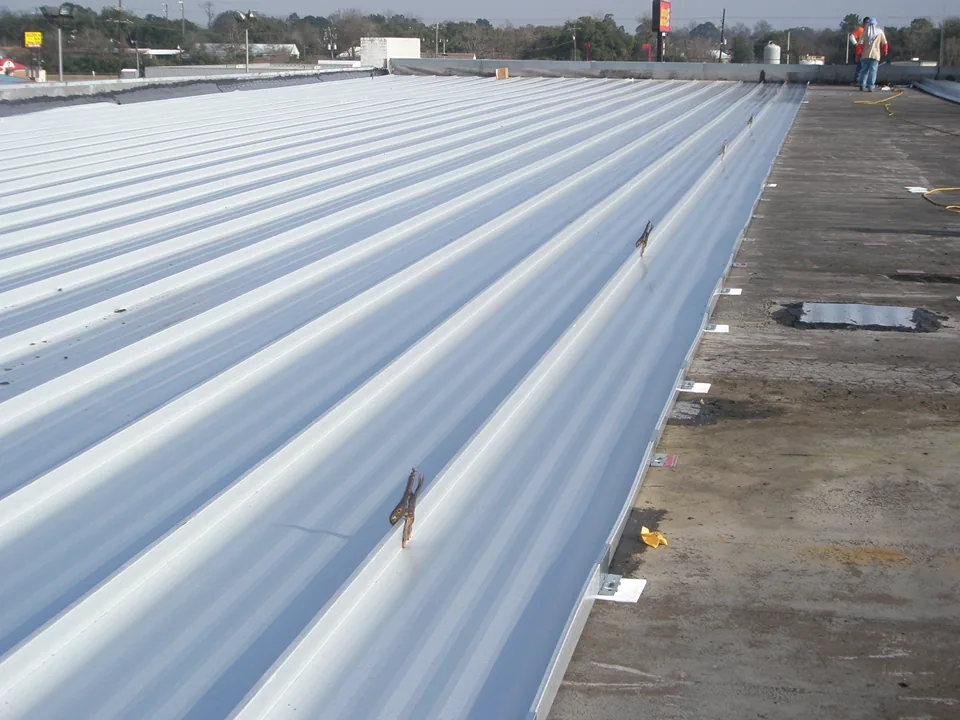
Roof Recover and Overlay Systems
Schedule an Irving roof inspection
We will inspect each roof zone, coordinate access and quiet hours with your site contact, and send a dated condition record with photos, findings and recommended next steps.
