
Silicone Roof Coatings in Lewisville, TX
Home // Roof Systems //
Overview
Silicone Roof Coatings in Lewisville
Two small squares of coating on a roof, one applied to a cleaned area and one to an area wiped only with a dry rag, will tell an owner more about the job than any brochure after a week of weather. Silicone roof coating is a liquid-applied, moisture-curing system that forms a flexible, waterproof, reflective film over an existing roof. It extends the life of a roof that is sound but weathered, and it tolerates standing water better than most coating chemistries. On Lewisville, TX buildings, where summer heat is long and spring storms bring hail and heavy rain, silicone is one of the options a roof restoration plan weighs.
We start by checking whether the roof is a candidate at all: what the surface is, whether the insulation is dry, whether the seams and flashings are repaired, and whether the coating will bond to what is there.
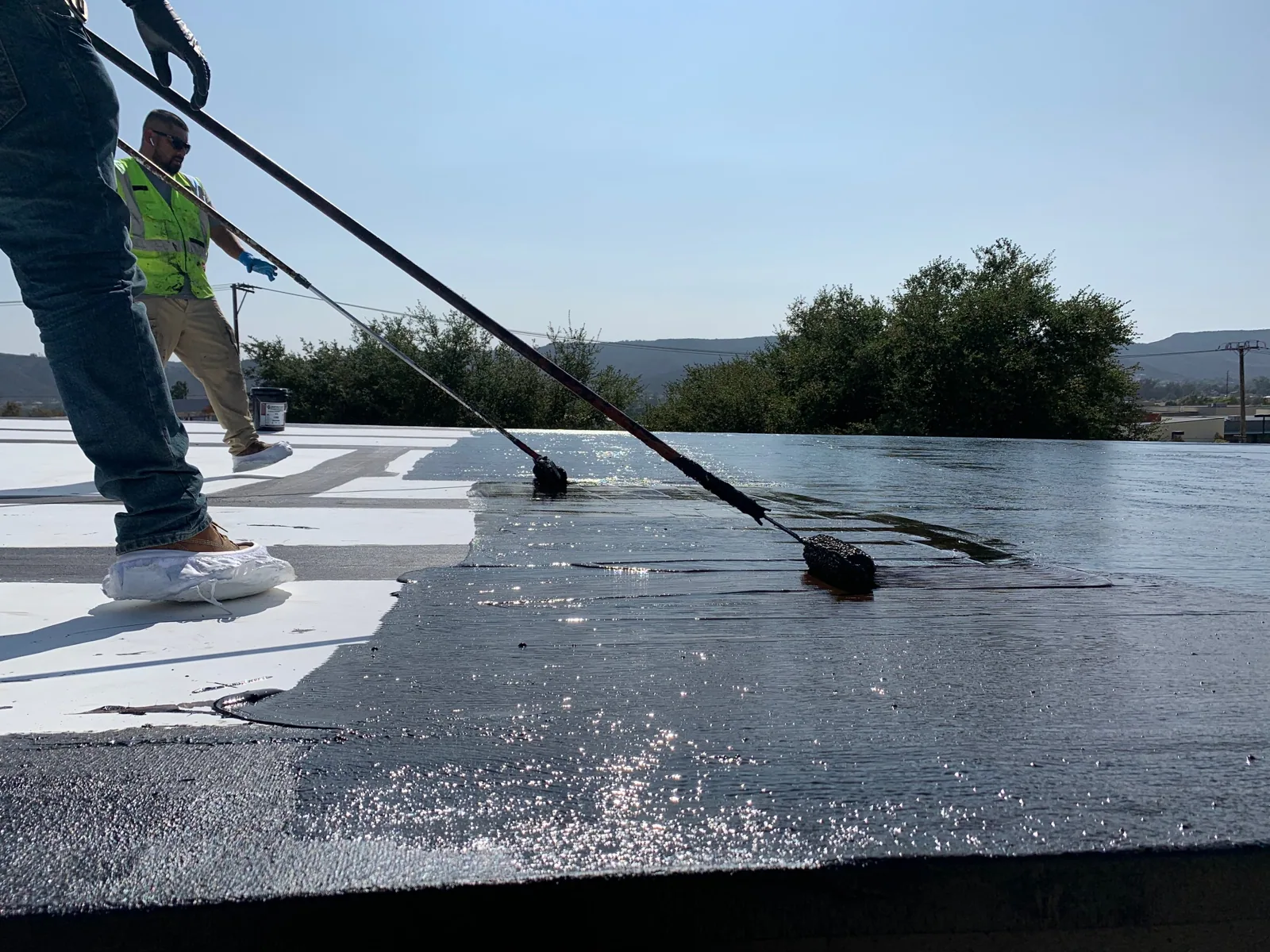
Inspection record: is the roof a coating candidate
A coating is a surface treatment, so the roof beneath it must be worth treating. The inspection records the existing membrane, its age and condition, the number of layers, the drainage and the slope. We use a moisture survey to find wet insulation, because coating over wet insulation traps the moisture and shortens the life of the roof.
- Existing surface type and its compatibility with silicone
- Seams, laps and fasteners that need repair first
- Flashings, curbs and penetrations
- Ponding areas and their depth and duration
- Cracks, blisters and splits in the existing membrane
Dates, photographs and roof-plan locations go with the record. If the roof fails the candidate test, the record says why and recommends the next step, whether that is repair, recover or replacement. A roof that passes proceeds to preparation, which is where most of the result is decided.
Attachment detail: adhesion, primers and test patches
Silicone bonds well to many surfaces, but not to all of them, and it does not bond to a dirty one. Adhesion is the central question. We clean the roof with a wash suited to the surface, let it dry, then apply test patches in several locations and check adhesion after cure by pulling the film. Some surfaces need a primer, some need a specific base coat and some cannot take silicone at all.
Test patches go on early, before the full job is priced, because the result changes the scope. If a patch peels, we record the surface and the likely cause, whether that is contamination, an old coating or a surface treated with a substance that blocks bonding. Seams, laps and flashing details receive reinforcement, a fabric embedded in coating at joints that move. The test results are included in the decision file. Compared with an acrylic system, silicone is more tolerant of ponding water, while acrylic roof coatings are the usual comparison for roofs that drain well.
Evidence sequence: ponding, dirt and Metroplex weather
Silicone's biggest practical advantage is that it is not damaged by water that stays on the roof, so it suits roofs with low spots that cannot be fixed economically. It is also a sticky surface that attracts dirt, and a dirty silicone roof loses reflectivity over time. Both facts belong in the record: where the roof ponds and how it is likely to collect dirt, such as near trees, traffic or industrial dust.
North Texas runs wettest in spring and fall, and summer adds mid-nineties highs with about twenty triple-digit days a year at the airport. Hail visits the Metroplex in most years without visiting every address, and it can bruise or puncture a thin film. After a storm we set new marks against older wear, and a hail damage repair record lists the spots that need touch-up. Application also needs dry weather and surfaces free of dew, so scheduling follows the forecast.
Repair boundary: what is fixed before any coating goes on
A coating is not a repair for a failed roof. Before it goes on, open seams are fixed, loose flashings are re-secured or replaced, fasteners are tightened or replaced, punctures are patched and any wet insulation is cut out and replaced. We record these items as the repair boundary: everything on the list is done first, and everything not on the list is stated as left in place.
If the roof has widespread wet insulation, a deck that is soft or a membrane that is brittle and splitting across the field, the boundary is wider than a coating can span, and the options move to a replacement or recover. An infrared moisture survey before the job sets that boundary. After repairs, the coating is applied in coats to a specified thickness, and we check the thickness with gauges as the work proceeds.
Work coordination: cleaning, overspray and cure time
Coating work starts with cleaning, which uses water and runoff that has to be controlled. Drains are protected, and runoff is managed to keep debris out of the stormwater system. Spray application raises overspray risk, so vehicles, glass and neighboring property are protected, and wind speed is monitored. Rain soon after application can damage a coating before it cures, so the forecast sets the days.
We coordinate access, parking, rooftop equipment shutdowns and tenant notices, and we record the opening and closing time of each section. Silicone cures by moisture in the air, so cure time varies with humidity and temperature. A coating job disrupts tenants less than a replacement, and on an operating property we use the approach from occupied-building reroofing to keep entrances and intakes clear. Properties along I-35E, SH 121 and in Old Town Lewisville have different access windows.
Options review: silicone against other restoration routes
For a roof that qualifies, the options are silicone, acrylic, a different coating chemistry or a new membrane. Silicone suits roofs with ponding and a need for long-term waterproofing. Acrylic suits roofs that drain well and where cost and recoat flexibility matter. A new membrane such as TPO suits a roof that has moved past the stage where a coating is sensible.
The comparison is made on the findings: the moisture reading, the substrate, the slope and drainage, the budget and how long the owner expects to hold the building. A coating restoration is also a chance to schedule recoating, since silicone films can be recoated after cleaning and testing. Owners with several roofs can use a roof capital plan to put restorations where they extend service most.
Closeout documentation: adhesion tests and thickness log
The closeout file lists the substrate, cleaning method, repairs made, primer or base coat, coating product category, number of coats, measured thickness at test points, adhesion results and the weather on each application day. It includes photographs by zone before, during and after.
Permit review can reach coating work, and Lewisville's adopted list includes the 2021 International Building Code. The file also sets a date for the next cleaning and inspection, so dirt pickup and wear are tracked.
Commercial Roofing Questions
Why does silicone suit roofs with ponding?
It is not harmed by standing water, so it tolerates low spots that other coatings do not. Dirt pickup is the trade-off.
What if a test patch peels?
The surface is wrong for silicone, or contaminated. We record the result and change the preparation, the primer or the system.
Can silicone go over wet insulation?
No. It would seal moisture in, so wet insulation is found and replaced before coating.
Is hail a problem for a coated roof?
Hail can bruise or puncture a thin film. The record marks impact points, and touch-up or recoating follows the findings.
Does a silicone coating job need a permit?
The permit office decides whether a permit applies and which edition governs; the 2021 International Building Code is part of the city's adopted list.
Related
Related Roofing Work
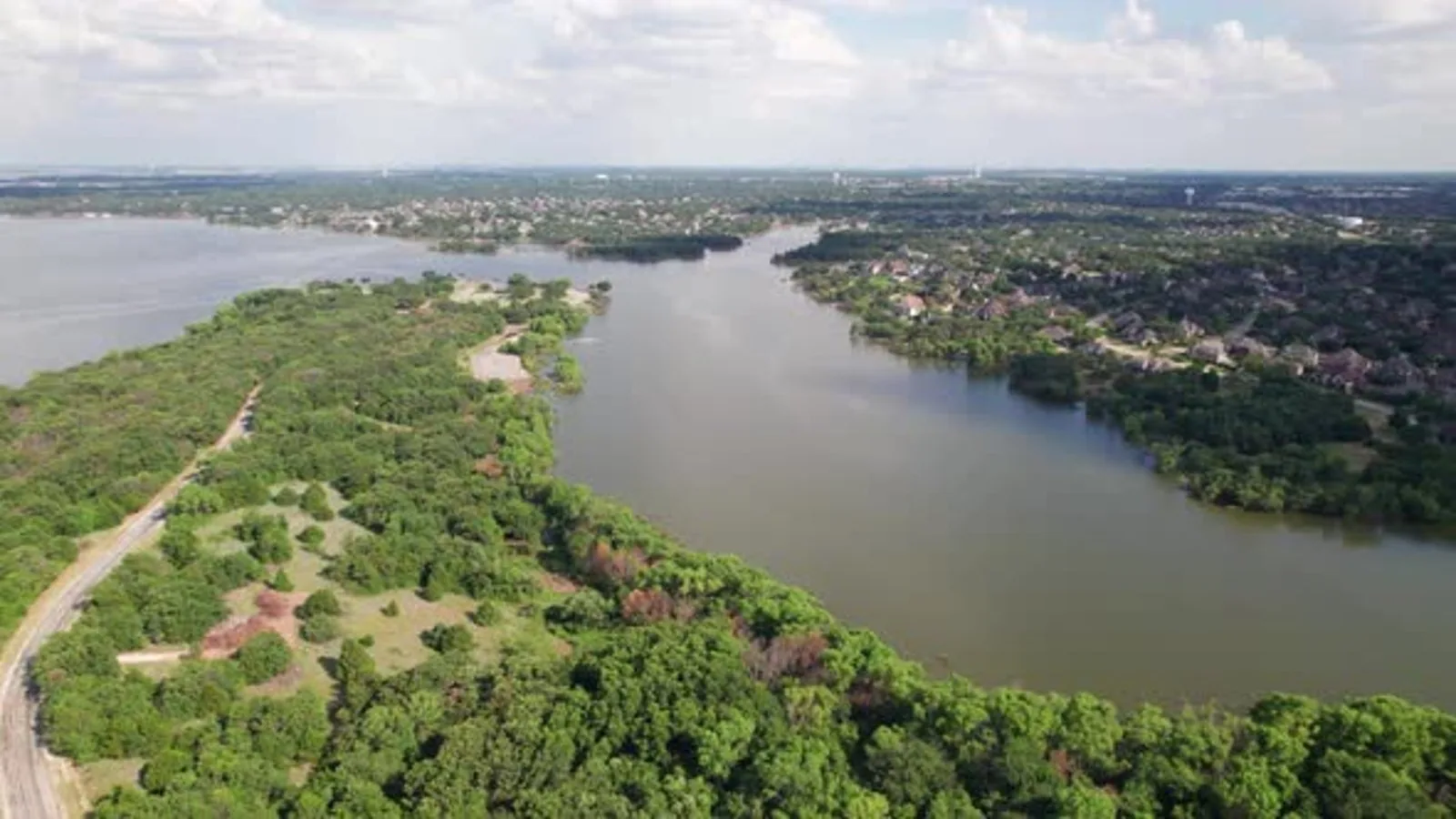
Acrylic Roof Coatings
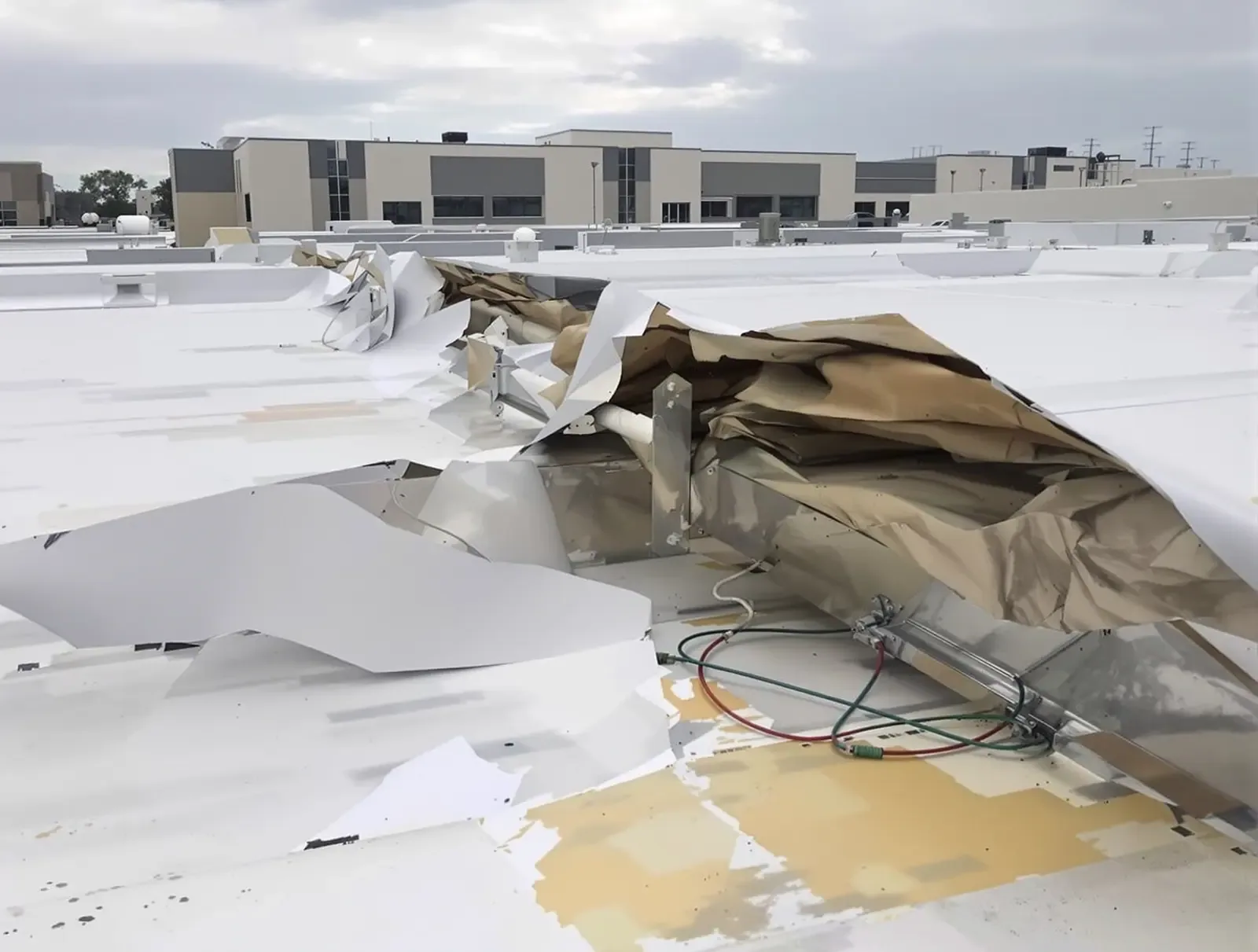
Hail Damage Roof Repair
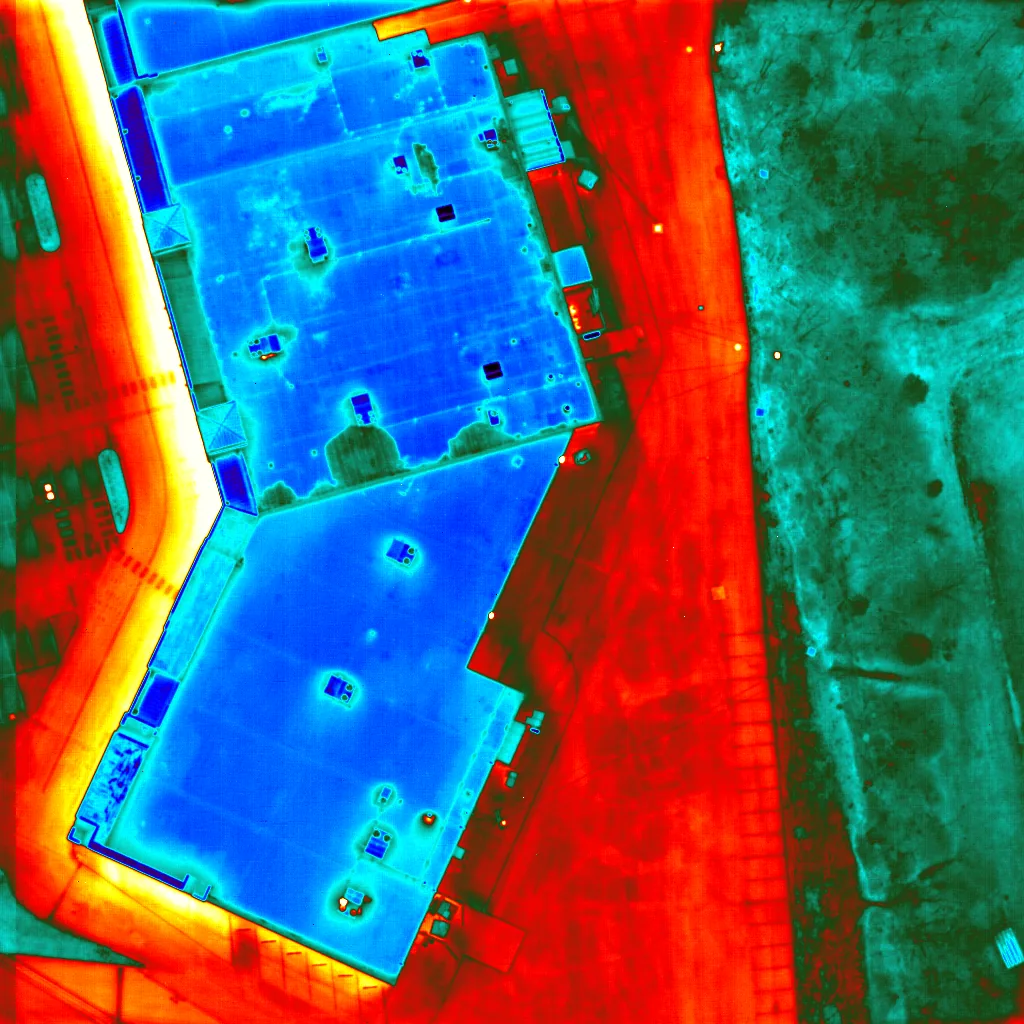
Commercial Roof Replacement
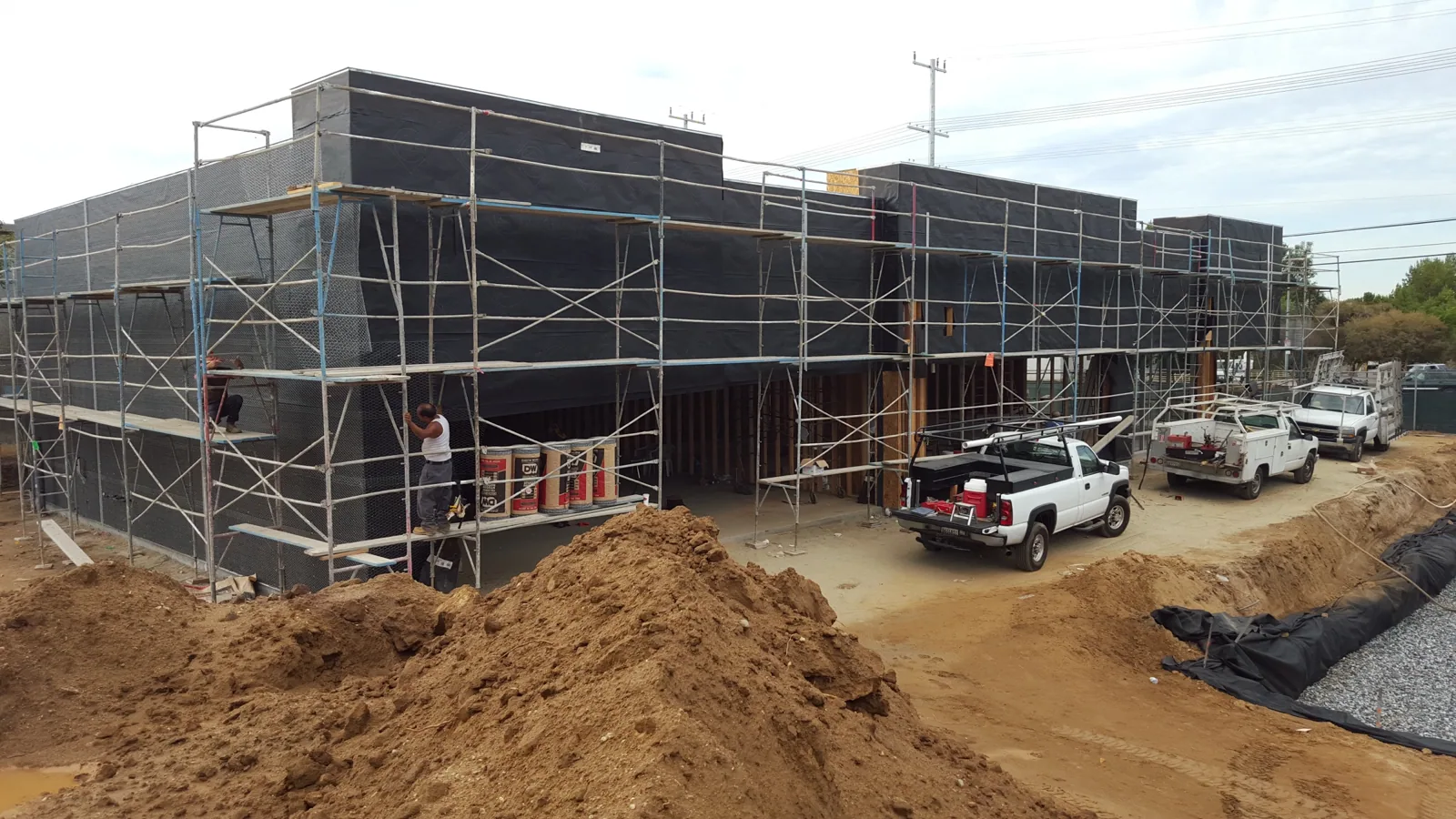
Infrared and Core-Cut Moisture Surveys
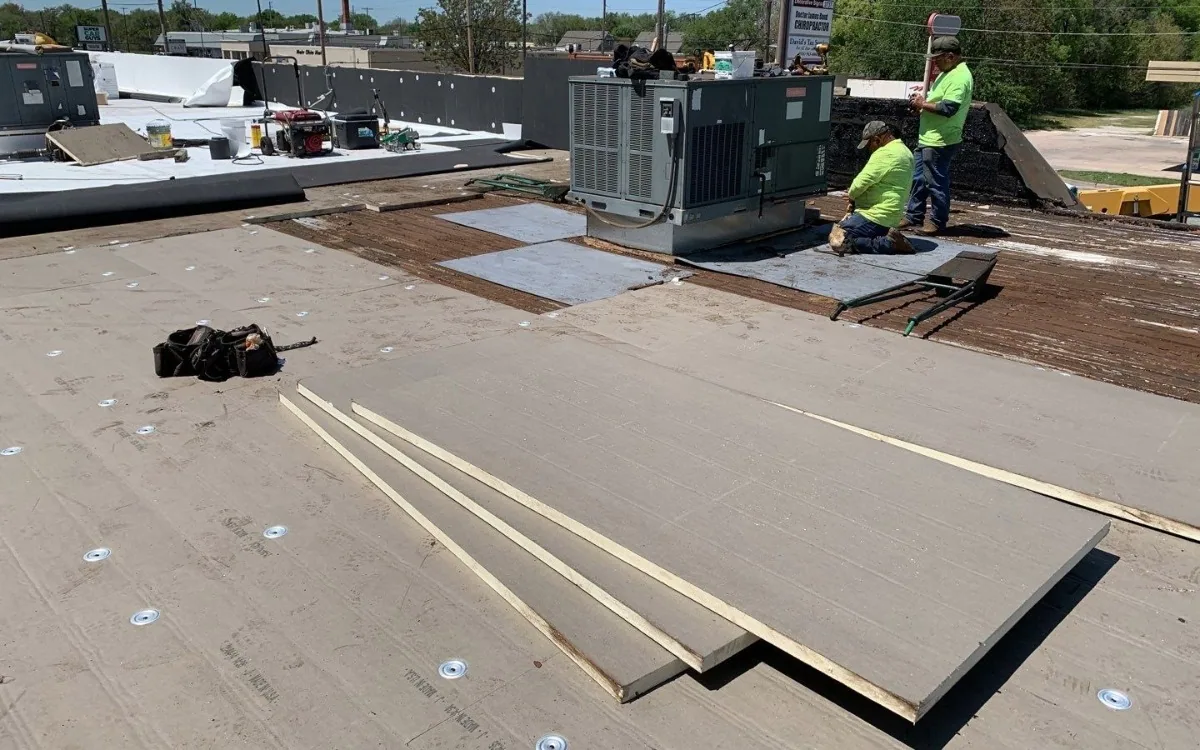
Occupied Building Reroofing
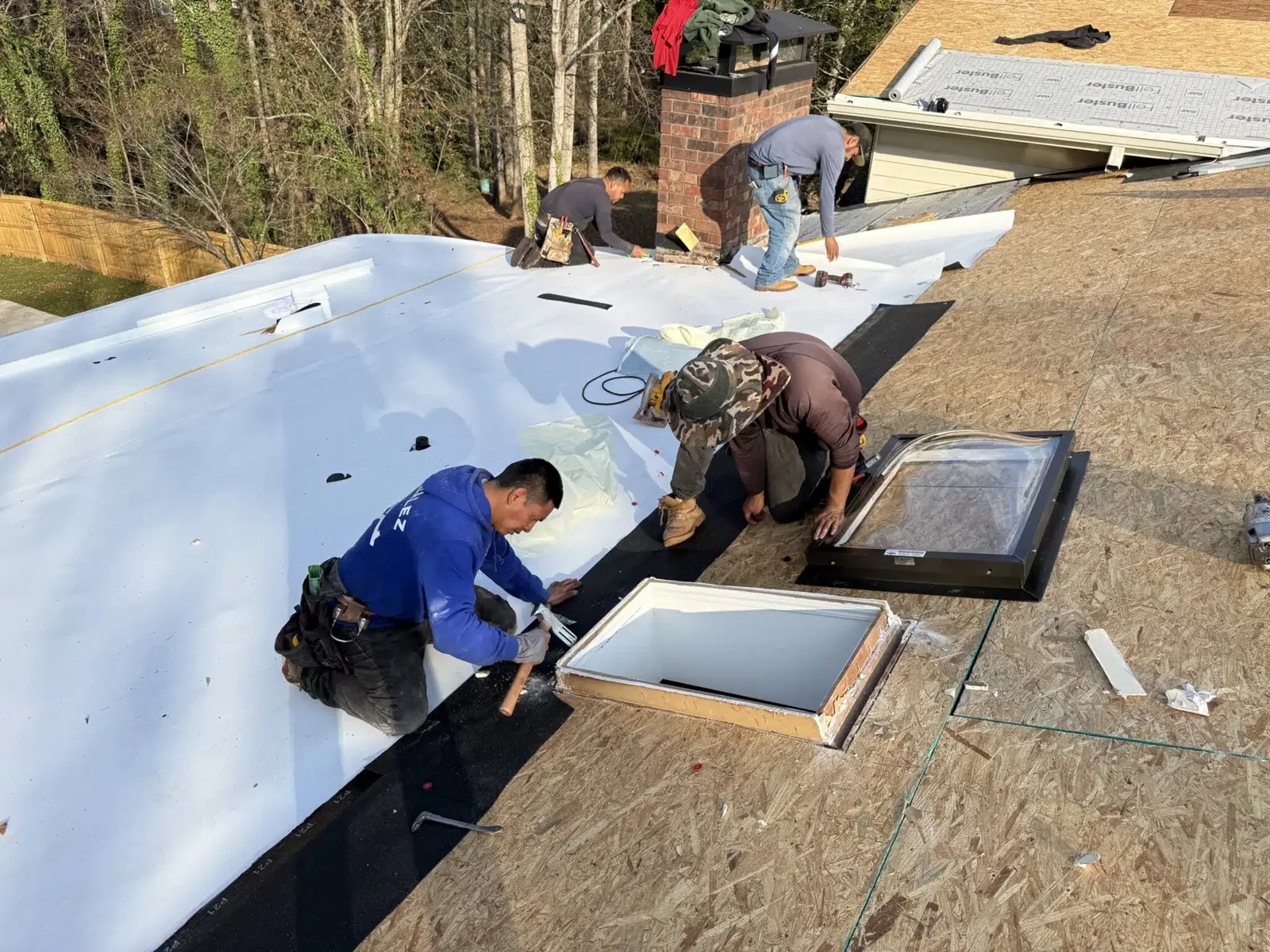
Old Town
Start with a coating candidate record
Schedule an inspection and receive a condition record with photos, moisture readings, adhesion test results and recommended next steps marked repair, coat or replace.
