Military Installation Roofing near Lewisville, TX
Overview
Military Installation Roofing near Lewisville, TX in Lewisville
A roofing schedule on a military installation begins with a gate, not a ladder: who is badged, who is escorted, which hours are open and what may be carried onto the grounds. Lewisville, TX sits within reach of several Army Reserve, National Guard, Navy and Veterans Affairs facilities. The Lewisville Armed Forces Reserve Center is about three miles northwest of central Lewisville, the Denton Army Reserve Center and Denton Readiness Center are roughly 15 to 17 miles north, and the Dallas California Crossing Readiness Center is roughly 13 miles northeast, all straight-line estimates, with road distances longer.
Roofing work on facilities like these follows a written method: record the access rules, record the roof, record the criteria the design must meet, then schedule around the mission.
Access log: gates, badging and escorts
Every installation has its own entry procedure, and the roofer learns it before pricing. The access log lists the points of contact, the badge or visit-request process, vehicle and equipment inspection rules, escort requirements, restricted areas and the hours when contractor work is allowed. It also records what is not allowed on the grounds, since tools, cameras and drones are often restricted or banned.
- Gate and visitor processing times, which affect how many working hours a day really contains
- Escort ratios and whether the escort must stay with the crew on the roof
- Staging and laydown areas, and rules for dumpsters and cranes
- Restricted zones such as classified spaces, ranges or flight areas
- Rules for photographs, which affect how the condition record is made
The photo sequence for a roof on a secure site follows the rules the base gives, and the log records which images were permitted. A drone survey is not assumed; we confirm in writing before one is flown. Where the contracting office issues its own safety or quality rules, we read them alongside the roofing specification and file both in the same packet.
Inspection record: what the facility roofs look like
Facilities in this group are varied. The Army reports that the Denton Army Reserve Center includes a 37,000-square-foot training building, an 8,000-square-foot three-bay vehicle maintenance shop and a storage building, with classrooms, an assembly hall, offices, a fitness center and a weapons simulator. It also reports reflective roof surfaces and rooftop solar at the complex. The VA runs the Dallas VA Medical Center around the clock as a specialty and primary care hospital. Naval Air Station Joint Reserve Base Fort Worth trains air crews and aviation ground-support personnel and hosts tenant units from several branches.
Those descriptions show the range of building types a roof inspection may meet: training halls, vehicle shops, clinics and aviation support spaces. They are facts about the facilities, not about their roofs, so the inspection starts from zero. We record the system, the layers, the seams, the drainage, the penetrations and the moisture condition of each building, then compare roof zones.
Repair boundary: criteria that decide what counts as done
Government roofing is often designed to the Unified Facilities Criteria for roofing, which sets requirements for design, materials, drainage, wind uplift and detailing. Under those criteria the repair boundary is more formal: a repair is not complete until it meets the specification, and a replacement is designed and reviewed against it. We read the project specification first and list every requirement that touches the roof, from insulation and cover board to flashing heights, fastener patterns and testing.
Public capital plans show how roof projects appear in the planning cycle. The Texas Military Department's strategic plan lists a $3 million total roof-replacement project for the Dallas California Crossing Readiness Center in fiscal year 2026, and it lists roof-replacement design for the Grand Prairie Field Maintenance Shop in fiscal year 2027 with a roof-replacement project retained the following year. Those entries are public planning facts, and they show roof projects on these facilities entering the planning cycle well before any crew arrives. Our work on any such project starts with the actual roof condition, not the plan entry.
Work window: mission schedules and weather together
Installations run on mission schedules: training weekends, deployment preparation, inspections and ranges. The Army has reported that a reserve unit used its home-station reserve center for deployment preparation and communications-equipment training, so the roof schedule has to respect training periods. It is set with the facility manager around those periods, and noisy tear-off is placed away from training and briefings.
Weather adds a second set of limits. Spring is the peak for severe thunderstorms in the Metroplex, and hail or wind reaches some part of the region almost every year. We size each tear-off section so it can be dried in before the crew leaves, hold a tarp and temporary seals on site and record the opening and closing time of each section. If a storm warning cancels a day, the log shows it and the schedule moves.
Options review: repair, recover or replace under a specification
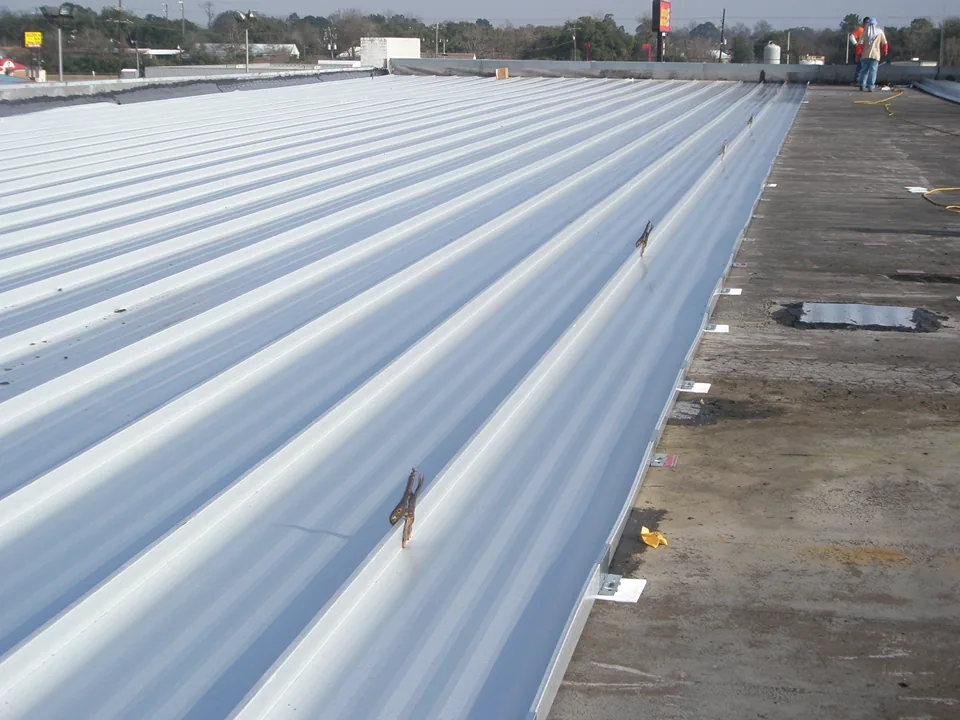
On a government building the choices are narrower than on a private one because the specification limits them. A repair may be allowed for a localized problem with the same material. A recover may or may not be permitted, depending on the layer count, the deck and the criteria. A full replacement follows the design package.
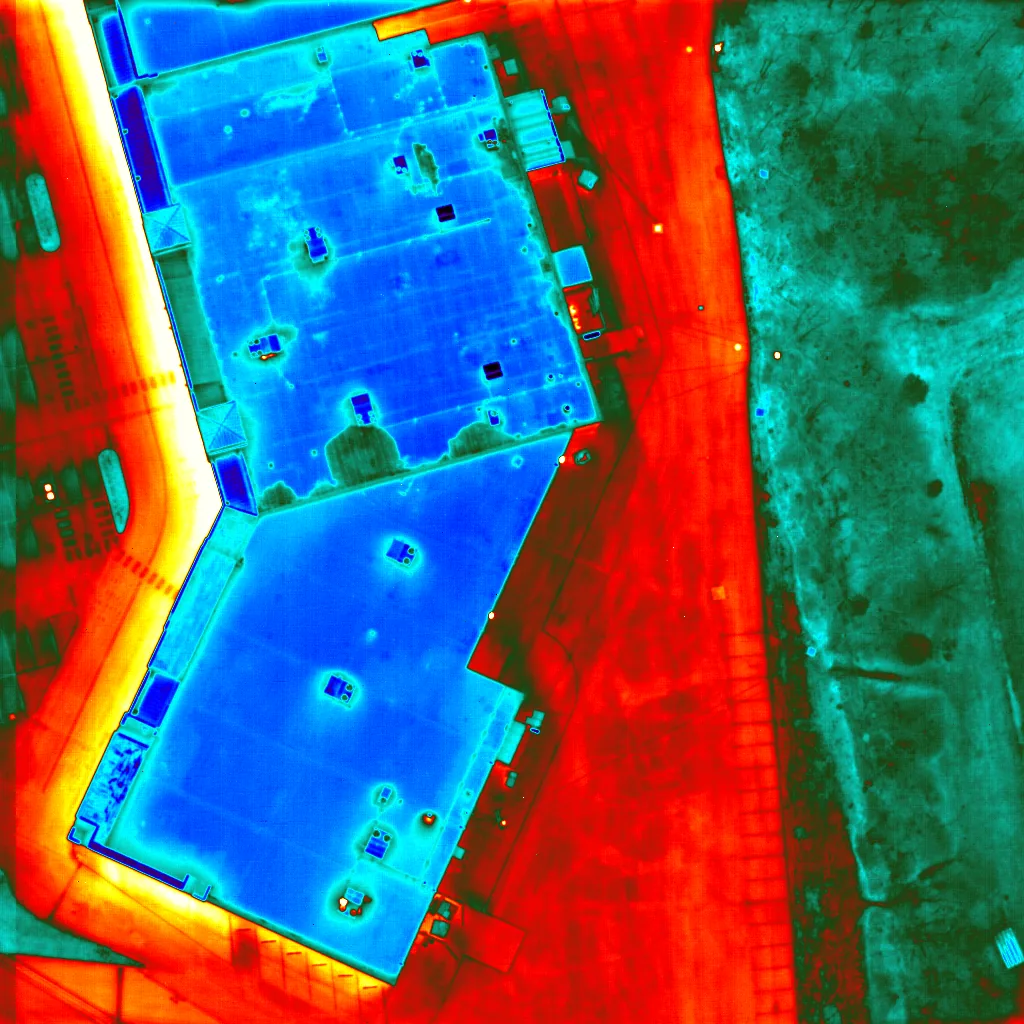
We lay the options next to the condition findings and the specification requirements, so the facility manager can see which are open. Moisture readings from an infrared moisture survey help define the extent of the problem before a project is scoped. For an owner of several federal or state sites, a multi-site roof program ranks roofs by condition so funding goes where the evidence is strongest.
Closeout documentation: the packet a government reviewer reads
A closeout for a military or public facility is read by a reviewer, an inspector and often a later contractor. It contains the access log, daily reports, photographs where permitted, moisture readings, test results, the final repair boundary, product data and installation records, and any deviations from the specification with the approval that allowed them.
Work inside the city follows the permit office's code edition, and the 2021 International Building Code is on its adopted list. A federal installation may follow different criteria, so each project confirms which code and which criteria govern. For owners of armories and public buildings, National Guard armory roofing and government building roofing follow the same record format. Denton, where the Army Reserve and Texas Army National Guard facilities named above are located, is part of the same service area.
Commercial Roofing Questions
What comes first when a facility needs roof work?
The installation's own entry and contracting requirements. We read them, confirm what is required for the crew and the equipment, and only then set a schedule.
Can a drone be used on a secure site?
Only with written permission. Many installations restrict or ban drones, so the record is made by hand unless the facility approves flights.
What are the Unified Facilities Criteria for roofing?
They are the government's design and construction requirements for roof systems. Projects governed by them have to meet the stated materials, detailing and testing.
How does an escort affect the schedule?
It limits the hours when the crew can work and the number of roof areas open at once. The access log records escort availability, so the schedule uses real hours.
Which code governs a project on a base?
The installation or contracting office names it. City codes apply to work inside Lewisville, and the permit office names the edition.
Related
Related Roofing Work
Commercial Roof Repair
Roof Recover and Overlay Systems
Commercial Roof Replacement
Infrared and Core-Cut Moisture Surveys
Multi-Site Roof Programs
National Guard Armory Roofing
Start with the access rules and the roof
Contact us to schedule an inspection and receive a dated condition record with findings, access requirements and recommended next steps before a work window is set.