
Commercial Roofing in Trophy Club, TX
Home // Service Areas //
Overview
Trophy Club in Lewisville
A modest roof can get less paperwork than a large one, and that is when the paperwork matters most. In Trophy Club, TX, the town identifies SH 114 as a corridor for commercial expansion, and its small-area plan lays out a redevelopment vision for the SH 114 business corridor. A retail building, a professional office or a service property along that route may have a modest roof, but it still has seams, flashing, drains and equipment that need a dated record.
We keep the inspection proportionate: one roof, a handful of zones, a clear photo sequence and a short list of findings with a next step beside each. An owner can read it in ten minutes and know where the roof stands.
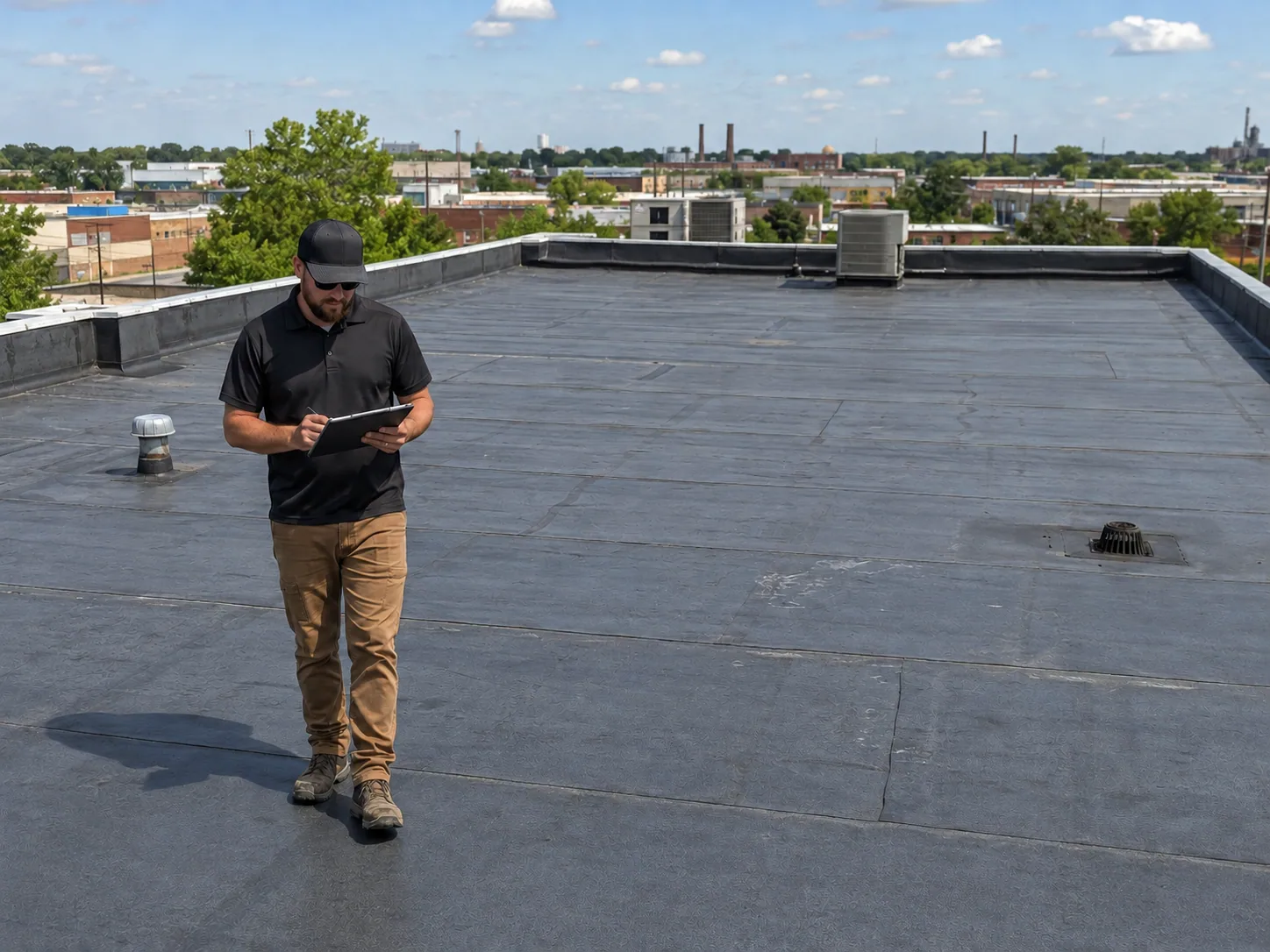
Compact roofs: where the water usually enters
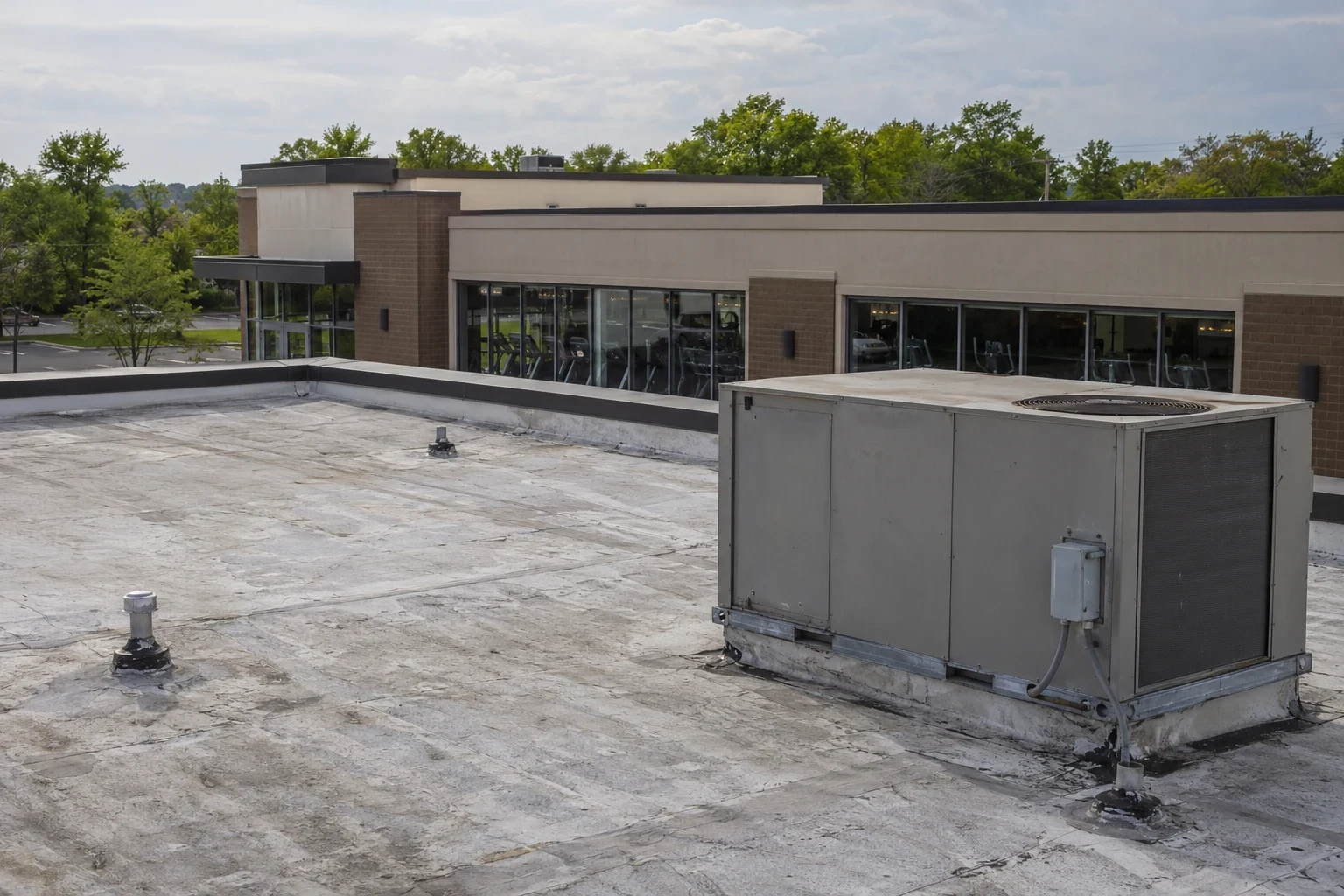
On a small commercial building, a few details carry most of the risk. The parapet or edge metal around the perimeter, the penetrations for plumbing vents and exhaust, the rooftop unit curb and the single drain or scupper that serves the whole roof each deserve a close look. When one of them fails, there is no second path for water, and the stain shows up quickly inside.
We photograph each of those details from a fixed point and then close up, and we record the condition of sealant, fasteners and flashing. A probe along seams and a press on suspect areas tell us whether membrane is bonded or lifting. The findings are listed in order of consequence, so the owner can see that a cracked pipe boot matters more than a scuffed walkway. Items that need no action today still get a line, because a small flaw with a date beside it is an inexpensive early warning for a building owner.
Corridor properties: access and visibility
Buildings along a state highway corridor have limited room around them. Parking lots serve customers, delivery access can be tight, and a crane or lift may need to take up several spaces. The work plan records where the lift will stand, which spaces are closed, what hours the business needs clear and how pedestrians are kept out of the fall zone.
Storefronts also have an appearance to protect. Debris on a sidewalk, a tarp visible from the road or a stained wall below a leaking scupper can cost a business more than the repair itself. Cleanup at the end of each shift is part of the scope, and the closeout photographs show the building as it was left.
Inspection pass: what the first visit covers
The first visit on a compact roof is short, and it is organized. We arrive with the roof plan if one exists, confirm how access works and record who opened the hatch or set the ladder. Then the roof is divided into labeled zones, usually no more than a handful, and each zone is photographed from a fixed point before we move closer.
The order of checks does not change from roof to roof: perimeter metal, drain and scupper, rooftop equipment curbs, penetrations, seams and wall flashing. Each finding gets a location measured from a fixed point, a photograph and a next step, which may be repair, further testing or monitoring with a date. If a moisture meter reads high near a penetration or along a low spot, the reading is logged beside the photo. The visit ends with a short verbal summary for the owner or manager, and the written record follows with the same findings in the same order, so nothing the owner heard on the roof is missing from the page.
For owners with more than one small building, the same format can be applied across properties, and the results can be sorted into one list that shows which roof needs attention first.
Redevelopment vision: roof decisions beside future plans
A corridor with a redevelopment plan raises a fair question for an owner: is it worth replacing a roof on a building that may be altered or rebuilt? The answer comes from the roof, not the plan. A building that will stand for several more years needs a dry, working roof, and a short-term repair that holds is often worth more than an early tear-off.
We compare the options with that horizon in view. A recover may serve a building with a limited remaining life if insulation is dry. A repair with a defined boundary may be enough for a few seasons. A replacement makes sense when the building will remain and the roof has failed. The decision file puts the three side by side.
North Texas storm season and a small roof
A small roof faces the same storm season as a large one and has less margin. The National Weather Service ties the Metroplex's severe thunderstorms to spring and fall and says hail, strong wind, flooding and tornadoes occur in the region almost every year, though any one site may be skipped. One bruised area or a lifted edge can reach a considerable share of a compact surface.
After a storm, we walk the whole roof, compare current images with earlier ones and note soft spots, loose edge metal and debris in the drain. A dated record helps an owner decide whether a claim is warranted, and a clean result is recorded as clearly as a damaged one. Our claim documentation support uses the same photographs.
Heat and sun on a low-slope roof
Long-term readings at the regional airport put July and August highs near 96 degrees, with roughly twenty days a year at or above 100. A compact roof with little shade takes that exposure on every square foot. We look for shrunken flashing at walls, cracked sealant at penetrations and seams that have lifted at their edges.
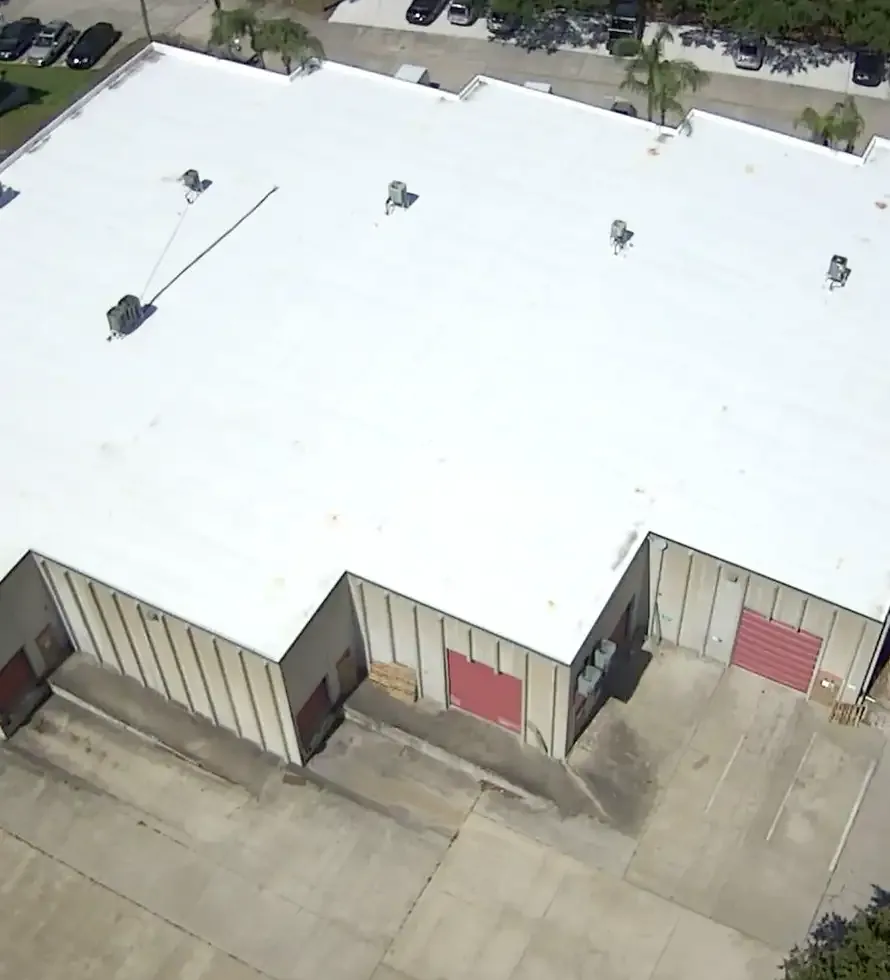
Where the base is dry and the surface is weathered, a coating restoration can extend service. Where moisture has reached the insulation, coating alone will not solve it, and the wet area has to be dealt with first.
Closeout: a short packet that still stands on its own
When the work is done, the owner receives before and after photographs, a simple zone plan, any moisture results, the materials used and a dated access log. Deferred items are listed with a review date. For a small property, the packet may be only a few pages, and it is still enough for a lender, a buyer or the next manager to read without a phone call.
Owners in nearby Roanoke, Southlake and Flower Mound receive the same format.
Commercial Roofing Questions
Is a small roof worth a full condition record?
Yes, and it stays short. A few zones, a photo sequence and a findings list cost little and give the owner a baseline for repair, sale or refinance.
Should a roof be replaced if the corridor may redevelop?
The building's remaining life decides it. If the structure will stand for several more years, a repair or recover with dry insulation can carry it, and replacement waits until the use is settled.
What happens to customer parking during a lift?
The plan marks the lift location, closed spaces, pedestrian barriers and hours when the business needs clear access. Cleanup at the end of each shift is part of the scope.
Can a single drain cause most of the damage?
On a small roof, often yes. With one outlet and no overflow, a blocked drain leaves water on the surface. We record the drain's condition and note whether an overflow is needed.
When does a coating make sense?
When the base is dry and the surface is weathered. A moisture reading tells us whether the insulation below qualifies before any product is chosen.
Related
Related Roofing Work

Roof Recover and Overlay Systems
Commercial Roof Repair
Commercial Roof Replacement
Roof Insurance Claim Assistance
Roof Coating and Restoration
Roanoke
Schedule a Trophy Club roof inspection
We will inspect the roof by zone, plan lift and parking needs with your site contact, and send a dated condition record with photos, findings and recommended next steps.
