
Commercial Roofing in Richardson, TX
Home // Service Areas //
Overview
Richardson in Lewisville
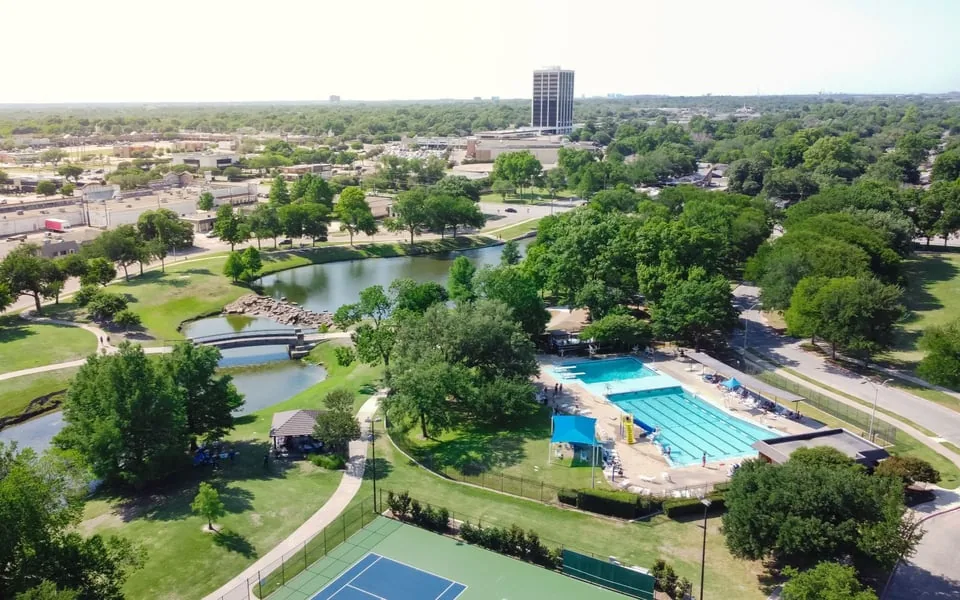
Redevelopment studies talk about land, and a roof decision talks about layers: the membrane, the insulation under it, the deck below that and the equipment sitting on top. In Richardson, TX, the city's economic-development office works on attraction, retention, redevelopment and innovation, and the Collins/Arapaho study looks at a broad part of the Telecom Corridor bounded by US 75, Campbell Road, Plano Road and Apollo Road. Buildings in an area like that change tenants, change uses and change hands, and each change is a moment when the roof either has a clear record or does not.
We write the record. An inspection produces dated photographs by roof zone, moisture readings where they matter and a repair boundary an owner can price against.
Tenant turnover: what a new occupant does to a roof
A new tenant often means new rooftop equipment, a different exhaust load and fresh penetrations for cabling or refrigerant lines. Each addition is a spot where water can find a way in, and each is installed by whoever was available that month. Over time the roof collects curbs, conduit supports and capped pipes that nobody can account for.
The first pass counts every penetration, marks which ones are active and checks the flashing at each. Abandoned curbs go on a removal list. A support leg standing on bare membrane gets a pad. The resulting inventory goes into the condition record, which is useful in a lease conversation because it shows which opening belongs to which occupant and what shape its flashing is in.
Evidence sequence: wide view first, then the suspect detail
Photographs on a roof walk follow a sequence for a reason. A wide image of the whole roof zone shows drainage direction, ponding stains and the general state of the surface. Closer images follow, from edge metal to seams to penetrations. Because the order is fixed, a new mark can be told apart from old wear, and a reviewer who was not there can see what we saw.
Each image is dated and tied to the roof plan. A moisture reading follows any area where a stain, a soft spot or a past leak suggests water below the surface. Where readings come back wet, we mark the edge of the wet area and note whether a core cut is needed to confirm the layers. That boundary becomes the line a repair or replacement is drawn against.
Spring storms: a regional warning, not a verdict
Spring is thunderstorm season across the Dallas-Fort Worth region, and the National Weather Service lists big hail, damaging gusts, flooding and tornadoes among hazards that arrive in some part of the Metroplex nearly every year, though a single address can miss a given hazard. For a Richardson owner, that supports a roof check after storm season. It does not turn a weather report into proof of damage.
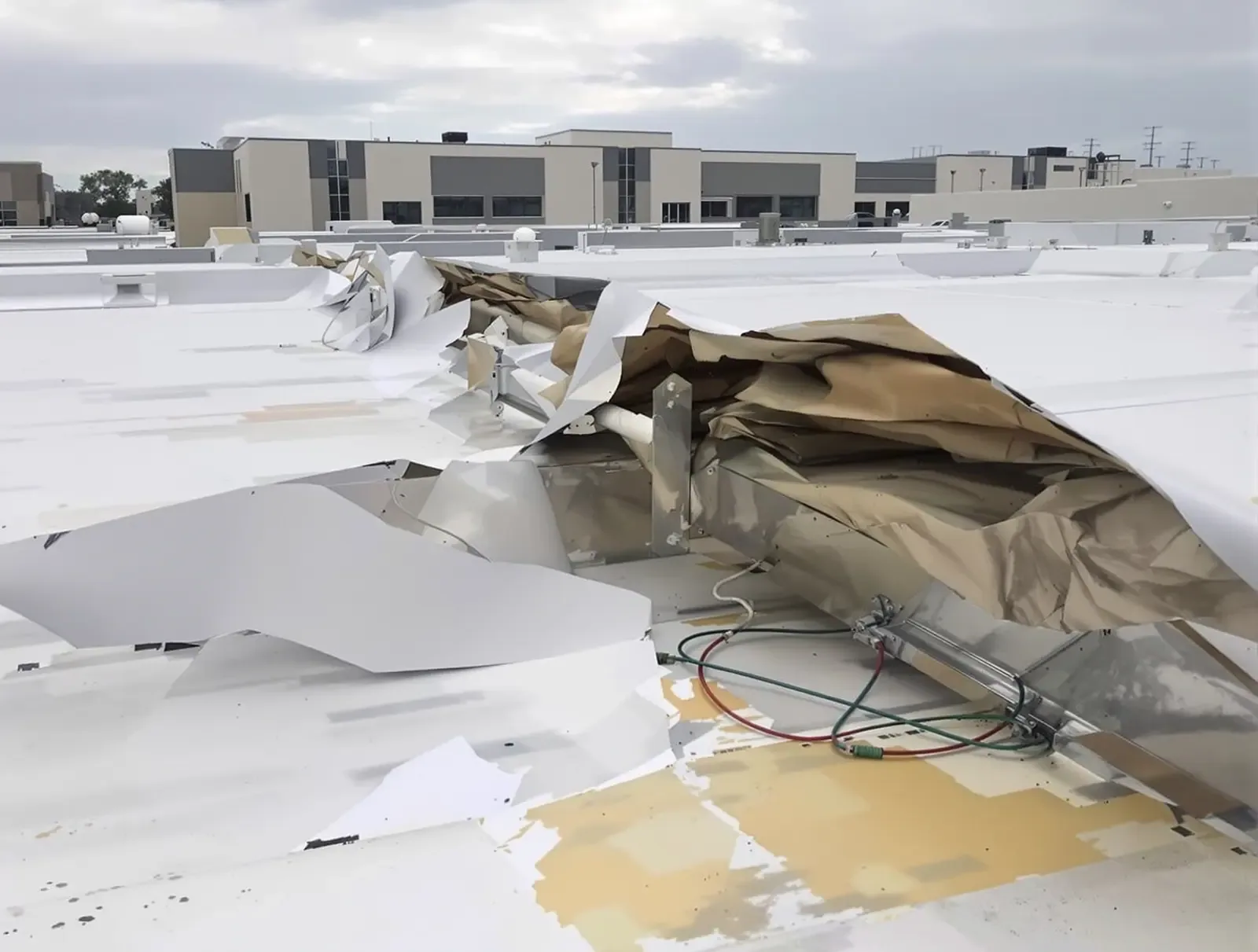
We compare post-storm images with an earlier baseline and look for soft metal at edges, fractured membrane, loose coping and debris in drains. A clean result goes into the record too. If an insurer needs documentation, the dated photographs and moisture results are organized by zone, which is easier to review than a general letter. Our storm damage repair work follows the same record.
Summer load: heat on membranes and sealants
Normals logged at the regional airport put July and August highs close to 96 degrees and show roughly twenty days a year at or above 100. A roof sits above that air temperature, and dark surfaces run hotter. Seams that were sound in spring can relax by September, and sealants at penetrations harden and crack after a few cycles.
The summer walk looks for chalking, shrinkage at wall flashing, and pitch pockets that have pulled back from the pipe. Where a roof is aging evenly, a coating restoration may be an option if the base is dry. Where a roof is failing in patches, targeted repair comes first. The moisture survey decides which category applies.
Access and staging: settling the route before the lift
Office and technology buildings have quieter hours than industrial ones, but the work window is tighter in a different way. Neighbors in a business park share drives and parking, a lift or crane needs a place to stand, and a hatch may open into a locked mechanical room. We write the route down before pricing: the entry the crew uses, the staging area, the path for material and the person who can open each door and sign the crew in.
Equipment shutdowns get the same treatment. If a rooftop unit has to be turned off so a curb can be reflashed, the facility contact names the hour, the unit and the person who restarts it, and the entry goes into the access log. Noise limits are noted too, since a tenant with video calls or a lab with sensitive instruments may need the loudest work scheduled for a different part of the day. Those details change labor and sequence, so they belong in the scope before a number is quoted, not after the crew has arrived.
Options review: what each path buys
Repair buys time at the lowest cost, and it works when the membrane is bonded and the insulation is dry. A recover adds a new membrane when the old assembly is sound enough to carry it. Replacement removes the failed layers and resets the roof for a fresh service life. The same photographs and readings feed all three, and the comparison states what each path would leave unresolved.
For owners holding more than one building in the area, a multi-site roof program ranks roofs on one sheet, so capital goes to the worst condition first. A building that sits in a redevelopment study area may also be a candidate for coordination with other planned work, and the roof schedule can be adjusted to fit.
Closeout packet: written for the next owner
The packet we hand over holds images from before and after, a zone map, dryness readings, product information and a dated access log. A buyer's inspector, a lender or a new facility manager can follow it without calling anyone, and any deferred item carries a location and a review date.
The same format applies to neighbors in Plano, Addison and Carrollton, and to buildings along the I-35E and SH 121 corridors in Lewisville.
Commercial Roofing Questions
When should a roof be checked after a tenant moves out?
Before the next lease is signed, while access is easy and the space is quiet. A walk then catches abandoned curbs, damaged flashing and leak marks, and the findings can be fixed before a new occupant arrives.
What is a wet-area boundary?
It is the line around insulation that tests wet. We mark it on the roof and the plan, and the repair or replacement is drawn against it so dry areas are not removed and wet areas are not left behind.
Do storm photos help with an insurance claim?
Dated images with a clear zone label help an adjuster compare the roof with its earlier condition. They support a claim when damage is visible, and they record a clean roof when it is not.
How does a coating restoration compare with replacement?
A coating suits a roof with a dry base and a weathered surface. It extends service without tear-off. A roof with wet insulation or widespread seam failure needs replacement of the failed layers instead.
What is in a closeout packet?
Photos from before and after, a zone map, moisture or core results, installed-material information and an access log. Deferred items are listed with a review date.
Related
Related Roofing Work
Storm Damage Roof Repair
Roof Coating and Restoration
Roof Recover and Overlay Systems
Multi-Site Roof Programs
Plano
Addison
Schedule a Richardson roof inspection
We will inspect the roof zone by zone, arrange access with your site contact, and send a dated condition record with photos, findings and recommended next steps.
