Versico Roofing Systems in Lewisville, TX
Home // Roofing Manufacturers //
Overview
Versico Roofing Systems in Lewisville
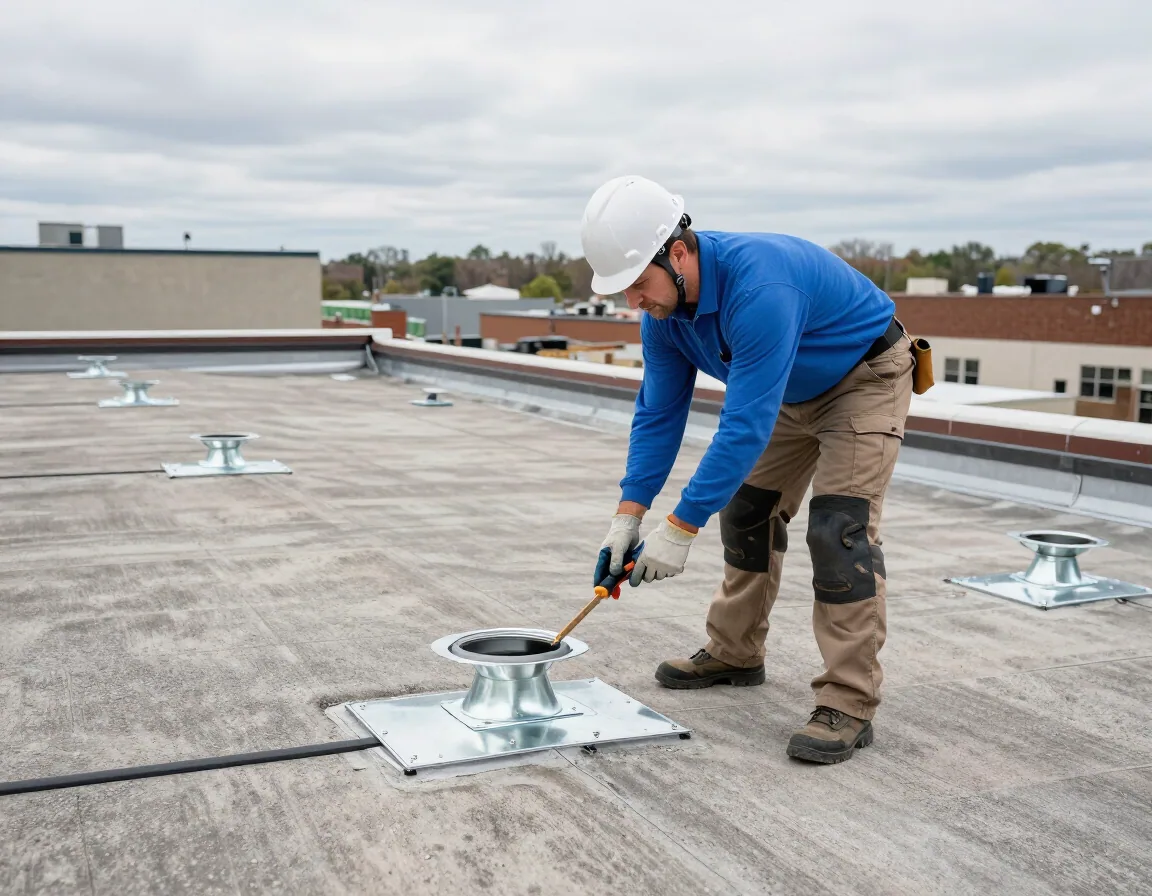
Components tell the story of a single-ply roof as clearly as the sheet does. Pipe boots, corner patches, termination bars, and the adhesive in a lap each carry a mark or a shape that points to a system, and on a Versico roof those parts are meant to work together. The first pass records what is visible: the sheet family, the attachment method, the accessories, and the condition of each. A part that does not match the rest of the roof, such as a boot of a different material, is noted as a possible earlier repair and checked for compatibility.
For Lewisville, TX owners, the record is a list of the roof's parts and how they are holding, built so that a repair uses the right part the first time.
Parts list: reading the roof from its accessories
The manufacturer is a roofing brand that sits within the larger Carlisle family, and it supplies single-ply membranes in the common families along with insulation and accessories. On the roof, that shows up as a set of parts designed to match: boots sized to pipe diameters, preformed corners, pressure-sensitive flashings, and termination hardware.
We photograph each accessory type and note its condition: boots for cracking, corners for lifted edges, bars for loose fasteners, sealant for dryness. Substituted parts are listed separately. A generic boot on a branded sheet might work and might not, and the file says which it is so a later repair can replace it with something suited to the sheet.
The list also records fasteners and plates on mechanically attached sheets: whether plates sit flat, whether any have lifted, and whether heads show rust. A plate that stands proud of the sheet can wear a hole through it in a season of wind. Where plates are missing, the sheet is checked for tears at that location.
Attachment method: how the sheet is held down
A single-ply sheet is held by adhesive, by fasteners and plates, or by ballast. The method decides how the roof ages and where it fails. An adhered sheet may bubble where adhesive let go or where moisture got beneath. A mechanically attached sheet may flutter in wind and wear at the fasteners. A ballasted sheet may be loaded unevenly after stone migrates toward the drains.
Wind uplift matters at edges and corners, where pressure is highest. We check perimeter metal by hand, count fasteners where we can see them, and look for torn or distorted membrane at the edge. The design wind speed for a given building comes from its own documents and the permit, and we do not substitute a regional figure. Any perimeter that moves under hand pressure is placed first on the repair list, and the movement is photographed with a hand in the frame so the size of the problem is clear to a reader who was not there.
Ballast gets weighed, in effect, by eye and by plan. We look for bare patches where stone has shifted, for drains with stone piled around them, and for areas where the membrane shows through. Bare membrane in sun ages faster, and stone against a drain can block it. Where ballast has to be moved for a repair, we replace it to the original pattern and photograph the finished area.
Repair compatibility: adhesives, sealants, and what not to mix
Single-ply repairs fail when materials meet that should not. Solvent-based adhesives can attack some sheets. Asphalt-based sealants can stain or degrade a light-colored membrane. Primers are specific to surfaces. Before any repair, we identify the sheet family and choose products suited to it, and we test a small area when the surface condition is uncertain.
Each repair is recorded with the product names, the batch if available, the surface preparation, and the temperature and humidity at application. Photographs show the prepared surface and the finished detail. If a warranty requires specific products, the choice follows it, and the file shows that the requirement was met.
Surface preparation is where compatibility is won or lost. Dirt, oil, and old sealant residue prevent a bond, and a surface that looks clean may not be. Cleaning method, solvent, and drying time are written into the repair note, because the record of how a surface was prepared is the first thing a reviewer asks about when a patch fails.
Storms and heat: what to inspect and when
Each year brings some mix of big hail, strong wind, flooding, or tornadoes somewhere in the Metroplex, according to the National Weather Service, and a particular site may or may not be in the path. After a storm we inspect for impact marks, displaced flashing, and torn edges. A report is a prompt to inspect, nothing more.
Summer normals at the regional airport reach about 96 degrees in July and August, with roughly twenty days a year at or past 100. Sun and temperature swings stress seams, boots, and sealant. Our summer visit looks at those parts first. We compare with prior photographs of the same positions, so a seam that has crept open or a boot that has begun to crack shows against the record.
Roofs along the corridors: access and equipment
The city's adopted plan for the 8.4-mile SH 121 Business corridor covers a stretch that planning documents place in commercial, office, and mixed-use use. At the Central I-35E focal point, where Business 121 and I-35E meet near the city's geographic center, the city maintains an overlay framework for redevelopment. A single-ply roof on a commercial building in either area may carry rooftop equipment, and access can depend on a tenant.
Our access log records for each roof the hatch location, the key holder, the hours, and any equipment that limits movement. The log helps the Business 121 corridor work run on schedule and gives the Central I-35E properties the same level of detail.
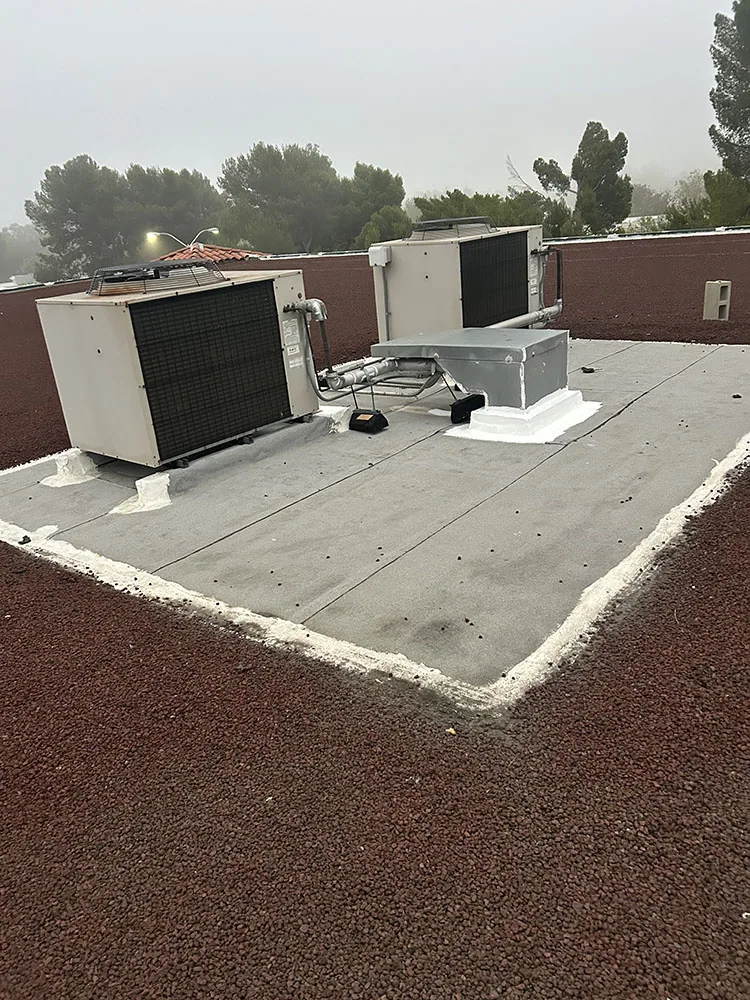
Equipment loads and walking paths get the same attention here as on any roof. The paths technicians use between the hatch and each unit are marked, and where the sheet shows wear, walkway pads are proposed. A path worn into a membrane is one of the most preventable failures on a single-ply roof.
Related makers and options at end of life
A property can hold Versico sections beside ones from Carlisle SynTec, GAF and others, and each is handled by its own family. When a roof nears the end of its life, owners weigh repair, recover, and replacement. Moisture readings, seam condition, and the layer count place the roof on that list.
The decision file shows the evidence and the review date, and the closeout packet lists the parts replaced and the products used.
Commercial Roofing Questions
How can I tell if my single-ply roof is a Versico system?
Paperwork first. In the field, accessories, labels, and a core cut help. The file records what the evidence supports and what remains an inference.
Does the part I use for a repair matter?
Yes. Boots, corners, and sealants that suit the sheet last longer. A mismatched part can fail or damage the sheet around it.
Why do edge details come first after wind?
Wind pressure is highest at edges and corners. A loose edge can pull the membrane and let water under it, so edges are checked before field repairs.
Can adhesive and tape repairs be mixed?
Only if the sheet and the products allow it. We identify the family and use matching products. The file lists each product used.
How long should a repair last?
It depends on the roof, the materials, and the cause of the failure. Repairs are reviewed at the next visit, and the log shows how each is holding.
Related
Related Roofing Work
Business 121 Corridor
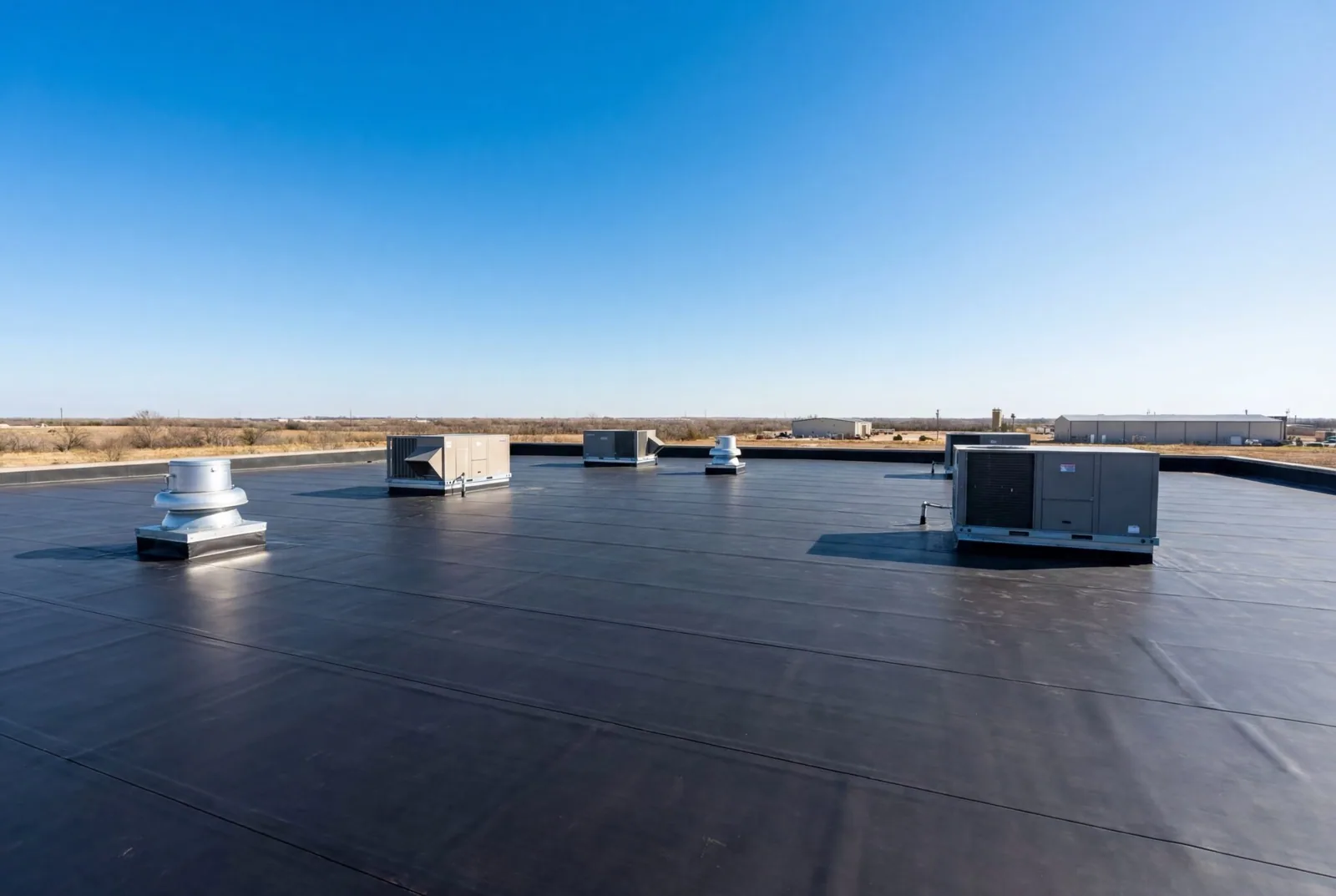
Central I-35E
Carlisle SynTec Roofing Systems
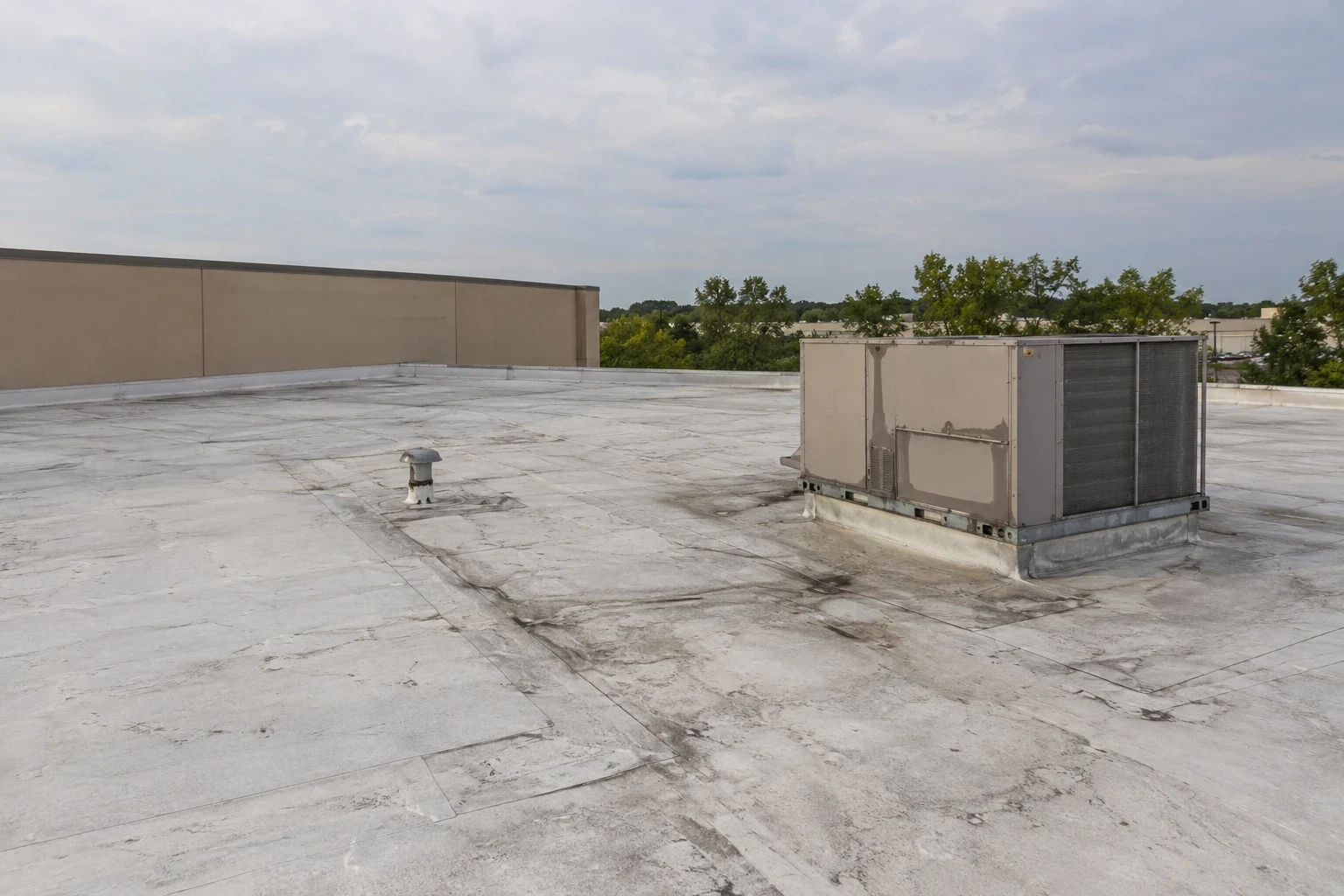
GAF Commercial Roofing Systems
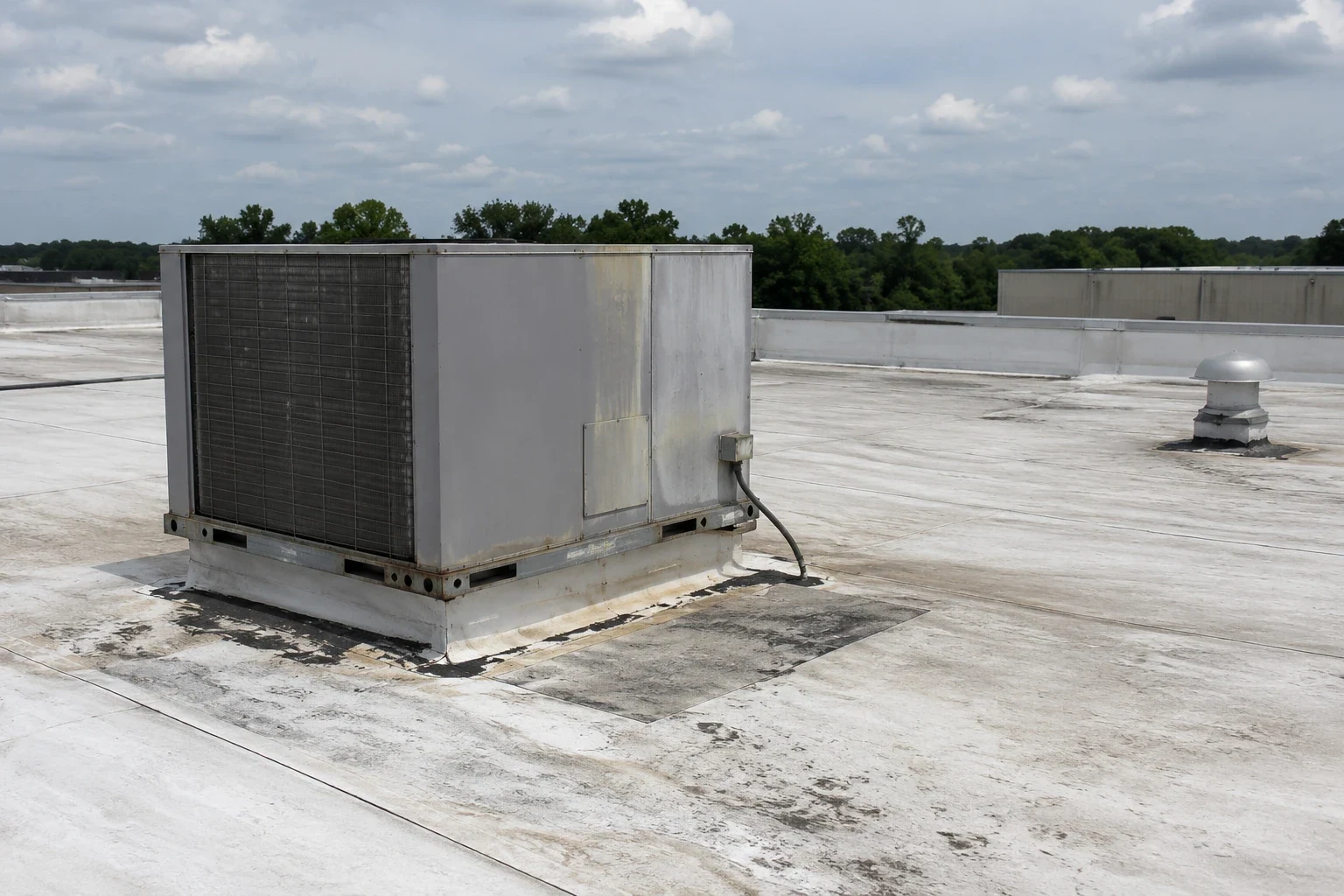
Commercial Roof Repair
Roof Recover and Overlay Systems
Schedule an inspection of the roof parts
Send any warranty papers, roof plans, and the way the roof is reached. We will walk the roof, list its parts and their condition, and return a dated condition record with photos and recommended next steps.